
“The city, sleeping pensively, is now but a memory,
As children and soldiers fade in albums.”Ataol Behramoğlu
Dedicated Dr. Şakir Derkut
I was eleven years old on 12 September 1980.
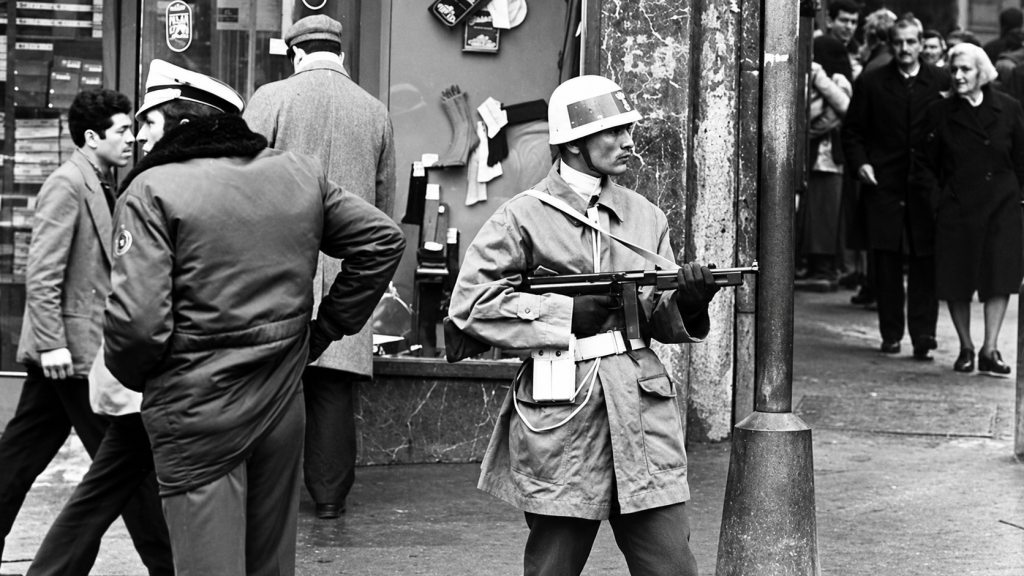
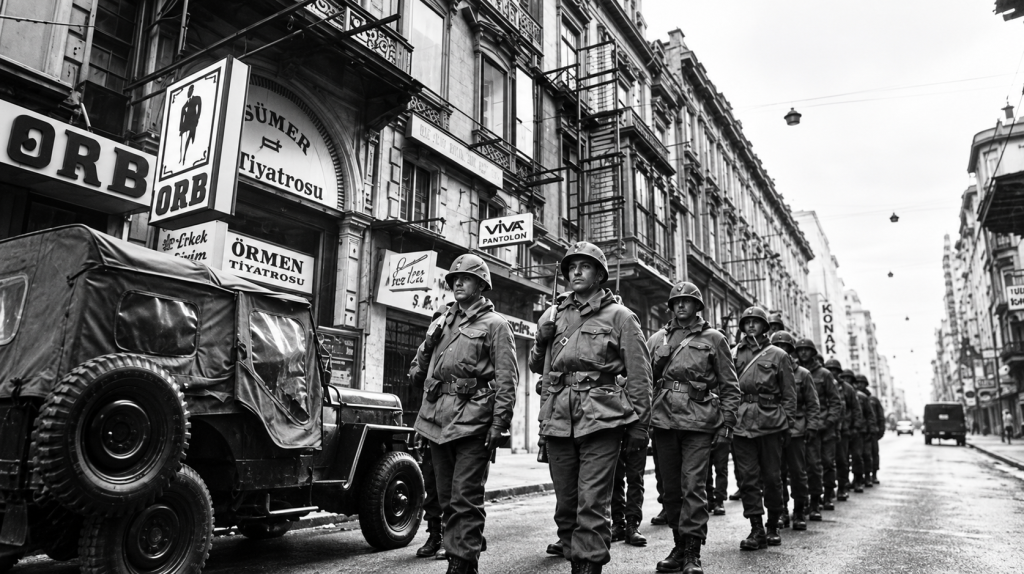
I remember the day only vaguely. I was old enough to understand that something serious was happening, but too young to grasp what it meant. There were soldiers, tanks, curfews and grave-looking men speaking on television. The adults around us understood far more than we did. For a child, politics existed somewhere in the background — frightening perhaps, but distant.
Yet 12 September would shape the country in which my generation grew up far more profoundly than I could possibly have understood at eleven.

Turkey had entered the 1980s after years of extraordinary political violence. On 12 September, the military under General Kenan Evren seized power, dissolved parliament and the government, suspended the Constitution and brought political life under military control. Political parties were eventually dissolved, and a new constitutional order was constructed under military rule. The 1982 Constitution that emerged from this period would leave a lasting imprint on Turkish political life.
But the transformation was not merely constitutional.
The coup attempted to remove politics from society itself.
Trade unions, political organisations, associations and student movements were suppressed; political participation became dangerous and political identities something to conceal. Scholars have consequently described one of the defining projects of the post-1980 order as depoliticisation, particularly of the younger generation. Politics, which had saturated everyday life in the 1970s, was increasingly replaced by an emphasis on private life, consumption, individual advancement and economic success.
That was the world in which I came of age.
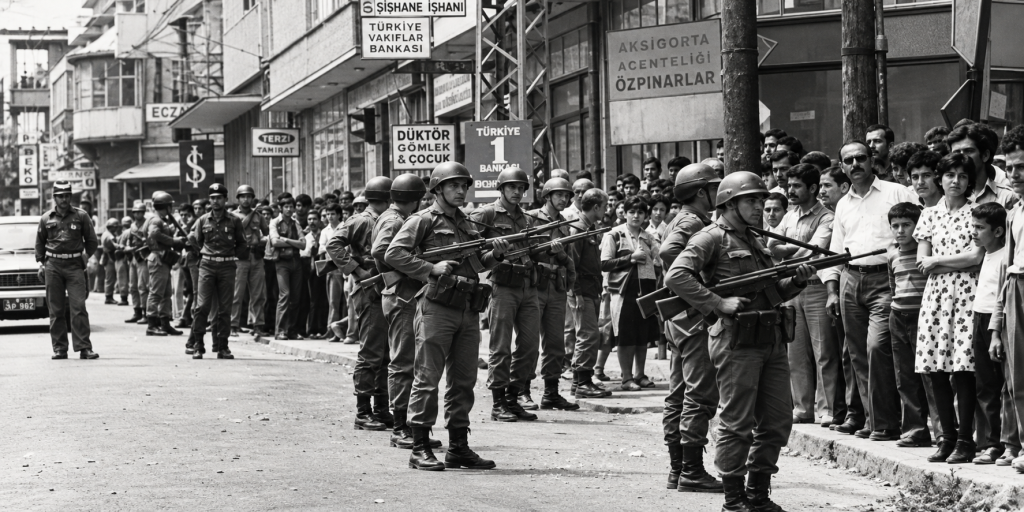
Only much later did I begin to understand what had happened behind the silence.
By then I had graduated as a psychology major and became involved in work concerning the human-rights violations committed during the coup period. Suddenly, what had been vague childhood memories acquired names, faces and psychological consequences.
I learned about arrests, imprisonment, torture, executions and lives permanently altered by what had happened after 12 September. Hundreds of thousands of people were detained; political trials were conducted on an enormous scale, and torture and ill-treatment in custody became one of the darkest legacies of the period. Decades later, Human Rights Watch would still describe the coup as having ushered in gross human-rights violations, particularly mass torture and deaths in custody.
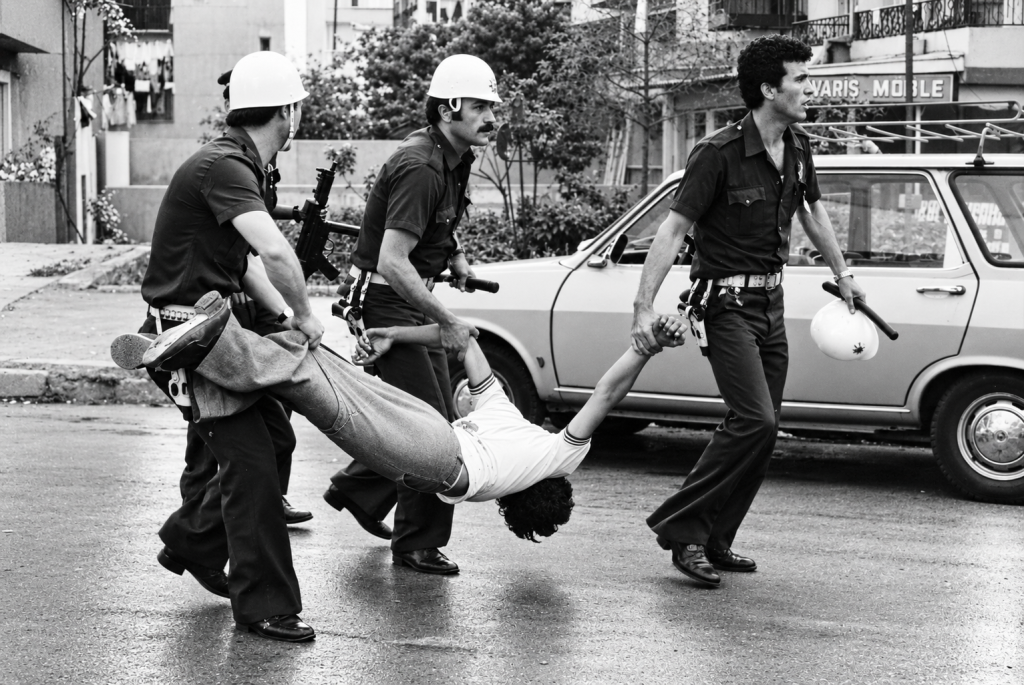
For me there was something strange about discovering this as a psychologist. I had lived through the period, yet as a child I had seen only its surface. Years later I encountered its psychological underside: fear, humiliation, silence, traumatic memory and the long shadows political violence leaves inside individual lives.
And meanwhile, Istanbul itself was changing.
The Istanbul of my childhood belonged to another economic and cultural world. During the 1980s, particularly after civilian government returned in 1983, the transformation accelerated dramatically. Turkey moved towards an export-oriented, liberalised economy under Turgut Özal, while Istanbul increasingly became the showcase of the new Turkey: a city of finance, construction, services, consumption and entrepreneurial ambition.
The physical city was remade alongside the social one.
After Bedrettin Dalan became mayor in 1984, enormous urban interventions followed. Roads were widened, historic neighbourhoods were demolished, industry was pushed away from the centre and the shores of the Golden Horn were radically reorganised. In Tarlabaşı, hundreds of nineteenth-century buildings disappeared to create the wide boulevard that cuts through the neighbourhood today. The transformation was presented in the language of modernisation, efficiency and progress — but pieces of Istanbul’s historical and social memory disappeared beneath the bulldozers.
Something more subtle was disappearing too.
The old Istanbul — already wounded by decades of population movements, the departure of its minorities and uncontrolled migration — was becoming a different kind of metropolis. The quieter, somewhat provincial city of my childhood was turning into a vast commercial megacity. New highways, office buildings, hotels, shopping culture, advertising, private television and conspicuous consumption gradually became symbols of another Turkey.
In this sense, the political and urban histories cannot really be separated.
The coup broke the power of organised political society; the economic order that followed increasingly celebrated the individual as consumer and entrepreneur rather than citizen. Istanbul became the most spectacular stage on which this new identity was performed. Scholars have linked the weakening of organised labour after military rule with the subsequent rise of finance, construction and services in Istanbul and with growing social polarisation.
Looking back, I therefore find it difficult to see 12 September simply as an event that began with tanks in the streets and ended when elections returned in 1983.
It was the beginning of a much longer transformation.
The institutions created after the coup, the 1982 Constitution, the restrictions placed upon political participation, the weakening of organised civil society and the culture of depoliticisation survived military government itself. At the same time, the economic transformation of the 1980s changed what Turkish society valued and aspired to. Istanbul embodied both processes more dramatically than perhaps anywhere else in the country.
The city changed physically. Society changed psychologically.
And gradually the meaning of citizenship changed too.
The eleven-year-old girl watching the events of September 1980 could not have known any of this. She could not have known that years later, as a psychology graduate, she would listen to and work with the consequences of human-rights violations committed during those years. Nor could she have known that the Istanbul around her — its streets, neighbourhoods, rhythms, people and values — was standing at the threshold of an extraordinary transformation.
More than four decades later, I think 12 September must be understood not simply as a military coup but as one of the great ruptures in the history of modern Turkey.
It silenced one political era and helped create the conditions for another. The authoritarian institutional legacy of the coup, the depoliticisation of society and the neoliberal transformation that followed did not by themselves mechanically produce the Turkey of today; history is never that simple. But they altered the terrain on which everything that came afterwards would develop.
And perhaps nowhere can that rupture be seen as vividly as in Istanbul.
The city I knew before 1980 did not simply grow older.
It became another city, in another Turkey.