
Some books survive because kings and sultans preserve them in palaces. Others are copied endlessly, passing safely from one generation to another.
And then there are books that survive almost by accident.
One of the most important works ever written about the Turkish language belongs to the latter category. Dîvânu Lugâti’t-Türk—roughly, Compendium of the Languages of the Turks—was written nearly a thousand years ago, disappeared from intellectual circulation for centuries, and was eventually rediscovered not in Central Asia, where its story began, nor in Baghdad, where it was presented, but in Istanbul.
Its survival is one of the great bibliographical stories of the city.
A Dictionary That Became a Portrait of a Civilization
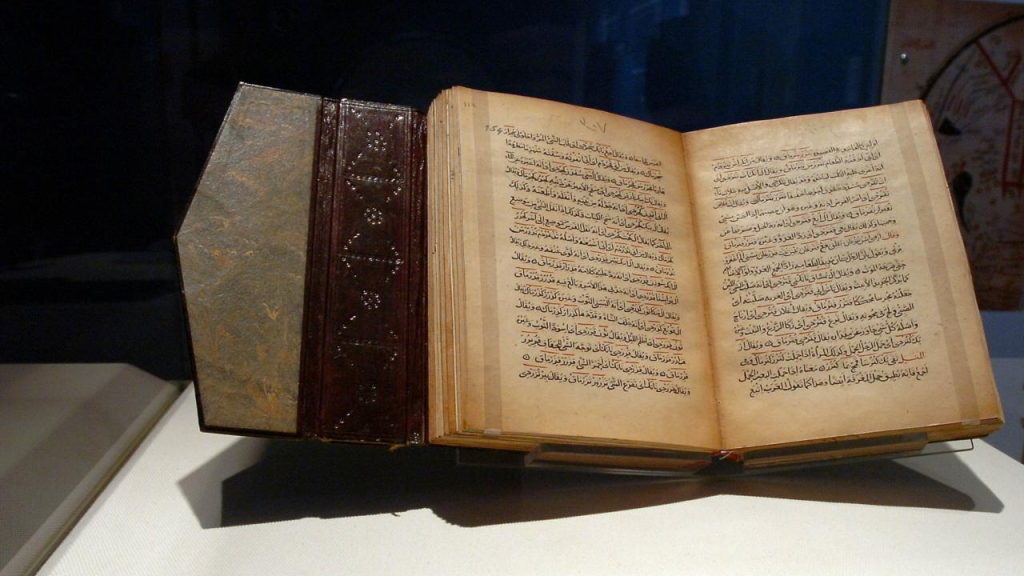
Kâşgarlı Mahmud began writing Dîvânu Lugâti’t-Türk in 1072 and completed it around 1074. Written primarily for an Arabic-speaking readership, the work explains Turkish words in Arabic and demonstrates the richness and sophistication of the Turkic languages.
But calling it a dictionary hardly does it justice.
Across its pages, Kâşgarlı recorded different Turkic dialects, proverbs, poems, expressions, grammatical forms, place names, and information about tribes and customs. Through vocabulary, an entire world appears: food, clothing, animals, warfare, kinship, beliefs, games, music, agriculture, and everyday life.
It is therefore simultaneously a dictionary, linguistic study, ethnographic record, literary anthology, and cultural archive of the eleventh-century Turkic world.
And then there is its extraordinary map.
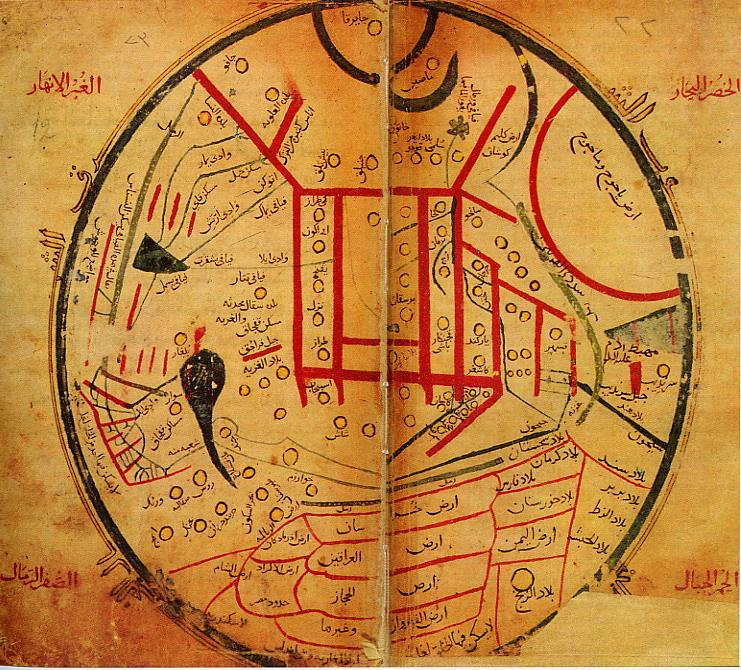
The map from the Dîvânu Lugâti’t-Türk
Kâşgarlı included a circular map showing the geographical distribution of Turkic peoples and their neighbours. It is regarded as the earliest surviving map centred specifically on the Turkic world and remains an exceptionally important document in the history of Turkic geography and cartography.
The book allows us to hear voices that would otherwise have vanished. Words spoken almost a millennium ago remain preserved inside it.
Then the Book Disappeared
The original manuscript written by Kâşgarlı Mahmud has not survived. Fortunately, in Damascus in 1266, a scribe named Muhammad ibn Abi Bakr ibn Abi’l-Fath, whose family origins traced back to Sava in present-day Iran, made a copy of the work. That copy would eventually become enormously important for a simple reason: It is the only known surviving manuscript of the entire work. For centuries, scholars knew that Dîvânu Lugâti’t-Türk had existed. Medieval authors referred to it, and the great seventeenth-century Ottoman bibliographer Kâtip Çelebi mentioned it in Keşfü’z-Zünûn. But no accessible copy was known. The text itself had effectively disappeared.
Until Istanbul returned it to the world.
A Discovery Among Istanbul’s Sahaflar
In the early twentieth century, the manuscript somehow found its way into the Istanbul antiquarian book trade.
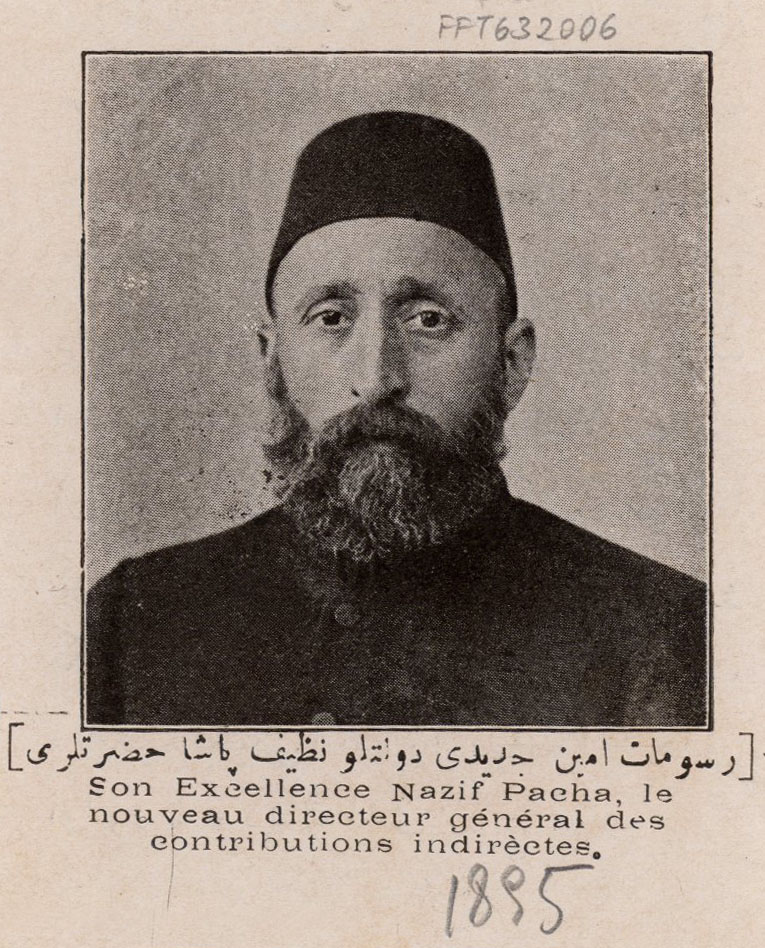
Nazif Paşa (visual is taken from saltresearch.org)
It had previously belonged to the library of Nazif Paşa, a former Ottoman finance minister. Before his death, he reportedly entrusted the manuscript to a woman in his family, telling her that if she ever needed money she could take it to the booksellers.
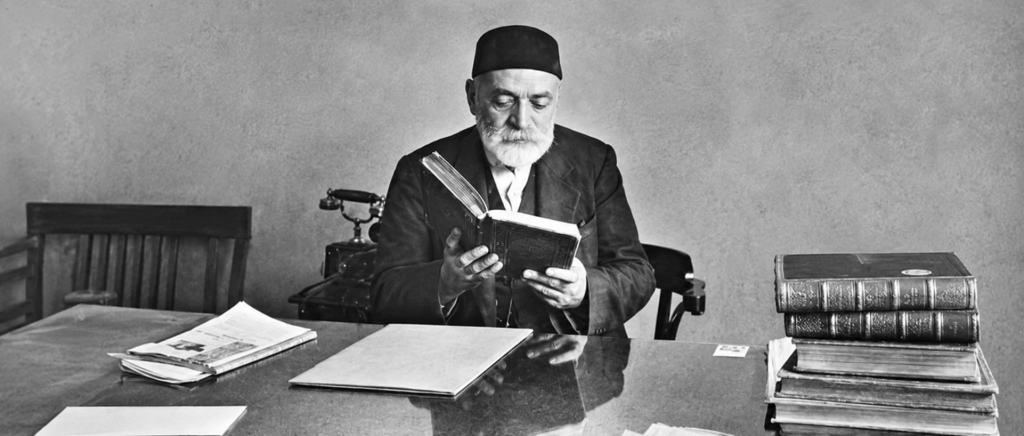
Ali Emiri Efendi
Eventually, she did. The manuscript reached the shop of the bookseller Burhan Bey in Istanbul. And there it encountered exactly the person capable of recognising what it was. His name was Ali Emîrî Efendi. Ali Emîrî was an Ottoman intellectual, poet, historian, and obsessive collector of books and manuscripts. In the early twentieth century, he encountered the manuscript through Istanbul’s sahaf trade. The precise dating of the discovery varies between sources—1914 and 1915 both appear in institutional accounts—but the essential story is certain: Ali Emîrî examined an obscure old manuscript offered for sale and realised that he was looking at the long-lost Dîvânu Lugâti’t-Türk.
He bought it for 33 Ottoman gold liras. What the seller regarded as an old manuscript, Ali Emîrî understood as something almost beyond monetary value. His excitement is preserved in the famous words attributed to him after the discovery:
“This is not a book; it is Turkistan.”
For once, the exaggeration seems justified. He had found the only surviving copy of one of the foundational documents of the Turkish language.
An Intellectual Sensation in Istanbul
News of the discovery spread through Istanbul’s intellectual circles. Among those eager to see the manuscript was Ziya Gökalp, one of the most influential thinkers of the late Ottoman period. Ali Emîrî, fiercely protective of his discovery, initially refused even to show it to him. He treated the manuscript almost as though he had rescued a living creature.
Eventually, the importance of publishing it became impossible to resist. Kilisli Rıfat Bilge played a crucial role in persuading Ali Emîrî to allow the work to be transcribed and published. The first printed edition appeared in Istanbul between 1915 and 1917, making Kâşgarlı Mahmud’s lost linguistic world available to scholars once again.
The consequences were enormous.
Modern Turkology suddenly possessed a source preserving Turkish vocabulary and dialects from almost a thousand years earlier. Words could be traced backwards through centuries. Linguistic relationships could be reconstructed. Early Turkish poetry and proverbs could be studied. Scholars could compare modern Turkic languages with forms recorded in the eleventh century.
It was rather like opening a sealed room and discovering that the voices inside could still be heard.
Where Is the Manuscript Today?
Remarkably, the manuscript never left Istanbul. Ali Emîrî eventually donated his extraordinary collection to the nation, forming the heart of what became the Millet Library of Manuscripts (Millet Yazma Eser Kütüphanesi) in Fatih. The sole surviving manuscript of Dîvânu Lugâti’t-Türk remains there today, registered in the Ali Emîrî Arabî Collection, no. 4189.
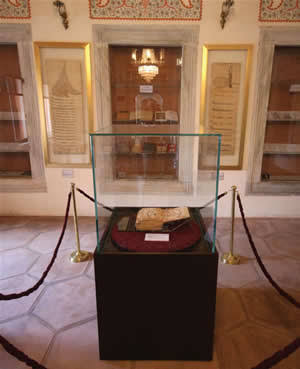
Display of Dîvânu Lugâti’t-Türk
In 2017, the manuscript was inscribed in UNESCO’s Memory of the World International Register, recognising its significance not simply for our country but as part of humanity’s documentary heritage.
From Central Asia to Baghdad, Damascus to Istanbul
There is something wonderfully appropriate about the manuscript ending its journey here.
The intellectual geography of Dîvânu Lugâti’t-Türk stretches across an enormous landscape. Its language came from the Turkic world of Central Asia. Kâşgarlı Mahmud composed it in the eleventh century and presented it within the intellectual universe of Abbasid Baghdad. The sole surviving manuscript was copied in Damascus in 1266 by a scribe whose origins lay in Sava, in present-day Iran.
Centuries later, after an almost mysterious journey westward, it surfaced among the booksellers of Istanbul.
And Istanbul became its final refuge.
This is one of the city’s quieter historical roles. Istanbul did not merely accumulate palaces, mosques, churches, fountains, and monuments. For centuries it also accumulated memory: manuscripts carried from other cities, libraries assembled by scholars, books rescued from disappearing households, objects whose original worlds had already vanished.
Sometimes the most important archaeological discoveries in Istanbul have not come from beneath the earth. They have come from shelves. Somewhere among the city’s old books, Ali Emîrî recognised a manuscript that almost everyone else had failed to recognise. Because he did, words spoken by people living across the Turkic world nearly a thousand years ago survived into ours.
The journey of Dîvânu Lugâti’t-Türk therefore ends with a particularly Istanbul kind of miracle: A civilization travelled west in the pages of a book, disappeared into the labyrinth of history, and was found again in a sahaf’s shop in Istanbul.
And the city that found it still keeps it today.
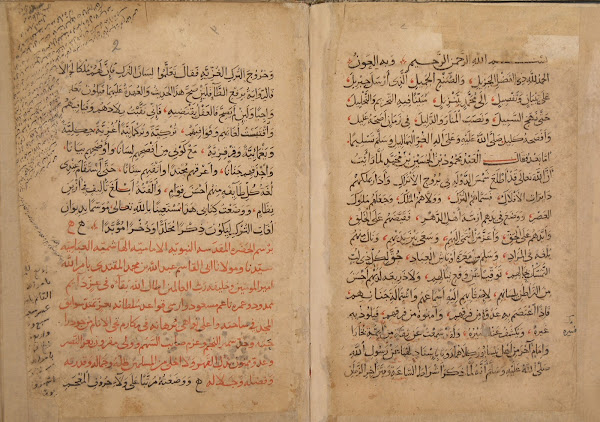
A glimpse at Dîvânu Lugâti’t-Türk