

Almost 800 people were leaving the land of their birth, their homes, their childhood and adolescent dreams, to escape the chilling threat of death.’
David Stoliar (taken from yadvashem.org)
I have just finished watching Babylon Berlin, and I find myself profoundly moved by its portrayal of a society moving inexorably towards catastrophe. What struck me most was the terrible helplessness of watching history unfold: the warning signs were everywhere, the approaching darkness was almost palpable, and yet the course of events seemed impossible to alter.
It made me think about Istanbul during the Second World War. Turkey managed to remain outside the conflict, navigating a precarious path between the warring powers. Istanbul was spared the bombs that devastated so many European cities. Its streets were not reduced to rubble, its monuments survived, and its inhabitants were not subjected to the horrors of military occupation. And yet the war came to our doorstep, sometimes quite literally.
In the winter of 1941–1942, a small, overcrowded vessel carrying hundreds of Jewish refugees fleeing Nazi persecution arrived in Istanbul. Its passengers had escaped a Europe descending into barbarism. They had crossed the Black Sea in the desperate hope of reaching safety in Palestine. For ten weeks, they remained trapped aboard their ship, within sight of the city. The ship was called Struma.
A Ship Carrying the Desperate
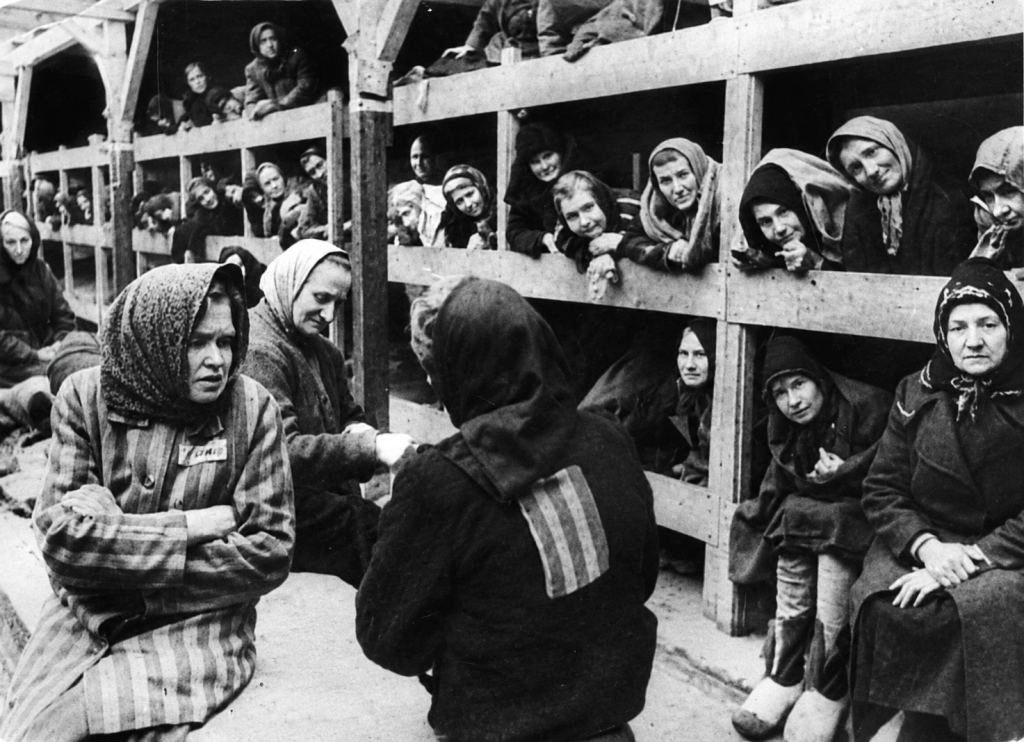
On 12 December 1941, the Struma departed from Constanța, Romania, carrying approximately 769 Jewish refugees. Romania, then allied with Nazi Germany, had become an increasingly dangerous place for its Jewish population. Persecution, dispossession and mass violence had driven thousands to seek escape.
The Struma was hardly seaworthy. Originally built as a yacht and later used for other purposes, the ageing vessel was ill-equipped for such a journey. It had inadequate sanitary facilities, insufficient provisions and a notoriously unreliable engine. Nevertheless, hundreds of people boarded it, including families, children, elderly people and young adults who had left behind their homes, possessions and former lives. Their destination was British-controlled Palestine, where they hoped to begin again.
But the ship’s engine failed during the voyage, and on 15 December 1941, the Struma was towed into Istanbul. What should have been a temporary stop became a prolonged ordeal.
Ten Weeks Within Sight of Istanbul
The Turkish authorities refused to allow the passengers to disembark, apart from a handful of exceptional cases. The refugees remained confined aboard the vessel, which lay at anchor in the waters of Istanbul. Conditions deteriorated rapidly. Food and clean water were scarce, sanitation was appalling, and disease threatened the already exhausted passengers.
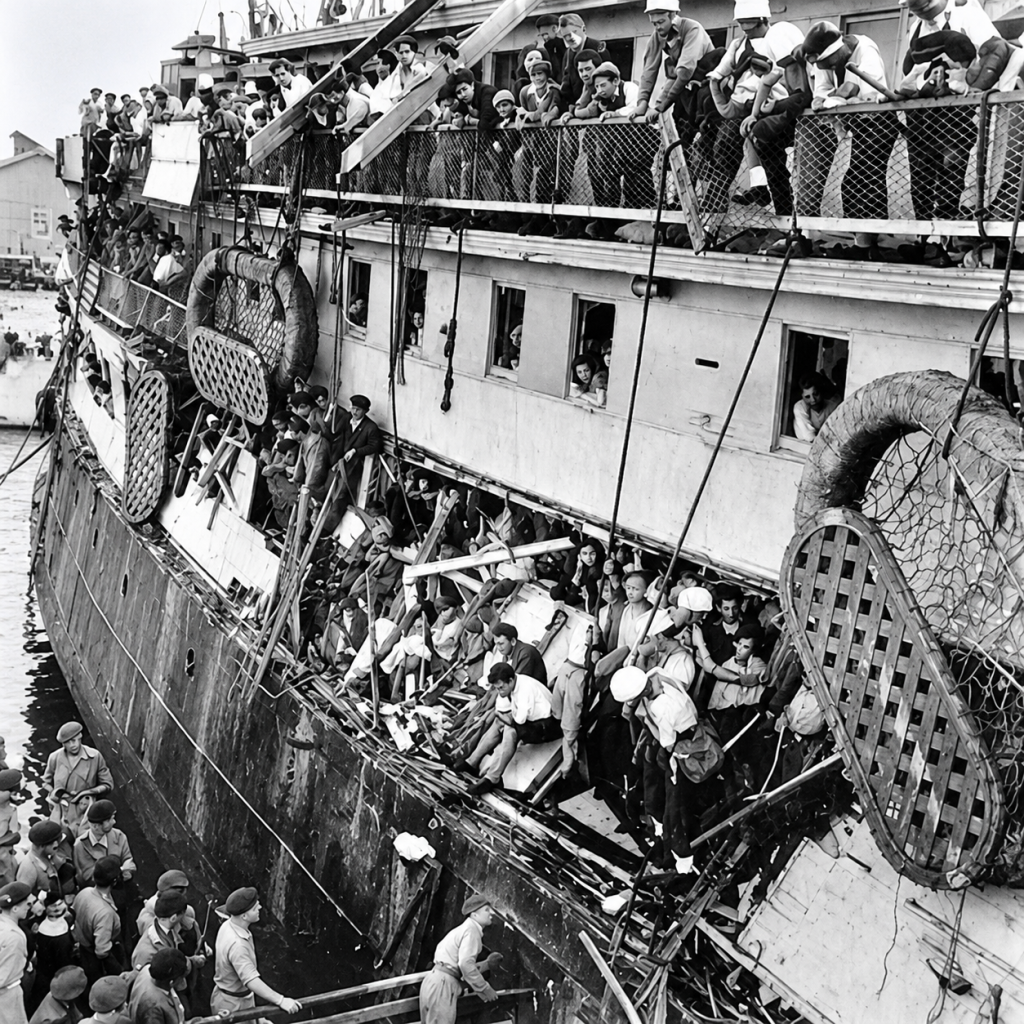
The cruelty of their predicament is almost unimaginable. They could see the city, its minarets, rooftops and shores within reach. Beyond the ship lay ordinary life: people walking through the streets, buying bread, going to work and returning to their families. Yet for the passengers of the Struma, that world was inaccessible.
The Turkish government, led by President İsmet İnönü and Prime Minister Refik Saydam, was determined to maintain the country’s neutrality during the war. Turkey was surrounded by immense geopolitical dangers and feared becoming entangled in the conflict. The authorities also resisted accepting refugees who might be unable to continue their journey and consequently remain in Turkey.
Meanwhile, the British government refused to grant the passengers permission to enter Palestine. British immigration restrictions, introduced before the war, remained in force even as European Jews faced extermination. Jewish organisations attempted to negotiate a solution and offered assistance, but diplomatic discussions dragged on, and the passengers remained trapped between governments unwilling to assume responsibility for them.
Their survival became a matter of immigration regulations, diplomatic negotiations and political calculations. The terrible irony was that these people had fled Europe precisely because governments had deprived them of protection. Now, having reached the shores of another country, they found themselves abandoned once again.
The Night the Struma Was Sent Away
A deafening explosion ripped through the ship… I only remember that a superhuman force lifted me into the air; after a few moments I fell back down and landed in the water. From the moment of impact, no more than a minute passed before the vessel disappeared without a trace. It was literally swallowed up by the waves in the blink of an eye… Just a few planks of wood floating on the surface remained of the Struma… There were a few dozen people in the water, men and women who tried to save themselves, but the screams and cries for help dissipated and vanished amidst the vast expanse of the sea… The waves were cold as ice, and my limbs lost all feeling… I managed to lay my hands on a large piece of driftwood and to climb up onto it… Not even four hours had passed before I comprehended that I was the only one who remained.‘
David Stoliar (taken from yadvashem.org)
On 23 February 1942, after more than two months of unsuccessful negotiations, Turkish authorities ordered the Struma to be towed out of Istanbul and into the Black Sea. The ship’s engine was still inoperable, and it was left at sea, unable to navigate under its own power.
The following morning, 24 February, an explosion tore through the vessel. The Struma sank rapidly into the freezing waters of the Black Sea. The ship was torpedoed by the Soviet submarine Shch-213, although the identity of the attacker was established only later. Almost everyone aboard perished. David Stoliar, a young Jewish refugee, was the sole person to survive the disaster.
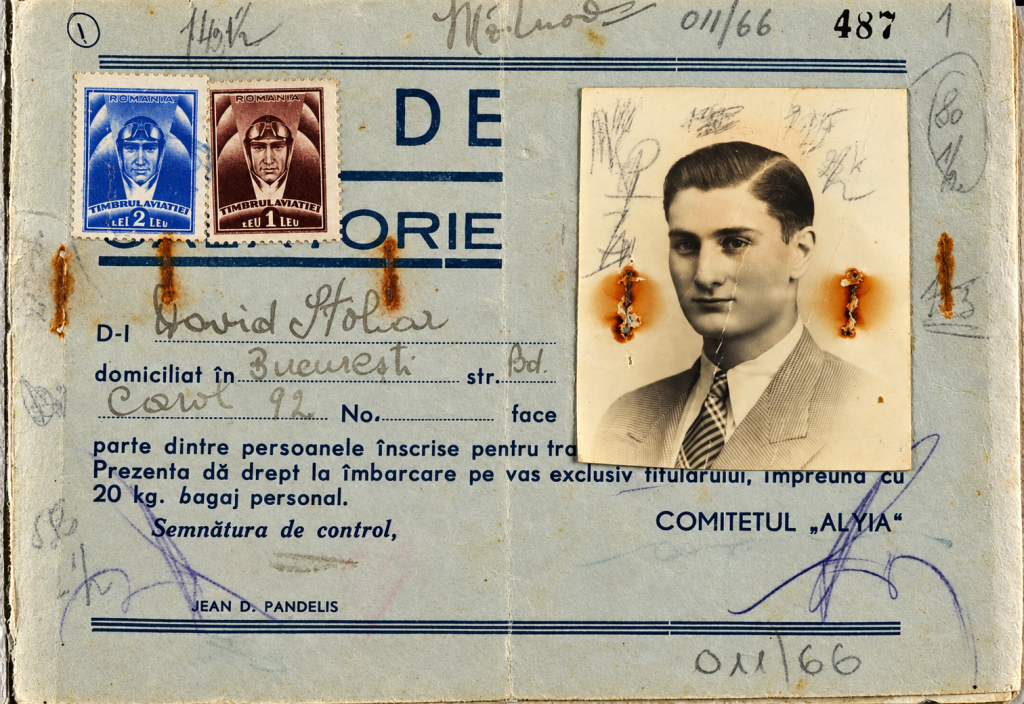
Boarding permit issued to David Stoliar, the sole survivor of the Struma disaster
Accounts of the sinking describe another man, a member of the ship’s crew, who initially survived the explosion alongside Stoliar but subsequently died before rescue arrived. Stoliar was eventually rescued after spending many hours in the freezing sea, surrounded by the wreckage of the ship. The passengers had escaped Nazi persecution, crossed the Black Sea and reached Istanbul, but they never reached safety.
The City That Watched
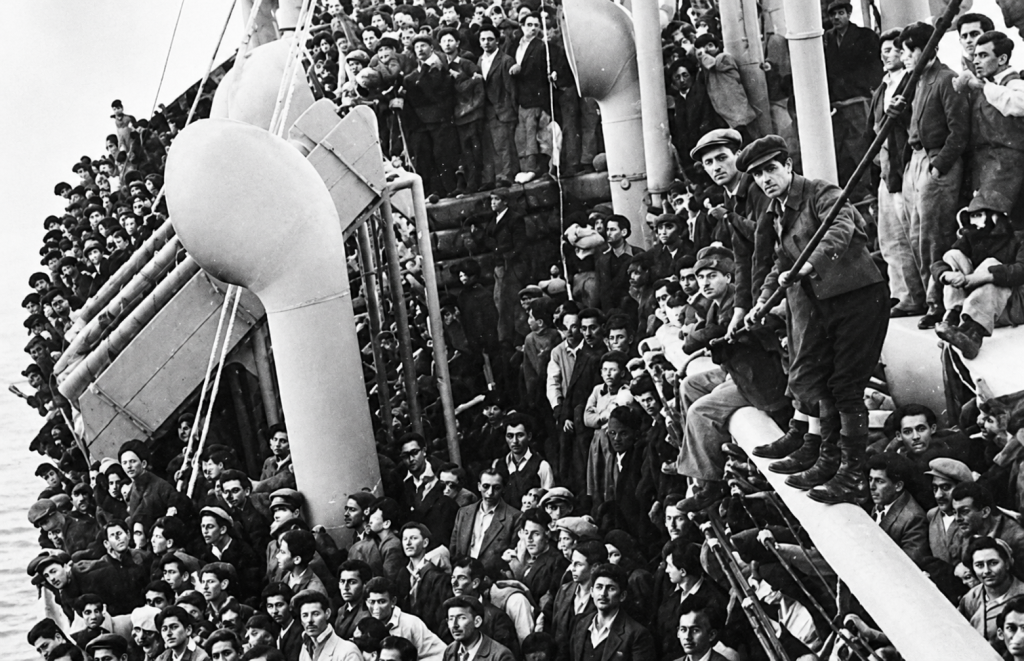
What makes the Struma tragedy particularly haunting is its setting. Istanbul has always been a city of crossings, migrations and refuge. For centuries, people fleeing war, persecution and political upheaval have arrived on its shores.
The Ottoman Empire famously welcomed many Sephardic Jews expelled from Spain in 1492. Their descendants became part of the cultural and commercial fabric of Istanbul, contributing to the city’s extraordinary diversity. Centuries later, another group of Jewish refugees reached the same city, only to find its shores closed to them. The contrast is difficult to ignore.
Of course, Istanbul’s inhabitants were not necessarily aware of the full extent of the refugees’ suffering, nor did ordinary citizens control the decisions of their government. It would be unfair to suggest that an entire city knowingly stood by and watched hundreds of people die. Nevertheless, the tragedy unfolded within sight of Istanbul, and it remains part of the city’s history.
The Struma was not a distant disaster reported from the battlefields of Europe. It happened here, in our waters, at our doorstep.
The Tragedy of Knowing and Not Acting
Watching Babylon Berlin, I was struck by the sense that history does not always descend upon us suddenly. Sometimes catastrophe approaches gradually, through a succession of compromises, evasions, calculations and failures of moral imagination. The Struma tragedy seems to embody precisely this process.
No single government was responsible for every circumstance that brought the passengers to their deaths. Nazi persecution drove them from their homes. British immigration policy obstructed their escape. Turkish authorities refused them sanctuary. A Soviet torpedo destroyed their ship. Each decision belonged to a different political and military context, yet together these circumstances created a tragedy in which hundreds of human beings found themselves with nowhere to go.
The passengers were not abstractions. They were not merely refugees, immigration cases or diplomatic complications. They were people with memories, families, professions, dreams and futures they had not yet lived. For ten weeks, they waited aboard a crowded ship in the waters of Istanbul, looking towards a city that was so close and yet impossibly far away.
Perhaps what makes the story unbearable is not simply that the Second World War reached our doorstep. It is that, when it did, there were choices to be made, and the choices that might have saved those lives were not.
David Stoliar, the sole survivor of the Struma tragedy, died at the age of 91 in Oregon in 2014. His words remain a poignant reminder of this tragedy and of our enduring responsibility to remember: “My anger has subsided. Now is the time to mourn, to heal, to embrace one another, and to share my memories so that future generations will always remember and never forget.” (Source)
Visuals are taken from Independent Türkçe.
Note that the video is embedded via YouTube and all rights belong to the respective rights holders.


