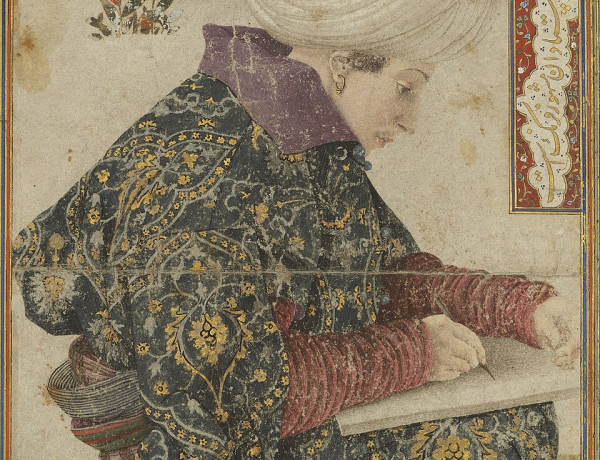

The people we call Byzantines were in fact Romans, simply a later phase in the history of the
Roman people, and their empire was the direct continuation of ancient Rome.’— Anthony Kaldellis, The Journal of Hellenic Studies
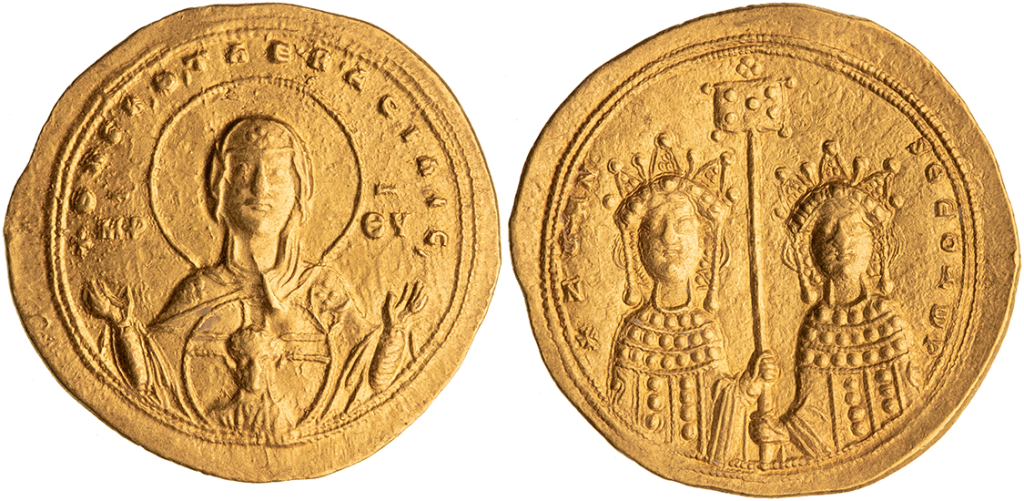
Zoe and Theodora (1042)
History is not merely a record of what happened. It is also a story that civilisations tell about themselves: a story of origins, achievements, virtues and, perhaps most revealingly, of those they choose to regard as their opposites.
For centuries, Western Europe constructed its identity partly through a particular image of Byzantium. The Eastern Roman Empire, which survived for nearly a thousand years after the fall of the Western Roman Empire in 476, came to represent everything that Europe supposedly was not: decadent, corrupt, treacherous, excessively ceremonial, politically devious and religiously fanatical.
Yet there is something profoundly curious about this portrait. The civilisation that Western Europe so frequently disparaged was neither foreign to its history nor peripheral to its cultural inheritance. It was Roman, Christian, intellectually sophisticated and heir to the Greek philosophical tradition. Its inhabitants did not even call themselves Byzantines. They called themselves Romans.
How, then, did a civilisation so intimately connected with Europe’s own origins become its historical opposite?

Anthony Kaldellis
The historian Anthony Kaldellis, whose work has challenged many conventional assumptions about Byzantine history, offers a provocative way of understanding this paradox. In his interpretation, Byzantium became a kind of dark mirror for Western Europe: a civilisation onto which the West could displace undesirable characteristics while presenting itself as the legitimate embodiment of Roman civilisation and Christianity.
His argument invites an intriguing question that extends beyond history into psychology: Can a civilisation construct its identity by disowning aspects of itself and projecting them onto another?
The Empire That Refused to Disappear
When the Western Roman Empire collapsed in the fifth century, the Roman Empire did not simply cease to exist. Its eastern half continued, with Constantinople as its capital, maintaining Roman institutions, imperial authority, legal traditions and a remarkably durable political identity.
The people whom modern historians call Byzantines understood themselves as Rhomaioi—Romans. Their state was the Roman Empire, not some newly invented successor civilisation.
The designation Byzantine Empire emerged much later in Western European scholarship. Although convenient for modern historians, it also creates a conceptual separation between ancient Rome and its eastern continuation.
This distinction is far from innocent in its historical consequences. By assigning the name Rome primarily to the ancient empire and treating Byzantium as something fundamentally different, conventional historical narratives could present Western Europe as Rome’s natural heir while relegating the actual continuation of the Roman state to a secondary position.
The paradox becomes particularly striking when we remember that Constantinople remained an imperial capital for more than eleven centuries, from its dedication in 330 until the Ottoman conquest in 1453.
Throughout much of this period, the empire preserved and transformed Roman law, maintained sophisticated administrative institutions, cultivated Greek literature and philosophy, and produced extraordinary achievements in architecture, theology, diplomacy and art.
Yet the civilisation that sustained this inheritance would eventually be remembered in much of Western historical writing less for its achievements than for its supposed moral and political deficiencies.
The Invention of a Decadent Civilisation
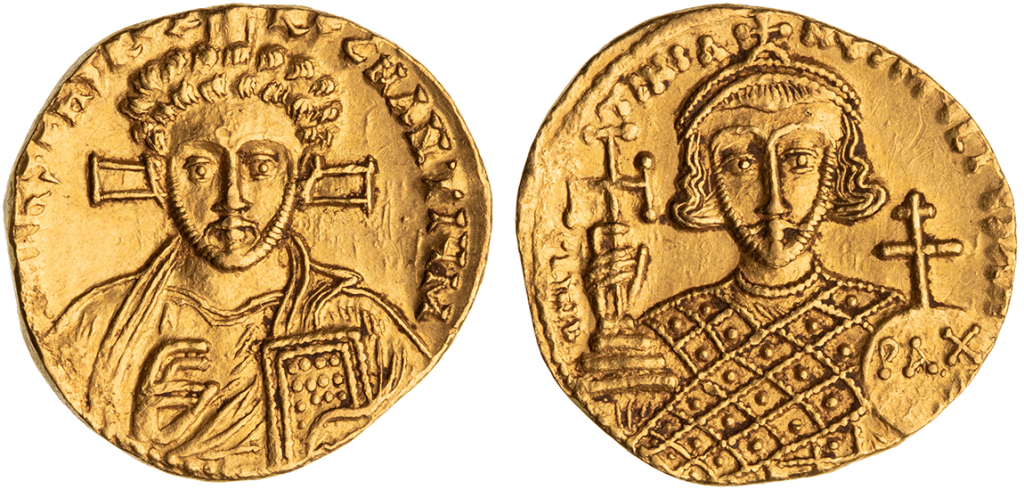
Justinian II, second reign (705–711)
The negative image of Byzantium did not emerge overnight.
Its roots can be traced to the gradual estrangement between the Latin West and Greek East, competing claims to Roman imperial legitimacy, ecclesiastical disputes and the increasingly hostile encounters between the two Christian worlds.
The coronation of Charlemagne as emperor in 800 intensified the question of who could legitimately claim the Roman imperial inheritance. The religious divisions between Rome and Constantinople further complicated their relationship.
The catastrophe of 1204, when the armies of the Fourth Crusade captured and plundered Constantinople, revealed how profoundly relations between Eastern and Western Christians had deteriorated.
Yet the subsequent Western representation of Byzantium was not simply a reflection of these conflicts. Over time, it acquired the characteristics of a remarkably persistent cultural stereotype. Byzantine politics became synonymous with intrigue. Byzantine diplomacy was interpreted as duplicity. Its elaborate court ceremonies were dismissed as empty theatricality. Its theological debates were ridiculed as sterile intellectual exercises. The adjective Byzantine eventually entered European languages as a term suggesting unnecessary complexity, secrecy and deviousness.
The Enlightenment reinforced this image. Edward Gibbon’s monumental The History of the Decline and Fall of the Roman Empire helped popularise a vision of Byzantine history as a prolonged narrative of deterioration, superstition and political weakness.
But there is an obvious problem with this interpretation.
A civilisation that survived for more than a millennium, endured repeated invasions, maintained an elaborate state apparatus and exercised extraordinary diplomatic influence can hardly be understood simply as an example of uninterrupted decline.
Something more than historical description appears to be at work.
Byzantium as Europe’s Dark Mirror
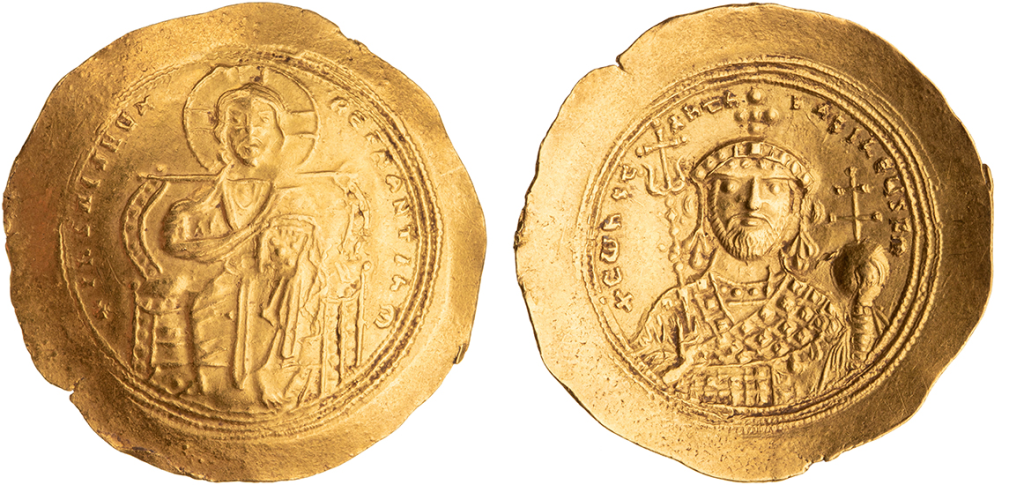
Constantine IX (1042–1055)
Kaldellis’s interpretation becomes especially interesting when viewed through the lens of psychology. The negative qualities traditionally attributed to Byzantium were hardly absent from Western European history. Dynastic assassinations, political conspiracies, religious persecution, corruption, elaborate court rituals and struggles between ecclesiastical and secular authorities were familiar features of Western political life.
Nevertheless, these characteristics became disproportionately associated with Byzantium, as though they were uniquely expressive of its civilisation.
From a psychoanalytic perspective, this pattern resembles the mechanisms of splitting and projection. In Melanie Klein’s account of early psychic life, splitting involves separating experiences into idealised and persecutory aspects that cannot yet be integrated into a more complex representation. Projection, meanwhile, allows unwanted or intolerable aspects of experience to be attributed to an external object.
These concepts were developed to understand individual psychic processes, and their application to entire civilisations must remain metaphorical rather than diagnostic.
Nevertheless, the analogy is illuminating. Western Europe could identify itself with the supposedly positive qualities of Roman civilisation—law, order, legitimacy, rationality and Christian truth—while assigning its undesirable characteristics to Byzantium. The West became the legitimate inheritor of Rome; Byzantium became its decadent distortion. The West represented authentic Christianity; Byzantium became associated with superstition, theological excess and religious corruption. The West embodied political progress; Byzantium represented stagnation.
Through this division, a complicated and often contradictory historical inheritance could be transformed into a reassuring narrative of civilisational superiority. By making Byzantium the bearer of its disowned qualities, Europe could preserve an idealised image of itself.
The Civilisation in the Shadow
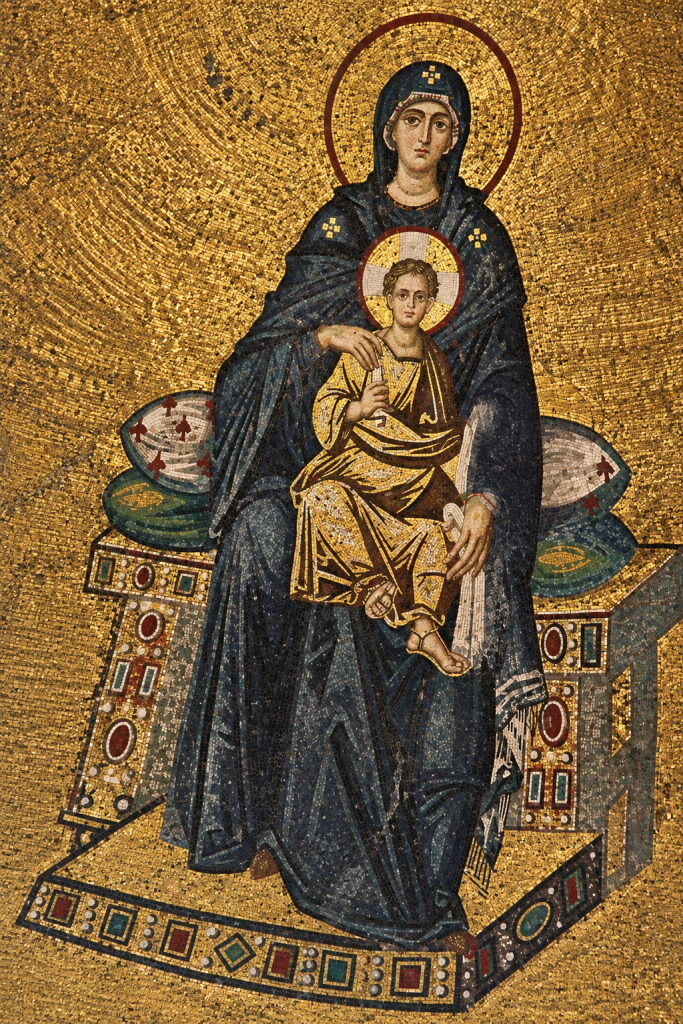
10th century mosaic of Virgin and Child in Haghia Sohhia (visual is taken from wikipedia)
Carl Gustav Jung’s concept of the shadow offers another suggestive analogy. For Jung, the shadow comprises those aspects of the personality that the conscious ego does not recognise, accept or wish to acknowledge as its own.
The shadow is not necessarily evil. It contains whatever has been excluded from the preferred image of the self. Applied cautiously to cultural history, this idea suggests that Byzantium became a repository for qualities that Western Europe wished to exclude from its own civilisational identity. What makes the analogy especially compelling is that Byzantium was not a radically alien culture. It shared Europe’s Roman inheritance, Christian religion and much of its intellectual ancestry. It was, in many respects, disturbingly familiar. This familiarity may have contributed to its usefulness as a negative counterpart. Byzantium represented not merely another civilisation, but an alternative expression of the same historical inheritance.
It demonstrated that Roman civilisation could survive without becoming Western Europe. It also challenged the assumption that the history of Europe necessarily culminated in the political, religious and intellectual institutions of the Latin West. In this sense, Byzantium was not simply Europe’s opposite. It was a version of Europe that Europe had difficulty recognising as its own.
The Politics of Historical Memory
Of course, the antagonism between Byzantium and Western Europe cannot be reduced to psychological projection. Their conflicts involved genuine theological disagreements, political ambitions, military rivalries and competing economic interests.
Nor were Western attitudes uniformly hostile. Byzantine scholarship, art and religious traditions were admired and appropriated in different periods. The transmission of Greek learning to Italy, particularly during the later centuries of the empire, contributed significantly to Renaissance intellectual life.
The Byzantine Empire itself was hardly free from political violence, religious intolerance or internal conflict. The point is not to replace one idealised historical narrative with another. Rather, it is to ask why certain characteristics were selected, exaggerated and transformed into defining features of an entire civilisation. Historical stereotypes rarely arise from pure invention. More often, they develop through the selective organisation of real events into narratives that serve particular cultural or political purposes.
Byzantium certainly experienced palace conspiracies, religious controversies and political crises. But why should these episodes define its civilisation more decisively than comparable events define medieval France, England or the Holy Roman Empire? The answer lies partly in the power to shape historical memory. Civilisations do not merely inherit the past. They interpret it, arrange it and sometimes transform it into a justification for their own identity. Those who control the dominant historical narrative can determine not only who deserves admiration, but also who will be remembered as decadent, backward or illegitimate.
The Stereotype That Survived the Empire
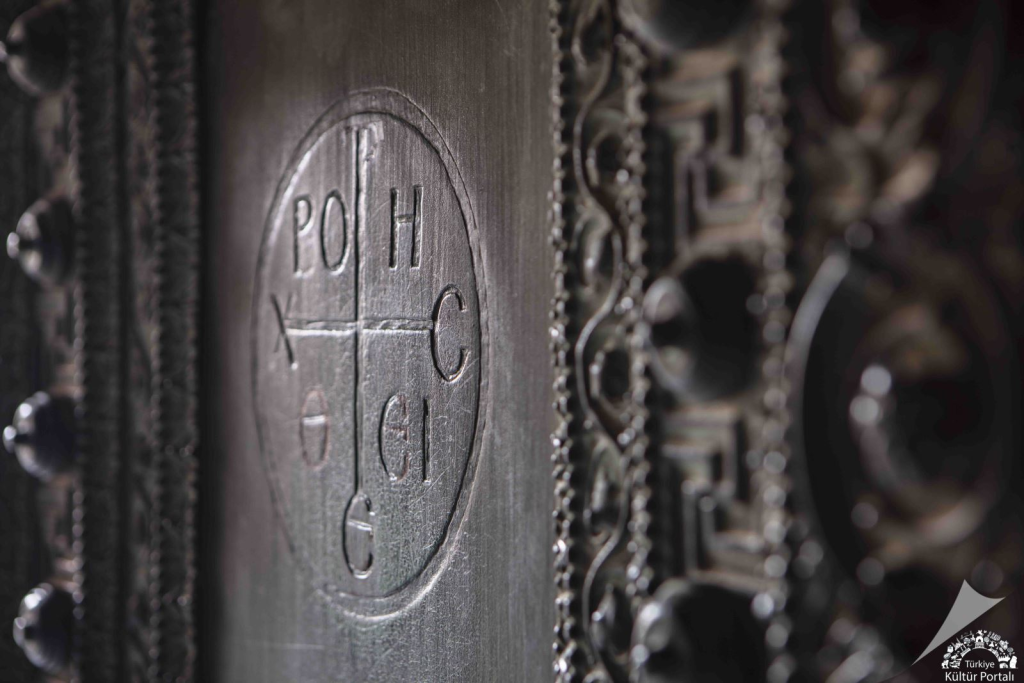
The Greek inscription Phos Zoe (“Light and Life”) on a door of Hagia Sophia symbolises Christ as the source of divine light and eternal life. (visual is taken from https://www.kulturportali.gov.tr/).
The Byzantine Empire disappeared as a political entity in 1453, but the negative image constructed around it proved remarkably durable. Even today, the word Byzantine commonly describes something excessively complicated, bureaucratic, obscure or politically manipulative. The stereotype has outlived the civilisation by more than five centuries. This persistence raises a question about the relationship between historical knowledge and collective identity.
Why do certain interpretations survive long after the circumstances that produced them have disappeared? One possibility is that stereotypes endure because they perform psychological and cultural functions. They simplify complexity, establish boundaries and provide communities with reassuring distinctions between themselves and others. The image of Byzantium as decadent and politically corrupt helped sustain a broader narrative in which Western Europe represented the progressive continuation of classical civilisation. To question that image is therefore to question more than a particular interpretation of medieval history. It is to reconsider the assumptions through which Europe has understood its own origins.
Kaldellis’s scholarship is important precisely because it restores the Eastern Roman Empire to the historical continuity from which it has so often been separated. Rather than treating Byzantium as an exotic, declining civilisation on Europe’s margins, he asks us to recognise it as a Roman society with its own political institutions, historical development and enduring sense of collective identity. This does not require idealising Byzantium. It requires allowing it to emerge from beneath the accumulated weight of other people’s descriptions.
Recognising the Disowned Self
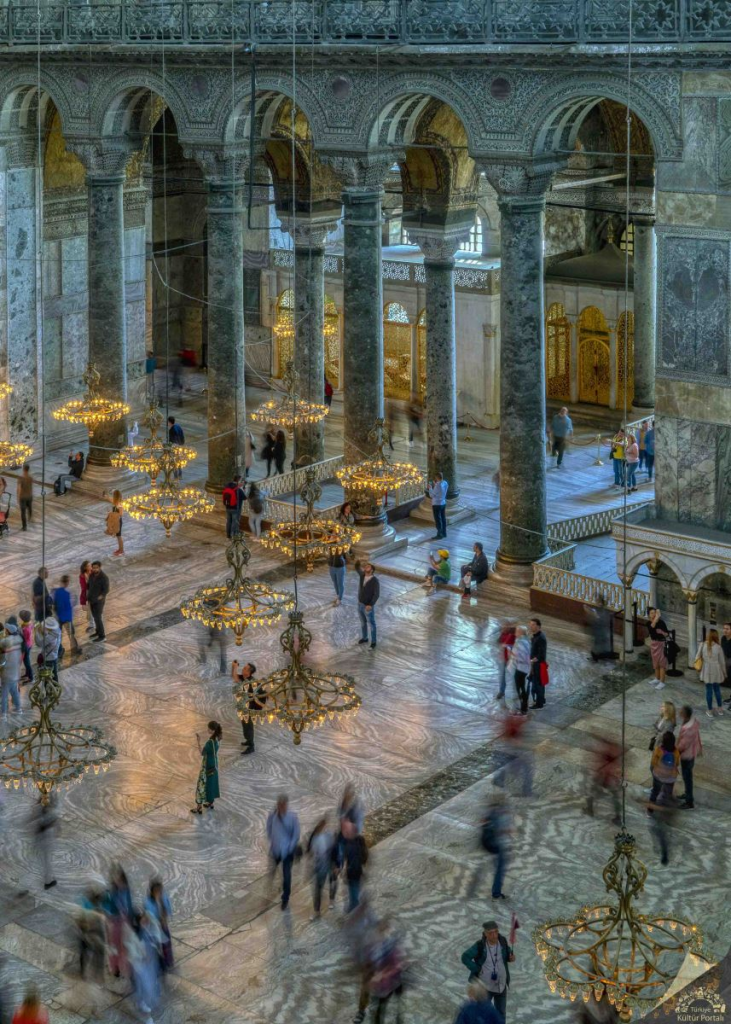
A glimpse at Haghia Sophia before it was turned into a mosque (visual is taken from https://www.kulturportali.gov.tr/)
Perhaps the most interesting implication of this historical reconsideration is psychological. Mature identity, whether individual or collective, requires the capacity to tolerate complexity and contradiction. An individual who can recognise both admirable and troubling aspects of the self no longer needs to preserve an entirely idealised self-image by attributing everything undesirable to others.
Something analogous may be said of historical consciousness. A civilisation capable of acknowledging the violence, intolerance, creativity, sophistication and contradictions within its own history has less need for a simplified image of another civilisation against which to define itself.
The ‘rehabilitation’ of Byzantine history is therefore not merely an exercise in correcting historical inaccuracies. It offers an opportunity to reconsider how civilisations construct their identities through selective remembrance and forgetting.
For centuries, Byzantium occupied a peculiar position in the European imagination: familiar yet alien, Christian yet supposedly deviant, Roman yet denied full possession of its Roman identity. It was close enough to Europe to challenge its preferred understanding of itself, yet sufficiently separated by language, religion and political rivalry to become an object of suspicion.
And perhaps therein lies the deepest irony. The civilisation that Western Europe so often represented as the corrupted remnant of Rome was, in fact, the civilisation in which the Roman Empire continued to exist. Byzantium was not simply a foreign world that Europe misunderstood. It was part of Europe’s own historical inheritance, transformed into an image of everything Europe wished to believe it had transcended.
Perhaps Byzantium was not Europe’s forgotten other, but Europe’s disowned self.
Further Reading
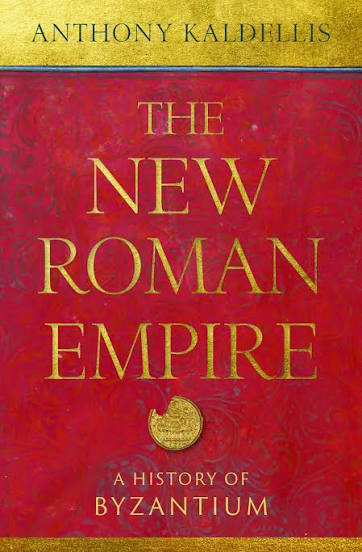
- Anthony Kaldellis, The New Roman Empire: A History of Byzantium (2023).
Note that the coin visuals are taken from https://numismatics.org/pocketchange/byzantine-iconography/.
Video is embeded via YouTube and all rights belong to the respective rights holders.