
Zoe and Theodora (1042)
In the spring of 1042, Constantinople witnessed one of the most extraordinary episodes in Byzantine history. Two sisters, Zoe and Theodora, descendants of the illustrious Macedonian dynasty, ascended the imperial throne together. For a brief moment, the Roman Empire was ruled by two women, not as consorts or regents, but as sovereigns in their own right.
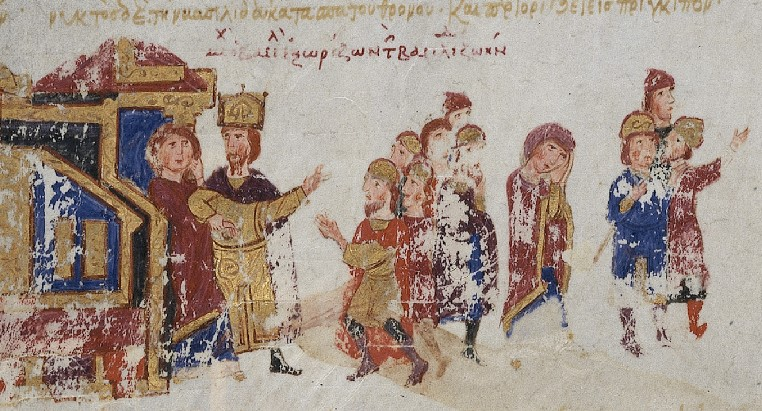
Michael V banishes Empress Zoe to a monastery, 1042. From the Madrid Skylitzes, a 12th-century Byzantine illuminated manuscript. Biblioteca Nacional de España, Madrid.
The story began with a rebellion. Emperor Michael V, who had secured his position through his adoptive mother, Empress Zoe, attempted to remove her from power by banishing her to a monastery. The people of Constantinople were outraged. To them, Zoe was no ordinary woman: she was porphyrogenita, or “born in the purple”, a legitimate daughter of the imperial dynasty.
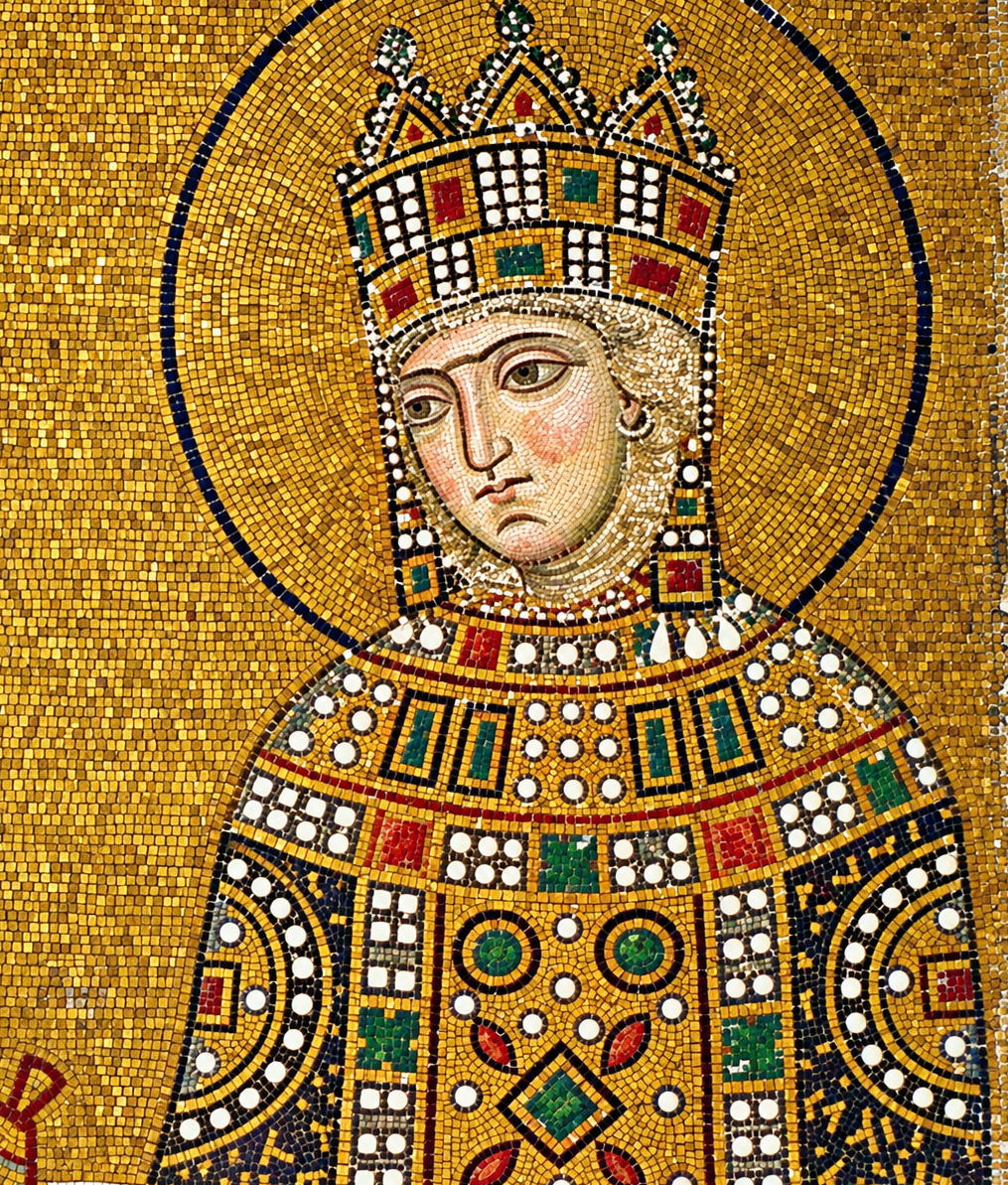
Empress Zoe
Crowds filled the streets, demanding her restoration. Meanwhile, her younger sister Theodora, who had spent years confined to a monastery, was brought to Hagia Sophia and proclaimed empress. Michael V was overthrown, and the two sisters emerged as joint rulers of Byzantium.
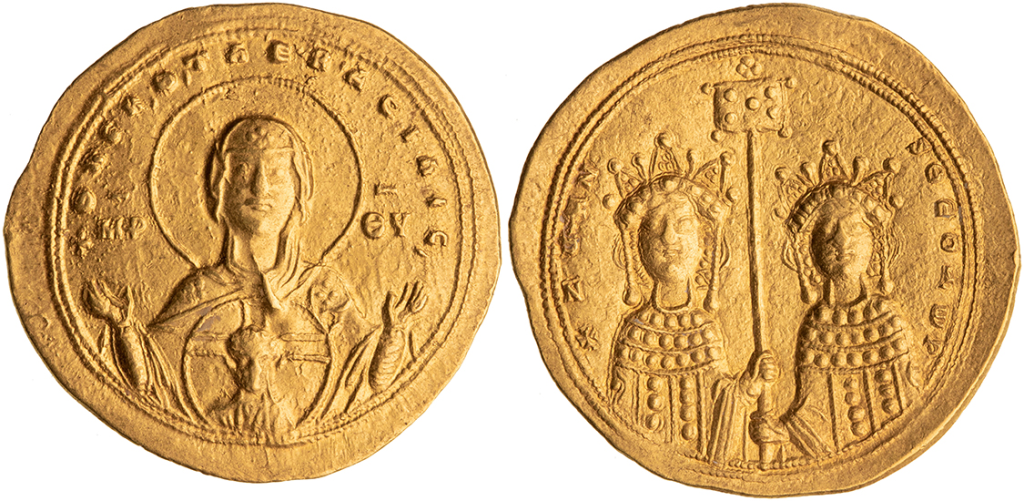
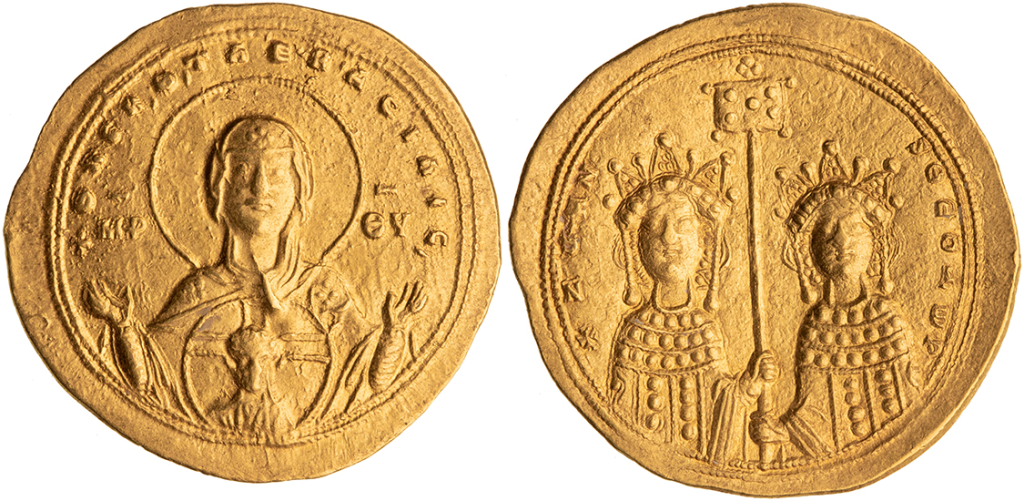
Their remarkable reign was commemorated in an equally remarkable gold coin. On one side appeared the Virgin Mary, invoking divine protection. On the other stood Zoe and Theodora, crowned and richly dressed, holding the imperial standard between them. No male emperor appeared beside them. The image was an unmistakable declaration of dynastic legitimacy and sovereign authority.
Yet their joint reign lasted only about seven weeks. In June 1042, Zoe married Constantine Monomachos, who ascended the throne as Constantine IX. Theodora remained an empress, though political authority increasingly passed into her brother-in-law’s hands.
Theodora would nevertheless return to power in 1055, ruling independently until her death in 1056.
The gold coin of 1042 survives as a fascinating witness to a fleeting but exceptional moment in Byzantine history: when two sisters, heirs to an ancient imperial dynasty, held the Roman Empire in their hands.
And for seven extraordinary weeks, the emperors of Rome were women.
Note that the coin visuals are taken from https://numismatics.org/pocketchange/byzantine-iconography/. The sources of other visuals are wikipedia.