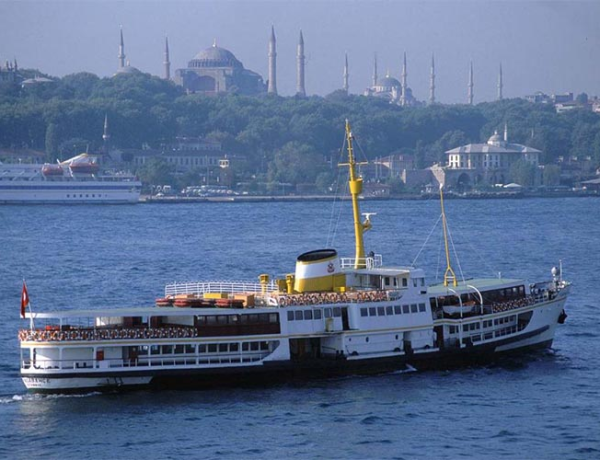

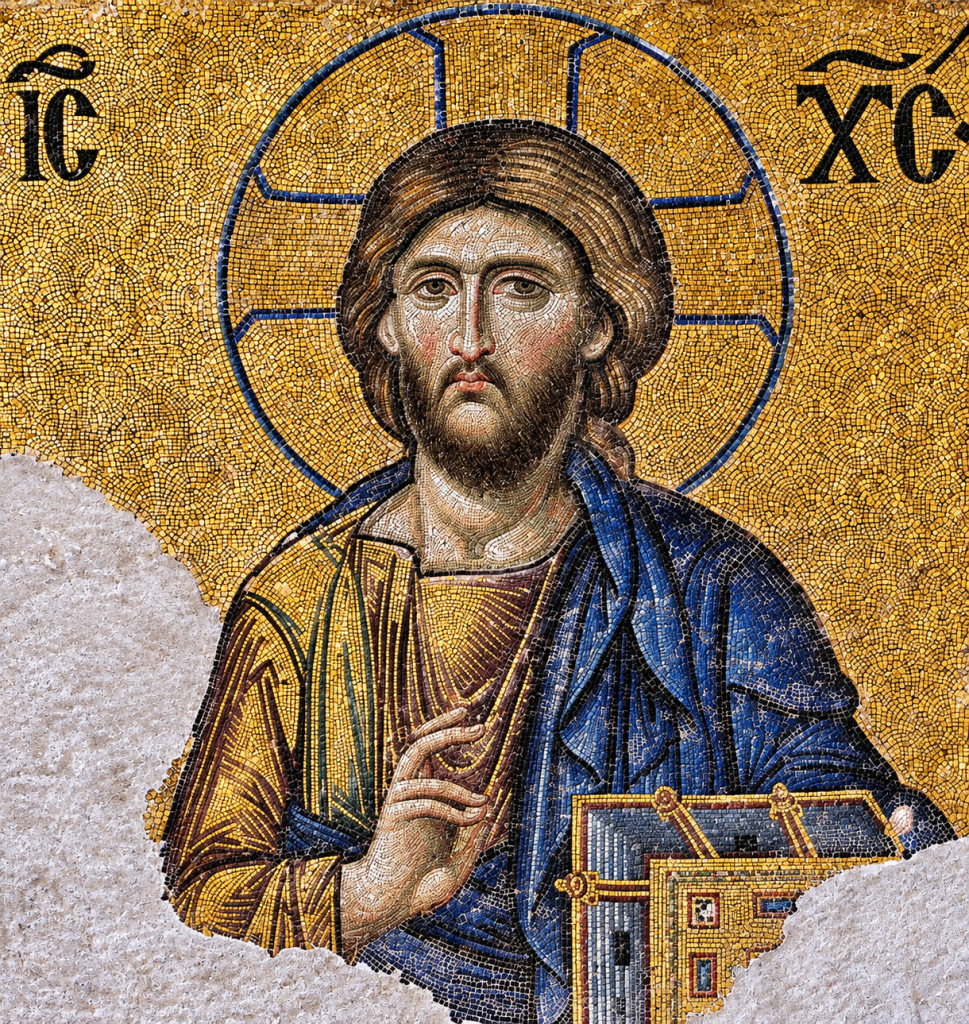
One of the most famous of the surviving Byzantine mosaics of the Hagia Sophia. The image of Christ Pantocrator on the walls of the upper southern gallery, Christ being flanked by the Virgin Mary and John the Baptist; 4.08 x 4.2 m (taken from wikipedia)
When the Western Roman Empire fell in 476 CE, the Eastern Roman Empire did not disappear with it. Instead, it endured for nearly another thousand years, preserving the political and cultural legacy of Rome while gradually developing a distinctive civilisation of its own. Known to us today as the Byzantine Empire, its inhabitants continued to call themselves Romans, and their empire remained, in their eyes, the legitimate continuation of ancient Rome.
At the heart of this extraordinary civilisation stood Constantinople, founded by Emperor Constantine the Great in 330 CE on the site of ancient Byzantium. Strategically situated between Europe and Asia, the city became one of the wealthiest, most sophisticated and culturally influential capitals of the medieval world. Its magnificent churches, imperial palaces, formidable defensive walls and bustling markets reflected the splendour of an empire that connected East and West.
Throughout its long history, Byzantium witnessed periods of remarkable prosperity and devastating decline. It survived invasions, religious controversies, dynastic struggles and territorial losses, while making lasting contributions to art, architecture, law, theology and the preservation of classical learning. Its influence extended far beyond its borders, shaping the cultural and religious traditions of Eastern Europe and the wider Mediterranean.
Yet this remarkable empire eventually came to an end in 1453, when Constantinople fell to the Ottoman Sultan Mehmed II, bringing the last surviving continuation of the Roman Empire to a close.
This Crusader Kings III documentary offers a fascinating introduction to the history of Byzantium, an empire that outlived the fall of Western Rome by almost a thousand years and left an enduring imprint on the history of Istanbul and the world.
Note that the video is embedded via YouTube and all rights belong to the respective rights holders.