
Rakı is not a drink to be consumed alone; it is a drink to be enjoyed slowly (letting it settle and be savored) together with meze. After it has a certain effect on the stomach and the brain, one begins to feel pleasure and naturally turns toward good conversation… In other words, one both speaks and listens. Thus, the rakı table becomes a collective act involving at least two people; a democratic forum based on mutual dialogue, where universal and personal problems are brought forth, where ideas are exchanged, and where a person, thinking out loud, confronts themselves — a kind of psychological group therapy.’
Aydın Boysan

Photo by Sinan Çakmak, taken from Mizanplas.com
One of the things that make Istanbul so unique is its meyhane culture which is a centuries old social institution which you can think as a traditional Turkish tavern. Meyhane is derived from two Persian words: mey and hane. Mey means alcoholic beverage where the hane means house. The name refers to a place with unhurried socializing, deep conversations, music, food and drinks.
Traditional Turkish culture has a very low rythm which can sensed at meyhanes where people gather round a long table, taking their time to eat, drink, converse and sing together to melodies of grief and joy. Altough I am not a drinker myself, I am fascinated by the mesmerising rythm of music, singing, eating and drinking in Istanbul’s traditional meyhanes.

The signature drink in these meyhanes are rakı, an anise-flavored spirit traditionally diluted with water, turning it milky white—hence its nickname, “lion’s milk.” It is meant to be sipped slowly throughout the evening. Mezes which are literally Turkish tapas accompany rakı which are meant to be savoured and shared. A vast and colourful range of mezes adorn the tables with their small and shared plates.

Yakup in Beyoğlu is one of the besr examples of traditional meyhanes in Istanbul
We know that the roots of meyhanes go back to the Byzantine Era, thriving in the port district of Galata. Historically, Greeks and Armenians were the meyhane owners. Today, the vibrant streets of Beyoğlu such as Nevizade and Asmalımescit carry this tradition.
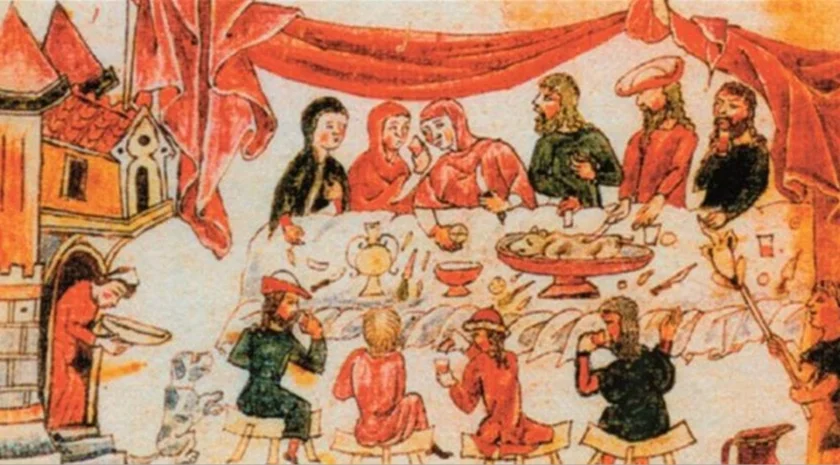
An old engraving depiction the meyhane tradition in the Byzantine Era, taken from Mizanplas.com
So if you are curious to experience the warmth, connection and nostalgia of meyhanes, make sure to visit one to have a feel of real Istanbul.
I want to share two commercials by one of the leading rakı brands in the country so that you can have a glimpse at the warmth of meyhanes and the accompanying rakı culture. This second commercial is the one in which it bids farewell to rakı and meyhane lovers before the ban of alcohol commercials in the country in 2014. I am fascinated by the warmth and nostalgia of both of these commercials which remind me of old Turkey where I grew up in which alcohol was a natural part of entertainment and joy!
Let me leave the last words to the famous Istanbulite Aydın Boysan. ‘It must not be forgotten that the rakı table is a dignified gathering. Anyone who joins it is both someone worthy of respect — as they have been accepted into this assembly — and also someone who must show respect to others. While drinking one brand of rakı, it is important not to praise another brand; otherwise, one is insulting the blessing being sipped at that moment, and this is wrong. Its greatest meze is conversation.’
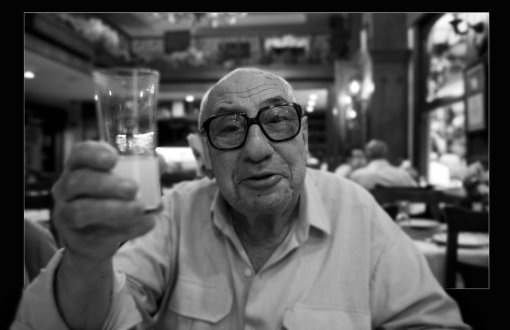
Aydın Boysan (1921-2018)