
Few pieces of Baroque music are as deeply connected to the Ottoman imagination as Jean-Baptiste Lully’s Marche pour la cérémonie des Turcs. Composed in 1670 for Molière’s Le Bourgeois gentilhomme, the work was born from a curious mixture of diplomacy, satire, and cultural fascination.
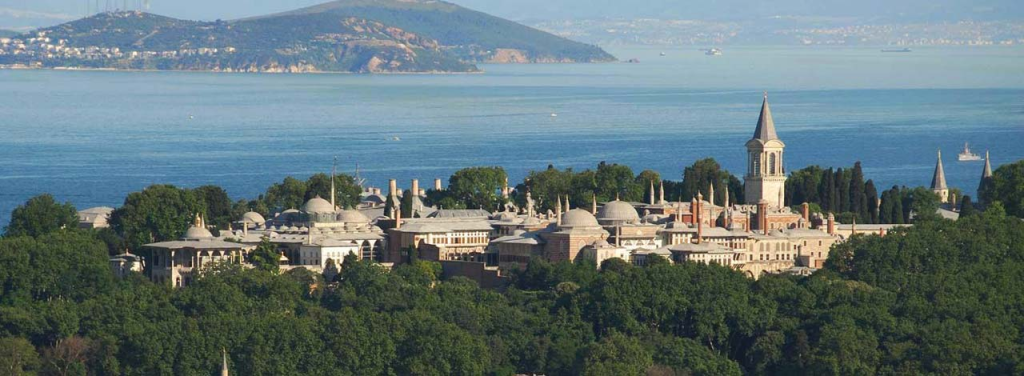
Ottoman Court Süleymanağa was refering to was Topkapı Palace
The immediate inspiration was the visit of the Ottoman envoy Süleyman Ağa to the court of Louis XIV in 1669. According to contemporary accounts, the ambassador failed to display the admiration and deference the French king expected. He reportedly suggested that the grandeur of Versailles could not compare with that of the Ottoman court in Istanbul, an affront that wounded the pride of the self-styled Sun King.
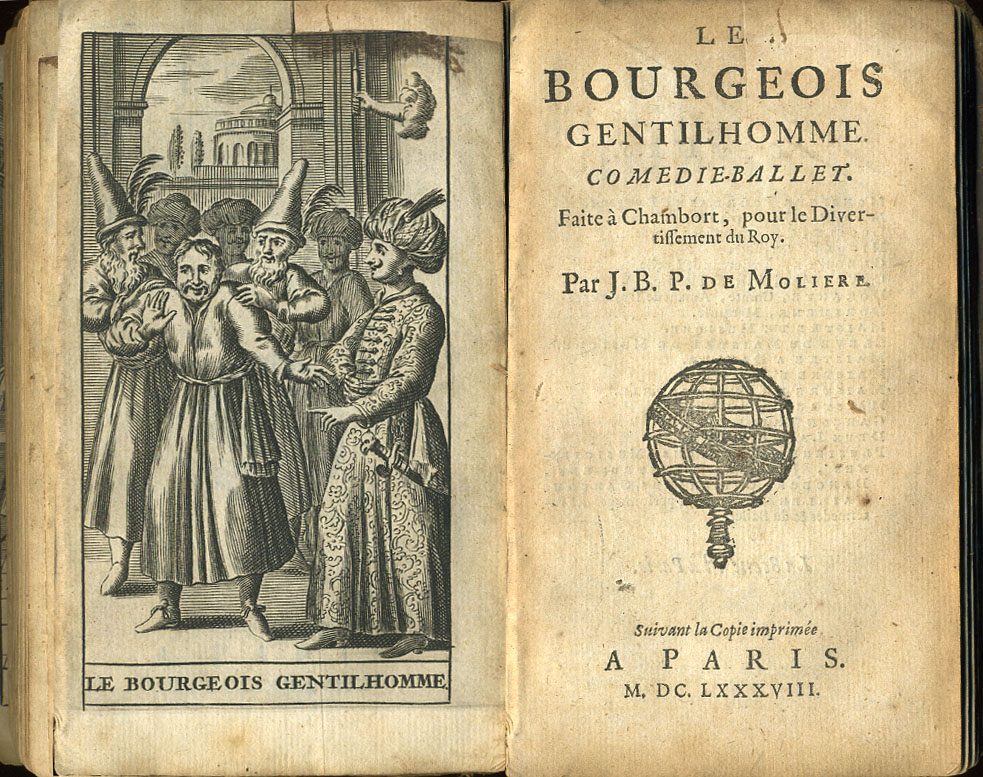
Rather than responding politically, Louis XIV answered through theatre. He commissioned Molière and Lully to create a comic spectacle featuring a mock Turkish ceremony. The result was Le Bourgeois gentilhomme, a satire aimed as much at French social pretensions as at exotic foreign customs.
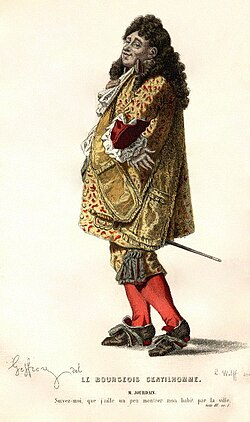
Fictional character Monsieur Jourdain
In the play, Monsieur Jourdain—a wealthy bourgeois desperate to join the aristocracy—is deceived into participating in an elaborate fake Ottoman initiation and awarded the nonsensical title of “Mamamouchi.” Lully’s Marche pour la cérémonie des Turcs accompanies this grand masquerade, with musicians, dancers, and performers dressed in fantastical interpretations of Turkish attire.
The irony is striking: the ceremony contains little that is genuinely Ottoman. Instead, it reflects seventeenth-century French fantasies about the East. The music itself, with its emphatic rhythms, martial energy, and repetitive motifs, sought not authenticity but exotic effect. In doing so, it helped establish one of Europe’s earliest examples of the alla turca style.
The influence of this imagined musical Turkey extended far beyond Versailles. During the eighteenth century, composers such as Mozart, Haydn, and Beethoven embraced Turkish themes and Janissary-inspired sonorities. Lully’s short march thus occupies an important place in the history of European orientalism, inaugurating a tradition that would endure for generations.
Yet the work also reveals a more complex relationship between France and the Ottoman Empire. The Turks were not merely feared enemies; they were admired, imitated, and woven into the cultural imagination of Europe. Fashion, interior decoration, literature, and music all participated in this phenomenon known as Turquerie.
Its modern revival owes much to the 1991 film Tous les matins du monde, whose soundtrack introduced millions to French Baroque music and transformed Lully’s short composition into an international favorite.
Today, Marche pour la cérémonie des Turcs survives not because audiences remember the diplomatic quarrel that inspired it, but because it captures a moment when politics, performance, and fantasy converged. It remains a vivid reminder that cultural encounters often produce not faithful representations of the other, but imaginative worlds shaped by admiration, rivalry, and misunderstanding.
Here is a contemporary interpretation by Istanbul Kolektif:
Note that videos are embedded via YouTube and all rights belong to the respective rights holders.