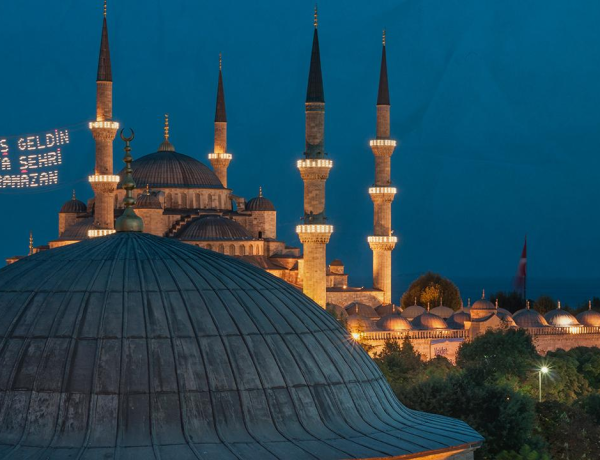

When we think of Vikings, Constantinople is rarely the first city that comes to mind. We imagine Scandinavia, longships crossing the North Atlantic, raids on English monasteries and settlements in Iceland. Yet the Viking world stretched astonishingly far east. For generations of Scandinavian warriors and traders, Constantinople was one of the great destinations of the known world. They called it Miklagarðr, “the Great City.”
By the ninth and tenth centuries, Norse traders and warriors were travelling through the river systems of Eastern Europe toward the Black Sea and the Byzantine Empire. Some came as merchants; others came as raiders. The Rus even attacked Constantinople, most dramatically in 941, when Byzantine ships armed with Greek fire devastated their fleet. But the relationship between Byzantium and the northern warriors gradually changed from confrontation to employment.
Vikings Guarding the Byzantine Emperor
The decisive moment came at the end of the tenth century. Emperor Basil II, threatened by rebellion, received several thousand Rus warriors from Prince Vladimir of Kyiv. Their effectiveness—and perhaps equally importantly, their lack of connections to Constantinople’s powerful aristocratic families made them particularly valuable to an emperor worried about betrayal. They became the nucleus of the famous Varangian Guard, an elite corps closely associated with the personal protection of the Byzantine emperor.
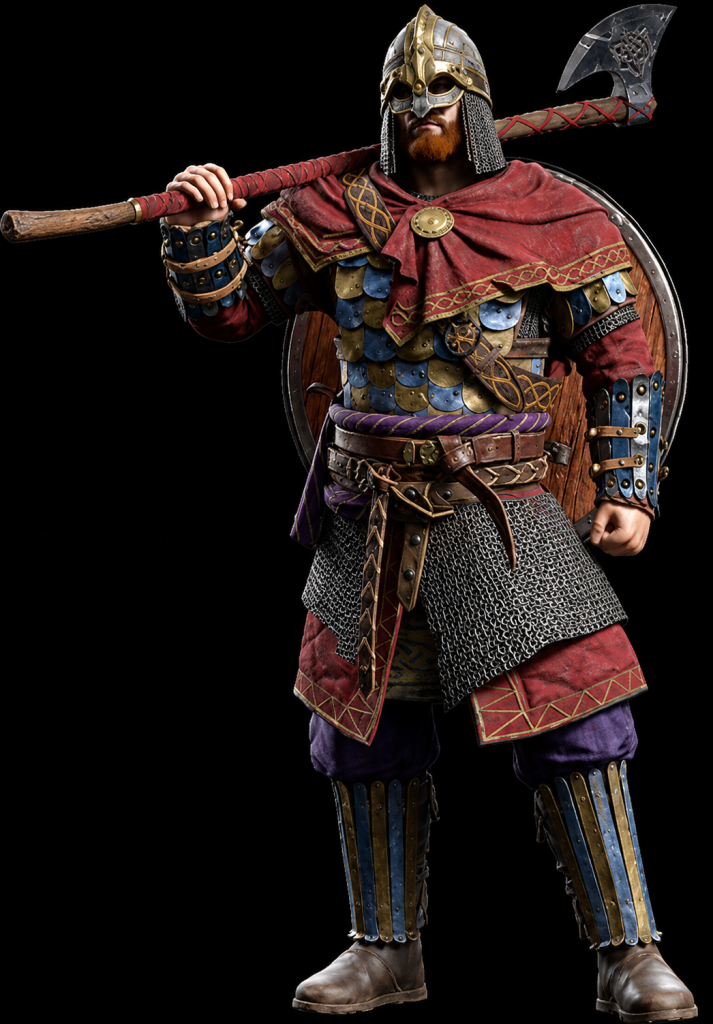
Depiction of a Varangian Guard
It must have been an extraordinary cultural encounter: enormous northern warriors carrying axes inside one of the most sophisticated courts in medieval Europe. They guarded palace entrances, accompanied the emperor, attended imperial ceremonies and fought in Byzantine campaigns from Anatolia to Sicily. Later, especially after the Norman conquest of England in 1066, Anglo-Saxons also joined their ranks.
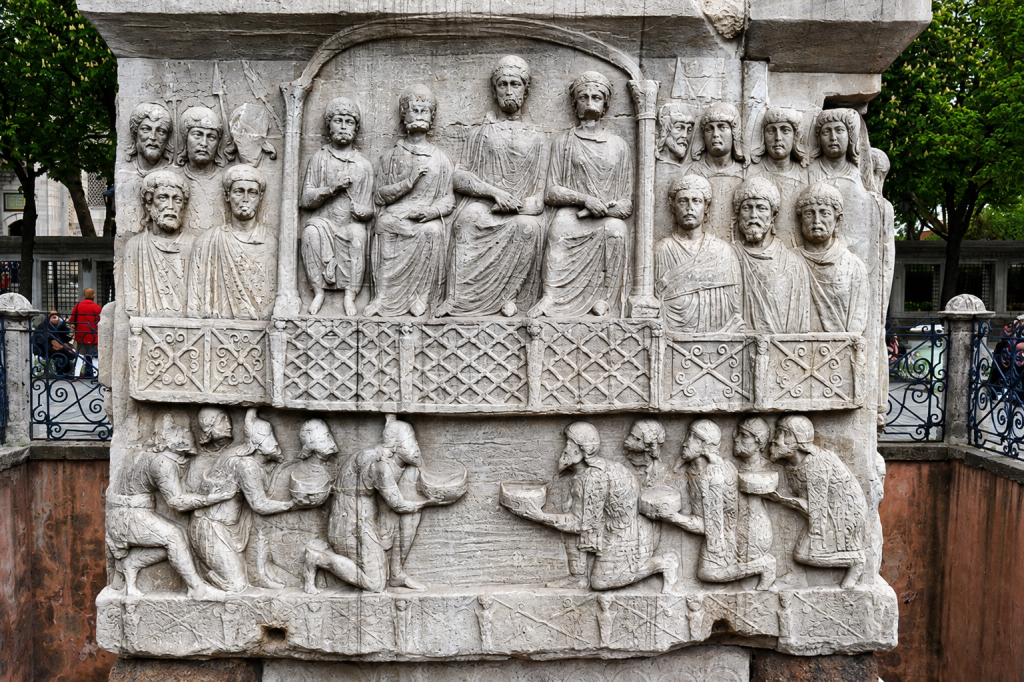
There is, however, an intriguing correction to a story sometimes told about the Obelisk of Theodosius in Sultanahmet. On its marble pedestal we can still see Emperor Theodosius I surrounded by members of his court and guards. These soldiers are sometimes casually identified as Varangians or Vikings—but they cannot be. The obelisk and its pedestal were erected in the Hippodrome in the fourth century, roughly six centuries before the Varangian Guard was established. The relief is nevertheless wonderfully evocative because Vikings would later stand in this same imperial landscape, protecting emperors whose ceremonial world was descended from the one depicted beneath the obelisk.
“Halfdan Was Here”
The most intimate evidence of their presence survives only a few hundred metres away, inside Hagia Sophia.
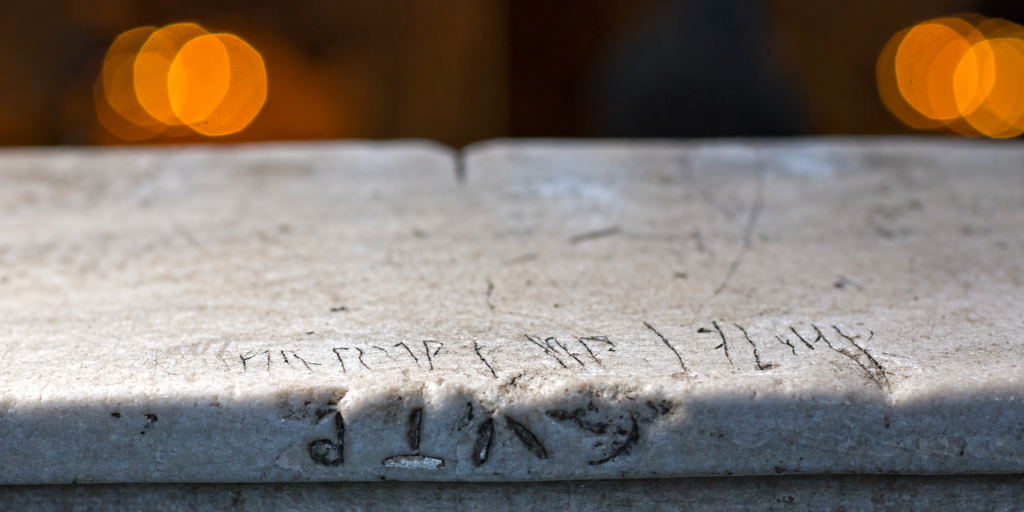
Viking runes carved into the marble of Hagia Sophia’s upper gallery
On the marble of the upper gallery are faint runic inscriptions generally associated with Scandinavian visitors or members of the Varangian Guard. One contains the clearly recognizable name Halfdan; another inscription has been associated with the Norse name Ári. Much of the first inscription is damaged, but it is popularly reconstructed as something essentially equivalent to: “Halfdan was here.”
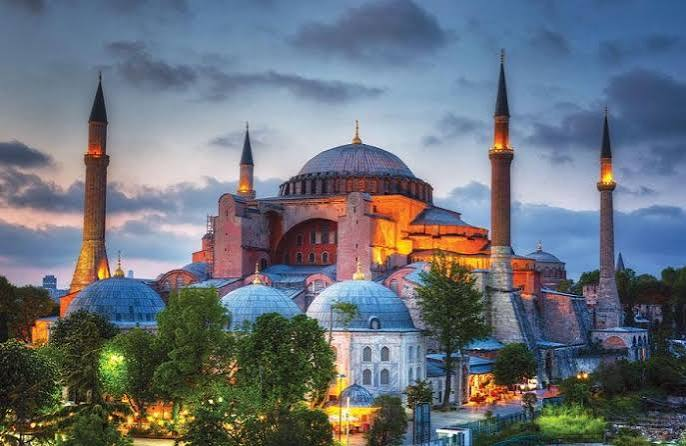
Hagia Sophia
There is something wonderfully human about it. Hagia Sophia was one of the most magnificent sacred buildings on earth. A Viking warrior may have stood through an elaborate Byzantine religious ceremony surrounded by marble, gold mosaics, incense, chanting and imperial ritual—and apparently decided to scratch his name into the building.
Nearly a thousand years later, the gesture is instantly recognizable. Empires change. Graffiti does not.
From History to Vikings: Valhalla
This remarkable connection between Scandinavia and Constantinople eventually found its way into television. The Netflix series Vikings: Valhalla follows a later generation than the original Vikings and brings Harald Sigurdsson—Harald Hardrada— into the Byzantine world. This is not simply a fictional invention. The historical Harald really did travel east, enter Byzantine service and fight with the Varangians before eventually returning north and becoming king of Norway.
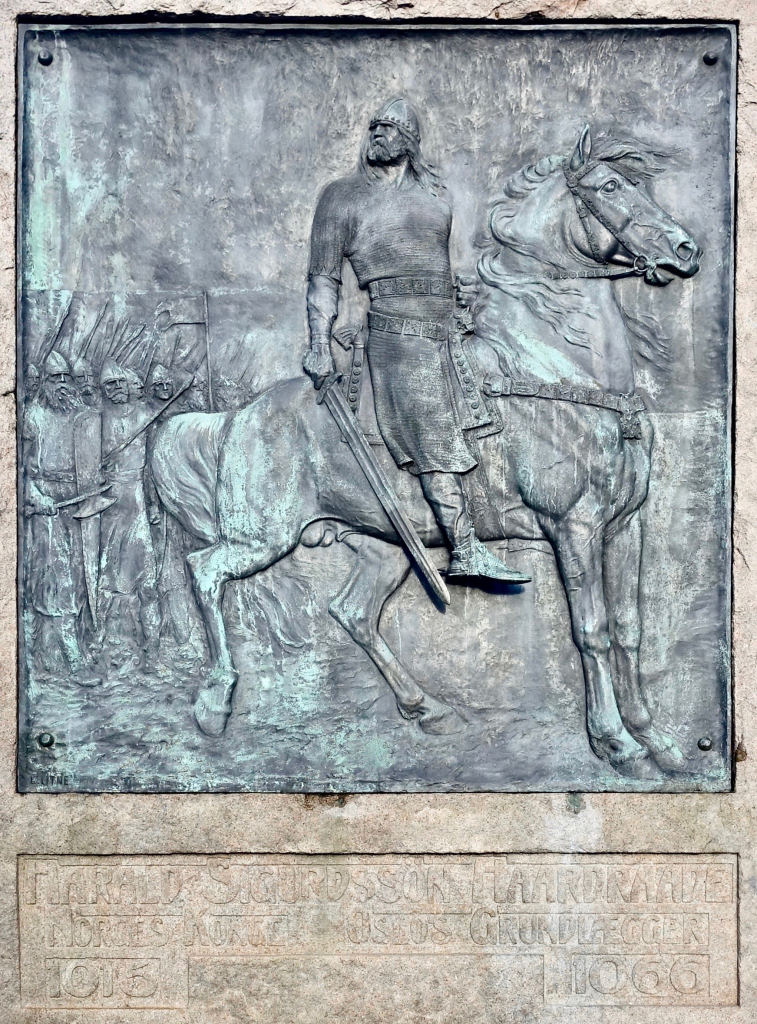
Harald Sigurdsson Hardrada monument in Oslo, Norway
The series takes considerable dramatic liberties, but the basic idea of a Viking warrior making his fortune in Constantinople is entirely historical.
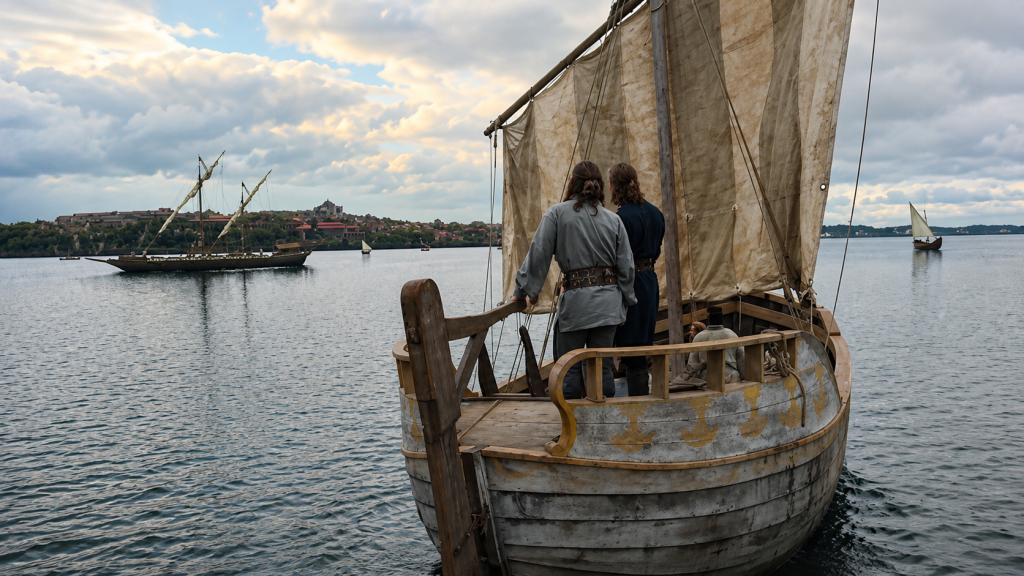
A scene from Vikings: Valhalla capturing the moment Leif and Harald arrive in Constantinople
And perhaps this is the most fascinating thing about the Vikings of Constantinople. They remind us how misleading our modern geographical categories can be. Medieval Istanbul was not an isolated “Eastern” city separated from Europe. It was a magnet whose wealth, power and reputation reached all the way to Scandinavia.
The traces are still there. Stand in Sultanahmet today and the distances collapse strangely. Beneath the Egyptian obelisk are images of a Roman emperor and his court. Across the square rises Hagia Sophia, where a Scandinavian named Halfdan carved his name into marble centuries later. Somewhere between them once walked northern warriors carrying great axes, employed to protect the ruler of Byzantium.
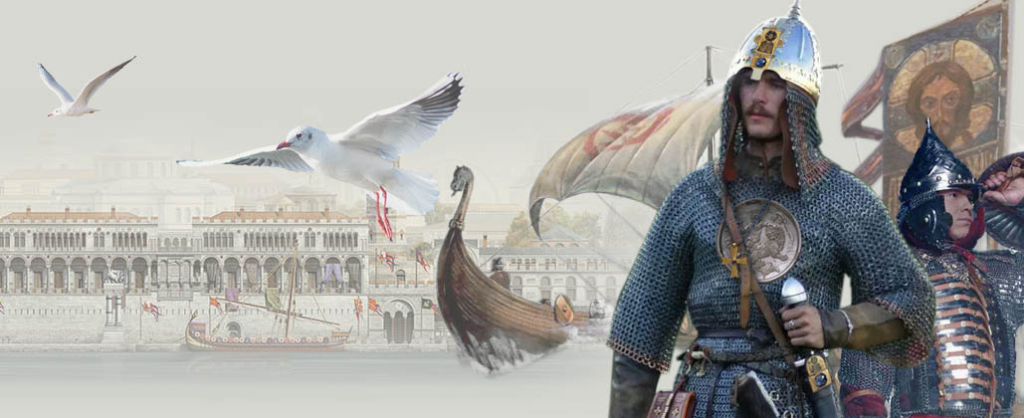
For the Vikings, Constantinople really was what they called it: the Great City at the end of the road.
Note that the video is embedded via YouTube and all rights belong to the respective rights holders.
Visuals are taken from commons.wikipedia.org and pallasweb.com.