
“The Bosphorus not only exceeded my expectations, but rather surprised me by how completely different it was from my preconception.”
Pyotr Ilyich Tchaikovsky
Six years before The Nutcracker premiered in St. Petersburg, Pyotr Ilyich Tchaikovsky sailed into Istanbul.
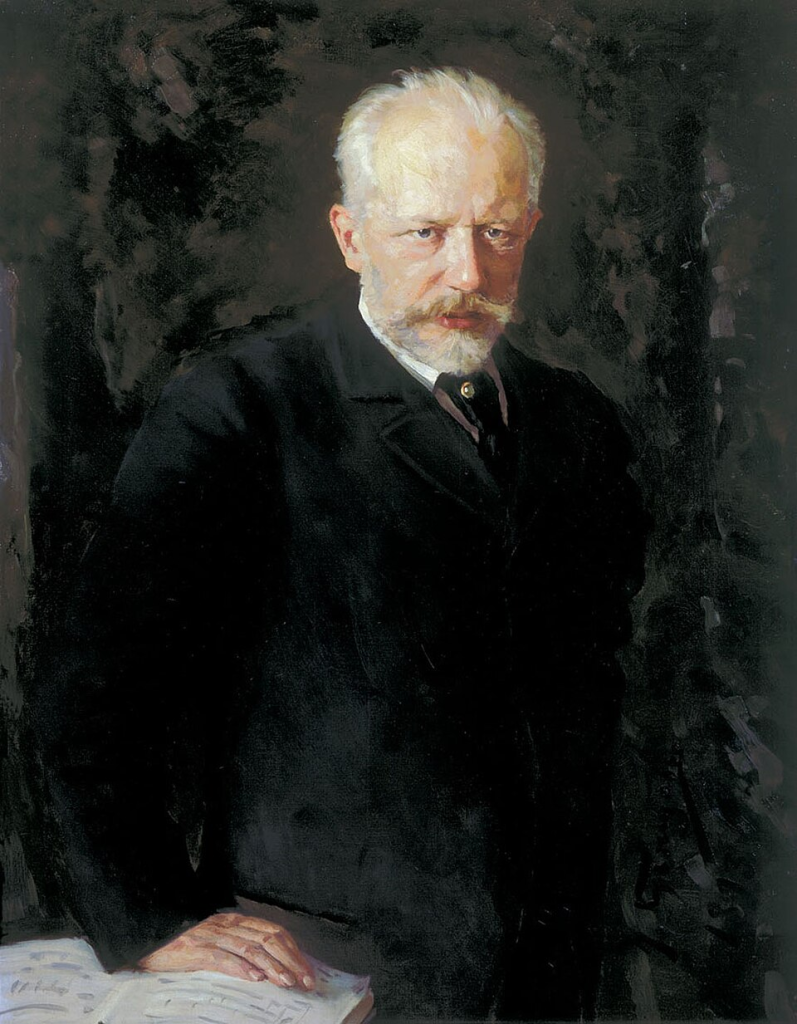
Pyotr Ilyich Tchaikovsky
It was May 1886. Travelling from Tiflis (Tblisi) toward Western Europe, Tchaikovsky arrived in the Ottoman capital by sea. The Bosphorus made a powerful impression on him. In his letters, he wrote enthusiastically about its extraordinary beauty and described Istanbul as quite different from what he had imagined.
He spent a day and night in the city, wandering around Pera and exploring Istanbul with a local guide. He saw its streets and markets, visited Hagia Sophia and the Sultan’s palace, encountered its famous street dogs and experienced its coffeehouses.
Tchaikovsky never travelled to Arabia, Yemen or Mocha. But he had travelled to Istanbul.
That distinction becomes particularly intriguing when we return to The Nutcracker, composed several years later and premiered in 1892.
In the ballet’s second act, Clara enters the fantastical Land of Sweets, where delicacies from different parts of the world are transformed into dances: Spanish chocolate, Chinese tea, Russian Trepak and coffee, represented by the mysterious Arabian Dance.
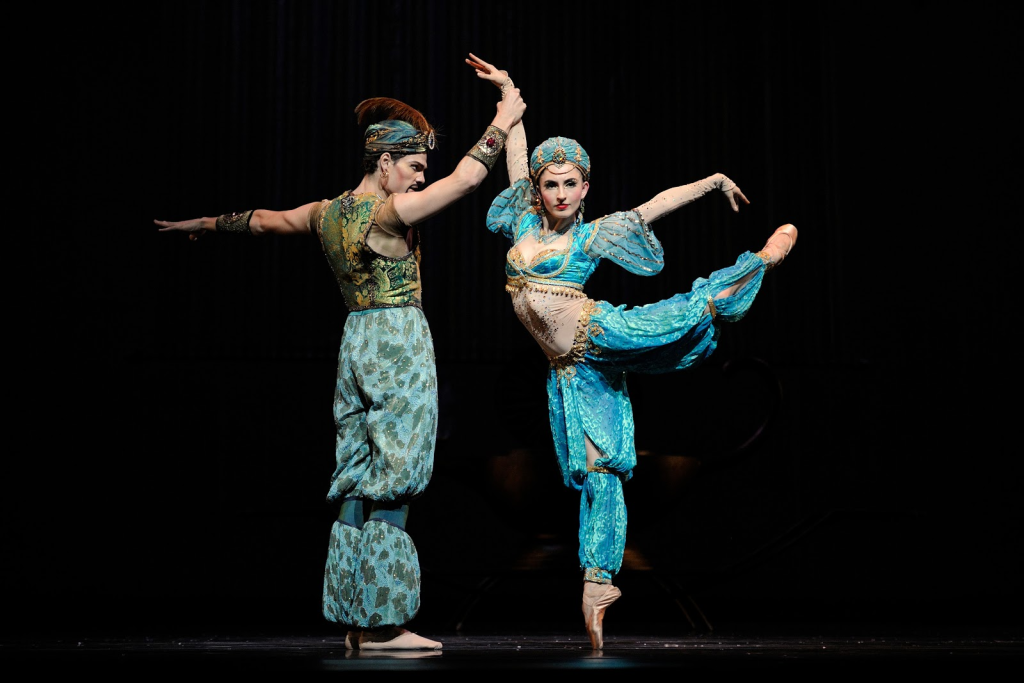
The association between Arabia and coffee was historically meaningful. Coffee cultivation and trade were closely associated with Yemen and particularly the port of Mocha before the drink spread throughout the Ottoman world. By the sixteenth century, coffee had become deeply embedded in Istanbul’s urban culture. Its coffeehouses helped transform coffee drinking into a public social ritual, while Ottoman coffee culture played an important role in the drink’s subsequent journey into Europe.
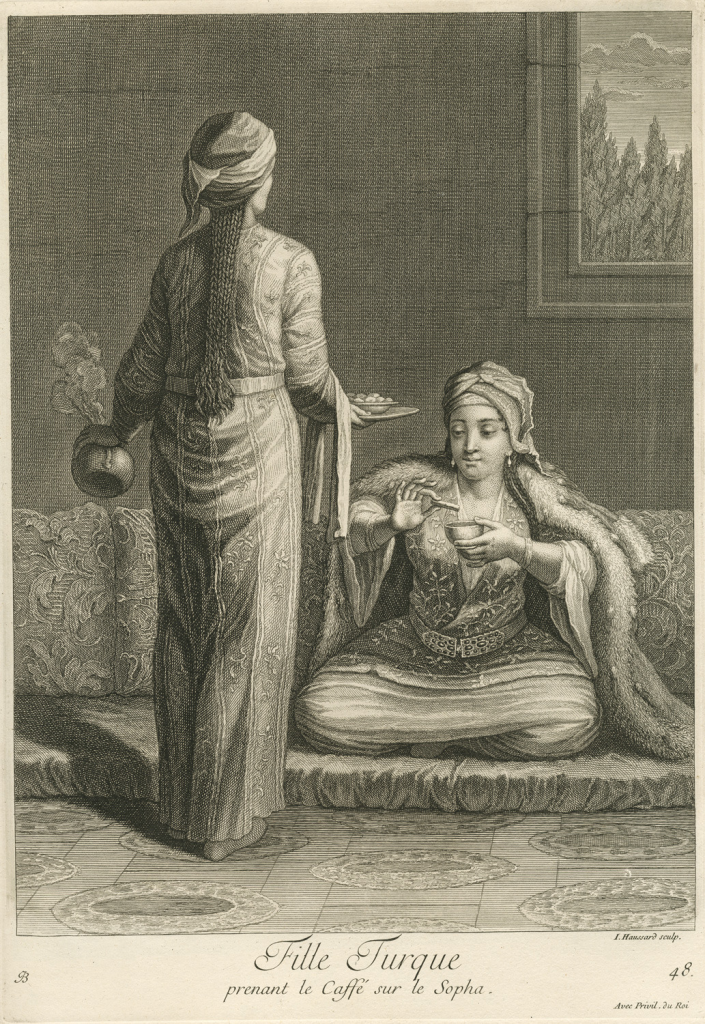
Turkish Girl Drinking Coffee by Jean-Baptiste Vanmour, 1714
Yet the Arabian Dance is not Arabian music in any straightforward sense. Its haunting melody has been traced to a Georgian lullaby, usually known as the “Lullaby of Niniko.” Tchaikovsky knew the Caucasus well through his visits to his brother Anatoly in Tiflis. Thus the music accompanying Arabian Coffee already contains a curious geographical displacement: a Georgian melody becomes “Arabian” within a Russian ballet about an imaginary kingdom of sweets.
This was not unusual in the nineteenth century. Russian artistic culture frequently imagined the Caucasus, the Ottoman Empire, Central Asia and the Arab world through the broad lens of Romantic Orientalism. These places were certainly understood as distinct, but in music, literature and painting they could also become parts of an expansive imagined “East”—a world associated with sensuality, mystery, languor and exotic beauty.
The Arabian Dance, with its slow pulse, dark orchestral colours and hypnotic repetition, belongs partly to this imaginative geography.
But Istanbul occupies a different place in Tchaikovsky’s story.
Unlike the Arabia of The Nutcracker, Istanbul was an Orient he had actually seen. He had sailed through the Bosphorus, walked through Pera, entered its coffeehouses and experienced the Ottoman capital for himself.
There is no evidence that his visit directly inspired the Arabian Dance, and it would be misleading to claim that it did. Yet the coincidence remains irresistible. The composer who would later transform coffee into one of the most haunting musical images of the nineteenth-century imaginary East had himself passed through one of the great cities in coffee’s historical journey from Yemen toward Europe.
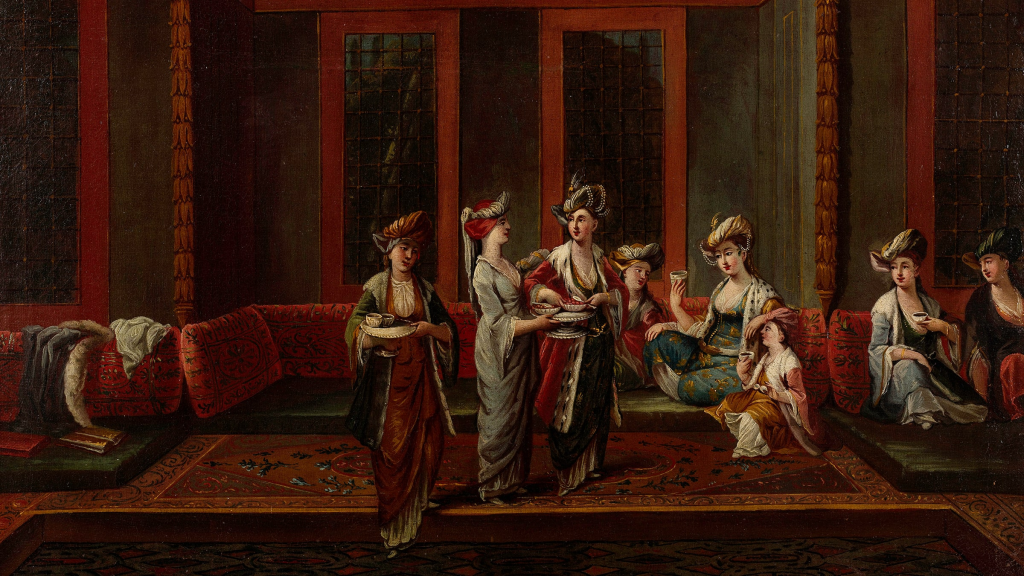
Women Drinking Coffee by Jean-Baptiste Vanmour, 1730
Perhaps that is the most interesting connection between The Nutcracker and Istanbul.
Tchaikovsky never saw the Arabia he imagined in Arabian Coffee. But he had seen Istanbul, the real East at the edge of his imagined one.
Note that the video is embedded via YouTube and all rights belong to the respective rights holders.