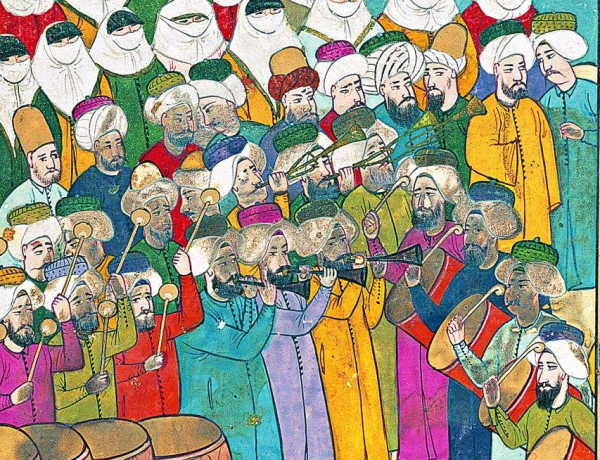

In 1786, two young men occupying very different worlds began a discreet correspondence. One was Şehzade Selim, confined within the carefully guarded life of an Ottoman prince and waiting, without certainty, for the throne. The other was Louis XVI, already King of France and struggling to reform a monarchy burdened by debt, privilege and political resistance.
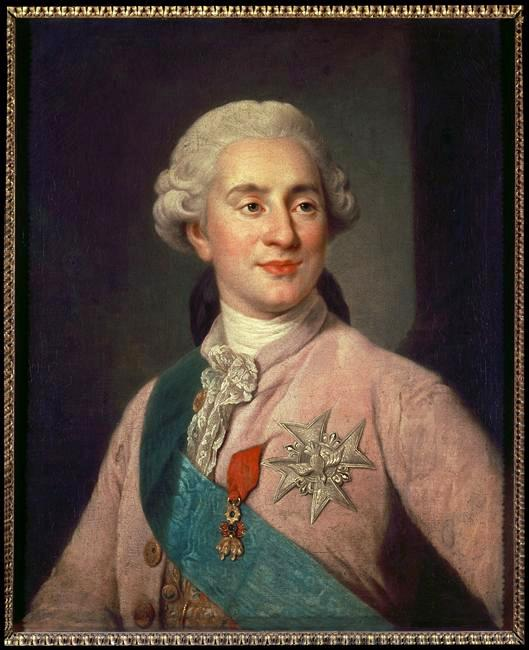
Louis XVI
Their letters travelled secretly between Istanbul and Versailles through Selim’s trusted intermediary, İshak Bey, who delivered messages and maintained this clandestine channel. Selim was twenty-four; Louis was thirty-one, turning thirty-two that August. Both had inherited—or expected to inherit—states whose magnificence concealed serious structural weaknesses. Both believed that reform was necessary. And both would ultimately be destroyed by the forces unleashed by their attempts to change the old order.
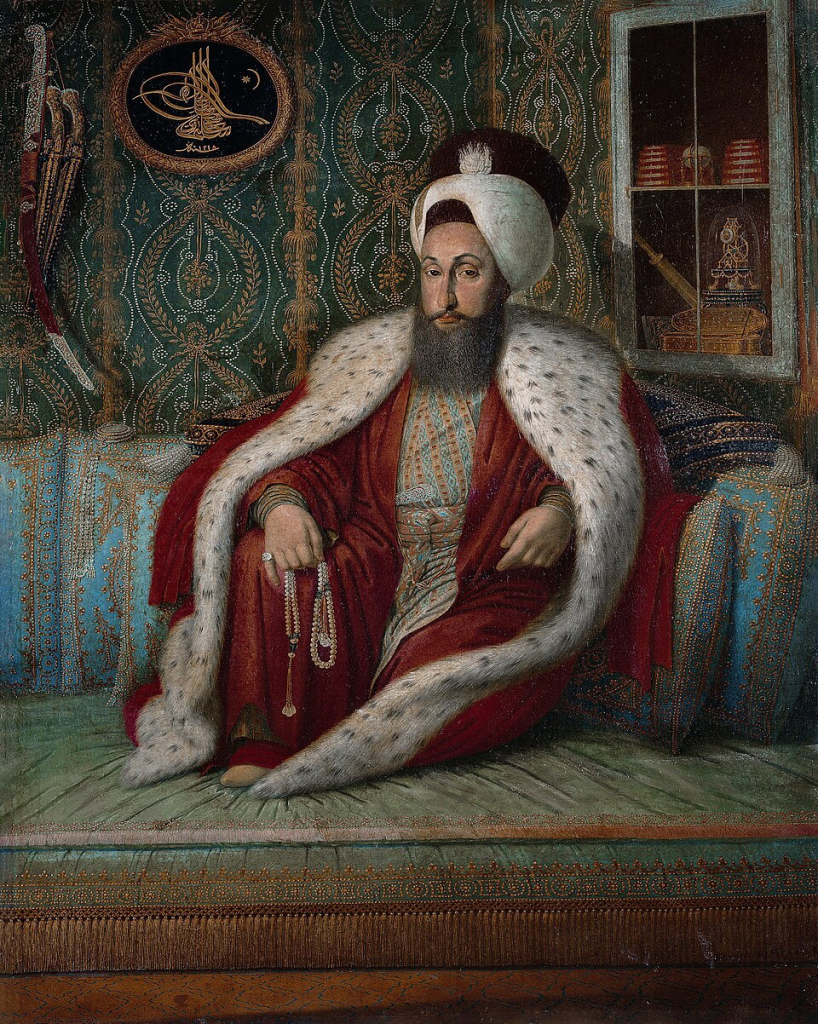
Selim III
Selim’s correspondence with Louis was not an exchange of intimate confidences. It was an exercise in clandestine diplomacy. Still a şehzade during the reign of his uncle Abdülhamid I, Selim could not openly communicate with a foreign sovereign. Such contact might have been interpreted as political intrigue or even as evidence of designs upon the throne. Yet Selim was already looking beyond the palace walls, trying to understand why the European powers were advancing while the Ottoman military and administrative system was faltering.
Through İshak Bey, Selim sought information about European government, diplomacy and military organisation. He was particularly interested in French knowledge and expertise. He appears in these letters not as a passive prince fascinated by the West, but as a future ruler quietly preparing himself for power. He wanted to know what might be changed, whom he could trust and how France might assist him when his time came.
Louis replied with warmth, although also with the caution of a king pursuing France’s own diplomatic interests. He encouraged Selim, praised İshak Bey and offered assurances of friendship. France had long regarded the Ottoman Empire as an essential counterweight to Austria and Russia; its support was therefore never entirely disinterested. Yet something more than political calculation can be discerned in the encounter. Louis recognised in the young Ottoman prince another sovereign confronted by the difficult question that haunted his own reign: how could an old imperial order be renewed without causing it to collapse?
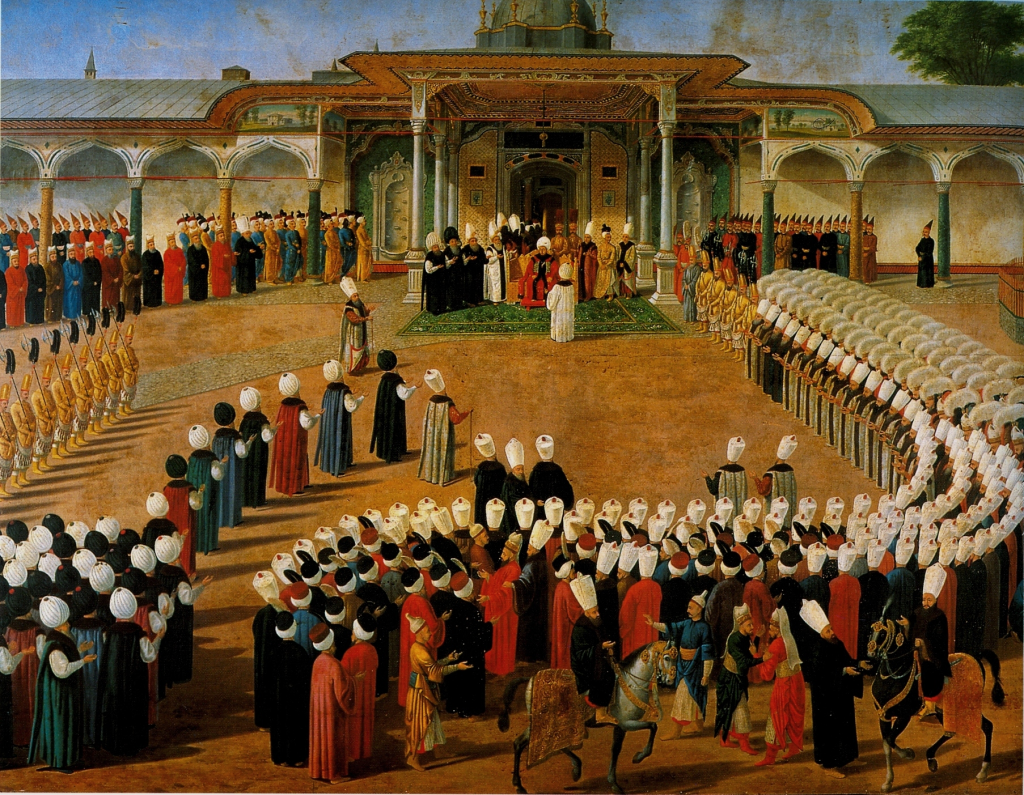
Sultan Selim III’s accession ceremony (1789), by Konstantin Kapıdağlı.
When Selim ascended the throne in April 1789, he inherited a state at war with Russia and Austria. On 28 September of that year, Louis wrote to him from Versailles. He advised the new sultan not to regard an unfavourable peace as a humiliation. Selim had not begun the war, Louis observed; had he done so, he would surely have waited for a better moment and prepared more carefully. Peace could provide the time needed to strengthen the state and reveal the qualities of its new ruler.
The date is haunting: 28 September 1789.
The Bastille had fallen only two months earlier. The French Revolution was already underway, and Louis’s own authority was beginning to disintegrate. A king rapidly losing control of his kingdom was advising another young monarch to secure peace, prepare carefully and preserve the possibility of reform.
Louis had himself attempted change. Early in his reign, he supported efforts to reform taxation, reduce court expenditure, liberalise the economy and weaken some of the inherited privileges obstructing the French state. He later granted greater civil recognition to Protestants and supported reforms in criminal justice. Yet his efforts were inconsistent, resisted by privileged groups and overwhelmed by France’s financial crisis. He wished to repair the monarchy, but the political forces surrounding it had become too powerful to manage through cautious reform.
Selim faced a comparable dilemma in Istanbul. His Nizam-ı Cedid, or New Order, sought to create a modern army, reorganise state finances, establish permanent embassies and introduce new forms of technical and diplomatic education. But every reform threatened an established interest. The Janissaries feared the loss of their position; religious and political factions condemned innovation; provincial powers resisted greater central control. Like Louis, Selim discovered that an old order may recognise its own decay and still violently oppose those who attempt to save it.
Their projects were not identical. Louis was drawn into a revolution that eventually sought to abolish the monarchy, while Selim attempted to strengthen the Ottoman dynasty through reform from above. France and the Ottoman Empire possessed different institutions, political cultures and historical pressures. It would therefore be misleading to present the two rulers as mirror images.
Yet their destinies form an extraordinary historical rhyme.
Louis XVI was deposed, imprisoned and executed by guillotine in Paris in January 1793. Selim III was deposed in May 1807 during the Kabakçı Mustafa rebellion and confined within Topkapı Palace. On 28 July 1808, as Alemdar Mustafa Pasha approached the palace intending to restore him to the throne, Selim was assassinated on the orders of Mustafa IV.
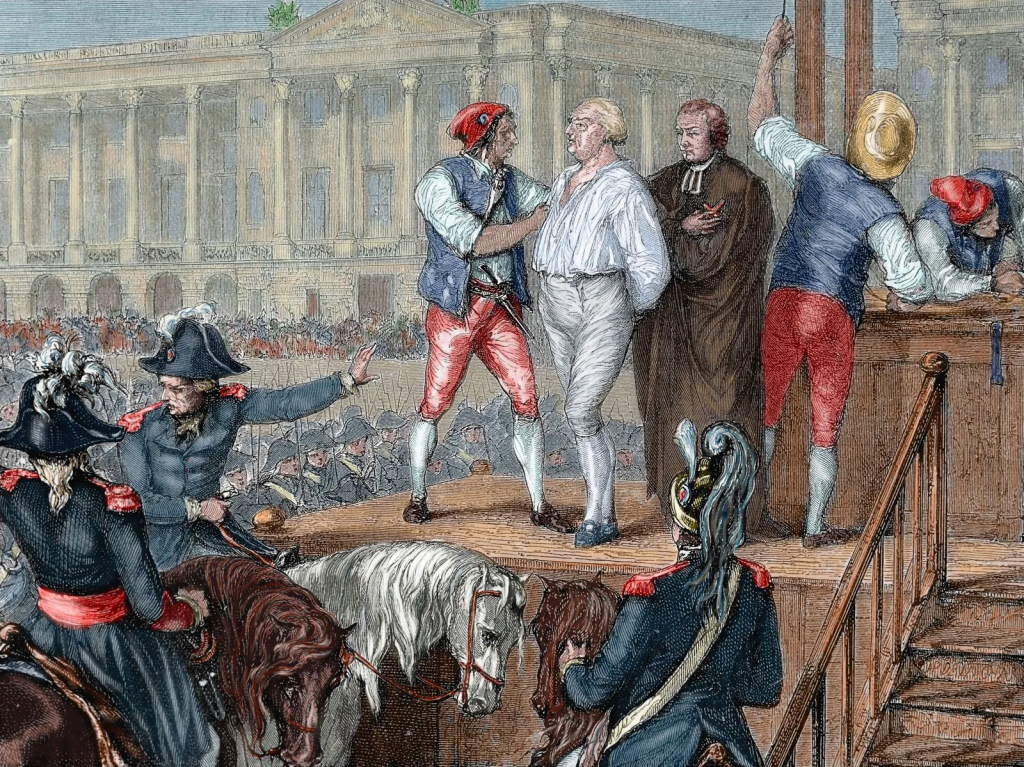
Execution of Louis XVI
The two young sovereigns who had corresponded across Europe were both killed in the capitals they had hoped to transform.
Neither was a triumphant revolutionary. Both were reformers born inside the systems they sought to change, emotionally and politically bound to the institutions whose failures they could nevertheless perceive. They understood that the old order could not continue unchanged, but they could neither entirely abandon it nor overcome those who profited from its survival.
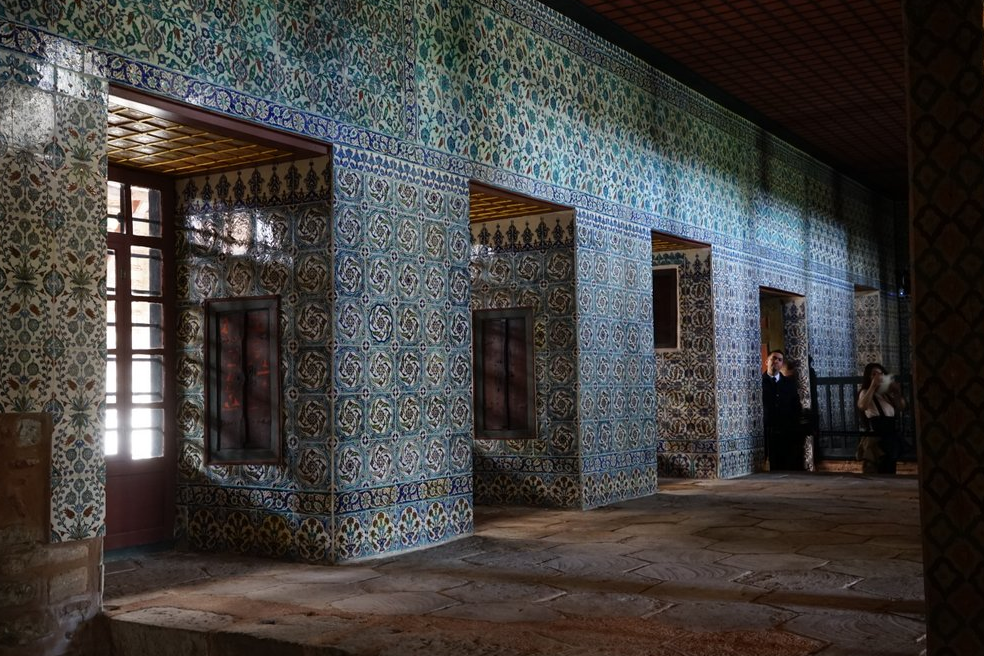
Harem of Topkapı Palace where Selim III was executed
Their letters therefore survive as more than a diplomatic curiosity. They capture a brief moment before revolution, rebellion and death: a young Ottoman prince secretly reaching towards Versailles for knowledge, and a young French king answering from a palace soon to be taken from him. Between them lay a shared hope that inherited power could be reconciled with renewal.
History answered them cruelly. Louis XVI could not save the monarchy by reforming it. Selim III could not save the empire without confronting the institutions upon which his throne depended. Each tried to open a door into a different future and each was ultimately consumed by the old world collapsing behind him.
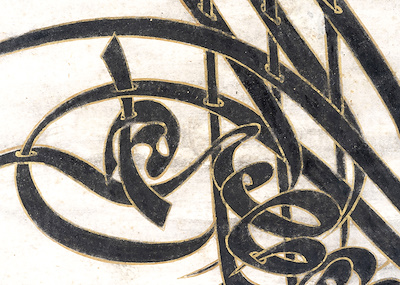
a detail from III. Selim’s Imperial Tughra