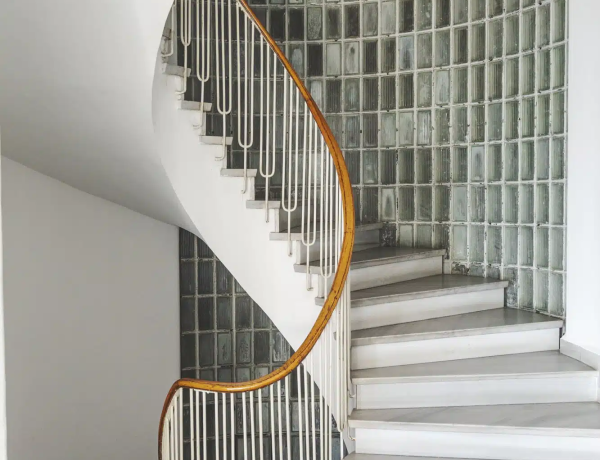

“They eat, write, sleep, and sit low; we high.”
Lord Baltimore, A Tour to the East, 1763, 1764
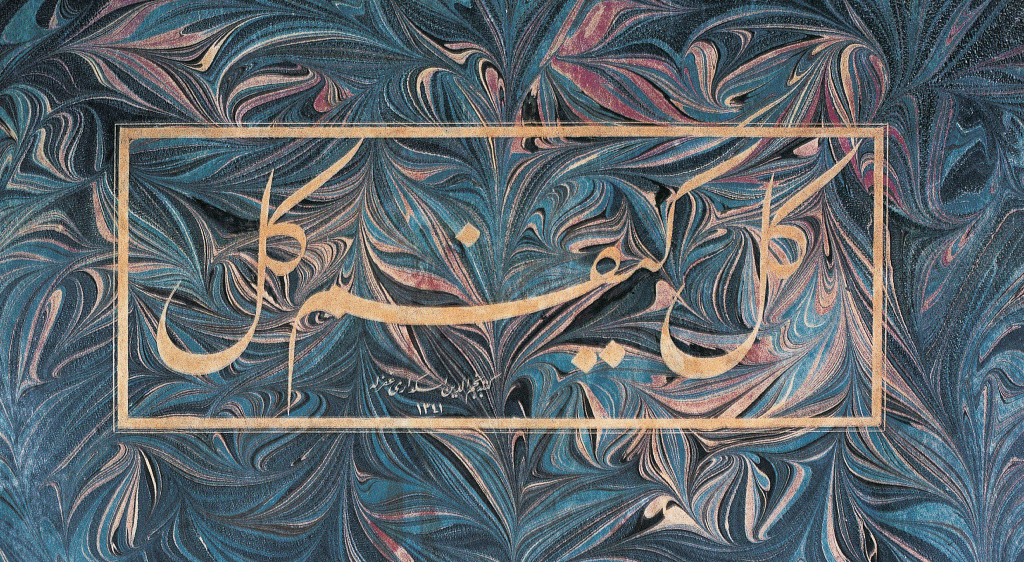
It reads ”come, my pleasure, come’
Before comfort became something purchased in the form of an upholstered armchair, it was a way of arranging one’s body, one’s room and even one’s day. In imperial Istanbul, this philosophy found its most charming expression in the figure of the ehlikeyif: a person who knew how to take pleasure in life, who understood the value of a quiet corner, a well-filled cushion, a cup of coffee and an afternoon allowed to unfold without haste.
The word ehlikeyif—literally, “one who possesses pleasure”—could affectionately describe someone devoted to ease and enjoyment. It also came to designate a particularly inviting piece of low, capacious seating, somewhere between an armchair and a divan. Yet the spirit preceded the object. It belonged to an entire culture of domestic comfort that flowed from the rooms of Topkapı Palace into waterfront mansions, wooden konaks and the modest houses of Istanbul.
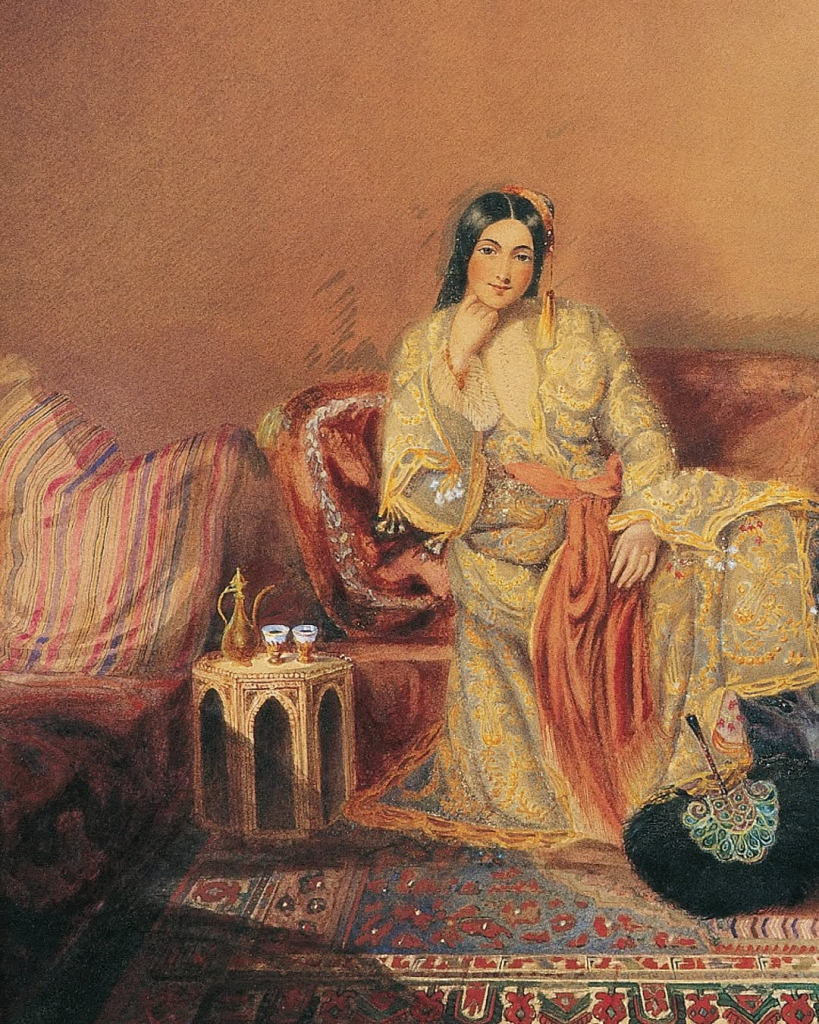
Detail from Greek Women from Fener attributed to Daniel Valentine Riviere, 1840
Until the nineteenth century, the traditional Ottoman room contained surprisingly little movable furniture. Western visitors frequently remarked upon this apparent emptiness. Lord Baltimore, visiting Istanbul in 1763, observed that the Turks ate, wrote, sat and slept at a lower level than the English. What seemed to European eyes like an absence of furniture was, in fact, a different conception of how a room should be inhabited. The room was not furnished with numerous objects; it was furnished by textiles, bodies and changing rituals.
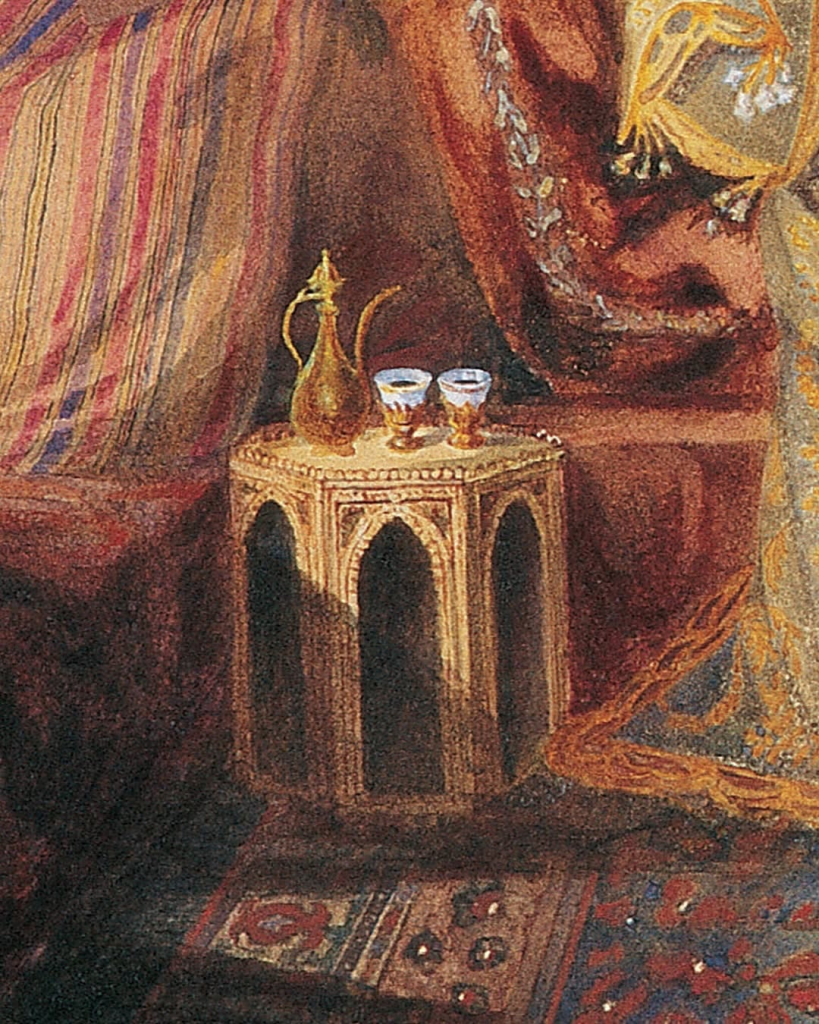
Detail from Greek Women from Fener attributed to Daniel Valentine Riviere, 1840
Low wooden platforms known as sedirs ran along the walls, usually beneath the windows. Over them were laid padded mattresses or döşeks, covered with woven cloth, velvet, silk or embroidered textiles according to the means of the household. Cushions supported the back; smaller pillows could be moved beneath an elbow, the neck or the feet. Carpets and kilims softened the floor, while niches and built-in cupboards held the few objects that were not currently in use. By placing the seating around the perimeter, the centre of the room remained open and adaptable.
This was a home that could change its function several times in the course of a single day. A room might be used for conversation in the morning, dining at noon and sleeping at night. Bedding was removed from cupboards and spread upon the floor; trays appeared for meals and disappeared afterwards. Instead of assigning a separate piece of furniture to every bodily action, Ottoman domestic life allowed the room itself to remain fluid.
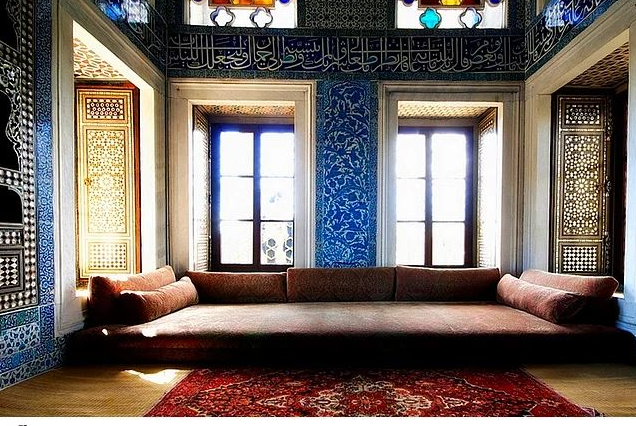
A glimpse at Topkapı Palace
At Topkapı Palace, this principle was elevated rather than abandoned. The imperial apartments were adorned with İznik tiles, gilded inscriptions, stained glass, fine woods and sumptuous fabrics, but their essential arrangement remained remarkably close to that of the traditional Istanbul house. Sultans, princes and court ladies sat upon low divans running beneath rows of windows, surrounded by cushions and overlooking gardens, courtyards or the waters of the Bosphorus. Even in rooms intended to project dynastic magnificence, comfort remained close to the ground.
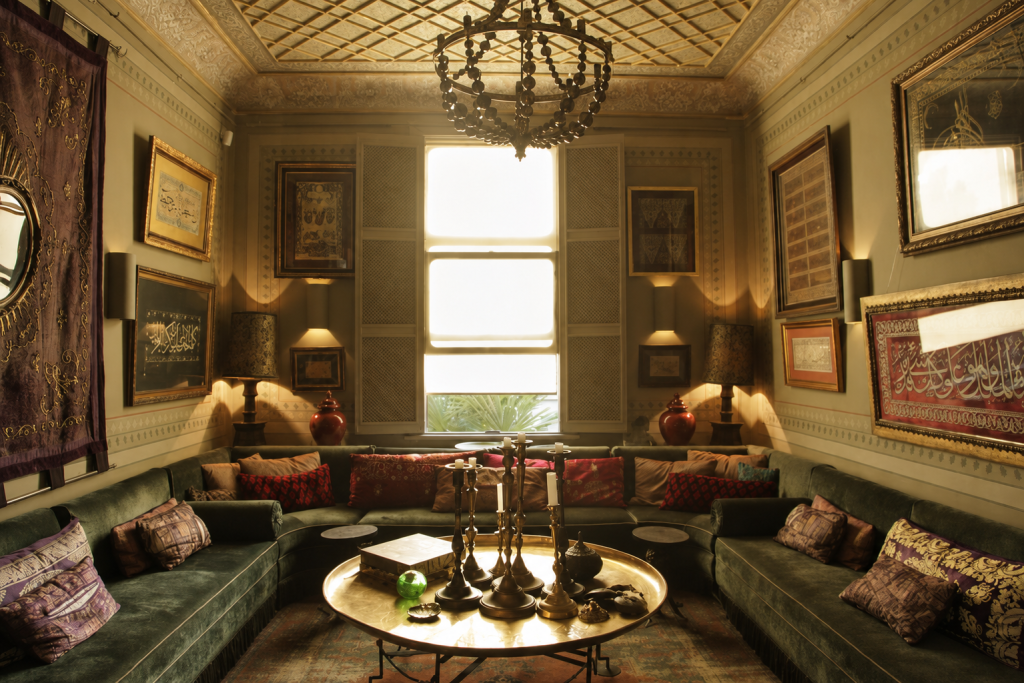
A glimpse at an old Istanbul Konak recreated by Serdar Gülgün in his home
The divan also shaped sociability. A circle of chairs separates individuals into distinct, upright units; a sedir invites them to share a continuous surface. One could sit cross-legged, lean sideways, stretch out a little, change position or draw a cushion closer. Conversation acquired a less rigid choreography. Coffee, sherbet, fruit and sweets circulated on trays. Poetry could be recited, music performed, gossip exchanged or silence enjoyed without the body being disciplined into a single formal posture.
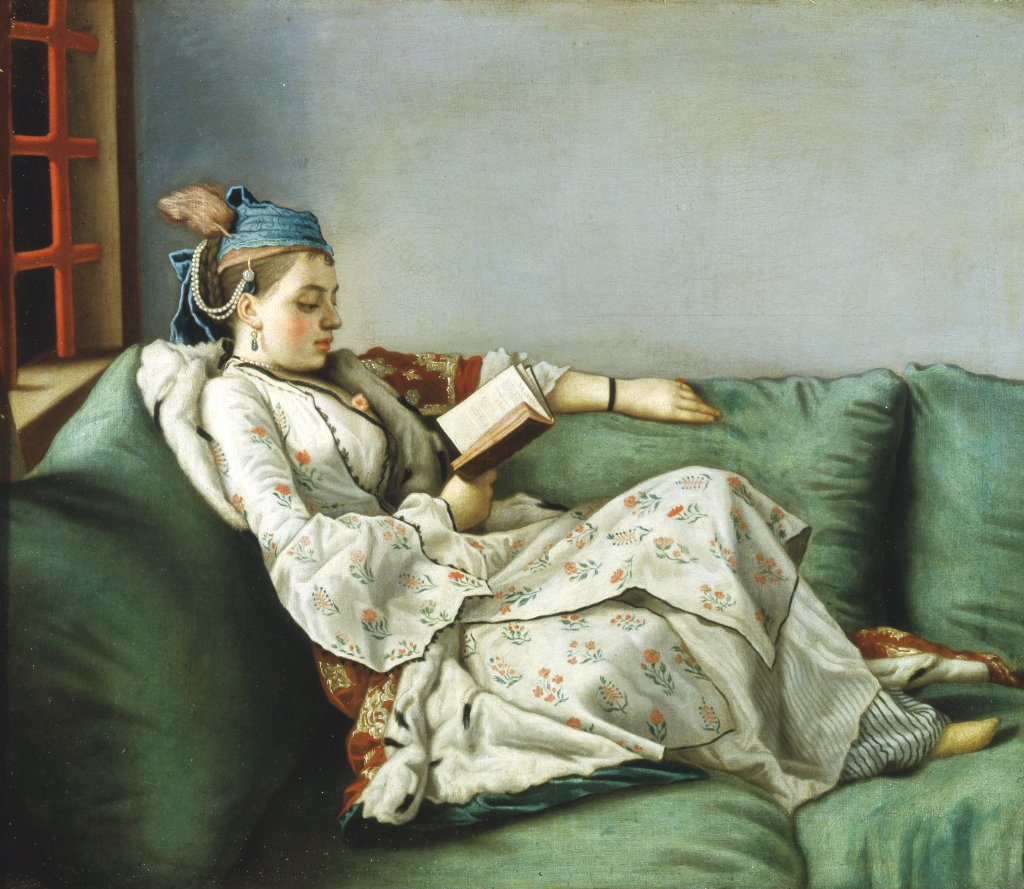
Portrait of Maria Adelaide of France in Turkish-style clothes, 1753
In the grand konaks of the Ottoman elite, the same basic arrangement became more elaborate. The divans might be covered with Bursa silks, brocades or embroidered velvets. There were cushions for display and cushions for actual use, winter textiles and lighter summer ones. The başoda, the principal reception room, expressed the household’s rank through the quality of its woodwork and fabrics, yet it still preserved the enveloping horizontal arrangement of the Ottoman room.
More modest homes shared the same instinct on a humbler scale. A family might possess no silk upholstery and few decorative objects, yet it could still create comfort through a cotton-filled döşek, handwoven covers and an accumulation of pillows. Comfort did not depend entirely upon wealth. It depended on softness, warmth and the freedom to rearrange one’s surroundings according to the moment.
This made many Ottoman interiors more physically forgiving than contemporary European rooms. In eighteenth-century Europe, fashionable interiors were increasingly filled with individual chairs, formal tables, cabinets and writing desks. Such furniture expressed refinement, status and specialised function, but it also prescribed how the body should behave. One sat upright in a chair, dined at a fixed table and slept in a permanent bed. In the Ottoman room, the body was less obedient to furniture. It could fold, recline, lean and stretch.
The difference should not be reduced to a simple opposition between a comfortable East and an uncomfortable West. European furniture could be sumptuous, and Ottoman etiquette possessed its own intricate rules. Yet the Ottoman interior offered a particular kind of comfort: informal, textile-based, adaptable and deeply receptive to the body.
During the nineteenth century, this world gradually changed. Ottoman palaces and elite houses absorbed European chairs, consoles, dining tables, bedsteads and salon suites. At Dolmabahçe Palace, furniture became an important part of the spectacle of imperial modernity. The body rose from the floor; rooms acquired permanent functions; the flexible domestic landscape gave way to the furnished salon. The sedir did not disappear, but it was increasingly joined—or replaced—by the sofa and armchair.
Nevertheless, the old Istanbul instinct for comfort survived. It can still be recognised in the deep sofa, the window seat covered with cushions, the mattress placed directly on a wooden platform and the irresistible corner where guests abandon upright formality and tuck their feet beneath themselves. Even the English word “ottoman,” now used for a padded footstool or backless seat, preserves a distant memory of the low upholstered seating Europeans encountered in Ottoman lands.
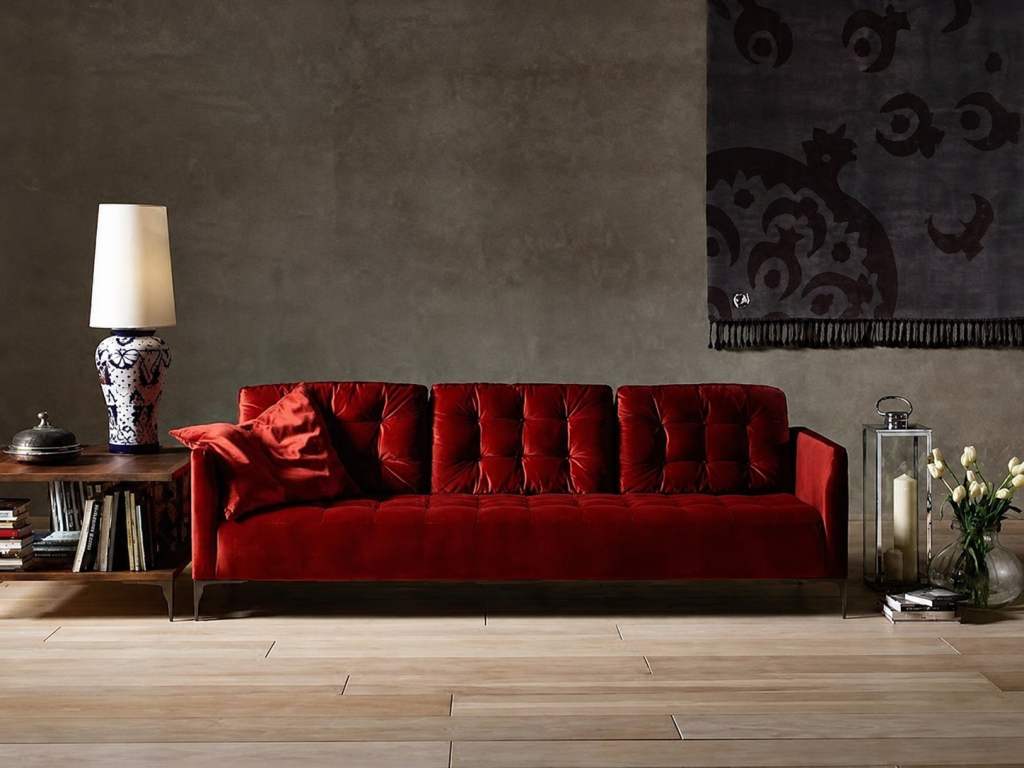
Faruk Malhan’s Sekü sofa: a contemporary interpretation of the traditional Ottoman divan
Contemporary designers continue to return to this inheritance, although rarely by reproducing an Ottoman room exactly. Traditional sedir seating reappears as a low modular sofa: linear, adaptable and assembled from independent cushions that can be rearranged at will. The ornament may be reduced and the silhouette made modern, but the underlying idea remains unchanged—the room should accommodate the body, rather than force the body to accommodate the furniture.
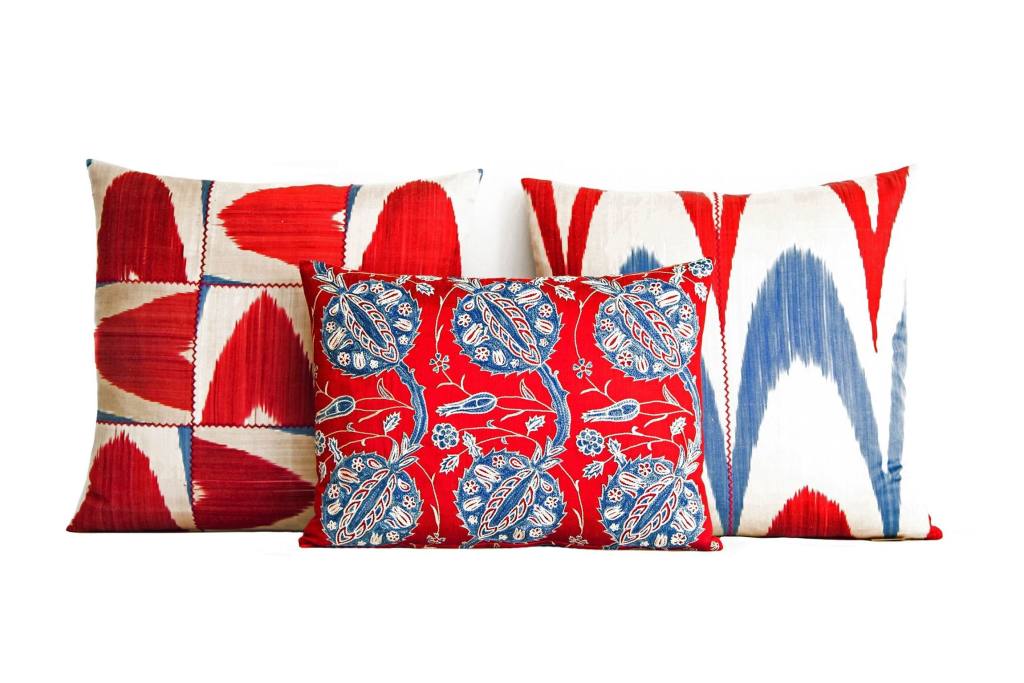
A glimpse at Yastık Collection
The most poetic continuation may be found in Rıfat Özbek and Erdal Karaman’s Yastık. Its very name—simply “cushion”—elevates the most ordinary element of the Ottoman interior into a contemporary design object. Their cushions bring together ikats, suzani embroideries and textiles gathered from Turkey and Central Asia, filled with down and even scented with dried lavender. They are modern luxuries, yet they preserve an older belief that pleasure enters a home through touch, colour, scent and softness.
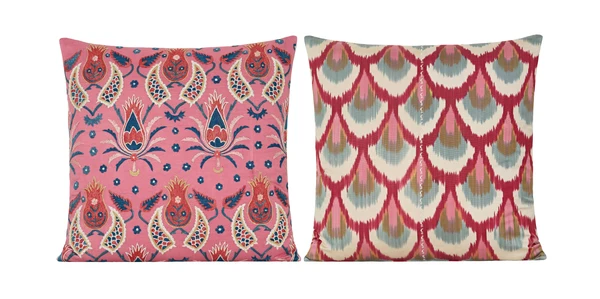
A glimpse at Yastık Collection
Perhaps this is the real legacy of ehlikeyif. It is not neo-Ottoman grandeur, excessive ornament or a nostalgic attempt to reconstruct the past. It is the quieter conviction that a home should contain at least one place in which the body can surrender its vigilance: a divan beneath a window, a mattress softened by use, a pillow drawn close, a corner made for lingering.
Imperial Istanbul understood that comfort was not the enemy of elegance. Sometimes elegance was simply knowing how to recline beautifully.
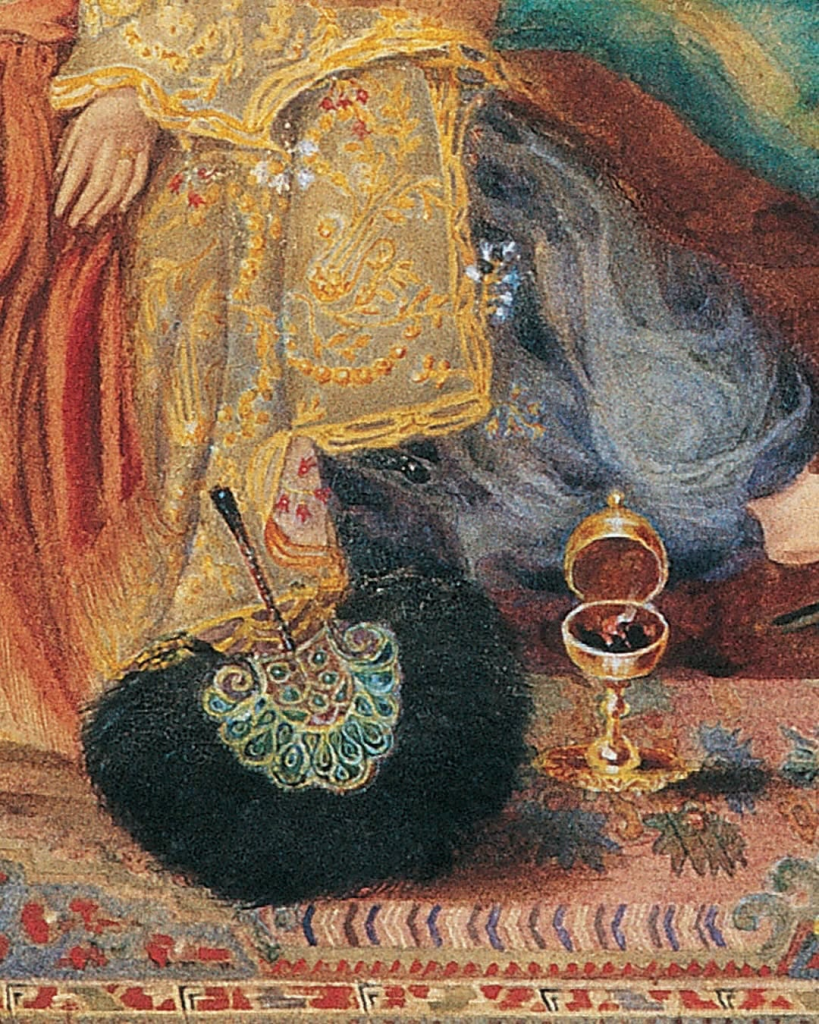
Detail from Greek Women from Fener attributed to Daniel Valentine Riviere, 1840
Visuals are taken from Pera Museum’s facebook account, istanbul74.com and yastikbyrifatözbek.com.