
Forgive me if I tend to romanticize the past.”
from Woody Allen’s Radio Days
I have always loved the warmth of Woody Allen’s Radio Days. The film is not merely about radio as an old technology; it is about an entire way of living around it. Crowded rooms, overlapping generations, familiar voices arriving mysteriously through the air, children listening from the floor while adults exchanged comments, radio became the invisible hearth of the household.
What moves me most is the peculiar intimacy of those scenes. Everyone listens to the same programme, yet each person receives it through the secret chambers of his or her own imagination. A song becomes one woman’s memory of a vanished love; a news bulletin awakens an adult’s fears; a serial transports a child to another world. Radio gathered people without abolishing their inner lives.
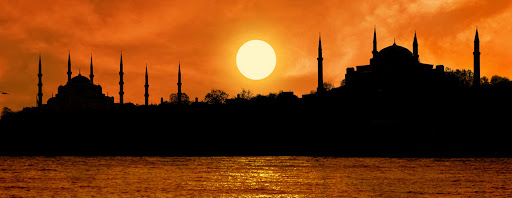
Istanbul had its own radio days, shaped by the city’s distinctive domestic culture, crowded neighbourhoods and ancient intimacy with sound.
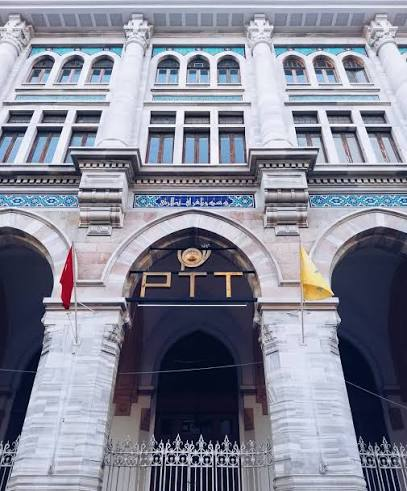
Sirkeci Grand Post Office
Regular radio broadcasting in Turkey began in Istanbul on 6 May 1927, under the auspices of the Telsiz Telefon Türk Anonim Şirketi. The first words travelled into the city from the Sirkeci Grand Post Office, a fitting birthplace for a medium that, like letters and telegrams, would carry distant voices into private lives.
In those early years, hearing a human voice emerge from a wooden box must have seemed almost supernatural. Istanbul had always been an acoustic city: the calls of street vendors, the bells of churches, the ezan rising from neighbourhood mosques, ferry whistles, foghorns, hoofbeats, military bands, tavern songs and gramophones playing behind open windows. Radio added another layer to this immense urban composition, a bodiless voice travelling across the city and entering thousands of homes at once.
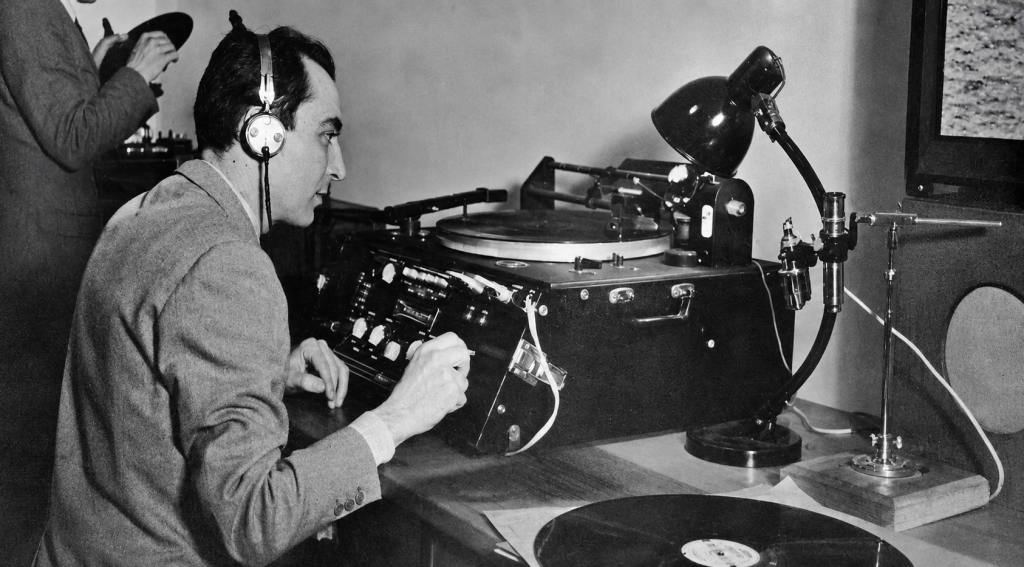
A radio studio broadcast in Istanbul, probably in the 1940s
When receivers were still rare, neighbours sometimes gathered in the home of the fortunate family who owned one. The radio therefore belonged not only to the household but also, in a sense, to the ‘mahalle‘ (neighbourhood). News, music and radio plays passed through walls and open windows. A song heard in one apartment might drift into the courtyard, reach the woman hanging laundry on the balcony and mingle with the cry of a street vendor below.
As receivers became more common, they found a natural place within Istanbul’s changing domestic interiors: in a wooden home among the traditional streets of Fatih, a Bosphorus mansion or one of the modern apartment buildings proliferating in Şişli. Resting on a sideboard beneath a lace cover, surrounded by framed family photographs, porcelain ornaments and perhaps a vase of artificial flowers, the radio became part of the room’s emotional geography.
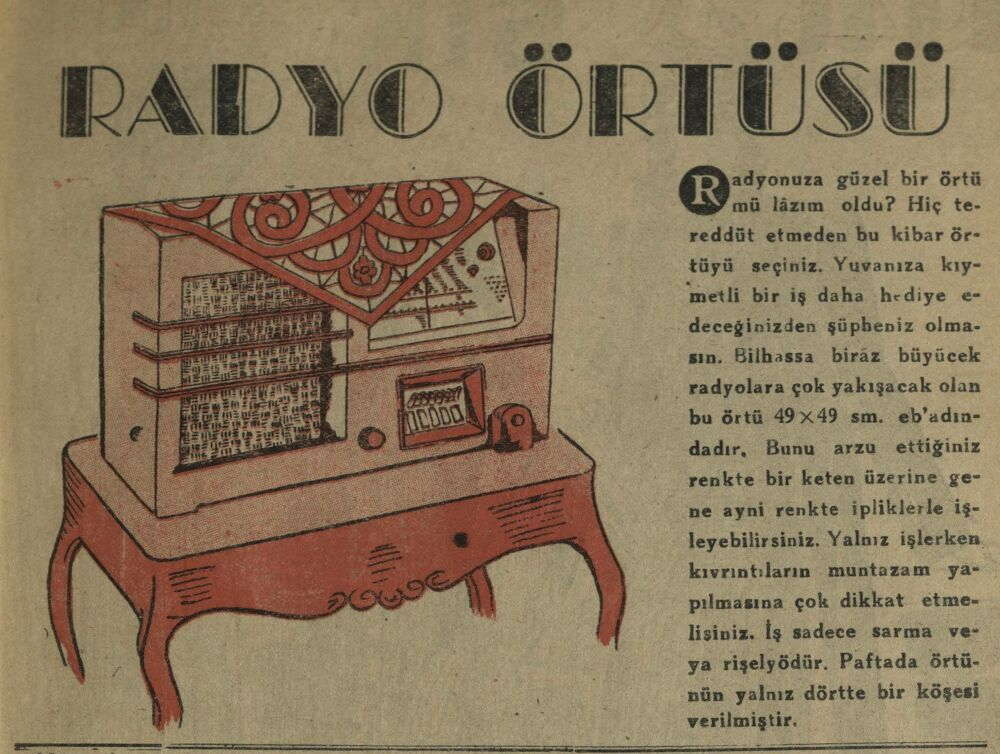
An article praising the lace cover a housewife must have for the radio at home and teaching how to make it, 1946
It was not merely switched on; it was listened to.
The establishment of the Turkish Radio and Television Corporation, TRT, in 1964 gave this shared listening culture its most enduring institutional form. Long before television became the dominant object in the living room, TRT Radio accompanied Istanbulites from morning until night. Its interval signals, announcements and carefully modulated voices became part of the rhythm of the household.
Morning programmes played while breakfast was prepared and children dressed for school. Housewives listened while cooking, sewing, ironing or cleaning. Shopkeepers kept a radio behind the counter. Tailors, barbers, grocers and craftsmen worked with music and conversation in the background. Taxi and dolmuş drivers carried radio through the city, turning traffic jams and long waits into shared encounters with songs, commentary and current events.
In coffeehouses, men gathered around live broadcasts of football matches—a ritual that became increasingly popular from the late 1930s and 1940s—and listened collectively to news bulletins. The commentator’s rising voice could transform an ordinary neighbourhood coffeehouse into the stands of a distant stadium. Later broadcasters, most memorably Halit Kıvanç, would make the excitement of the match inseparable from the rhythms and imaginative possibilities of radio itself.
Radio connected the private Istanbul of kitchens and sitting rooms with the public Istanbul of ferries, shops, workshops, taxis and coffeehouses. The same voice might be heard in a waterside apartment in Üsküdar, a grocery in Kasımpaşa, a tailor’s shop in Beyoğlu and a taxi crossing the Galata Bridge. For a brief time, people separated by class, district and way of life occupied the same acoustic world.
TRT offered news bulletins, Turkish classical music, folk songs, Western classical music, educational programmes, children’s broadcasts, sports commentaries and radio plays. Programmes such as Arkası Yarın—“To Be Continued Tomorrow”—introduced suspense into the daily life of the household.
Stories did not arrive all at once, ready to be consumed and discarded. Listeners waited for the next episode. During that interval, characters remained alive in the imagination, and family members could speculate about what might happen next. Anticipation was not yet regarded as an inconvenience to be eliminated. Waiting was part of the pleasure.
Radio theatre was especially suited to Istanbul, a city already haunted by stories. A door creaking, footsteps in a corridor, a ferry whistle or the distant barking of a dog could summon an entire world: a fading Ottoman mansion, a dark street in old Pera, a wooden house overlooking the Golden Horn or a railway station filled with departing passengers.
Because nothing was visible, the listener furnished every room and gave each character a face. Radio did not limit the imagination through its lack of images; it set the imagination free.
Music carried another kind of memory. Turkish classical music, already deeply connected to Istanbul’s palaces, mansions, gardens and waterside gatherings, entered ordinary apartments through the radio. A makam unfolding in the evening could momentarily dissolve the walls of a small room. The listener might be transported to an imagined moonlit Bosphorus, a vanished fasıl gathering or a summer night in an old garden.
Yet through popular songs, tangos and Western-style dance orchestras, its programmes reflected Istanbul’s distinctive ability to move between tradition and modernity.
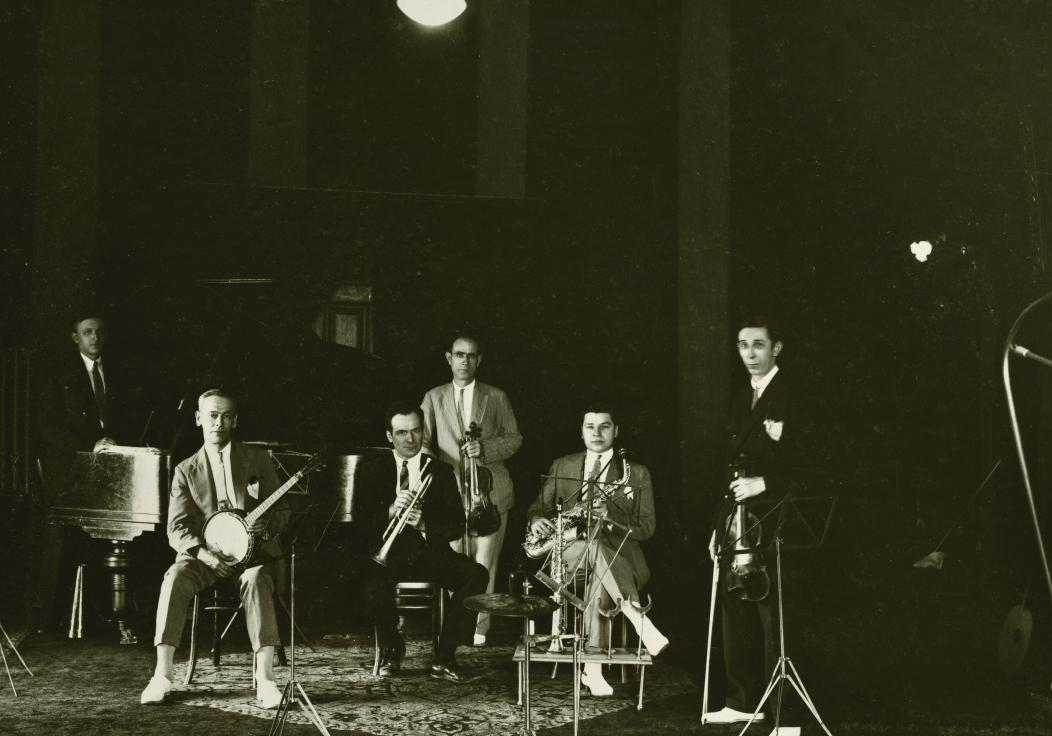
Istanbul radio artists (İBB, İstanbul Kitaplığı)
Through Yurttan Sesler, meanwhile, songs from Anatolia entered Istanbul homes. This had a particular meaning in a city continually reshaped by migration. Families who had arrived from different regions could suddenly hear the music of the places they had left behind. A türkü transmitted from the studio might carry a village, a mountain, an abandoned house or a dead parent back into the room. Radio allowed newcomers to remain connected to their origins while gradually becoming Istanbulites.
In this sense, TRT did more than entertain. It helped weave together the city’s heterogeneous population. Istanbul was made not only by those born there but also by generations who arrived from the Balkans, the Black Sea, Anatolia, the Caucasus and beyond. Radio offered them a common repertoire—a collection of songs, voices, stories and announcements through which they could begin to imagine themselves as part of the same public.
This common culture was not politically innocent. TRT represented the voice of the state, and its language could be formal, disciplined and paternalistic. It decided what counted as proper speech, legitimate music and national culture. Radio brought propaganda as well as art, official silence as well as information. During coups, political crises and periods of censorship, families turned towards the same device with anxiety, waiting for an announcement that might alter their lives.
Yet even fear was experienced collectively. People listened together and then discussed what they had heard. News travelled from the radio to the dinner table, from the dinner table to the stairwell, and from the stairwell to the neighbourhood grocer. Istanbul’s apartment buildings, with their open windows, shared courtyards, concierges and endlessly circulating gossip, transformed broadcasting into conversation.
Radio suited this older Istanbul because the city’s way of life was itself more collective. Families were larger; generations lived together or close to one another; neighbours entered each other’s homes without formal invitations. Women borrowed coffee, sugar or a cup of rice across the landing. Children played in streets and courtyards under the intermittent supervision of an entire neighbourhood. News travelled through grocers, concierges, hairdressers, ferry passengers and relatives who arrived without telephoning first.
The radio did not interrupt this social fabric. It entered it and became one of its voices.
Social media has produced almost the opposite form of life. It offers an abundance of voices, images and information, but each person receives a different stream. Even when a family sits together, its members may inhabit entirely separate algorithmic worlds. One watches a political video, another scrolls through strangers’ holidays, another follows a scandal, while someone else repeatedly checks whether a message has been seen.
They share a sofa but no longer necessarily share a reality.
The radio generation waited for a programme to begin. The social media generation is pursued by a feed that never ends.
The contrast is especially striking in contemporary Istanbul. The city is more crowded than ever, yet its inhabitants often appear increasingly enclosed. On ferries, buses and the metro, hundreds of people travel together while looking into separate screens. Earphones seal each person inside a private acoustic chamber. The city still surrounds them—the sea, the gulls, the call of the simit seller, the conversations of strangers—but the individual can pass through Istanbul without fully hearing it.
Older radio culture made private homes porous to the city. Social media often makes individuals impermeable even when they are standing in a crowd.
This technology also produces a different form of anxiety. Radio certainly carried frightening news, especially during wars, coups and political upheavals. But the anxiety usually concerned an identifiable event in the external world. Social media brings fear closer to the skin. It continually invites us to measure our lives against the edited lives of others.
Am I attractive enough? Successful enough? Visible enough? Has anyone responded? Am I loved, admired or already forgotten?
The old radio addressed a public. Social media incessantly evaluates the individual.
It transforms attention into competition and ordinary life into a performance. Even Istanbul itself becomes something to display rather than inhabit: a Bosphorus sunset photographed before it has been looked at, a meal arranged for an audience before it has been tasted, a historic neighbourhood reduced to a picturesque background for the self.
The family gathered around the radio was not necessarily harmonious. The father might control the dial; the children might be bored; the mother might listen while continuing to serve everyone else. The traditional household had its hierarchies, silences and injustices, and the past should not be turned into a sentimental paradise.
Yet even disagreement took place within a shared room. People negotiated, protested, laughed, interrupted and listened in one another’s presence. They were occasionally required to enter someone else’s interest. A child heard the music loved by a grandparent; an adult overheard a children’s story; an entire family followed a radio play that none of them would have selected individually.
Shared listening exposed people to one another.
Perhaps this is what I love most in Woody Allen’s Radio Days, and what I imagine when I think of Istanbul during the great years of TRT Radio. It is not merely nostalgia for old programmes, elegant announcers or wooden receivers glowing softly in darkened rooms. It is longing for a form of attention that had a centre, for a time when voices coming from far away did not scatter the people in a room but drew them closer together.
Radio made the world larger while keeping the family near. Social media has placed the world in our hands while allowing those nearest to us to disappear behind separate screens.
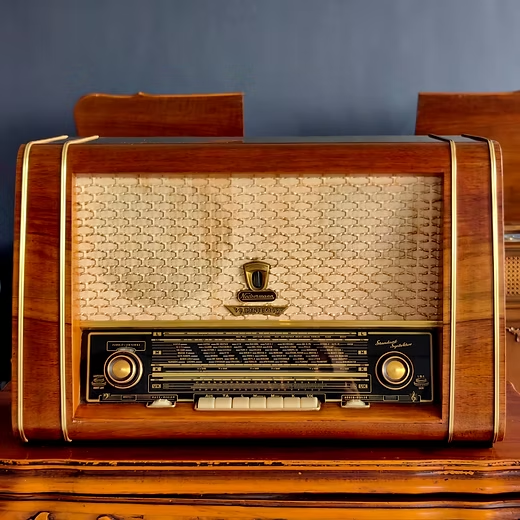
Visual is taken from antikkuntik.com
The old radios can now be found in Istanbul’s antique shops, their polished wooden cases carrying the silence of another domestic age. The radios themselves may have fallen silent, but the Istanbul they once gathered around them still lingers in memory.
Note that the videos are embedded via YouTube and all rights belong to the respective rights holders.