
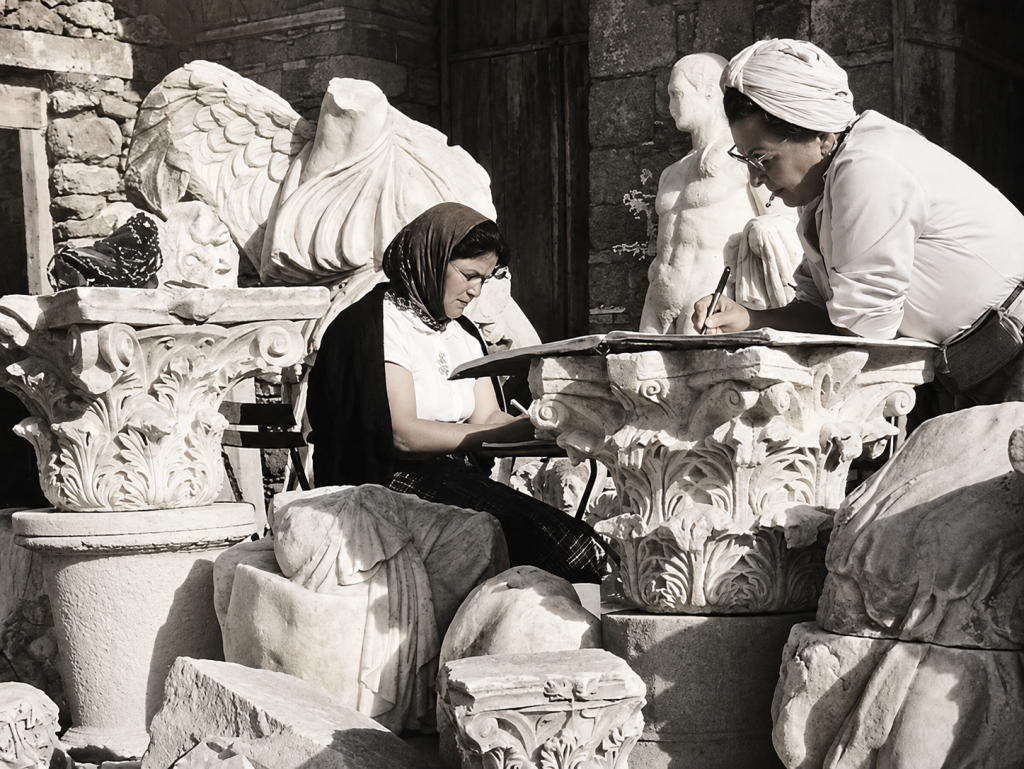
Jale İnan with another female colleague
There are lives that seem to grow naturally out of a city’s history. Jale İnan’s was one of them.
Born in Istanbul on 1 February 1914, in the final years of the Ottoman Empire, İnan grew up in a household in which archaeology was not an abstract academic discipline but part of everyday life. Her father, Aziz Ogan, was one of the formative figures of Turkish archaeology and museology. He had entered the world of archaeology under the influence of Osman Hamdi Bey—the painter, archaeologist and pioneering director of Istanbul’s Imperial Museum whose work helped establish the foundations of modern archaeology and museum practice in Turkey. Aziz Ogan would eventually serve for more than two decades as director of the Istanbul Archaeological Museums.
In this sense, Jale İnan belonged to an extraordinary intellectual lineage. Through her father, the world of Osman Hamdi Bey was still close enough to touch.
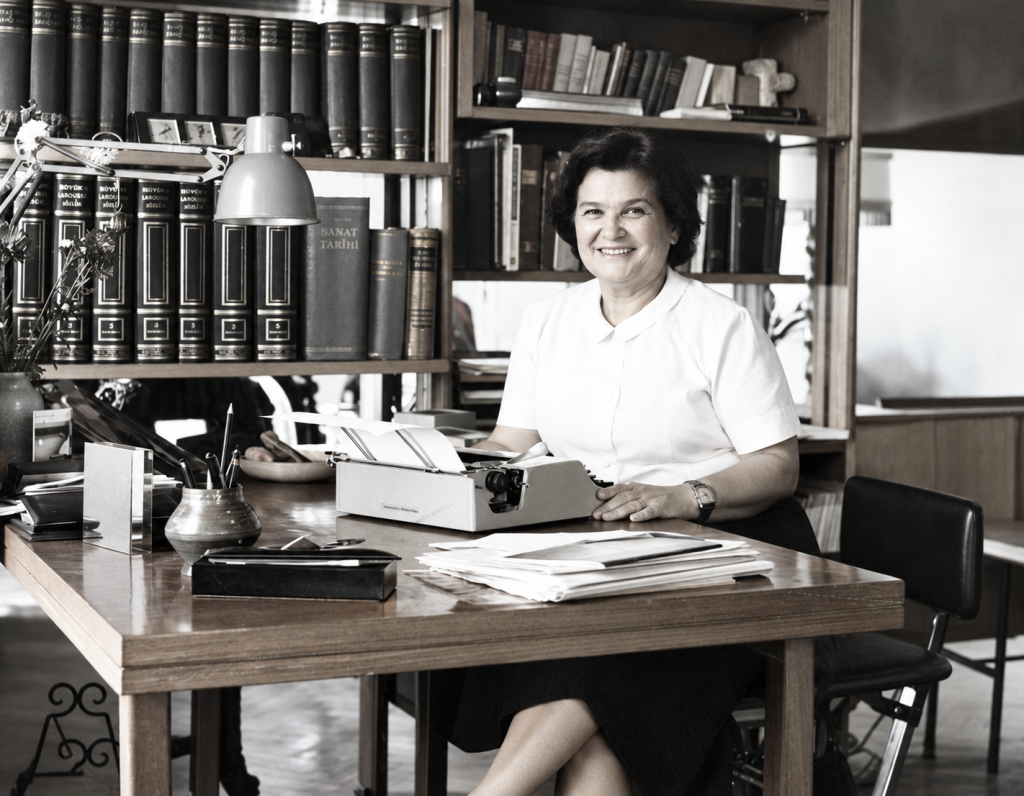
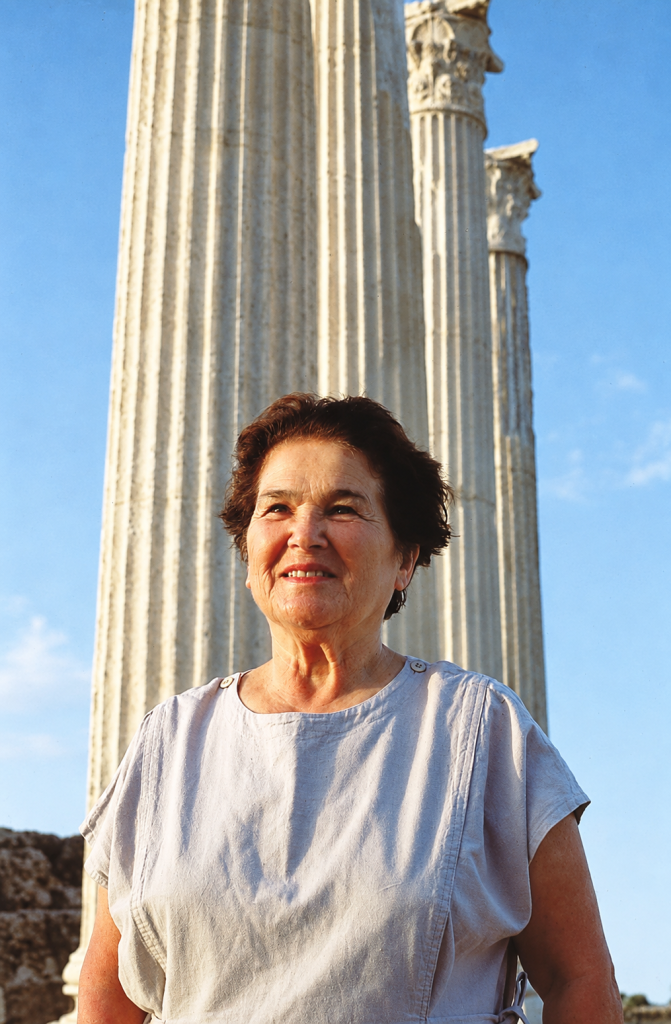
Jale İnan at her Study
As a child and teenager, she accompanied Aziz Ogan on professional journeys and encountered archaeological sites such as Ephesus, Miletus and Aphrodisias. She also met some of the prominent European archaeologists working in Anatolia. Archaeology entered her imagination long before it became her profession.
Yet when she finished school at Istanbul’s Erenköy Girls’ High School, studying archaeology in Turkey was not a straightforward possibility. There was not yet an established university department in which she could pursue the subject she wanted, so she initially began studying medicine in Istanbul. Her path changed when she received a scholarship to study classical archaeology in Germany. She continued her education in Munich and Berlin and completed her doctorate during the difficult years of the Second World War.
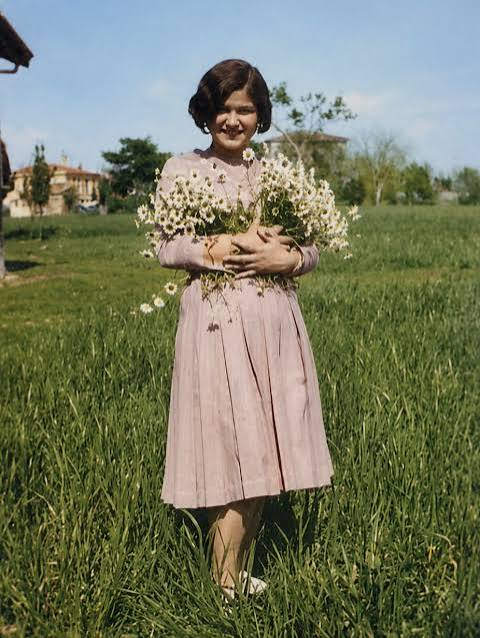
Jale İnan in Erenköy
When she returned to Turkey, she became one of the architects of a new generation of Turkish archaeology—and the country’s first female archaeologist.
Her most important fieldwork took her far from Istanbul, to the ancient cities of the Mediterranean coast. Working initially with Arif Müfit Mansel, and later directing excavations herself, İnan devoted decades to Perge and Side, as well as conducting work at sites including Kremna and Seleukeia in Pamphylia. Her career was concerned not simply with uncovering antiquity but with conserving it, interpreting it and keeping it connected to the landscape from which it came.
That conviction would eventually lead to one of the most remarkable episodes of her life.
A Herakles Cut in Two
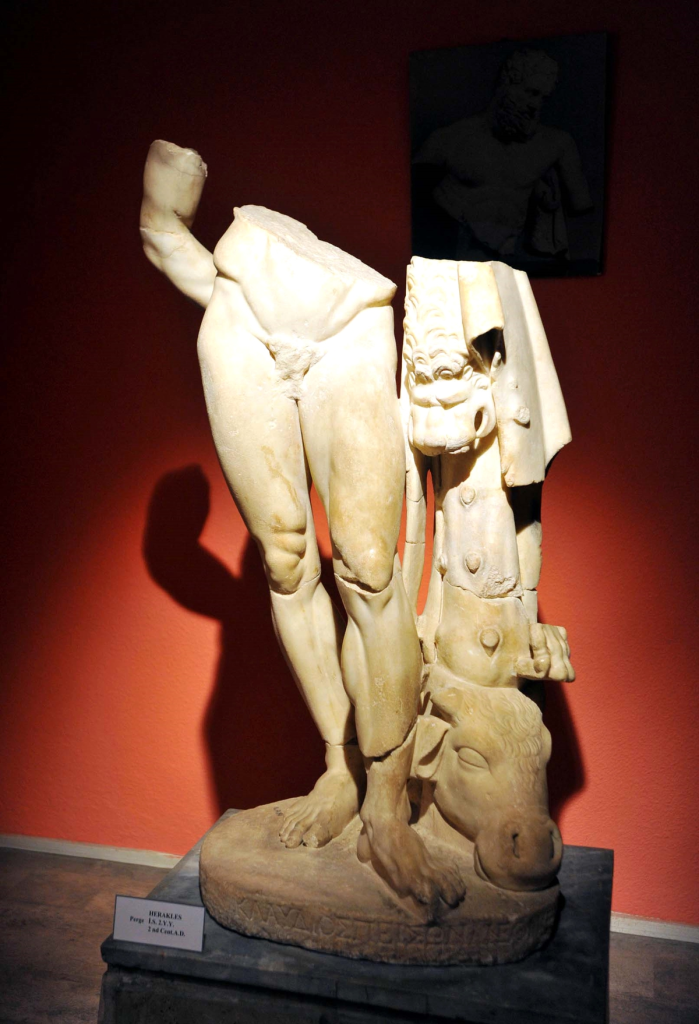
In 1980, during excavations at the ancient city of Perge near Antalya, archaeologists uncovered the lower portion of a Roman marble statue of Herakles. The figure represented the exhausted hero at the end of his labours—the type known as the Weary Herakles, ultimately derived from a celebrated fourth-century BCE composition associated with the Greek sculptor Lysippos. The surviving Roman version dated to the second century CE.
But Herakles was missing half his body.
Only his lower portion had been recovered.
Then, years later, another Herakles appeared thousands of kilometres away.
The upper half of a remarkably similar statue was in the collection of the Museum of Fine Arts in Boston. The museum had acquired a half-interest in the torso in 1981 from a dealer in Germany, and the sculpture had subsequently been exhibited in the United States. In 1990, its striking resemblance to the Perge fragment attracted attention. Turkey maintained that the Boston torso and the Antalya fragment belonged to the same ancient statue.
Jale İnan was convinced.
What followed was archaeology used almost as forensic science.
In 1992, casts were made of the Boston torso and the lower half excavated at Perge so that the broken surfaces could be compared. İnan herself was present at the test in Boston. When the casts were brought together, the result was extraordinary: the pieces matched. Archaeologist Brunilde Ridgway, who witnessed the experiment, later recalled that they practically “clicked.”
The broken marble had preserved its own evidence.
For İnan, this was more than an academic identification. She became one of the persistent voices arguing that the two halves belonged together and that Herakles should return to the place from which his lower half had been scientifically excavated.
The dispute nevertheless continued for years. The Museum of Fine Arts states that the precise circumstances in which its torso left Turkey have never been documented and that the account of its earlier provenance supplied by the dealer was never verified. What had been demonstrated, however, was something much harder to dispute: the Boston torso and the Perge fragment had once constituted a single sculpture.
Jale İnan did not live to see the final homecoming. She died in Istanbul in 2001.
But the case she had helped build survived her.
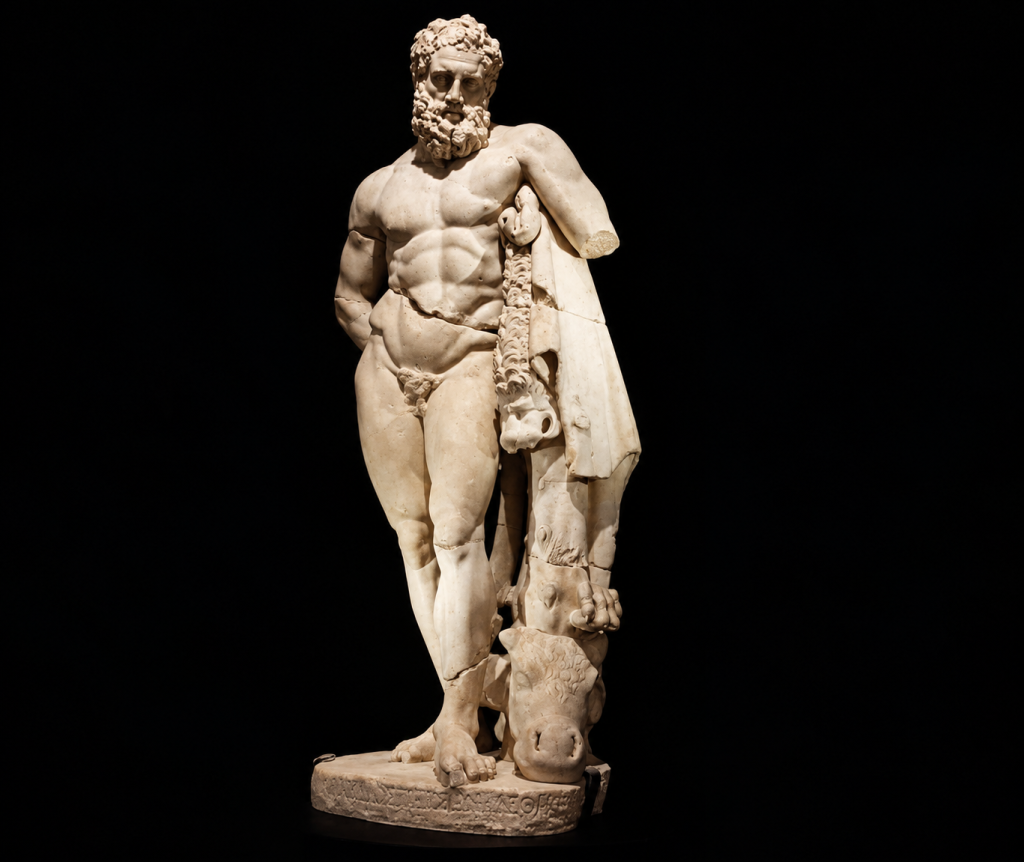
After years of discussions between Turkey and the Museum of Fine Arts, an agreement was finally signed on 22 September 2011 transferring ownership of the upper half to Turkey. Three days later, the torso arrived in Turkey. Conservators reunited it with the lower half, and on 9 October 2011 the complete figure went on display at the Antalya Museum.
More than thirty years after the lower half had emerged from the earth at Perge, Herakles was whole again.
From Istanbul to Perge—and Back Through Memory
There is something especially fitting about Jale İnan’s role in this story.
She was born into the archaeological culture that had developed around Istanbul’s museums in the late Ottoman and early Republican periods. Her father had been shaped by the generation of Osman Hamdi Bey; she, in turn, helped create the professional archaeological institutions of the Republic. What began in the museums and intellectual circles of Istanbul eventually led her to the buried cities of southern Anatolia.
Her life therefore tells a larger story about archaeology in Turkey itself.
For an earlier generation, antiquities had often moved through an international world in which European collectors, dealers, excavators and museums possessed enormous power over where objects discovered in Ottoman lands ultimately ended up. By Jale İnan’s generation, Turkish archaeologists were increasingly insisting on something different: that Anatolia’s ancient past should be excavated scientifically, studied by scholars in Turkey, conserved locally and understood as part of the cultural memory of the land in which it had survived.
The Weary Herakles became an unusually powerful symbol of that idea.
And perhaps the most beautiful image with which to remember Jale İnan is not simply that of the pioneering woman standing at an excavation trench.
It is the image of an elderly archaeologist in Boston, confronting a fragment of marble that had travelled halfway across the world and recognizing it.
She knew where it belonged.
The return would take another nineteen years. Jale İnan would not live to witness it.
But in 2011, when the two pieces of Herakles were finally joined in Antalya, the statue itself became a monument to her persistence: a broken body reunited, and a fragment of Anatolia’s memory brought home.
Note that the video is embedded via YouTube and all rights belong to the respective rights holders.