
The below visuals by French illustrator Antoine Helbert show us how the Bukoleon Palace would have looked like if it could survive to this day! We only have the remains of this 1600 years old Byzantine Palace which is listed as a Word Heritage Site by Unesco.

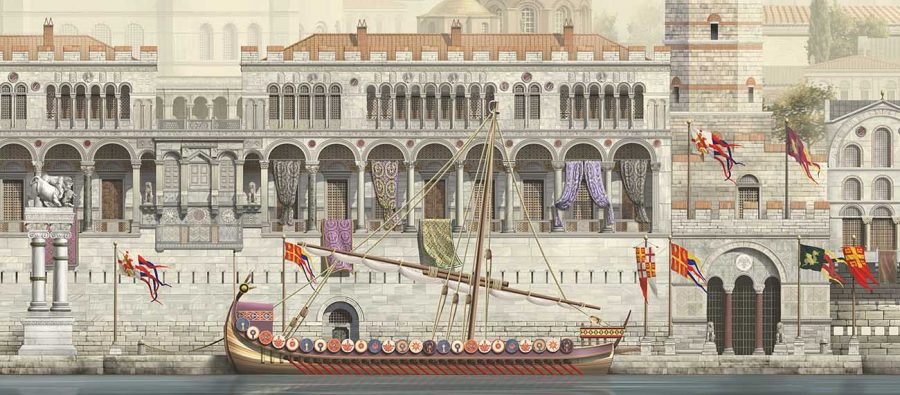
Now the remains of this palace stands in the historical peninsula in walking distance to Sultanahmet by the sea side.
Note that the two lions that were guarding the entrance of the Palace at the port are currently in the İstanbul Archeological Museum.
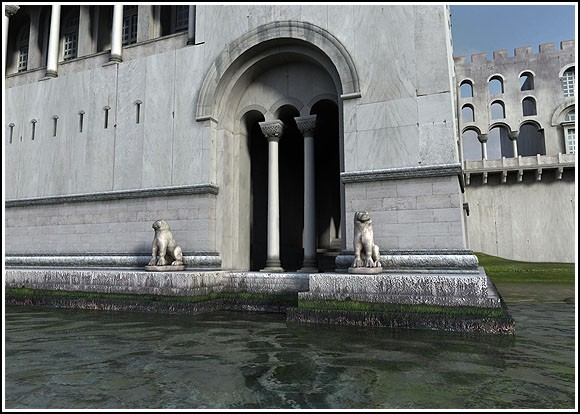
Visual taken from Byzantium 1200 Project
When you visit the İstanbul Archeology Museum, the lions you will see standing on the side of the stairs belonged to the Bukoleon Palace.
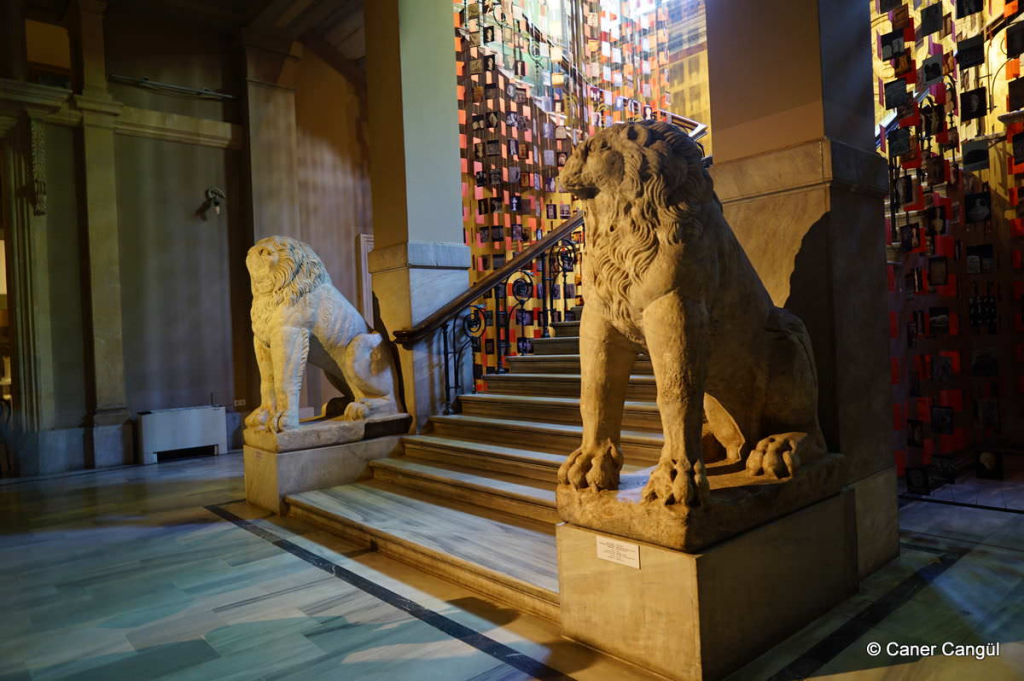
Photo by Caner Cangül

An old photo showing the dire condition of the Palace. Note that the palace was by the sea side back then. Now there is a road right in front of it cutting its ties with the sea of Marmara

A more recent photo showing the condition of the palace before the restoration started – photo by Furkan Çıtakoğlu (2019)
The good news is that İstanbul Municipality has started a full fledged restoration of the remaining parts of the palace in order to turn it into an open air museum.
Historians say that Bukoleon Palace was decorated with relics, sacred items and art of the period and was a centre of fascination as a symbol of the glory of the Eastern Roman Empire and had hosted emperors and church councils. We know that the palace was sacked with all its possessions and court women by the Crusaders who crushed the city in 1204. The Palace was gradually abandoned in the 11th century and was in ruins by the time Ottomans conquered the city in the 15th century. The legend says that Fatih Sultan Mehmet who conquered the city wept after he saw the condition of the Byzantine Palace which was once a symbol of the city’s glory and wrote these lines:
“The spider weaves the curtains in the palace of the Caesars
The owl calls the watches in the towers of Afrasiab.”
Make sure to visit this 1600 years old palace to pay tribute to the city’s past with all its glories and tragedies when the restoration project is finalised and the site is turned into an open air museum.