
“I never beheld a work of nature or art which yielded an impression like the prospect on each side from the Seven Towers to the end of the Golden Horn.”
Lord Byron
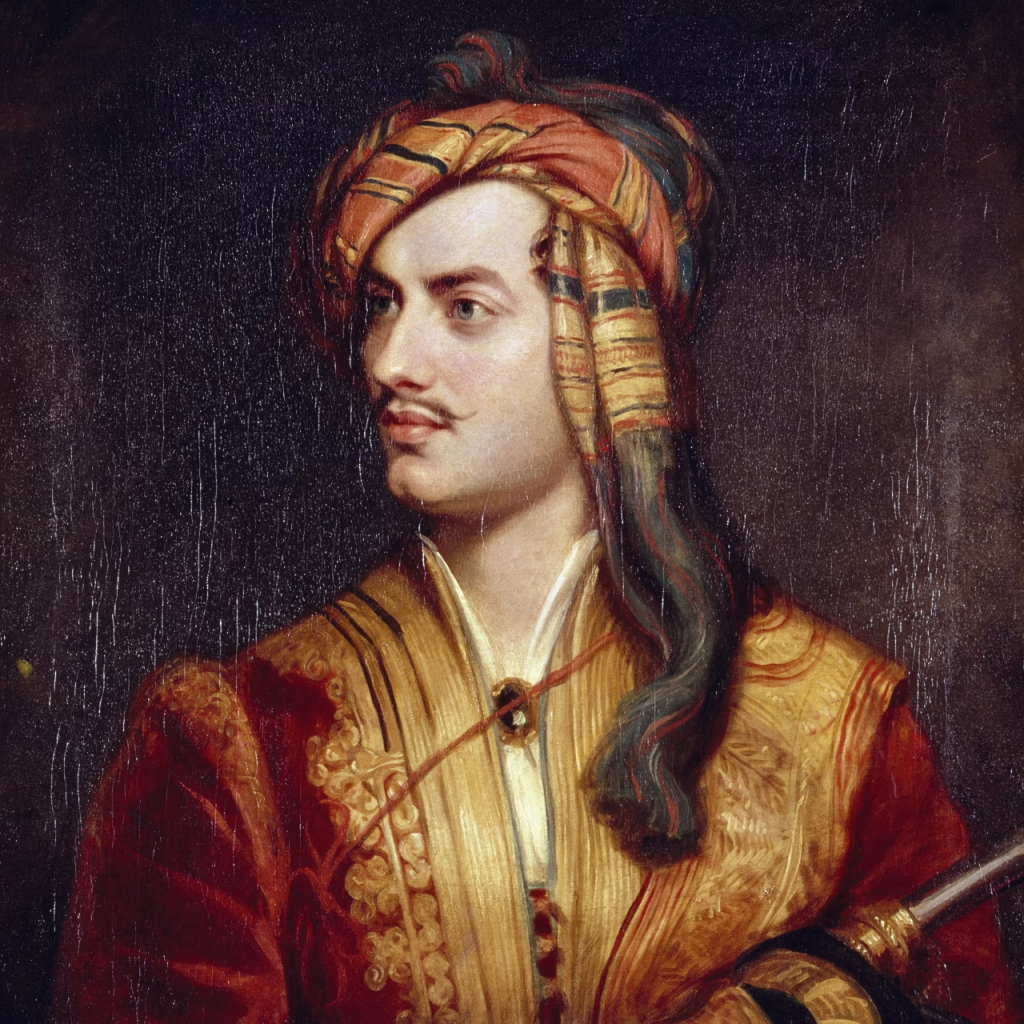
Lord Byron in Albanian dress, a costume he acquired during his travels through the Ottoman Balkans. Thomas Phillips, 1813.
Long before the brooding, rebellious and irresistibly charismatic man became a familiar figure in literature and popular culture, there was Lord Byron.
The archetype that would eventually bear his name — the Byronic hero — is proud, intelligent, passionate and emotionally wounded; contemptuous of convention, yet haunted by something within himself. What makes the figure particularly fascinating is that Byron did not simply write him.
To some extent, he lived him.
In 1809, the twenty-one-year-old poet left England with his friend John Cam Hobhouse on an unconventional Grand Tour. With the Napoleonic Wars disrupting the usual European routes, they travelled instead through Portugal, Spain, Malta, Albania and Greece, eventually entering the Ottoman world.
By the spring of 1810, Byron had reached Smyrna and travelled through Asia Minor before continuing north towards Constantinople.
Swimming into Legend
On 3 May 1810, before reaching the Ottoman capital, Byron performed one of the most famous feats of his youth. Accompanied by Lieutenant William Ekenhead of HMS Salsette, he swam across the Hellespont, today’s Dardanelles, consciously following the legendary route of Leander, who according to Greek mythology crossed the strait to reach his beloved Hero.
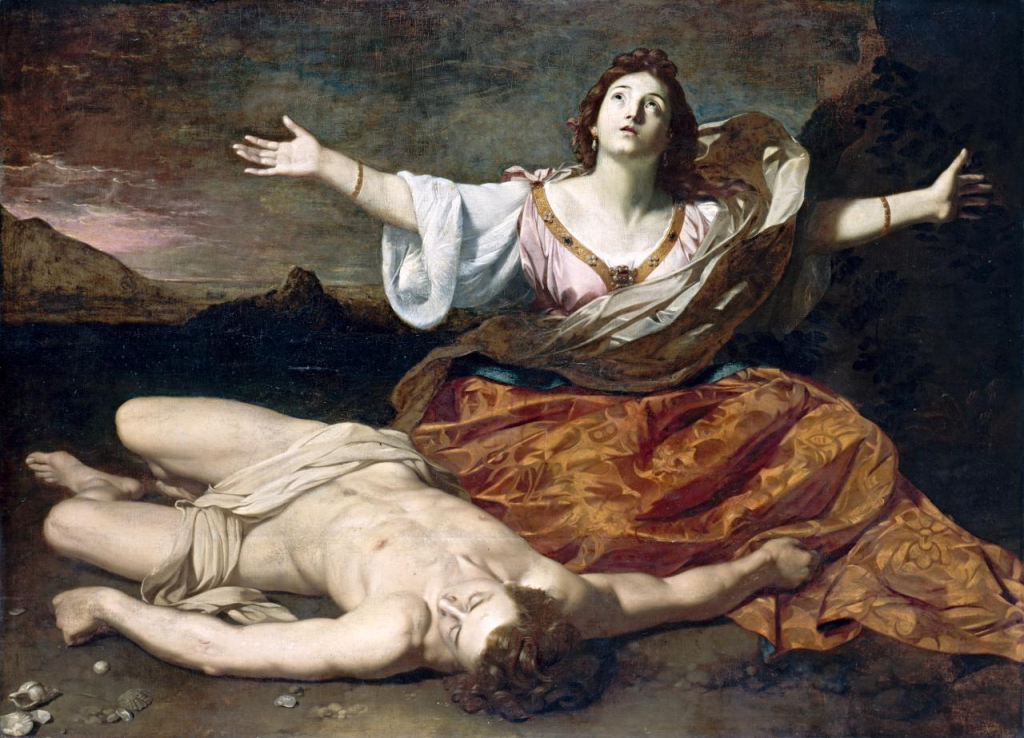
Nicolas Regner, Hero and Leander, 1625-1626
The episode seems almost absurdly Byronic: classical mythology transformed into physical adventure, danger voluntarily embraced, and life itself turned into literature.
Indeed, only days later Byron commemorated the adventure in his mock-heroic Lines Written After Swimming from Sestos to Abydos, humorously contrasting Leander, who had swum for love, with himself, who had done it for glory.
“He lost his labour, I my jest:
For he was drown’d, and I’ve the ague.”
After Salsette was delayed around the Dardanelles, Byron finally arrived in Constantinople on 13 May 1810. He stayed in Pera, the cosmopolitan diplomatic quarter across the Golden Horn, and explored the Ottoman capital with its mosques, streets, ceremonies and extraordinary position between Europe and Asia.
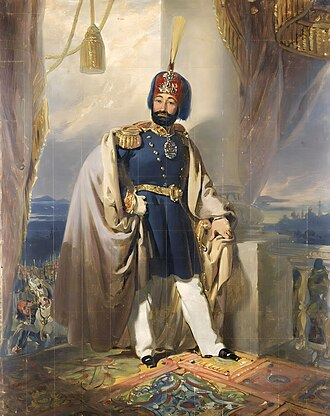
Mahmut II
Byron’s encounter with Constantinople was made all the more remarkable by an unusual privilege granted to him under Sultan Mahmud II. Through the intervention of the British ambassador, he obtained an imperial firman that allowed him to enter some of the city’s great mosques—access that was by no means routinely extended to non-Muslim travellers at the time. Byron himself anticipated the experience with evident excitement, writing, “The mosques I shall have a firman to visit.” The document opened doors that would otherwise have remained closed to a young English aristocrat, allowing him to experience the monumental interiors of Ottoman Constantinople rather than merely admire its domes and minarets from afar. For Byron, who had arrived in the East with a mind already steeped in history, poetry and romantic imagination, the firman offered something extraordinarily seductive: permission, quite literally, to cross a threshold into a world that most European visitors could only contemplate from the outside.
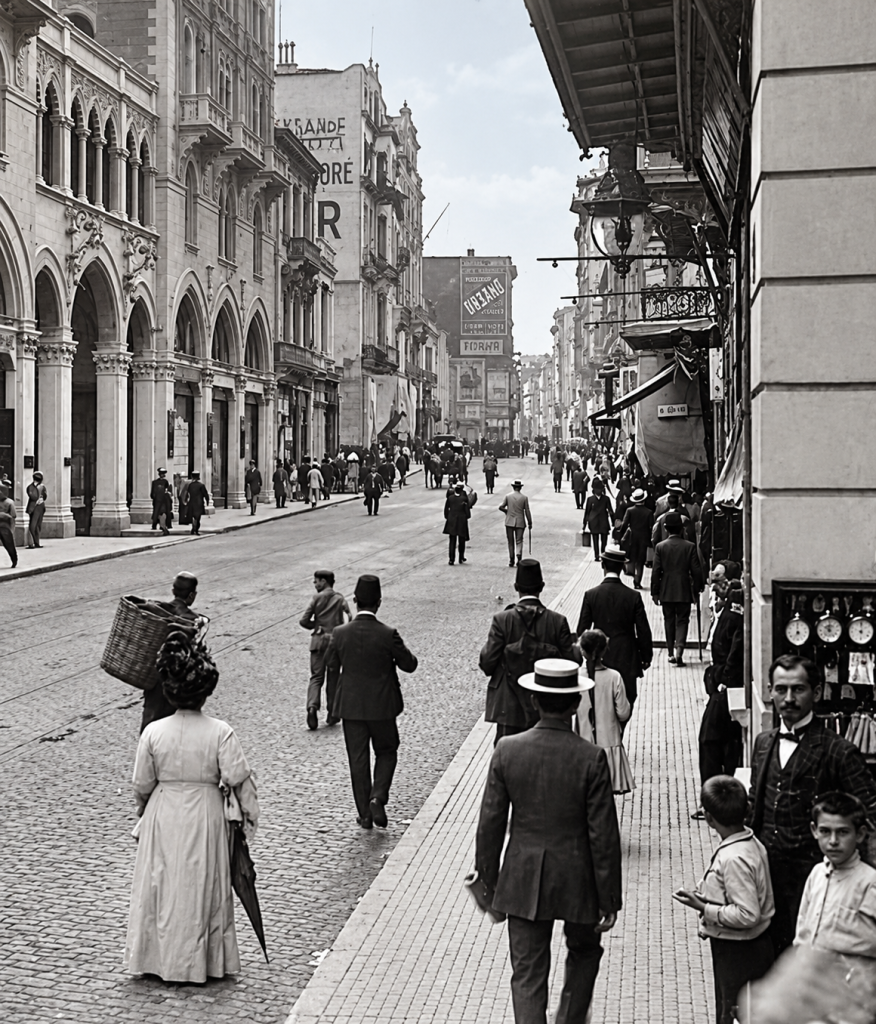
Pera, 1800s
For a Romantic poet fascinated by contradictions, few cities could have been more appropriate. Constantinople was simultaneously European and Asian, ancient and modern, Byzantine in memory and Ottoman in imperial identity.
In some ways, the city mirrored the contradictions of the figure Byron was creating.
The Birth of the Byronic Hero
The landscapes of Byron’s eastern journey did not simply become memories. They were already becoming literature as he travelled.
During his journey through Albania, Greece and the Ottoman world, Byron worked on the first two cantos of Childe Harold’s Pilgrimage. Published after his return to England in 1812, they made him famous almost overnight.
Its central figure was a restless young aristocrat, disillusioned with conventional society, wandering through foreign landscapes while carrying an unnamed dissatisfaction within himself.
The Byronic hero had arrived.
Byron would develop the archetype further in figures such as the Giaour, Conrad and Lara: solitary, rebellious, sexually magnetic men with mysterious pasts who cannot comfortably inhabit ordinary society.
Perhaps the defining quality of the Byronic hero is that his darkness travels with him. He may cross borders, abandon societies and seek intensity in distant places, but geographical escape never quite becomes psychological escape.
This makes Byron’s journey to Constantinople particularly evocative.
The traditional traveller journeys to discover the world. The Byronic traveller journeys partly to escape himself — only to discover, again and again, that he has brought himself along.
Byron left Constantinople in July 1810, but the East remained deeply embedded in his imagination and writing.
And there is something wonderfully fitting in the image of the young poet approaching Constantinople in May 1810: Europe behind him, Asia before him, the imperial city on the horizon and Byron already turning his restless life into legend.