
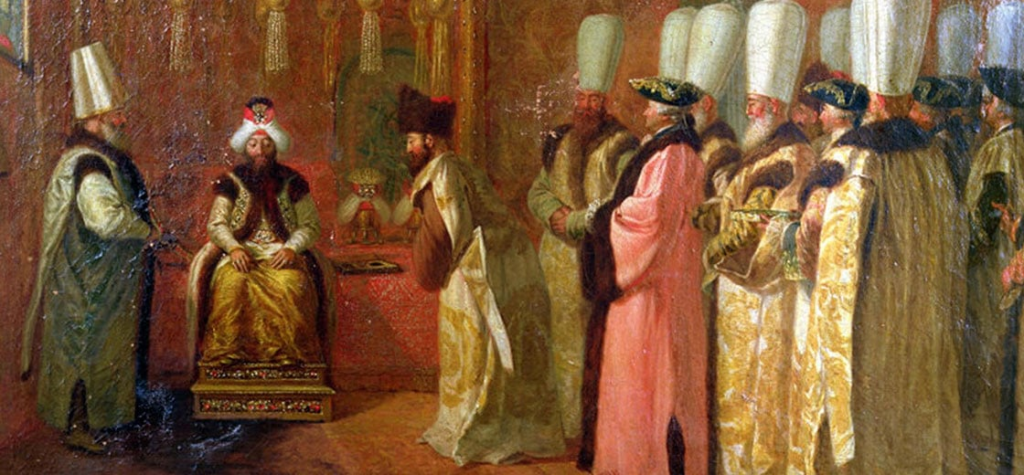
Ottoman Sultans were fascinated with caftans and wore caftans of various colours and patterns made from precious fabrics. Historians say that the origin of caftans go back as far as 1500 BC to ancient Persia but spread across central and western Asia but it is an undeniable fact that Ottomans loved it and embraced it with full force.
What strikes one living in the modern world is that these caftans worn by the elite men of the Ottoman society had incredibly vibrant colours and rich patterns, something unimaginable for most men in the modern world.
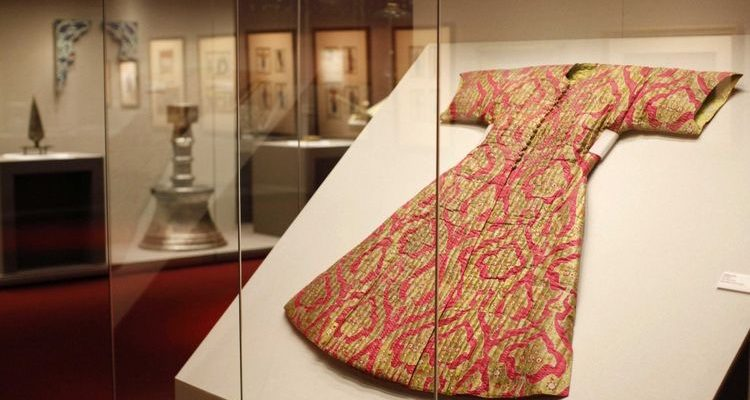
Topkapı Palace was the first palace of the Ottomans when they conquered İstanbul in the 15th century and this palace has a special section dedicated to the caftans of the Ottoman Sultans. I would highly recommend you to visit it to see a wide range of extraordinary caftans starting from the 15th century worn by Ottoman Sultans.
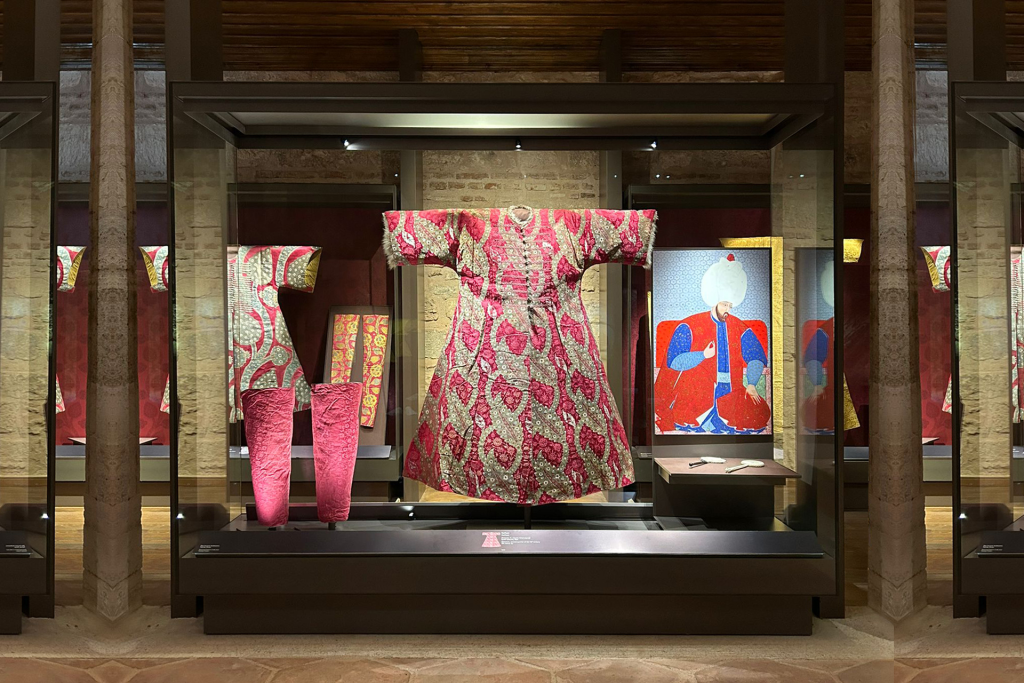
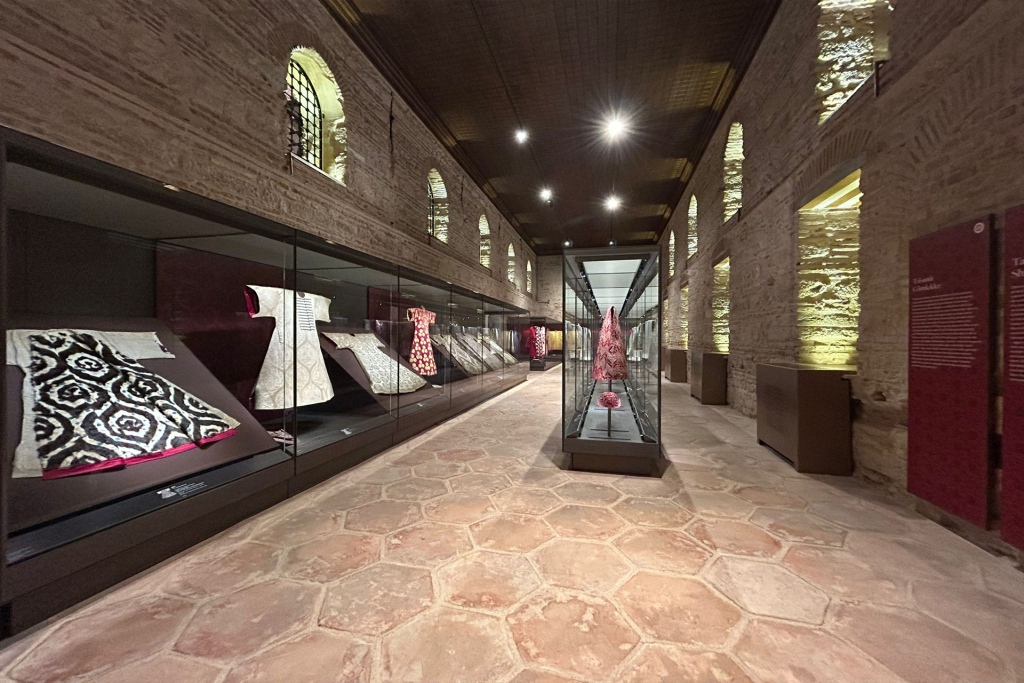
What is even more fascinating is that the caftan of Fatih Sultan Mehmet who conquered İstanbul is also displayed at Topkapı Palace.
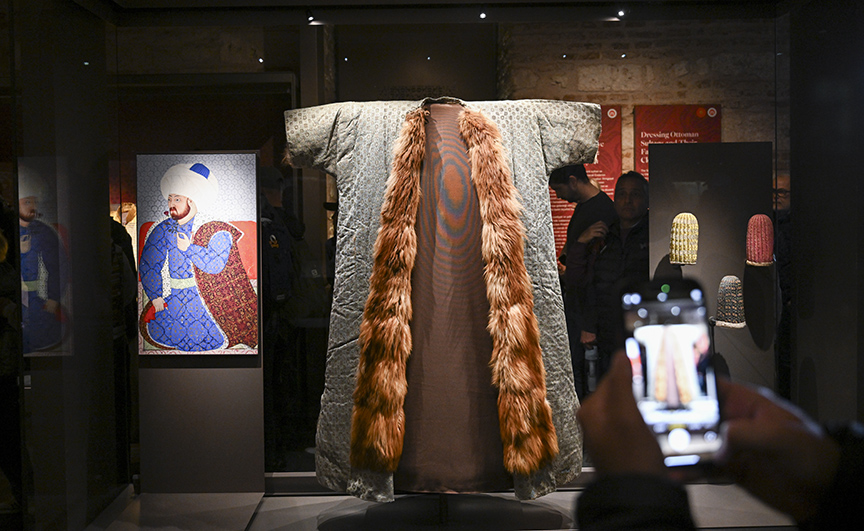
You can see the caftan of Fatih Sultan Mehmet next to his painting depicting him wearing it in the 15th century. Note that the fur is inside the caftan which was commonplace at the time unlike today.
Many fashion designers from across the world have been inspired by caftans and here is a photo of Pierre Cardin in 1972 when he was visiting Topkapı Museum, looking at the caftan of Murad III.
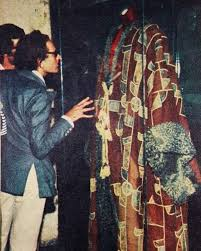
Pierre Cardin looking close up at the Caftan of Murad III in 1972
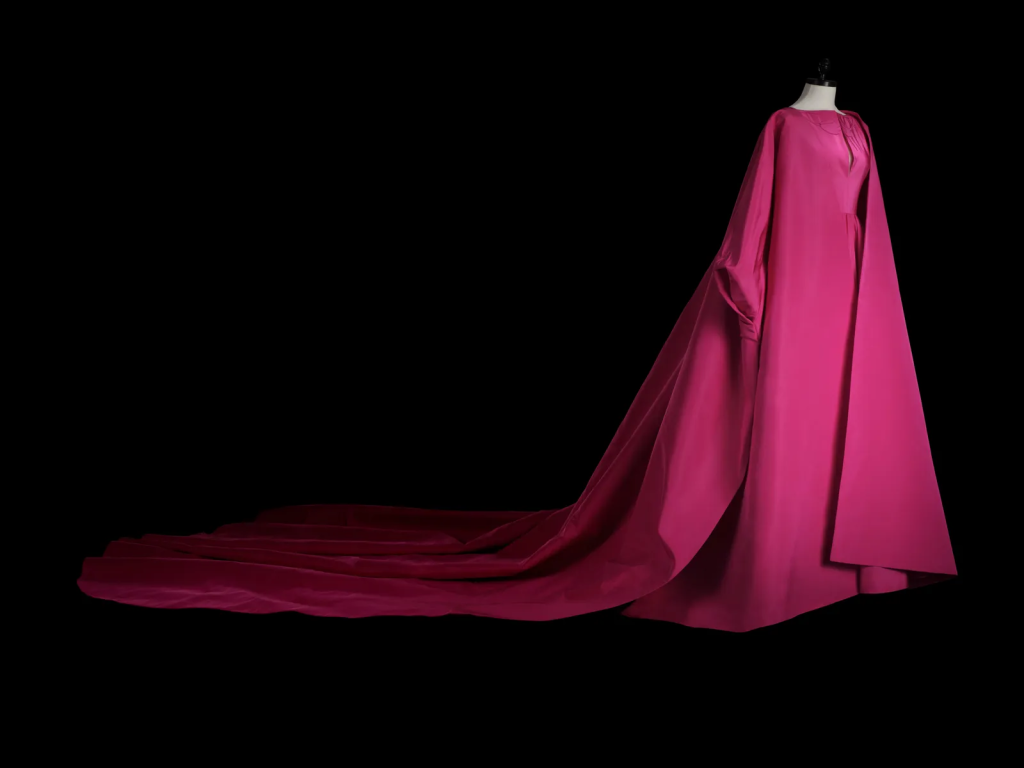
Although caftans were a common attire for Ottoman male elites, today fashion designers are designing caftans or garments inspired by caftans for their female clientele. Naeem Kaan and Oscar de la Renda are one of the examples of contemporary designers inspired by the caftans.

Naeem Kaan, 2013
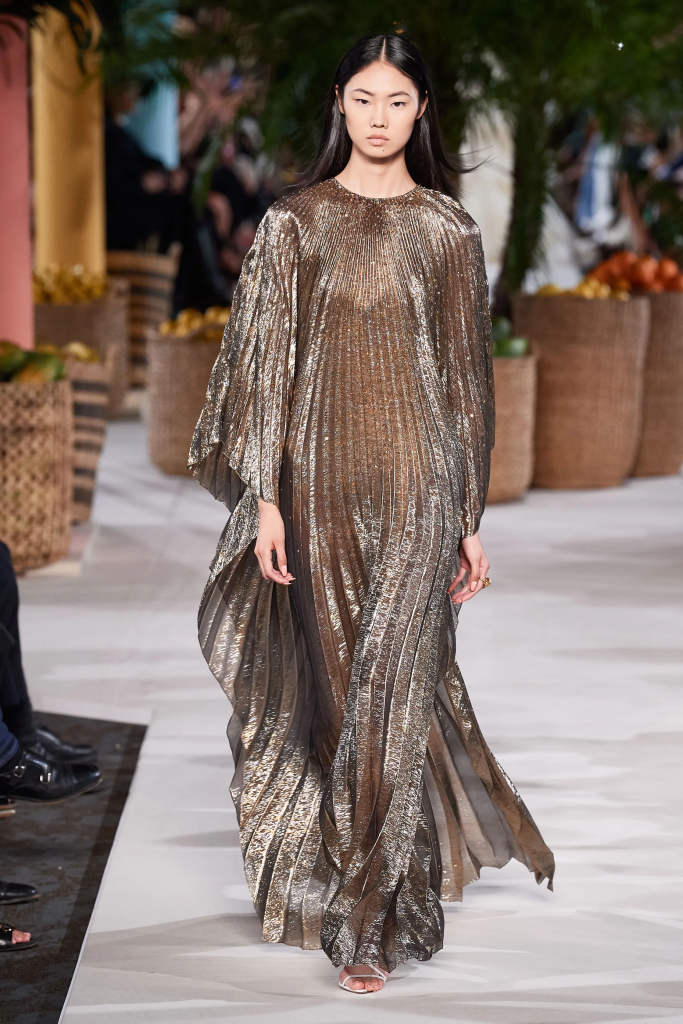
Oscar de la Renda, 2020
Note that this fascinating piece in the Golden Opulence Exhibition of Beymen on its 50th anniversary was also inspired by Ottoman caftans.
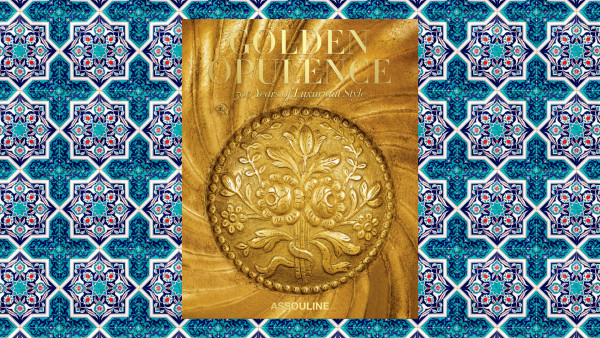
The Golden Opulence Exhibition was held in 2023 in İstanbul