

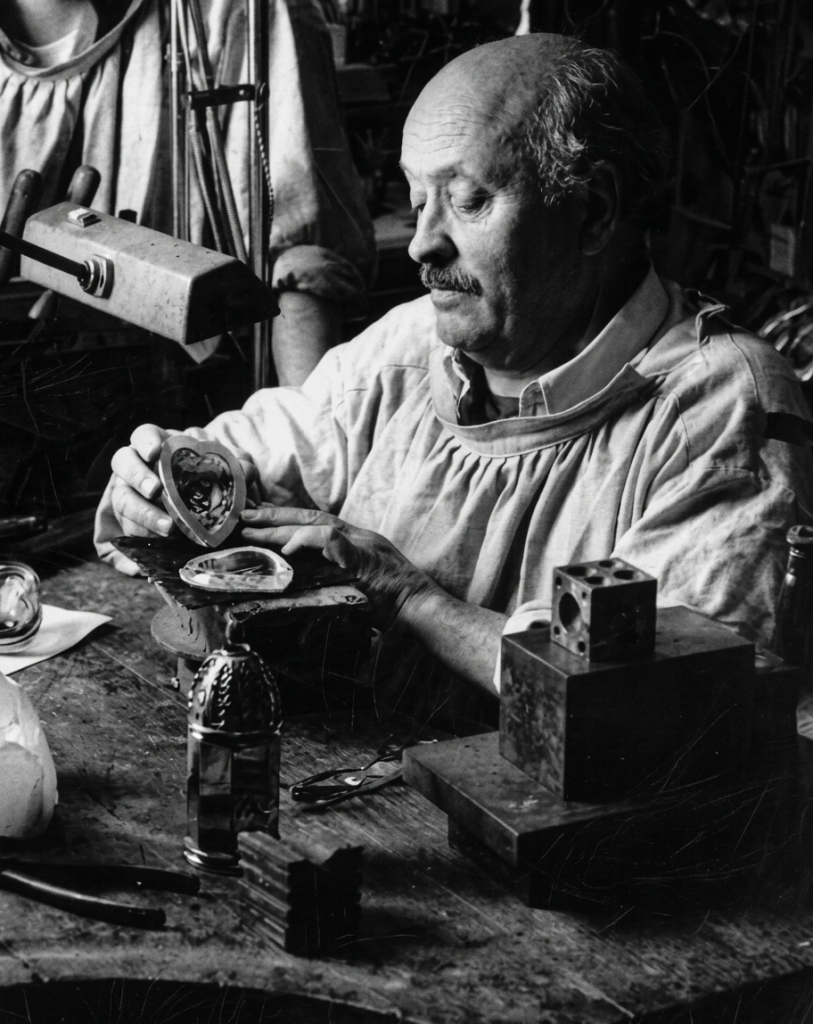
Few jewellery designers of the twentieth century succeeded in bridging the distance between ancient civilisations and modern fashion as imaginatively as Robert Goossens (1927–2016). Known as Monsieur Bijou, the French goldsmith and sculptor transformed historical artistic traditions into extraordinary creations for some of the greatest names in haute couture. Among his many sources of inspiration, the Byzantine Empire held a particularly captivating place.
The Golden Splendour of Byzantium
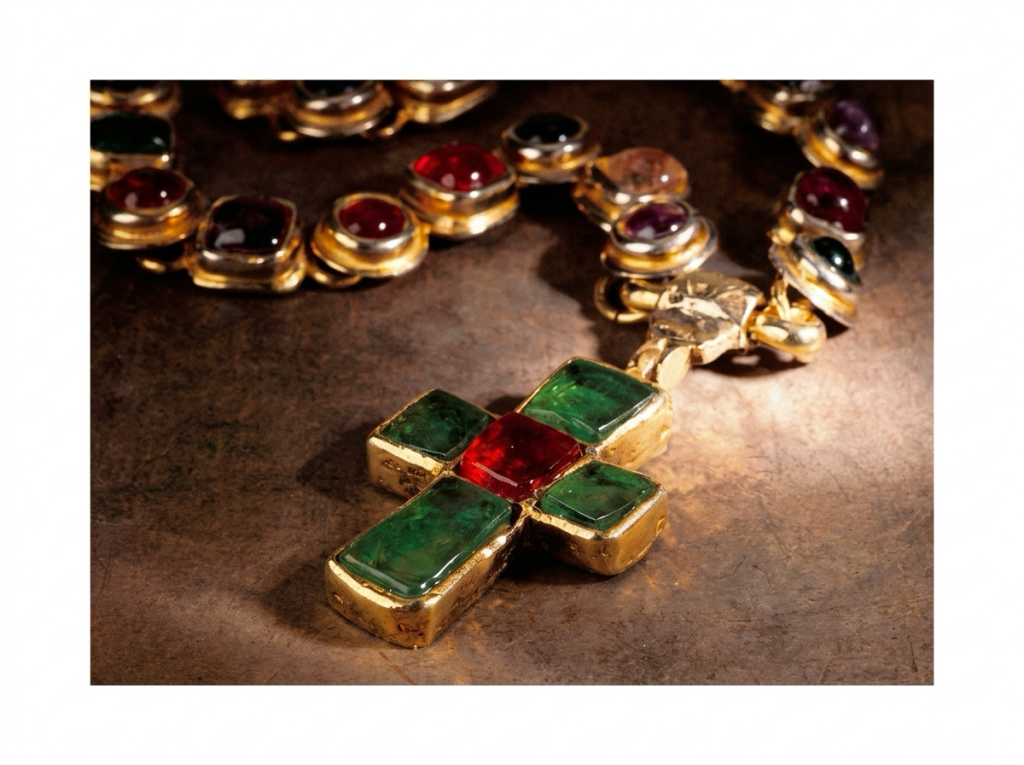
A cross by Goossens inspired by Byzantine art
For more than a millennium, Constantinople was one of the world’s greatest centres of artistic production. Byzantine goldsmiths developed sophisticated techniques, combining precious metals, gemstones, pearls and enamel to create objects of extraordinary refinement. Jewellery was not merely an expression of wealth; it also conveyed religious devotion, imperial authority and social distinction.
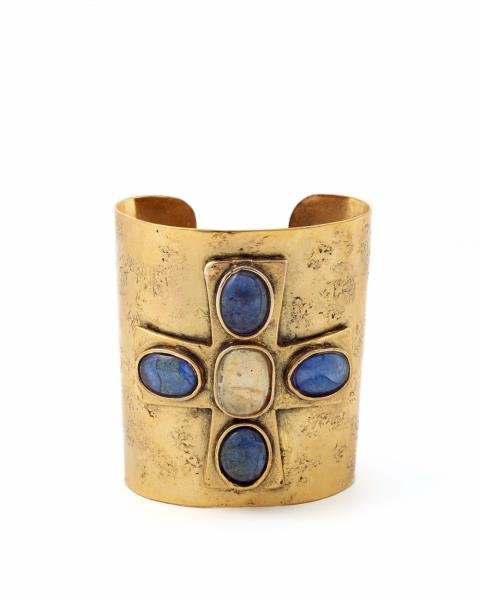
Bracelet by Goossens inspired by Byzantine art
The Byzantine aesthetic was characterised by its fascination with gold, light and colour. Monumental crosses, elaborate reliquaries and richly decorated ornaments reflected a world in which material splendour acquired an almost spiritual dimension. This combination of craftsmanship and symbolism became an important source of inspiration for Goossens.
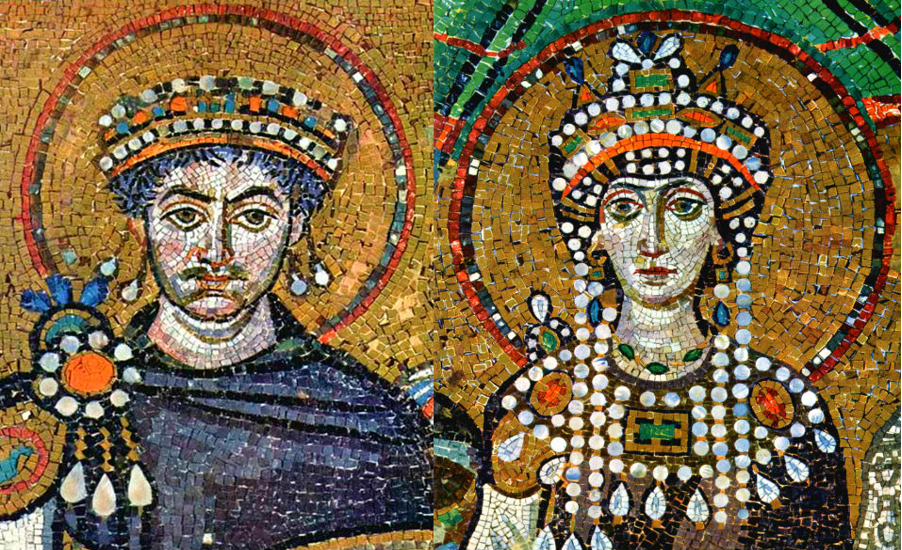
Mosaics of Empreror Justinianus and Empress Theodora reveal the richness of Byzantine jewelry
From Ancient Artefacts to Haute Couture
Born in Paris into a family of metalworkers, Goossens began his apprenticeship in 1942, at the age of fifteen, at the Bauer workshop. He established his own workshop in 1950, gradually developing a distinctive artistic language rooted in historical references and exceptional craftsmanship.
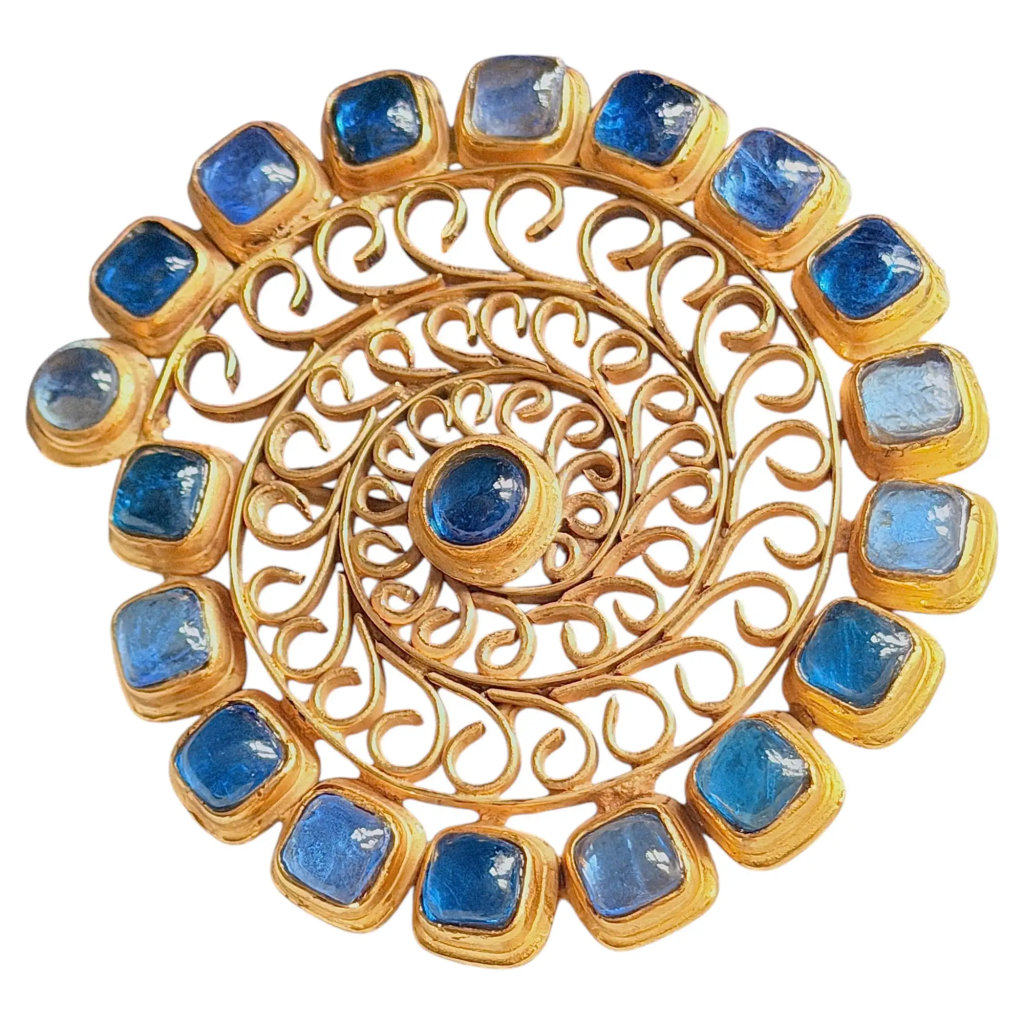
Byzantine style brooch designed for Balenciaga
Balenciaga was among his early haute couture patrons, commissioning jewellery that drew upon historical artistic traditions, including Byzantine-inspired crosses incorporating rock crystal.
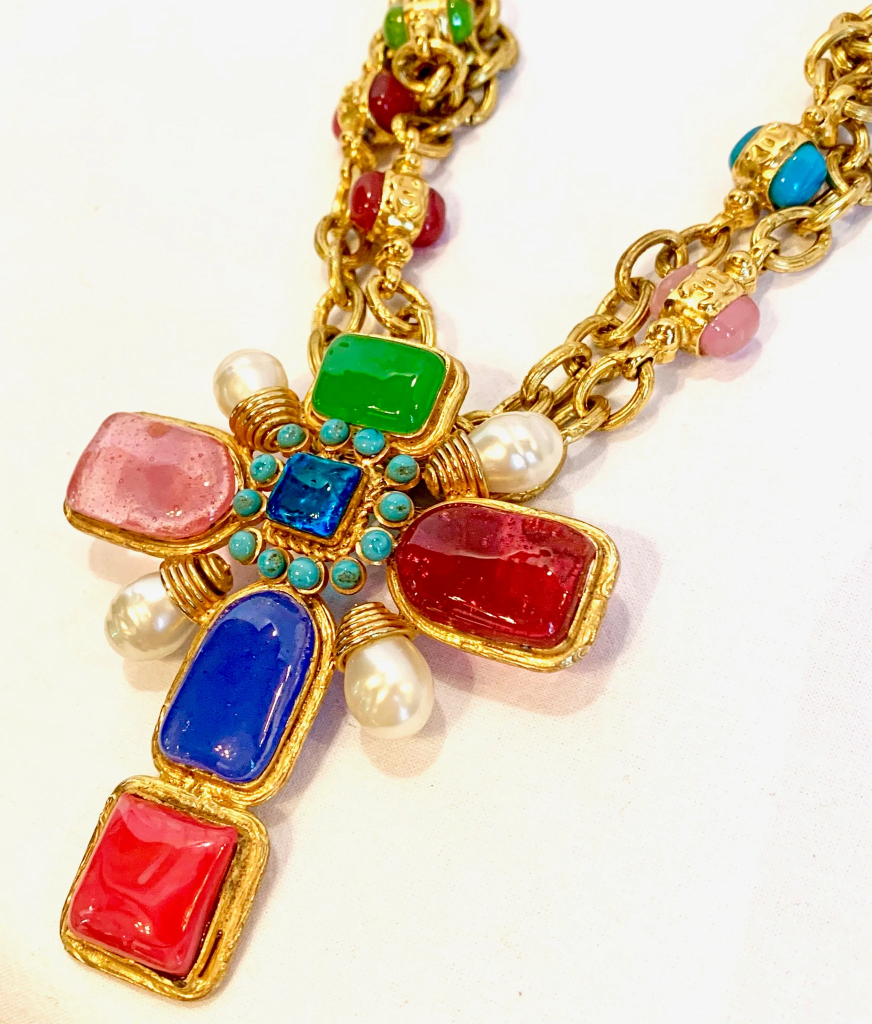
Byzantine style cross designed for Chanel
His encounter with Gabrielle Chanel in 1953–54 marked the beginning of one of the most remarkable creative partnerships in twentieth-century fashion. Sharing a fascination with historical jewellery, they explored the artistic heritage of ancient civilisations, particularly Byzantium, Persia, Greece and Rome. Rather than reproducing historical objects, they reinterpreted their forms and materials for modern fashion.
Byzantine Crosses, Gold and the Language of Light
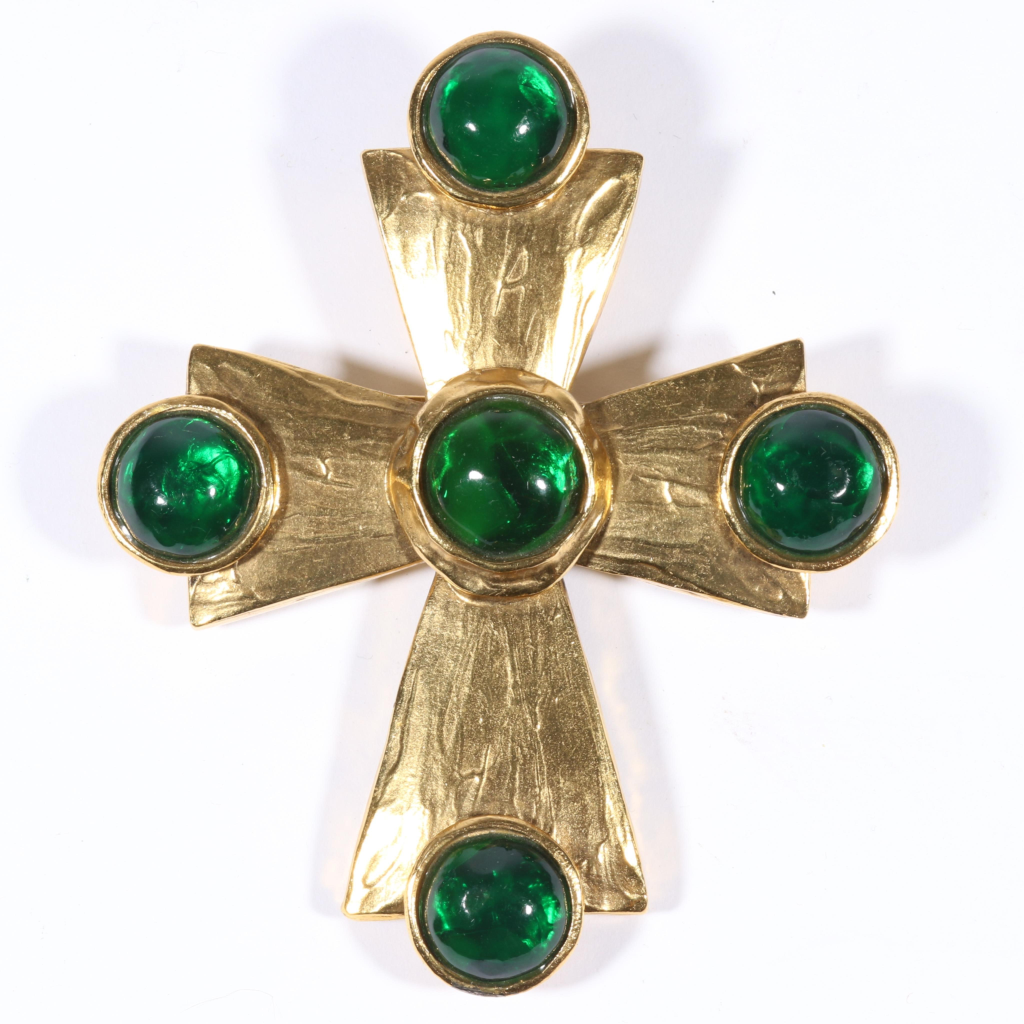
Byzantine style emerald green jelly cabochon cross pendant brooch designed for Yves Saint Laurent
Among Goossens’ most recognisable creations are his elaborate crosses, whose monumental forms recall Byzantine religious and ceremonial jewellery. Combining gilded metal, rock crystal and coloured decorative elements, these pieces evoke the magnificence of ancient reliquaries.
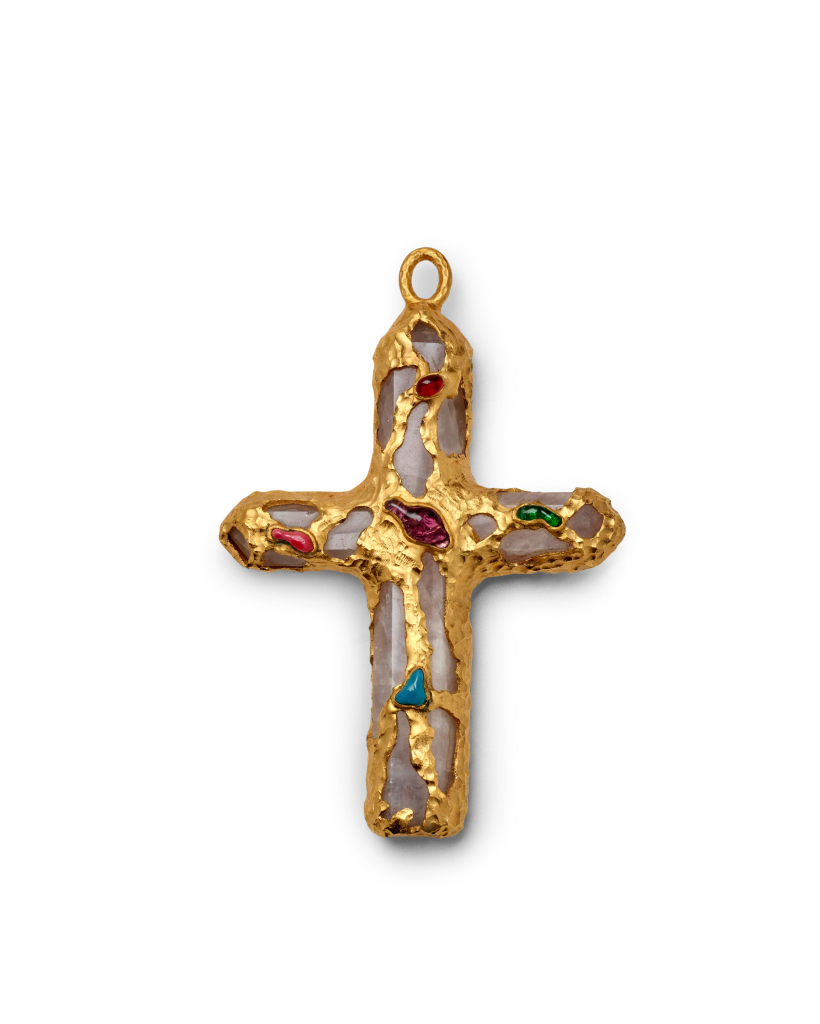
Byzantine style rock crystal cross designed for Chanel, 1993
Rock crystal became one of his signature materials. Its transparency and ability to capture light complemented the warmth of gold and the intensity of coloured stones.
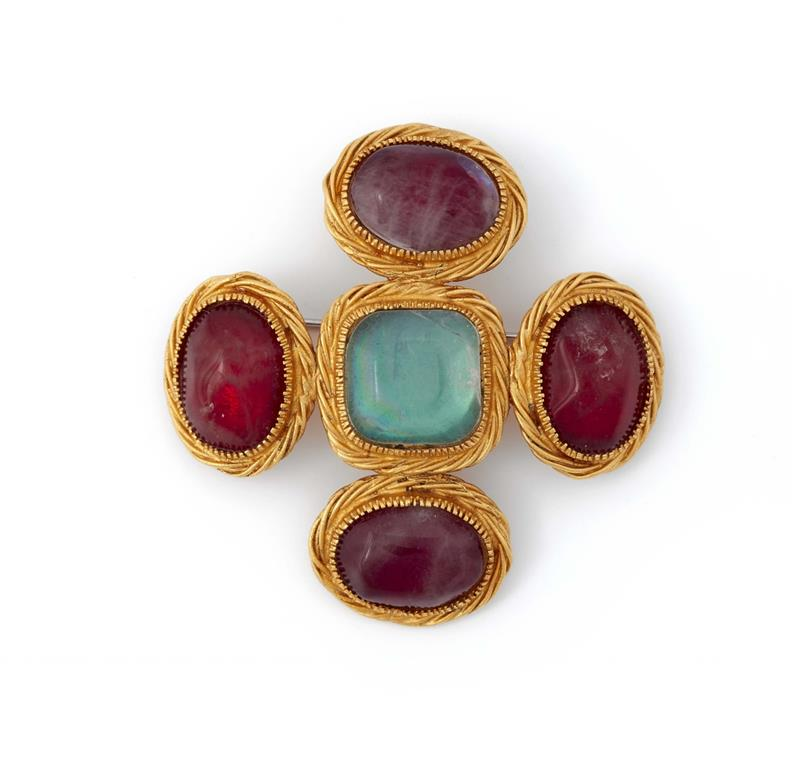
Byzantine style cross brooch for Chanel, mid 1960s
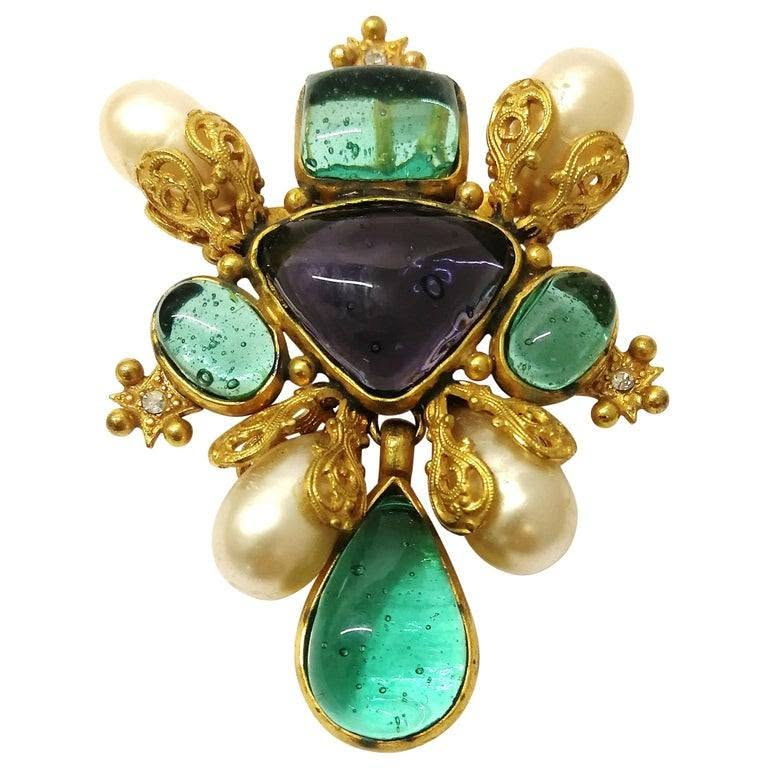
Byzantine style cross designed for Chanel
Goossens also revisited historical goldsmithing techniques, including cloisonné, in which thin metal partitions create compartments for enamel or other decorative materials. His creations frequently combined gilded bronze, turquoise, coral, pearls and semi-precious stones, demonstrating that artistic value depended as much on imagination and craftsmanship as on the intrinsic worth of materials.
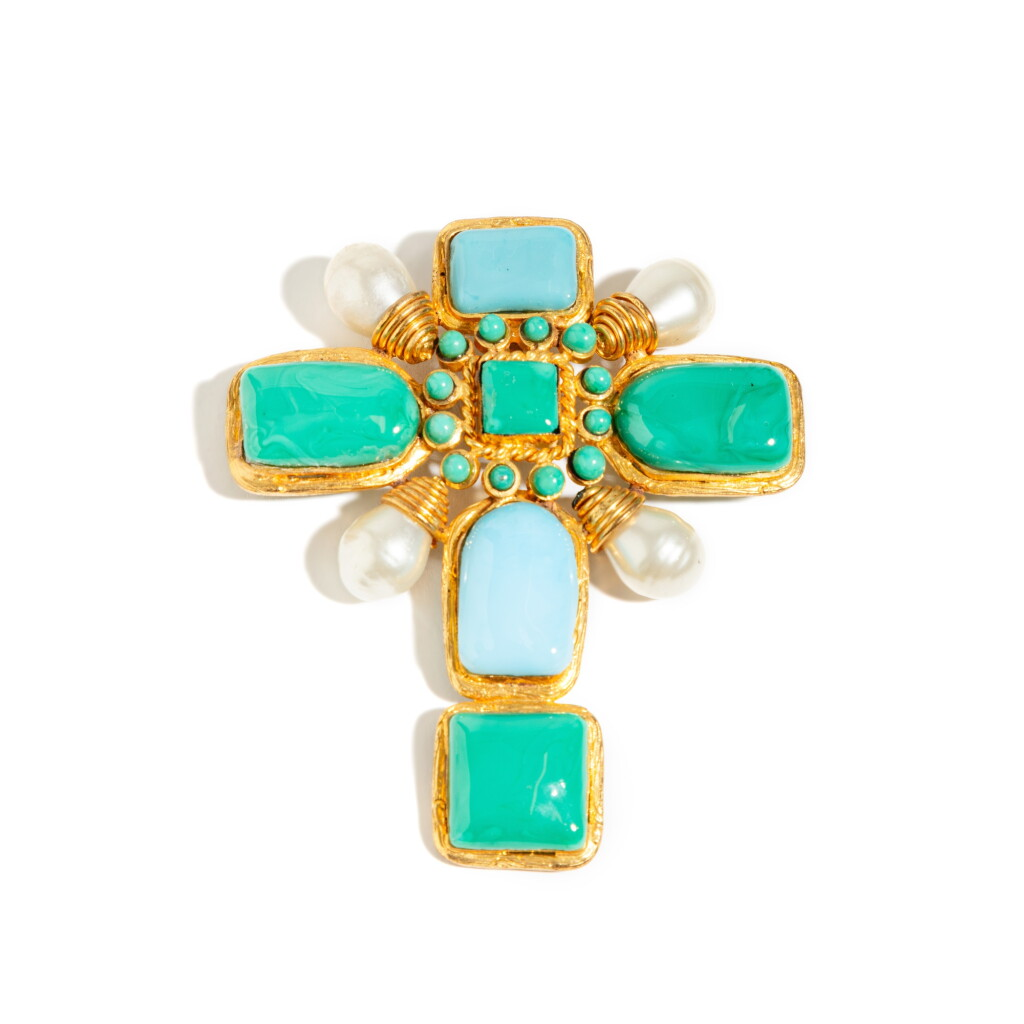
Byzantine style cross for Chanel, 1993
The Enduring Legacy
Goossens also collaborated with Yves Saint Laurent, Elsa Schiaparelli and Madame Grès, bringing his extraordinary craftsmanship into different creative worlds. His work continued to draw upon historical and geographical traditions, from classical antiquity to medieval Europe.
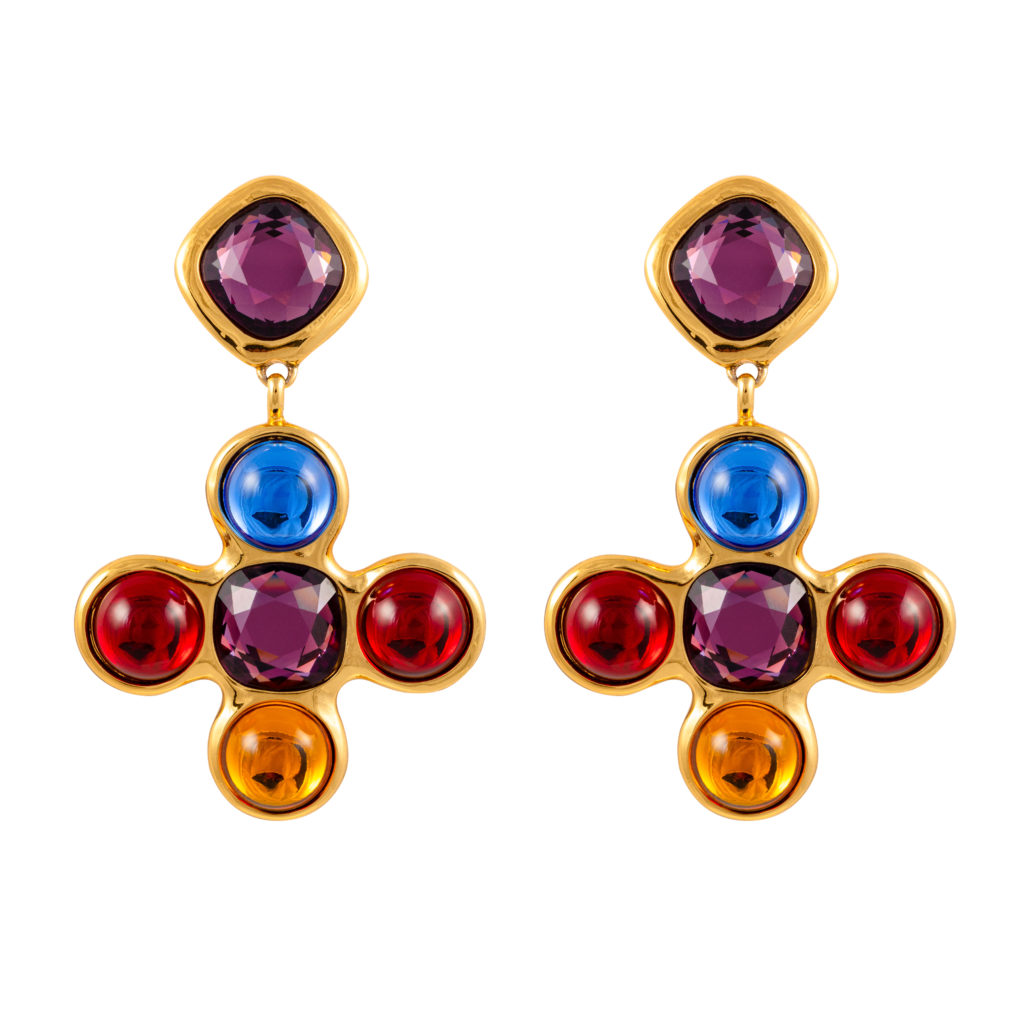
Earrings by Goossens inspired by Byzantine art for YSL
In 2005, Chanel acquired his atelier, preserving an important part of his artistic heritage. Today, his creations can be found in museum and private collections, including the Musée des Arts Décoratifs in Paris.
Robert Goossens’ genius lay in his ability to make history tangible again. The splendour of Byzantium, once expressed through the goldsmiths of Constantinople and the treasures of its imperial court, found a new interpretation in the ateliers of twentieth-century Paris.
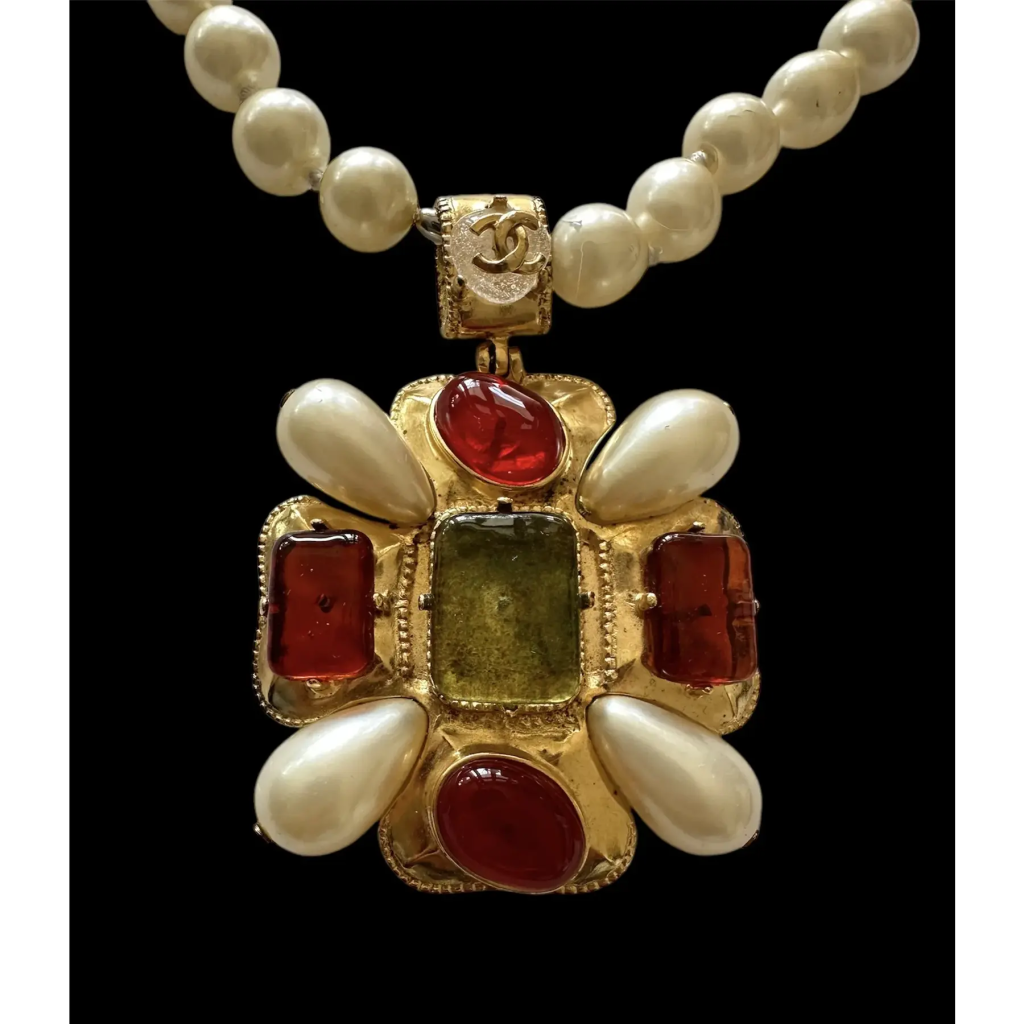
Necklace by Goossens inspired by Byzantine art for Chanel, 1997
He did not attempt to recreate the Byzantine world. Instead, he rediscovered its visual language and allowed it to speak in a different artistic era. In his hands, gold became more than a precious material: it became a medium of light, memory and imagination, a bridge connecting the artistic heritage of Constantinople with the modern world of haute couture.
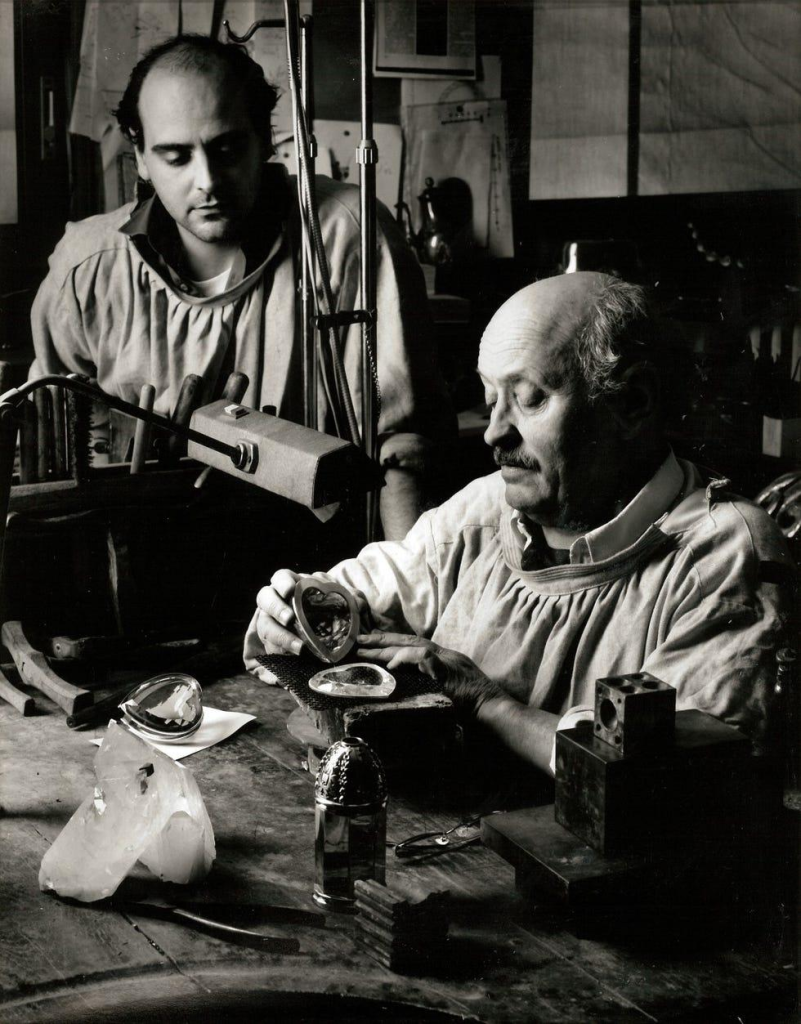
The great master with his son
If you are curious about the legacy of the grand master, here is his story for you:
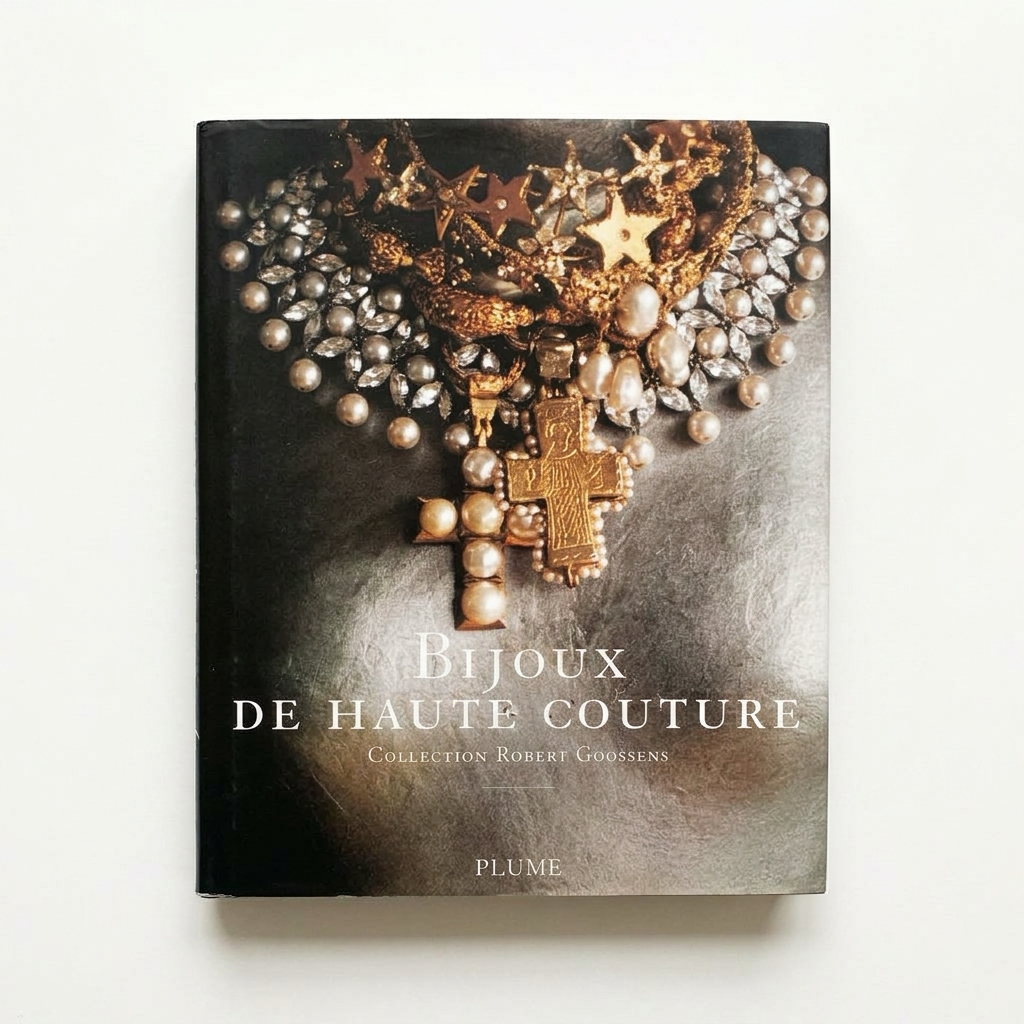
Note that the video is embedded via YouTube and all rights belong to the respective rights holders.