
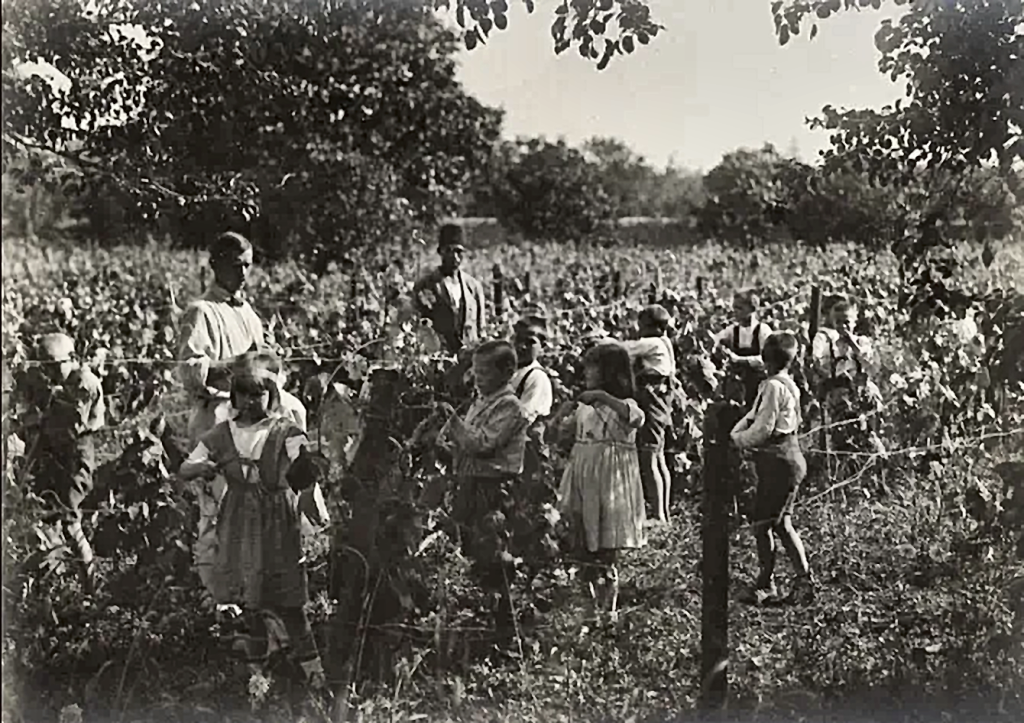
A glimpse at an old Erenköy vineyard (visual is taken from wayanatapas.com)
It is difficult to imagine today, but Istanbul was once a city of vineyards, orchards and vegetable gardens. Long before concrete apartment blocks and crowded avenues transformed its landscape, large parts of the city were covered with vines. Vineyards were not merely agricultural spaces; they were an essential part of Istanbul’s economy, social life and cultural identity.
According to historical records, Istanbul had approximately 50,000 decares of vineyards in 1896. From Erenköy, Göztepe and Kızıltoprak on the Asian shore to Çamlıca, Yakacık and the villages along the Bosphorus, viticulture was deeply rooted in the city’s landscape. Grapes were cultivated for eating, grape must and wine production, and certain neighbourhoods became associated with their own local varieties.
The nineteenth century brought considerable challenges to this tradition. The phylloxera epidemic, which devastated vineyards throughout Europe, eventually reached the Ottoman Empire. Efforts to revive viticulture included the introduction of resistant American rootstocks, the establishment of nurseries and the distribution of vine cuttings. Kızıltoprak and Erenköy were among the areas involved in these initiatives.
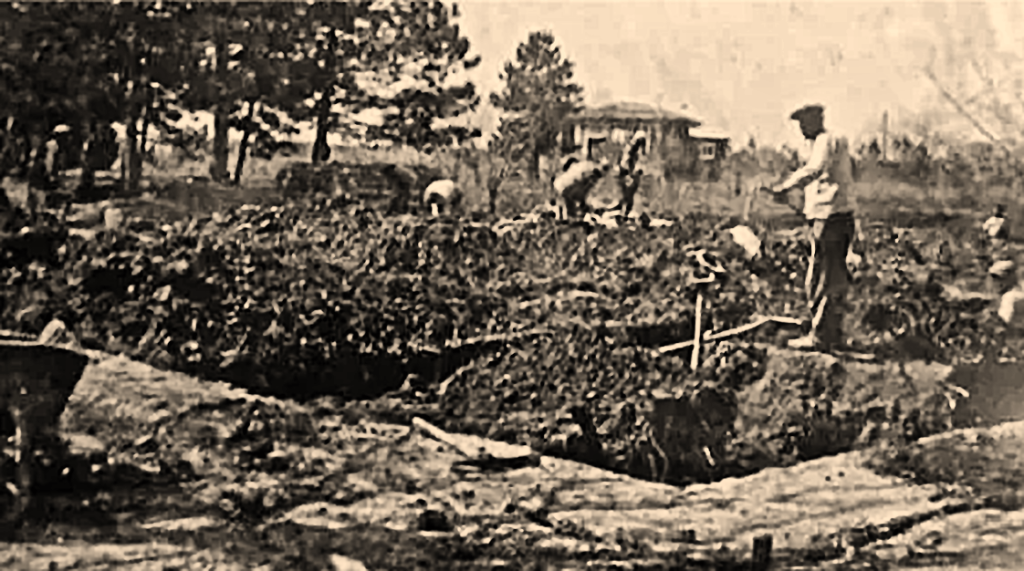
A glimpse at an old Erenköy vineyard (visual is taken from wayanatapas.com)
Erenköy Beyazı: A Forgotten Heritage
One discovery related to the vineyards of Istanbul particularly surprised me. I learned that even a newly built residential development, Apartman 18 on Ömerpaşa Street, had actually drawn inspiration from the vineyards that once covered the surrounding area where I live.
Having known this neighbourhood since the 1970s, I was genuinely astonished. I had never heard that the streets I knew so well had once been surrounded by vineyards. It is remarkable that such an important part of the area’s history could have disappeared so completely from local memory.
Another fascinating detail was the existence of a grape variety called Erenköy Beyazı (Erenköy White), associated with wine production, alongside Erenköy Siyahı (Erenköy Black). The neighbourhood where I grew up once had its own viticultural identity.
Vineyards, Music and the Summer Culture of Istanbul
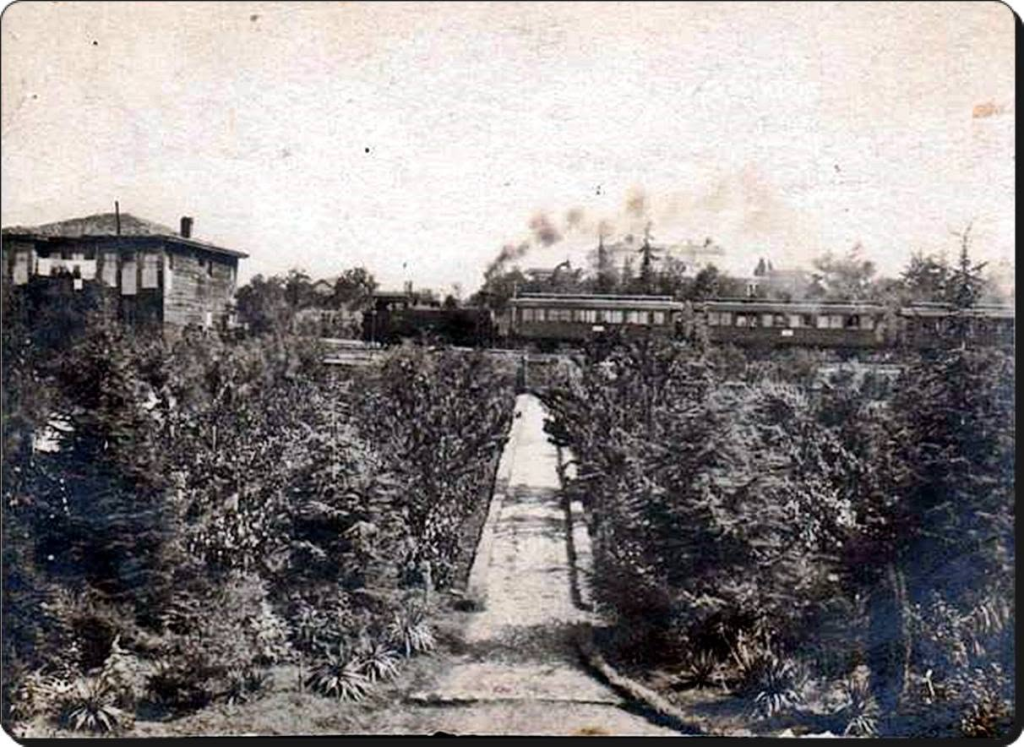
Erenköy, 1917
The vineyards were also part of a much wider culture of summer living. Erenköy, Göztepe, Caddebostan, Kalamış and Fenerbahçe were once celebrated as peaceful summer retreats, with elegant houses, gardens, orchards and open spaces. Families spent their summers there, visited one another, organised outdoor gatherings and enjoyed a slower, more leisurely way of life.
Music was an integral part of these gatherings. Gardens and vineyards were places for conversation, singing, dancing and entertainment. The old Istanbul press occasionally described these gatherings, offering glimpses of a social world that has largely disappeared.
One particularly evocative musical reminder is the old Turkish song Dün Göztepe’nin Neş’eli Bir Âlemi Vardı — “Göztepe Once Had Such Joyful Gatherings.” Even its title seems to carry the atmosphere of a vanished neighbourhood: its gardens, summer evenings, social encounters and carefree pleasures.
I was fortunate enough to experience the very last echoes of that summer-resort culture. Having known the area since the 1970s, I remember a time when its former character had not yet entirely disappeared. Today, however, the transformation is almost complete. Much of the neighbourhood has become a dense mass of concrete buildings and an endless stream of cars. The gardens, open spaces and greenery that once defined its character have largely given way to urban congestion.
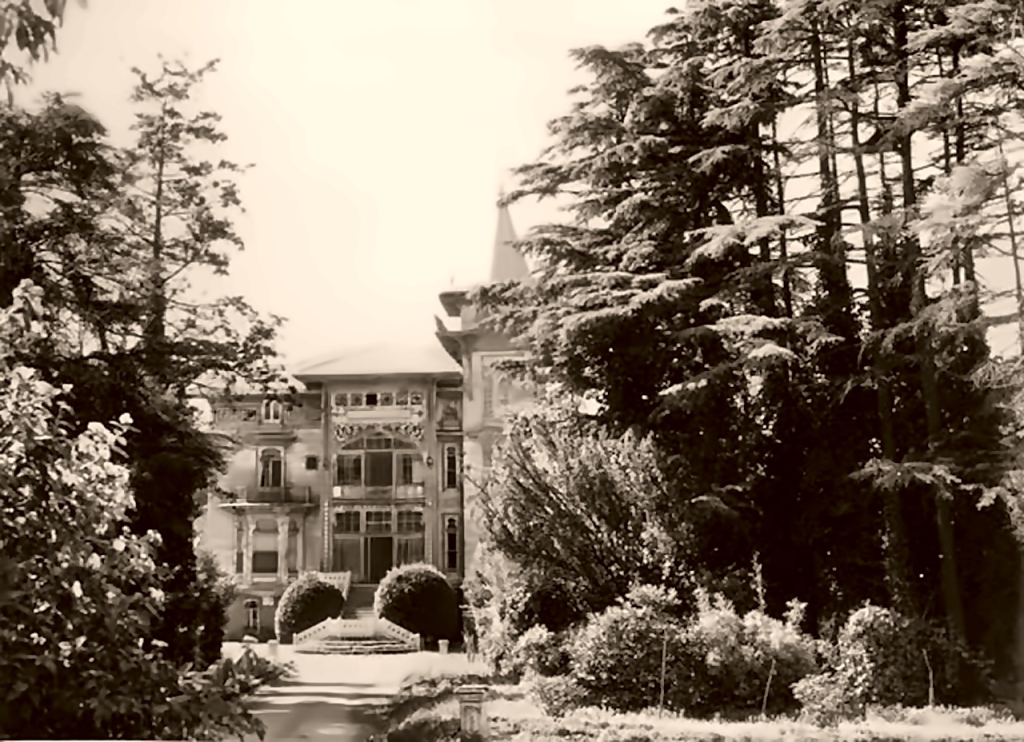
Mansion of Dr. Cemil Topuzlu in Çiftehavuzlar (visual is taken from lcivelekoglu.blogspot.com)
Listening to the song today, I cannot help thinking about the distance between the world it evokes and the place we now inhabit. It is almost as though the music has preserved a memory that the city itself has forgotten.
When a City Loses More Than Its Vineyards
The disappearance of Istanbul’s vineyards was the result of several developments: agricultural challenges, changing economic conditions, population growth and, above all, the relentless expansion of the city. As the twentieth century progressed, vineyards and orchards increasingly gave way to roads, residential developments and apartment blocks.
Yet something much more significant was lost in this transformation. Along with the vineyards disappeared local grape varieties, agricultural knowledge, traditional practices and a particular relationship between people and the land. The names of neighbourhoods survived, but their original landscapes and associations gradually faded from collective memory.
Istanbul is usually celebrated for its monumental history: Byzantium, Constantinople, the Ottoman Empire, its palaces, churches and mosques. But there is another, more intimate history that deserves attention — a history of vineyards, gardens, summer houses, music, food and everyday pleasures.
Perhaps this is the history we should also learn to cherish.
The vineyards of Istanbul may be gone, but their memory survives in archival photographs, historical records, forgotten grape varieties, neighbourhood names and songs such as Dün Göztepe’nin Neş’eli Bir Âlemi Vardı.
And sometimes, quite unexpectedly, it emerges in the architectural inspiration of a new apartment building on a street where vines once grew.
A city is not made only of the buildings that remain. It is also made of the landscapes, lives and memories that have disappeared. Perhaps it is time to remember!
Reference: https://www.wayanatapas.com/istanbulun-kaybolan-baglari/
Note that the video is embedded via YouTube and all rights belong to the respective rights holders.