
The ancient world was more interconnected than we often imagine today. Imagine a road that once connected Rome and Constantinople, two of the greatest cities of the Roman Empire.

Via Egnatia that connected two halves of the Roman Empire can be traced on this map
Beginning at the Adriatic ports of Dyrrachium (modern Durrës, Albania) and Apollonia, the road crossed Macedonia and Thrace, passing through key cities such as Thessalonica, Philippi, and Adrianople before reaching Byzantium, which was later renamed Constantinople by Emperor Constantine. Its broad stone paving, engineered bridges, and milestones reflected the Roman commitment to durable, reliable infrastructure, most of which has survived till today.

Ancient Via Egnatia in Kavala
The Via Egnatia was one of the most important highways of the Roman world, serving as a vital link between the western and eastern halves of the empire. Constructed in the 2nd century BC under the proconsul Gnaeus Egnatius, it stretched more than 1,100 kilometers across the rugged landscapes of the Balkans.
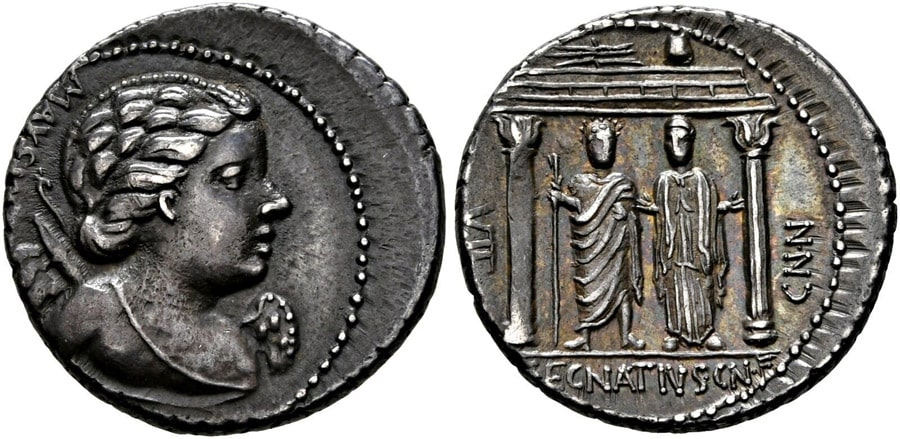
Coins printed in the name of proconsul Gnaeus Egnatius
For centuries, the Via Egnatia carried legions, merchants, pilgrims, and diplomats. It was along this route that Paul the Apostle spread Christianity, and later, Byzantine emperors relied on it to defend and administer their territories.

Saint Paul the Apostle
As trade and ideas flowed across its length, the road became not only a military asset but also a cultural bridge between East and West.
The end of the Via Egnatia was the Golden Gate which the Byzantines called Porta Aurea. Let’s lend an ear to its significance:
The Golden Gate (Latin Porta Aurea, Greek Χρυσεία Πύλη) was a monumental triumphal gate of Constantinople. Situated at the southern end of the Theodosian Walls, it marked the beginning of Constantinople’s main street, the Mese, and the end of the Via Egnatia. It originally had bronze statues of Emperor Theodosius and an elephant quadriga as well as gilded bronze doors after which the gate was named. In the mid-15th century, the Golden Gate was incorporated into the Ottoman fortress of Yedikule (“Seven Towers”). (taken from the byzantinelegacy.com).
Here is a reconstruction of the Golden Gate which is currently the fortress of Yedikule which of course has lost most of its grandeur!
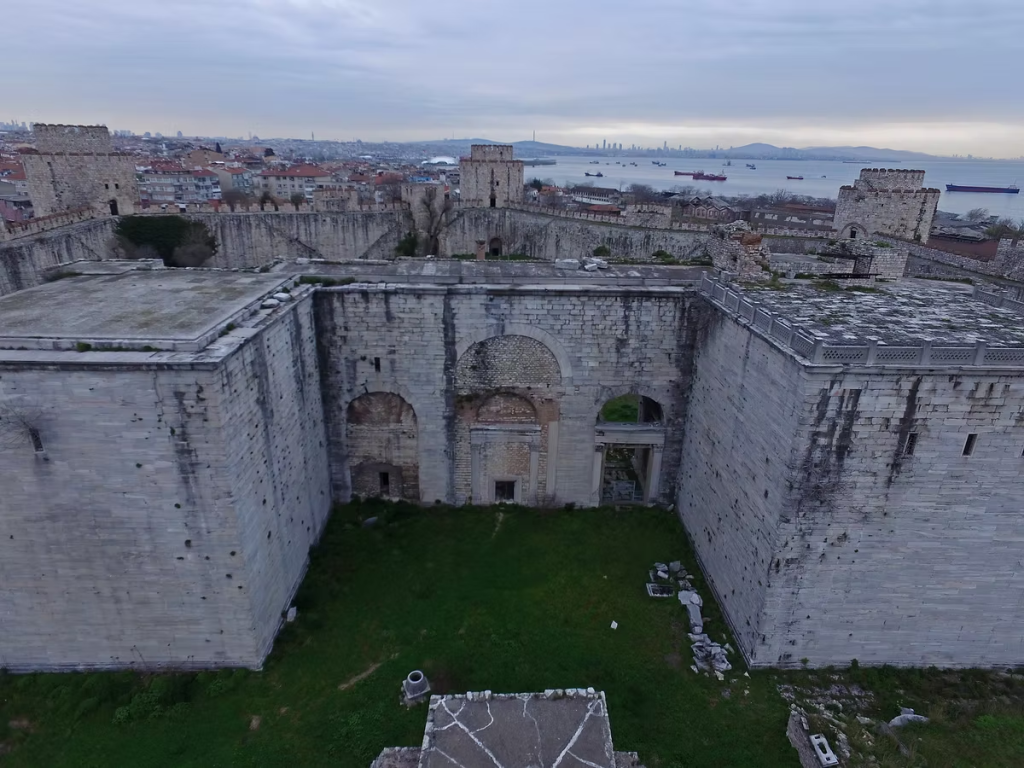
Yedikule Fortress in modern day Istanbul
Even after the fall of Rome, the Via Egnatia remained crucial under Byzantine and later Ottoman rule. Today, parts of its course are still followed by modern highways, a reminder that this ancient road once bound together the two greatest cities of the Roman world!