
Dedicated to my father Mustafa Feridun Doğrusöz and all the gentlemen and ladies of his generation!
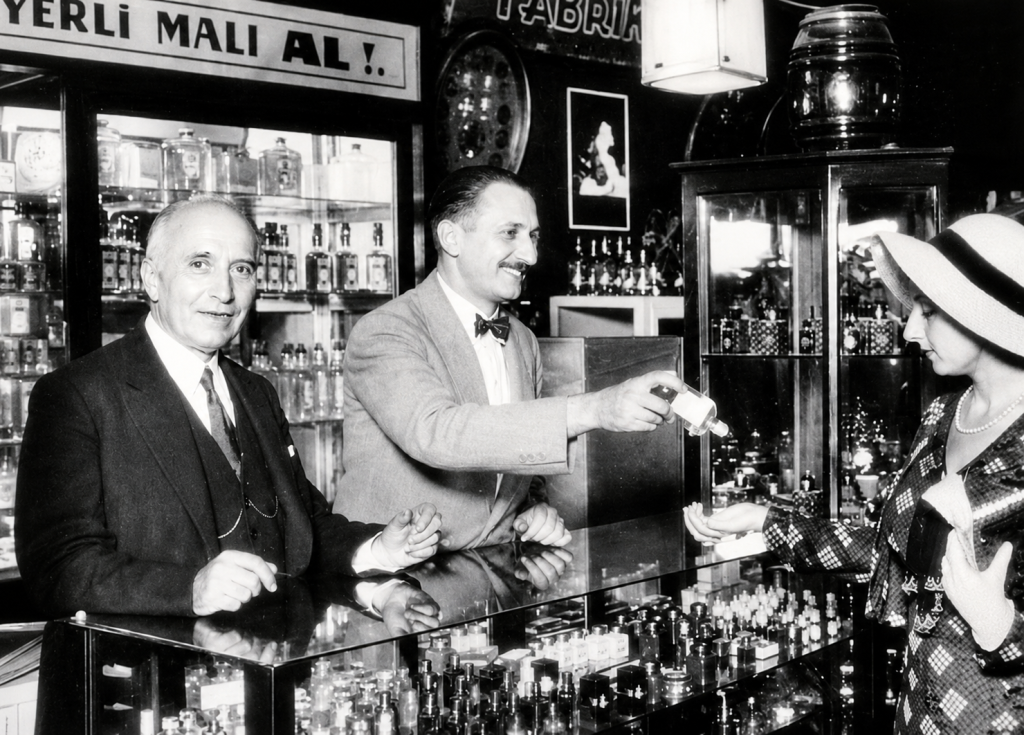
Photo by Selahattin Giz, A perfume store in Istanbul, 1930s
There was once a particular way of being that belonged to Istanbul.
It was never about wealth, social class, or education alone. Nor was it confined to Muslims, Christians, Jews, Armenians, Greeks or Levantines. It was something shared by those who had absorbed the city’s rhythm over generations—a quiet urban culture expressed in manners rather than words.
An Istanbul hanımefendisi (lady) was recognised not by expensive clothes but by grace. An Istanbul beyefendisi (gentleman) was known not by power but by restraint. They spoke softly. They rarely interrupted. They listened. They apologised without humiliation and disagreed without hostility. They respected personal space, queued without being asked, greeted strangers politely, and treated waiters, shopkeepers, neighbours and servants with the same courtesy they showed to their social equals.
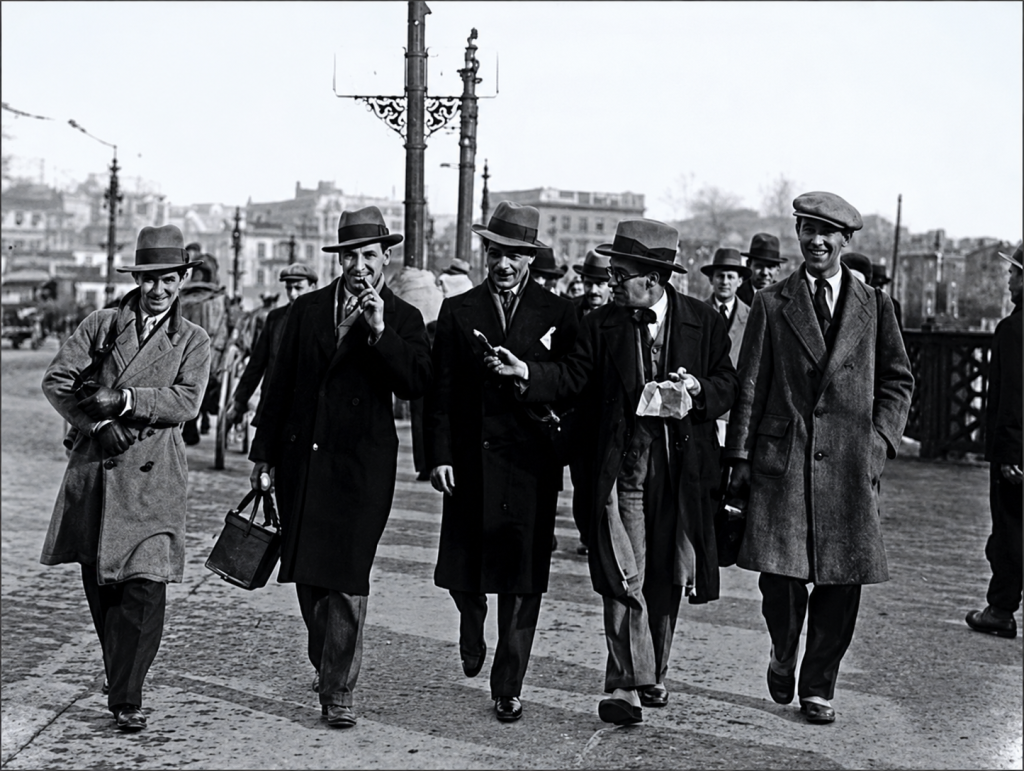
Faik Şenol , Ali Ersan , Hilmi Şahenk , Namık Görgüç ve Selahattin Giz on Galata Bridge, 1930s
Old photographs reveal this world with remarkable clarity. Ladies carrying umbrellas stroll along İstiklal Avenue. Gentlemen remove their hats in greeting. Ferry passengers wait patiently before boarding. Tram conductors, street vendors and policemen all seem to participate in an unspoken choreography of mutual respect.
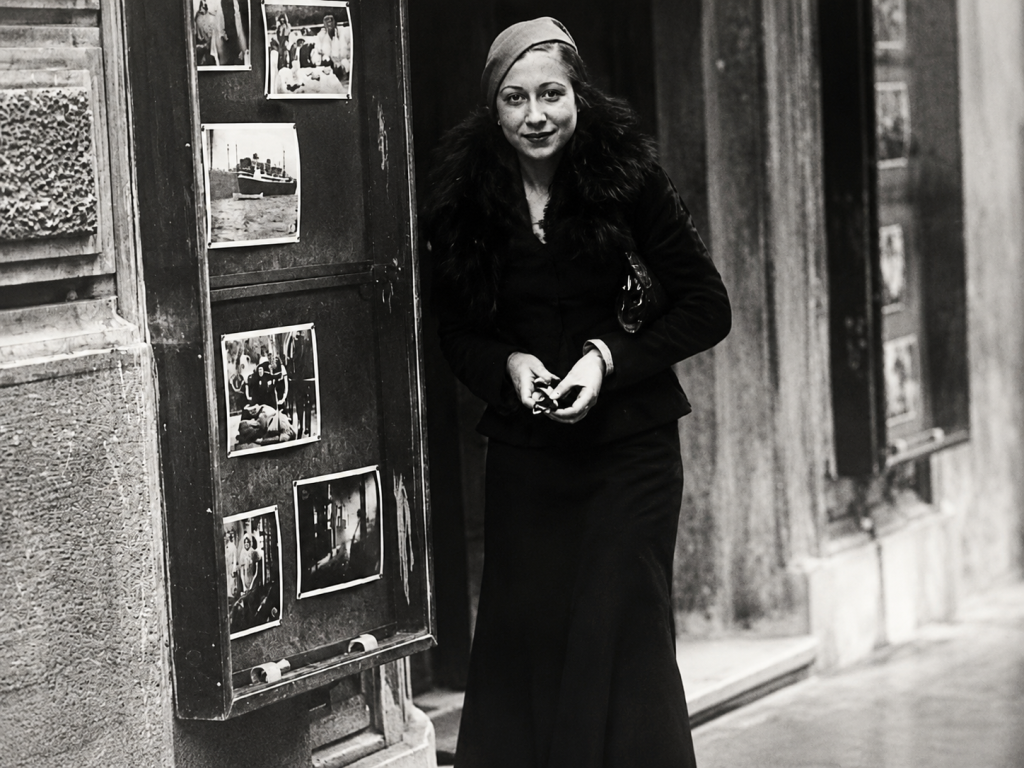
An Istanbul Lady, 1930s (Photo by Selahattin Giz)
Of course, nostalgia can deceive us. Istanbul was never a paradise. Poverty, inequality and political conflict existed alongside elegance. Yet it is difficult to deny that the city once possessed a distinctive etiquette, a shared understanding of how one should behave in public.
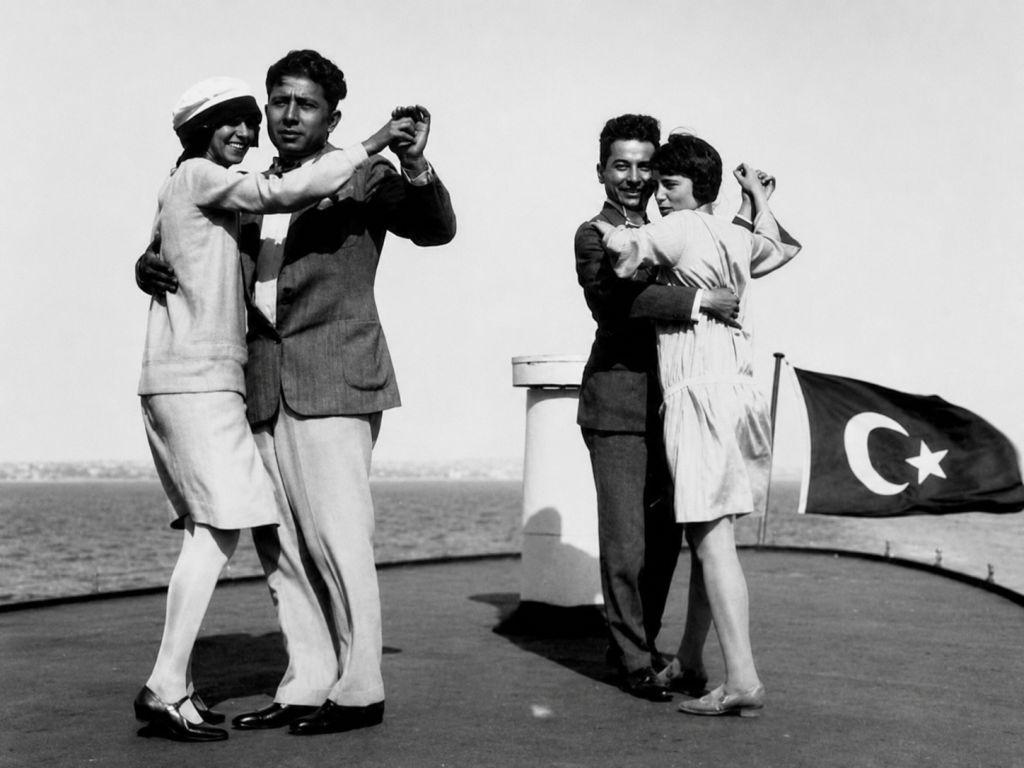
İşbank employees are dancing on the 5th anniversary of the establishment of İşbank, 1929
(photo by Selahattin Giz)
Where has all this grace gone?
The answer cannot be reduced to a single event, but the decades following the 1950s marked a profound turning point. Turkey entered an era of rapid industrialisation and internal migration on an unprecedented scale. Istanbul’s population exploded within a generation. Entire neighbourhoods appeared almost overnight. The city that had evolved gradually over centuries suddenly found itself struggling to accommodate millions of newcomers while simultaneously losing much of the cosmopolitan population that had helped shape its urban culture.
This was not a story of one group replacing another. Nor was it a question of geography. People arriving from Anatolia brought with them rich local traditions, values and forms of hospitality. But every great city has its own unwritten code of public behaviour, learned slowly through everyday life. When a city’s population changes more rapidly than its institutions, neighbourhoods, and cultural memory can adapt, that shared code inevitably begins to weaken.
At the same time, another force was transforming urban life across the world. Modern cities became faster, noisier and more individualistic. Cars replaced walking. Apartment blocks replaced neighbourhoods where generations knew one another. Consumerism rewarded visibility over modesty. Social media later encouraged performance rather than civility. The ideal of the dignified gentleman or lady gradually gave way to the more celebrated virtues of confidence, assertiveness and self-promotion.
Courtesy began to be mistaken for weakness.
Humility came to be seen as a lack of ambition.
Silence became awkward.
Today, what many older Istanbulites mourn is not simply the disappearance of elegant clothing or refined language. They mourn a moral vocabulary that once governed everyday encounters: consideration, discretion, patience, modesty and respect for the shared public space.
Perhaps this is why the photographs of Selahattin Giz and other chroniclers of old Istanbul affect us so deeply. They preserve more than streets and buildings. They preserve a way of looking at one another.
The Istanbul hanımefendisi and beyefendisi have not disappeared because they belonged to a particular family, religion or neighbourhood. They have become rare because the culture that quietly produced them has largely vanished.
Note that the video is embedded via YouTube and all rights belong to the respective rights holders.