
Istanbul is often described as a meeting point between continents, empires, and religions. Less frequently discussed, however, is the presence of the Syriac community—one of the oldest Christian cultures in the world—whose history in the city stretches across centuries and connects ancient Mesopotamia to the shores of the Bosphorus.

A glimpse at the Syriac Orthodox Nuhomo (Easter) Ceremony in Mardin
The Syriacs (Süryaniler), whose historical roots lie in Upper Mesopotamia, particularly in regions such as Tur Abdin, Mardin, Midyat, and ancient Antioch, are among the earliest peoples to embrace Christianity. Their liturgical language, Syriac, is a dialect of Aramaic, the language historically associated with the Near East and often linked to the era of Jesus Christ.
The Syriacs acted as the ultimate intellectual bridge between antiquity and the modern world. In 529 AD, when Roman Emperor Justinian closed the famous Pagan Academy of Athens due to religious crackdowns, fleeing Greek philosophers and scientists found refuge in Syriac-populated territories. Recognizing the immense value of this ancient knowledge, Syriac scholars meticulously translated invaluable Greek works on medicine, mathematics, and philosophy into Syriac (Aramaic). Centuries later, when the Islamic Empire expanded into Mesopotamia, it was this meticulously preserved Syriac library that ignited the Islamic Golden Age. By working closely with the Abbasid Caliphs at Baghdad’s famed “House of Wisdom,” Syriac intellectuals translated these texts into Arabic, passing the torch of global science forward.
Although Syriac individuals and clergy were present in Constantinople during the Byzantine period, the community’s institutional presence in Istanbul became more visible during the nineteenth century. As the Ottoman Empire modernized and internal migration increased, Syriac families from southeastern Anatolia gradually settled in the imperial capital. Merchants, craftsmen, intellectuals, and clergy established new social networks while maintaining their religious and cultural traditions.

Meryem Ana Süryani Kadim Kilisesi (Virgin Mary Syriac Holy Church) in Beyoğlu
One of the most important symbols of Syriac life in Istanbul is the Meryem Ana Süryani Kadim Kilisesi in Beyoğlu. The church occupies a site with a long religious history and became the principal center of the Syriac Orthodox community in the city during the nineteenth century. Historical sources indicate that the church was reconstructed in 1863 and later rebuilt after suffering severe damage during the Great Beyoğlu Fire of 1870. The current structure, completed in the 1960s, incorporates architectural elements inspired by the stone craftsmanship of Mardin, reflecting the community’s connection to its southeastern homeland.
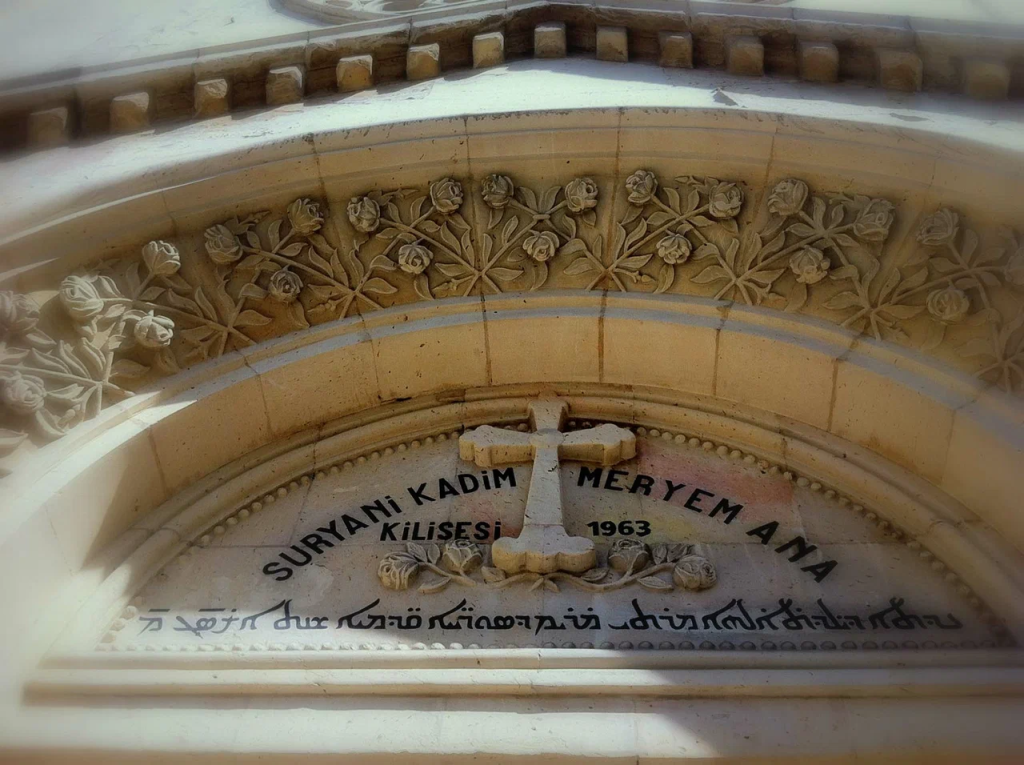
Meryem Ana Süryani Kadim Kilisesi (Virgin Mary Syriac Holy Church) in Beyoğlu
For much of the twentieth century, this church remained the only Syriac Orthodox church in Istanbul. As migration from southeastern Turkey increased—particularly from Mardin and Tur Abdin—the city’s Syriac population grew, transforming Istanbul into the largest Syriac center in Turkey. Many community members became active in sectors such as trade, textiles, jewelry, education, medicine, and construction, while continuing to preserve family traditions, religious rituals, and community associations.
The cultural life of Istanbul’s Syriacs extends beyond religion. Their cuisine preserves centuries-old Mesopotamian influences, combining wheat, bulgur, lamb, herbs, spices, and ceremonial dishes prepared for feast days and family gatherings. Weddings, baptisms, Easter celebrations, and Christmas liturgies remain important occasions where language, music, and communal memory are transmitted between generations. Researchers have noted that these traditions play a vital role in sustaining Syriac identity, especially within diaspora and urban communities.
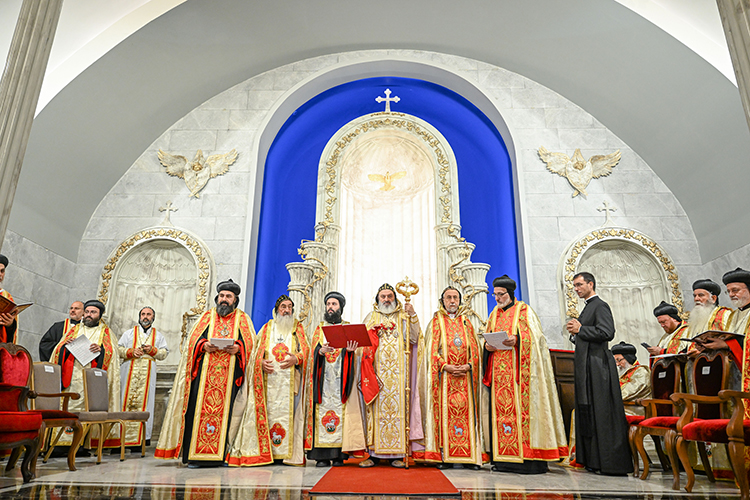
Opening ceremony of Mor Efrem Syriac Orthodox Church in Yeşilköy
A significant recent milestone in the community’s history was the construction of the Mor Efrem Süryani Ortodoks Kilisesi in Yeşilköy. Opened in 2023, it became the first newly built church of the Republican era in Türkiye. The project carried symbolic importance for many Syriacs, representing both continuity and visibility for a community whose presence in Anatolia predates many modern states and borders.
Today, the Syriac community of Istanbul occupies a unique position within the city’s multicultural landscape. Their churches, liturgical chants, language, and social institutions serve as reminders that Istanbul’s identity has never been shaped by a single culture alone. Instead, the city has long been a mosaic of peoples and memories. The Syriacs contribute a distinct thread to that mosaic—one woven from ancient Mesopotamian roots, Christian heritage, and a resilient commitment to cultural preservation.
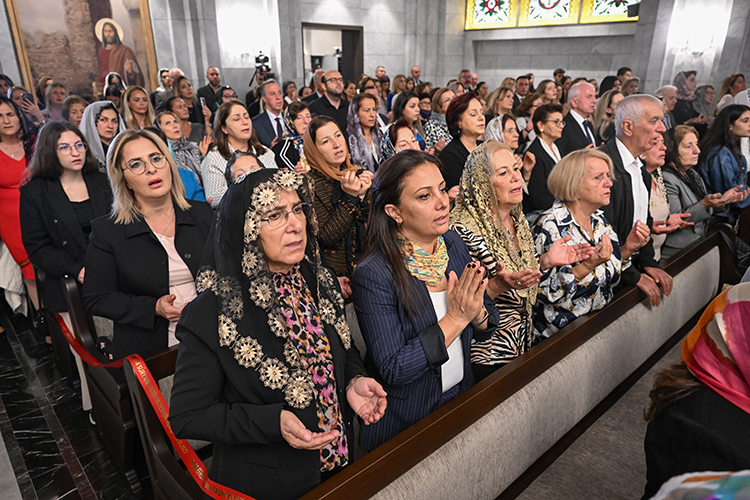
From the opening ceremony of Mor Efrem Syriac Orthodox Church in Yeşilköy
In contemporary Istanbul, where modern life moves rapidly and historical layers often disappear beneath new developments, the continued presence of Syriac culture offers something invaluable: a living connection to one of the oldest continuous traditions of the Middle East. Their story is not merely a chapter of the city’s past, but an ongoing part of its present.
And here is a traditional Syriac song for you performed by Kardeş Türküler.
Note that the video is embedded via YouTube and all rights belong to the respective rights holders.