
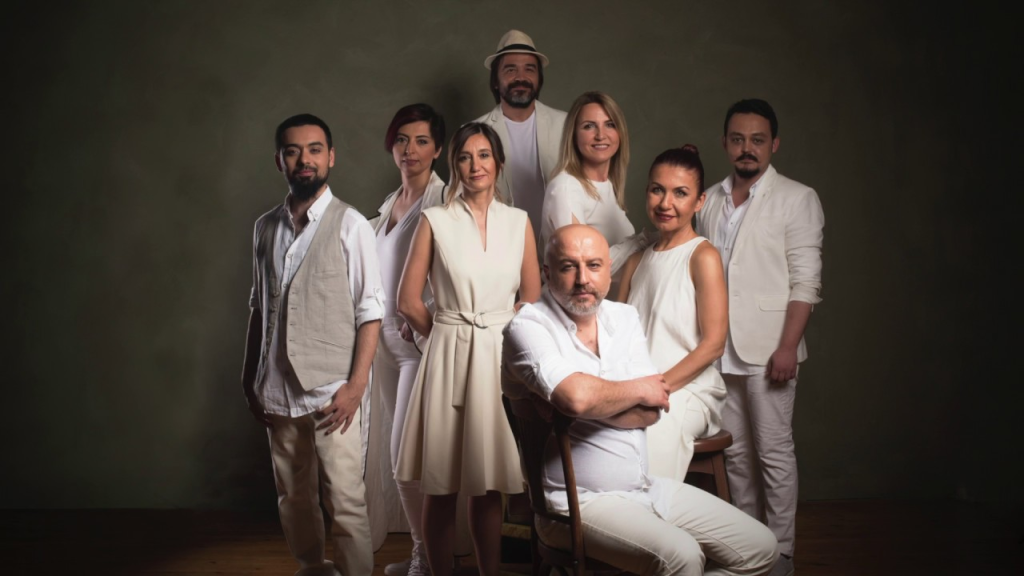
Few musical projects capture the spirit of Turkey’s musical traditions as vividly as Kardeş Türküler. Emerging from the vibrant cultural landscape of the city in the 1990s, the ensemble has become one of Turkey’s most significant voices for cultural diversity, coexistence, and shared heritage.
Founded by students associated with the Boğaziçi University Folklore Club, Kardeş Türküler began as an effort to explore and preserve the rich musical traditions of Anatolia and the surrounding region. What started as a university-based project soon evolved into a professional ensemble dedicated to performing songs in multiple languages spoken across Turkey, including Turkish, Kurdish, Armenian, Arabic, Greek, Laz, Circassian, Syriac and others.
Their name, which translates as “Songs of Brotherhood” or “Brother Songs,” reflects a philosophy rooted in cultural dialogue rather than uniformity. Rather than presenting folk traditions as isolated cultural artifacts, Kardeş Türküler highlights the historical connections between communities that have shared the same geography for centuries.
No city embodies this vision more naturally than Istanbul. Situated between Europe and Asia, Istanbul has long served as a meeting point of civilizations, religions, languages, and ethnic identities. Throughout its history as the capital of the Byzantine Empire and later the Ottoman Empire, the city absorbed influences from across the Mediterranean, the Balkans, the Caucasus, and the Middle East. The result is a uniquely layered cultural landscape where multiple traditions coexist and intersect.
Kardeş Türküler’s repertoire mirrors this complexity. A concert may move seamlessly from a Kurdish lament to an Armenian folk song, from a Greek melody to a Turkish dance tune. These transitions are not presented as exotic contrasts but as expressions of a shared cultural geography. In doing so, the ensemble challenges rigid notions of identity and invites audiences to appreciate the intertwined histories of the peoples who have lived in and around Istanbul for generations.
The group’s work has also extended beyond music. Through collaborations with theatre productions, documentary projects, and cultural initiatives, Kardeş Türküler has contributed to broader conversations about memory, diversity, and social inclusion in contemporary Türkiye. Their performances often emphasize the idea that cultural heritage is not a fixed monument of the past but a living, evolving dialogue between communities.
Istanbul provides the ideal backdrop for this message. Walking through neighborhoods such as Balat, Kuzguncuk, or Beyoğlu, one encounters traces of the city’s multicultural past in its architecture, religious buildings, languages, and culinary traditions. Kardeş Türküler transforms this urban experience into sound, giving musical expression to the city’s many voices.
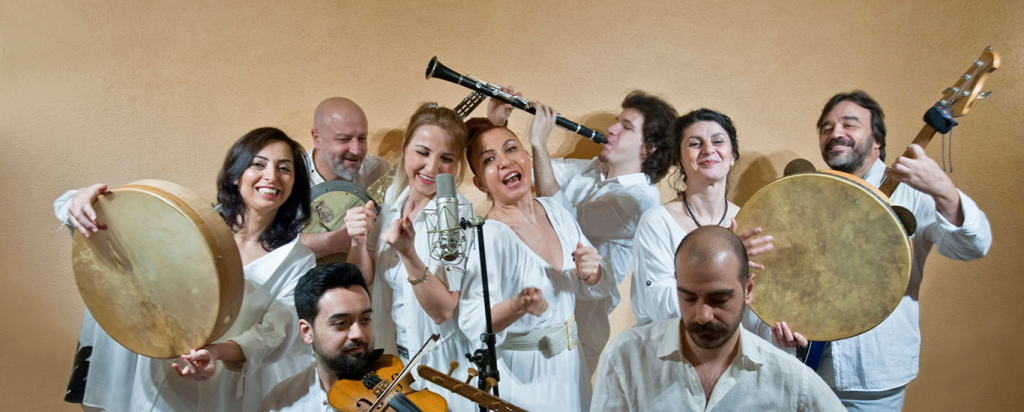
In an era when cultural differences are often portrayed as sources of division, Kardeş Türküler offers a different narrative. Their music suggests that diversity can be a source of creativity, understanding, and collective memory. Through songs that cross linguistic and ethnic boundaries, they remind audiences that Istanbul’s greatest strength has always been its ability to bring different worlds together.
More than a musical ensemble, Kardeş Türküler has become a symbol of Turkey itself: complex, layered, diverse, and continually shaped by the encounters of cultures across time.
Note that the videos are embedded via YouTube and all rights belong to the respective rights holders.


