
Even if they were to give me all the countries of the world, along with their crowns and thrones, I would not leave the place where my beloved is.’
Fatih Sultan Mehmet
On the morning of May 29, 1453, one of history’s longest chapters came to a dramatic close. After a fifty-three-day siege, the armies of Sultan Mehmed II entered Constantinople, the ancient capital of the Byzantine Empire.
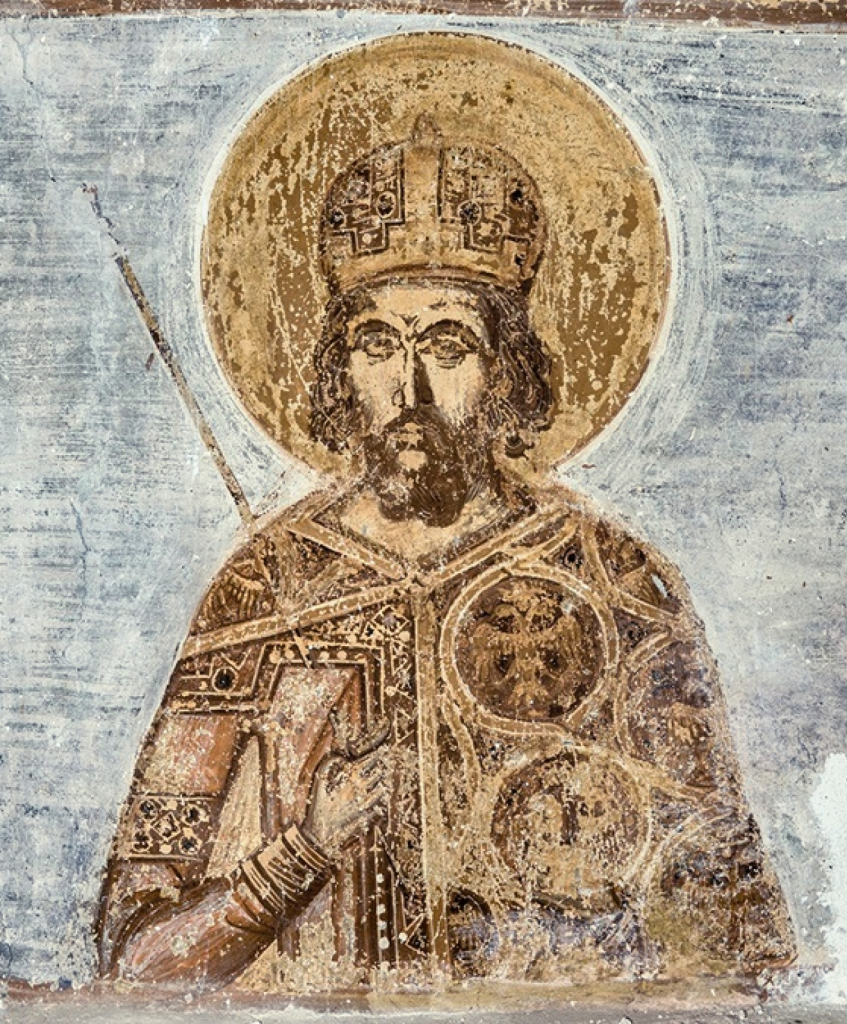
Constantine XI Palaiologos
The city’s last emperor, Constantine XI Palaiologos, is said to have died sword in hand among his soldiers as Ottoman forces poured through the breached defenses. With his death, an empire that traced its origins directly to ancient Rome finally disappeared from history.
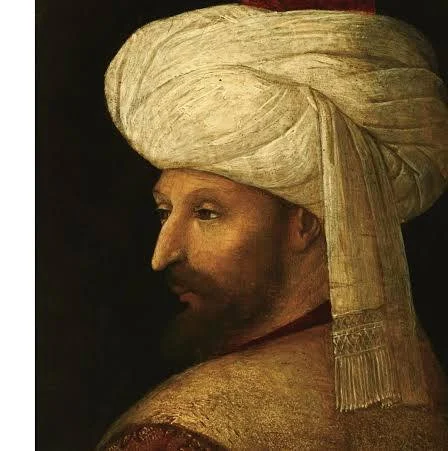
Fatih Sultan Mehmet
Yet the conquest of Constantinople was far more than the fall of a city. It marked the culmination of centuries of political transformation, the emergence of the Ottoman Empire as a global power, and the beginning of a new era that would reshape the course of world history.
The Siege That Changed the World
When the twenty-one-year-old Sultan Mehmed II prepared his campaign against Constantinople, many European rulers underestimated him. Young in age but experienced in leadership and warfare, Mehmed approached the conquest with extraordinary determination and strategic vision.
He assembled an army estimated between fifty thousand and eighty thousand men and invested heavily in military innovation. Massive cannons, some of the largest ever constructed, were brought to bombard the city’s famous walls. Strategic fortresses were built along the Bosphorus to control maritime access and isolate Constantinople from potential aid.
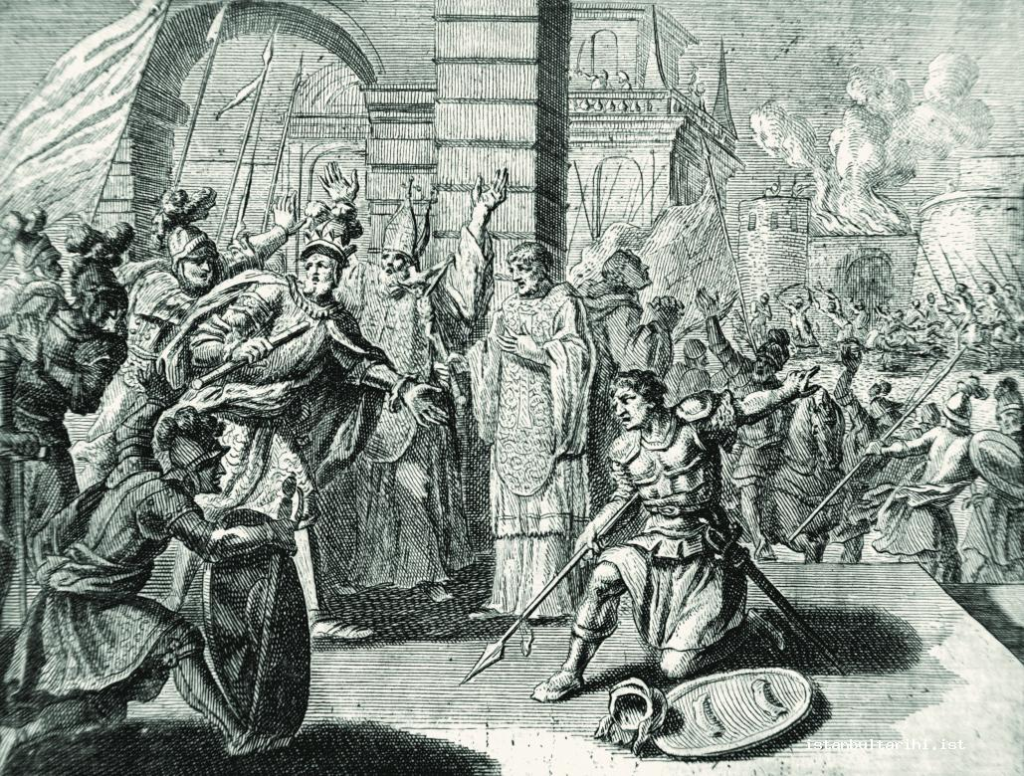
Fall of Constantinople by Rycaut
One of the most remarkable episodes of the siege occurred when Mehmed ordered Ottoman ships to be dragged over greased wooden logs across the hills north of the city and launched into the Golden Horn. The Byzantines had protected this harbor with a giant defensive chain, believing it impossible for enemy vessels to enter. Mehmed’s audacious maneuver bypassed the obstacle entirely and placed Ottoman forces in a position from which they could attack the city from multiple directions.
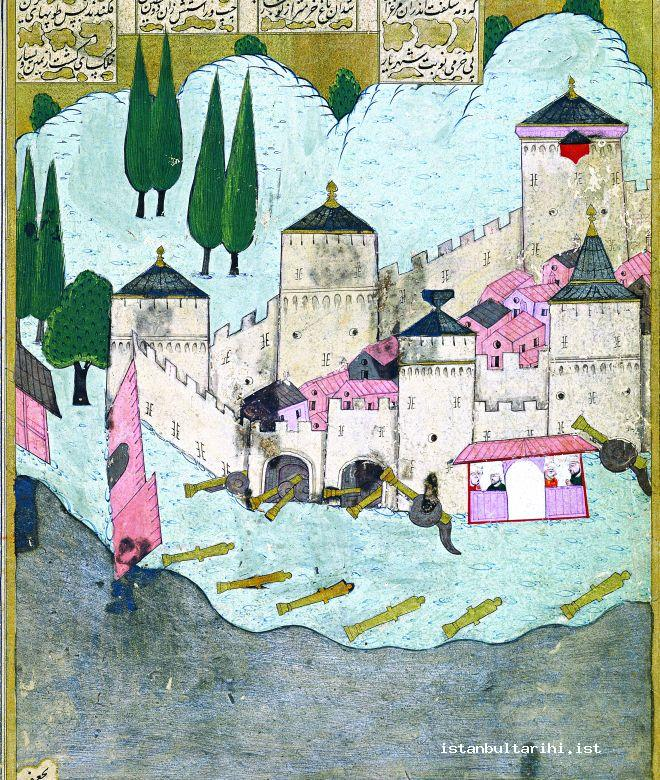
Rumeli Fortress that was erected during the siege of Constantinople for strategic reasons
The achievement was all the more extraordinary because Constantinople’s defenses had long been regarded as nearly impregnable.
Overcoming the Unconquerable
For centuries, the massive Theodosian Walls had stood as one of the greatest defensive systems ever constructed. Built during the fifth century, they had successfully resisted attacks from Huns, Arabs, Bulgarians, Russians, and countless other enemies. Generation after generation regarded the city as unconquerable.
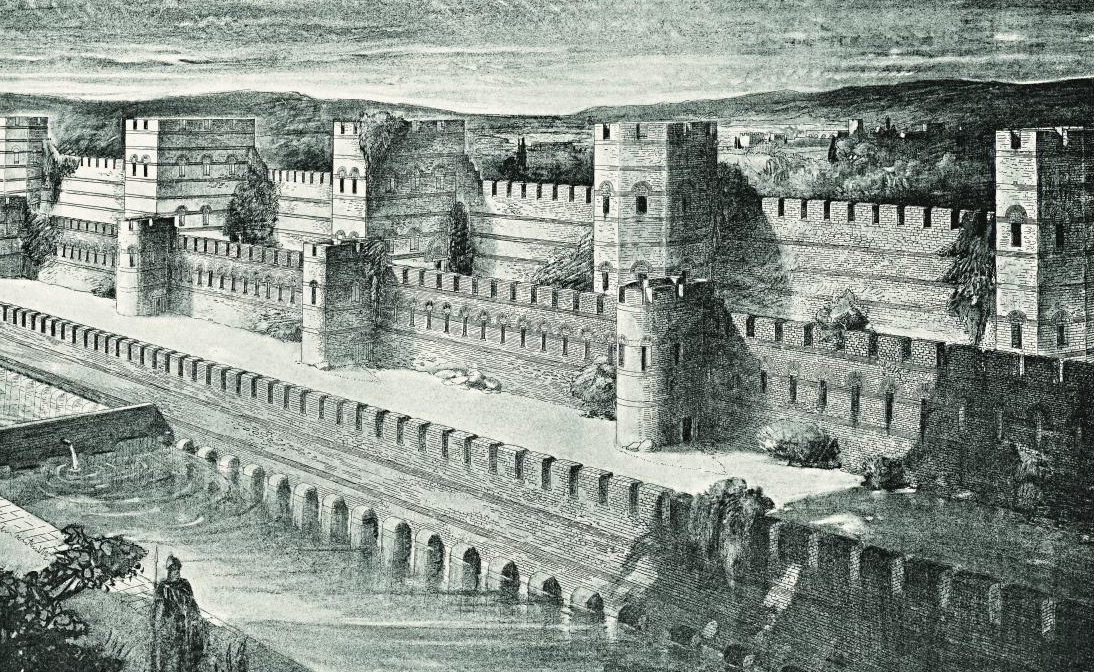
Walls of Constantinople
Indeed, before 1453, Constantinople had only fallen once to a foreign force. That event came not through military superiority but through the betrayal and chaos of the Fourth Crusade in 1204, when Western European crusaders turned against their fellow Christians and brutally sacked the city.
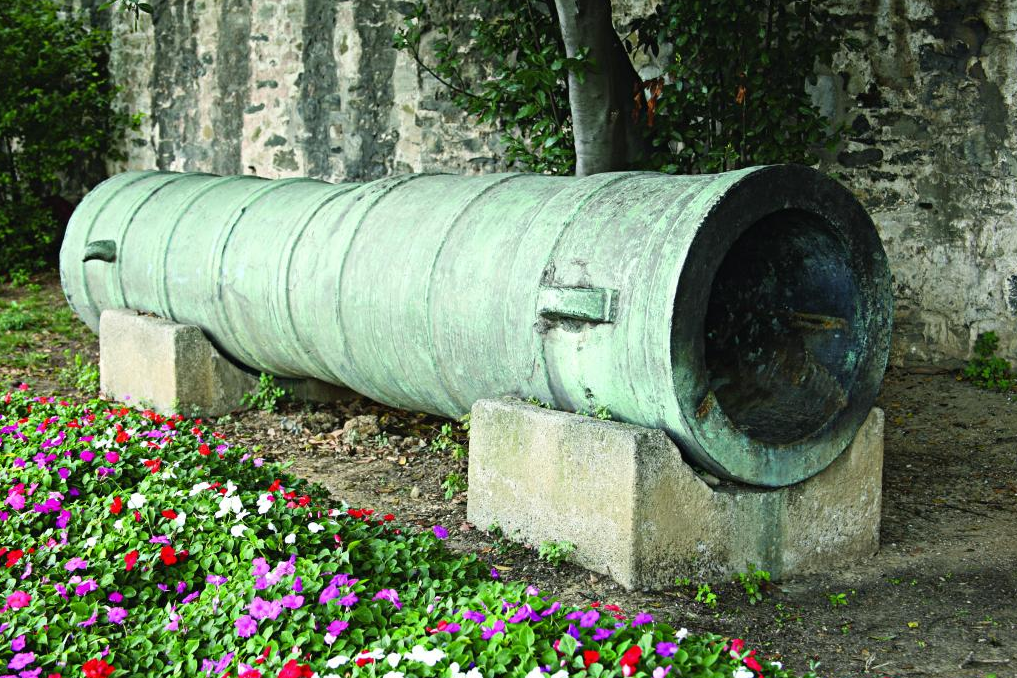
One of the cannons used in the conquest of Constantinople
The success of Mehmed II therefore represented something unprecedented. He had achieved what centuries of invaders had failed to accomplish. The Ottoman victory was not merely another conquest; it was the defeat of a city that had stood at the center of Mediterranean civilization for more than a thousand years.
The Empire That Had Already Fallen
Although 1453 is remembered as the final collapse of Byzantium, the empire’s decline had begun long before the Ottoman siege.
Many historians identify the Fourth Crusade of 1204 as the true turning point. The crusaders’ occupation devastated Constantinople. Churches were desecrated, libraries destroyed, treasures looted, and economic networks shattered. The city eventually recovered politically, but it never regained its former strength.
The consequences proved irreversible. Population declined, territorial losses accelerated, and the empire’s financial foundations weakened. Over the following centuries, Byzantine territory steadily shrank while the Ottomans expanded around it.
By the time Mehmed launched his siege, the once-mighty Eastern Roman Empire had been reduced to little more than Constantinople itself and a handful of isolated possessions. The imperial capital stood as a lonely remnant of a civilization that had already been fading for generations.
Hagia Sophia: A Monument to Many Civilizations
No building better symbolizes the layered history of Constantinople than Hagia Sophia.
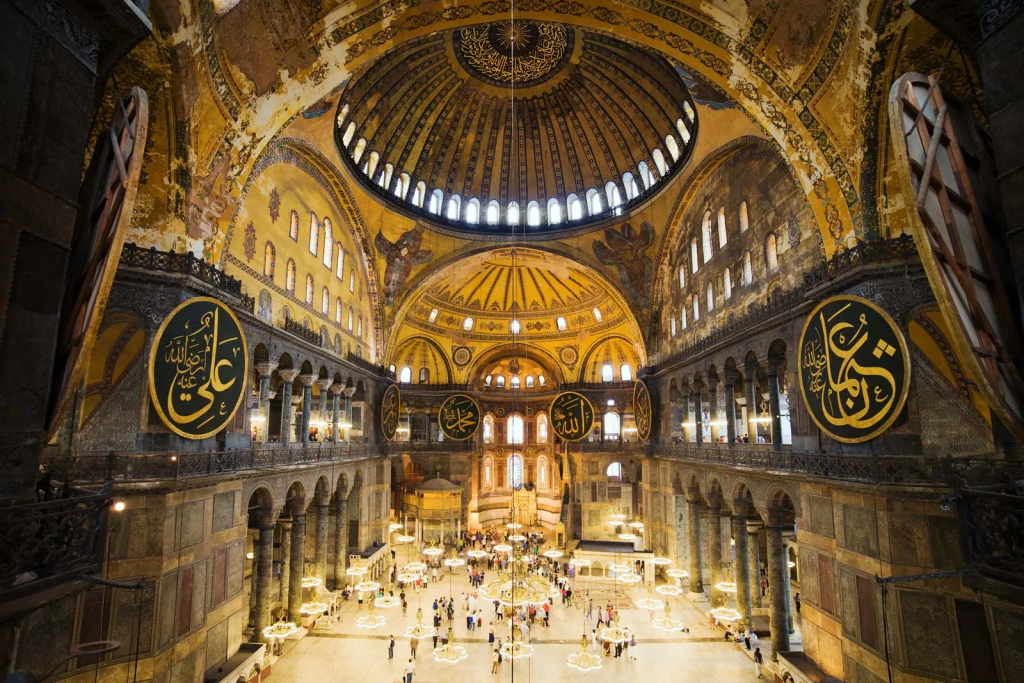
Haghia Sophia
Constructed in 537 under Emperor Justinian I, the cathedral was one of the greatest architectural achievements of the ancient world. For nearly a thousand years, it served as the spiritual heart of Eastern Christianity.
Many visitors assume that the disappearance of many Byzantine mosaics and religious images resulted from the Ottoman conquest. Yet the reality is more complex. Much of this destruction occurred centuries earlier during the Byzantine Iconoclast Controversy, a period of intense internal conflict over the use of religious images. During these disputes, many mosaics and frescoes were damaged or removed by Byzantines themselves.
Following the conquest, Hagia Sophia became a mosque, receiving additions that reflected Ottoman architectural traditions while preserving much of its earlier structure. In modern times, further restoration and preservation efforts have revealed aspects of both its Christian and Islamic heritage.
Today, beneath a single dome, Hagia Sophia contains echoes of Rome, Byzantium, the Ottoman Empire, and modern Turkey. It stands as a physical record of the civilizations that have shaped the city across fifteen centuries.
Mehmed’s Vision for a New Capital
The conquest was not an act of destruction alone. Mehmed II understood that he had inherited one of the world’s great cities, and he immediately began transforming it into the capital of a rising empire.
The city was repopulated with communities from across Ottoman territories. Markets were rebuilt, institutions restored, and new monuments constructed. Constantinople, now increasingly known as Istanbul, once again became a thriving center of commerce, culture, and government.
The Ottoman architectural legacy would reach its greatest expression in the works of the master architect Mimar Sinan. His monumental mosques, particularly the Süleymaniye Mosque in Istanbul and the Selimiye Mosque in Edirne, helped define the skyline that remains iconic today. In the history of Ottoman architecture, Sinan occupies a position comparable to that of Michelangelo in Renaissance Italy.
Building Law into Stone
The Ottoman achievement was not limited to military power or monumental architecture. The empire also developed sophisticated systems for regulating commerce and public life.
One revealing example survives in infrastructure built during the Ottoman period. Caravanserais, bridges, roads, and market complexes often incorporated practical mechanisms for enforcing commercial regulations. Historical accounts describe structures with specially designed gateways through which loaded camels had to pass. If a merchant attempted to overload his animals, the burden would physically prevent passage, enforcing standards through architecture itself.
In this sense, Ottoman governance was literally built into stone. Infrastructure was not merely functional; it embodied legal and social principles that shaped daily life across the empire.
The Beginning of a New Age
The fall of Constantinople is often regarded as the event that ended the medieval world.
As the Ottoman Empire consolidated control over major trade routes linking Europe and Asia, European powers intensified their search for alternative paths to the East. This effort contributed to the great maritime explorations of the fifteenth and sixteenth centuries.
Portuguese navigators sought routes around Africa. Spanish monarchs financed voyages across the Atlantic. Among those voyages was the expedition of Christopher Columbus, which unexpectedly connected Europe with the Americas.
Although the causes of the Age of Exploration were complex and multifaceted, the Ottoman conquest of Constantinople played an important role in accelerating Europe’s search for new commercial opportunities.
A Bridge Between Worlds
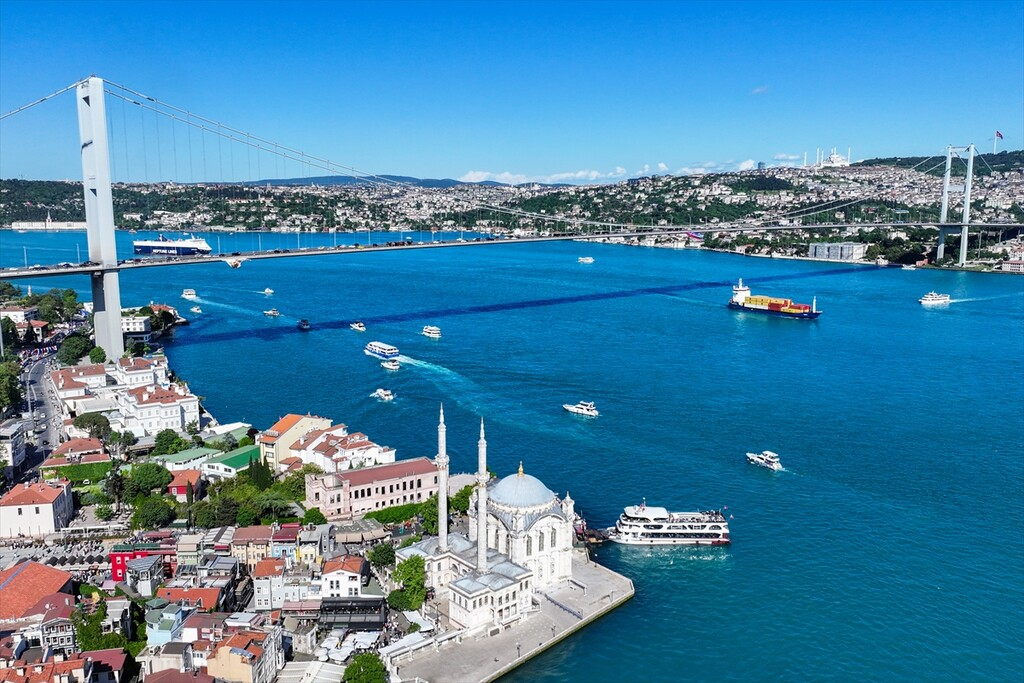
Few cities in history have occupied a more strategic position than Istanbul. Straddling Europe and Asia while controlling access between the Black Sea and the Mediterranean, it has served as a crossroads of civilizations for millennia.
Its importance echoes that of ancient Troy, another settlement that grew wealthy by controlling crucial trade routes in the same region. Geography has consistently made the Bosphorus one of the world’s most valuable corridors for commerce, migration, and cultural exchange.
Yet the city’s greatest significance lies not merely in its location but in its remarkable continuity. Successive civilizations did not simply erase what came before them. Instead, they built upon inherited foundations, creating layers of history that remain visible today.
The fall of Constantinople in 1453 was simultaneously an ending and a beginning. It marked the final disappearance of the Roman Empire, the rise of Ottoman power, and the emergence of a new global age. Yet the conquest did not erase the city’s past. Rather, it added another layer to an already extraordinary historical landscape.
Modern debates often attempt to portray Constantinople and Istanbul as belonging exclusively to one civilization or another. History tells a different story. The city’s identity is not defined by a single empire, religion, or culture. It is the product of all of them.
The Byzantine legacy survives in churches, walls, traditions, and institutions. The Ottoman legacy shapes the skyline, the neighborhoods, and the city’s cultural character. Modern Turkey continues to preserve and reinterpret this inheritance. Together they form one of humanity’s most remarkable urban civilizations—a living testament to the power of continuity amid change.
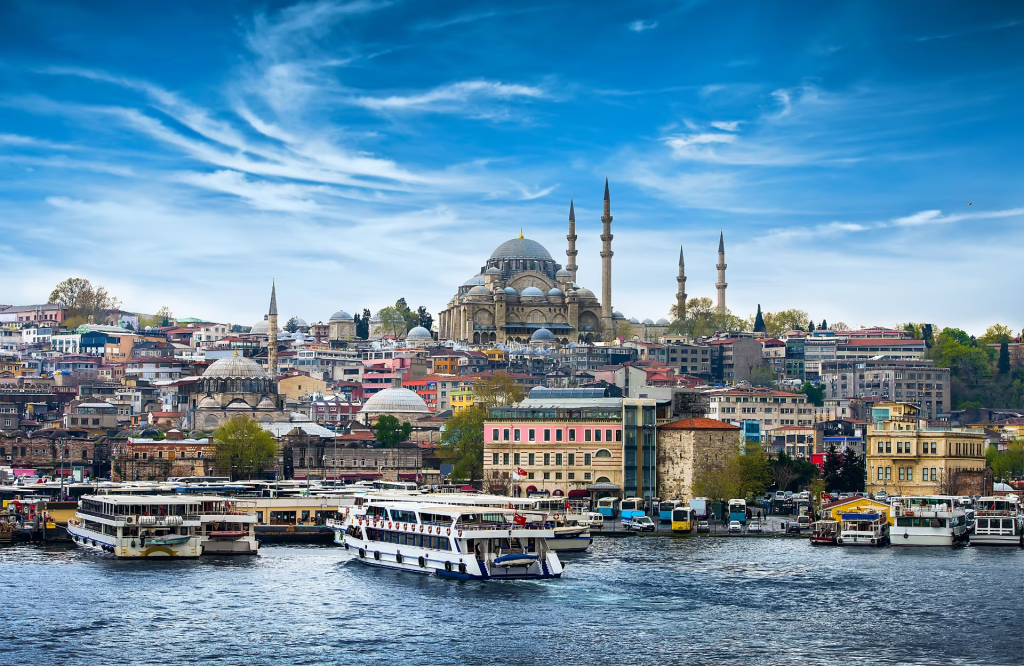
In that sense, the story of Constantinople did not truly end in 1453. Rather, it entered a new chapter. The city that had once been the capital of the Roman Empire became the heart of the Ottoman world and later a cornerstone of modern Turkey. Its churches, mosques, palaces, walls, and waterways continue to tell a story that belongs not to a single civilization but to many. Few places on earth so clearly demonstrate that history is not a sequence of isolated eras but a continuous dialogue between past and present. Istanbul remains the living heir to Rome, Byzantium, and the Ottomans alike—a city where civilizations did not simply replace one another but accumulated, layer upon layer, creating one of humanity’s most extraordinary historical landscapes.
Visuals with historical reference are taken from istanbultarihi.ist and wikipedia.
Video is embedded via YouTube and all rights belong to the respective rights holders.