
I learned that every mortal will taste death, but only some will taste life.’
Rumi
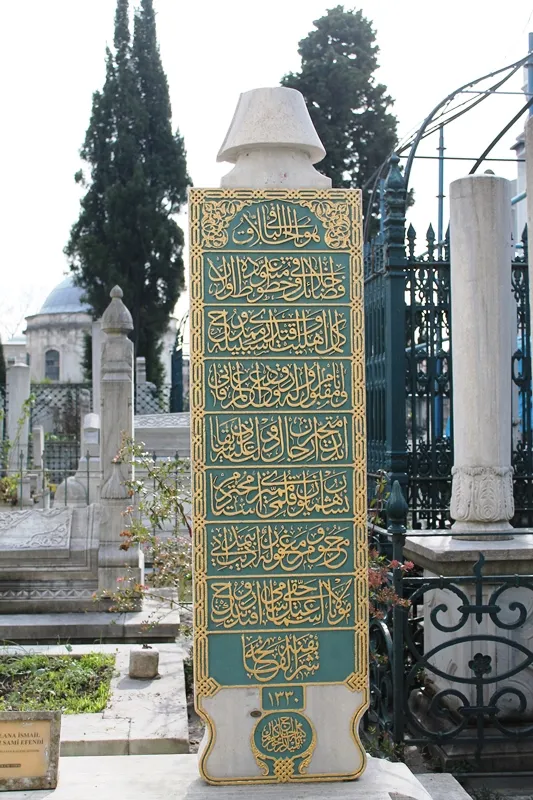
Ottoman cemeteries were an integral part of city life compared to the west where death has been hidden away. Ottomans believed that death was a natural part of the life cycle and therefore have lived in peace with it.
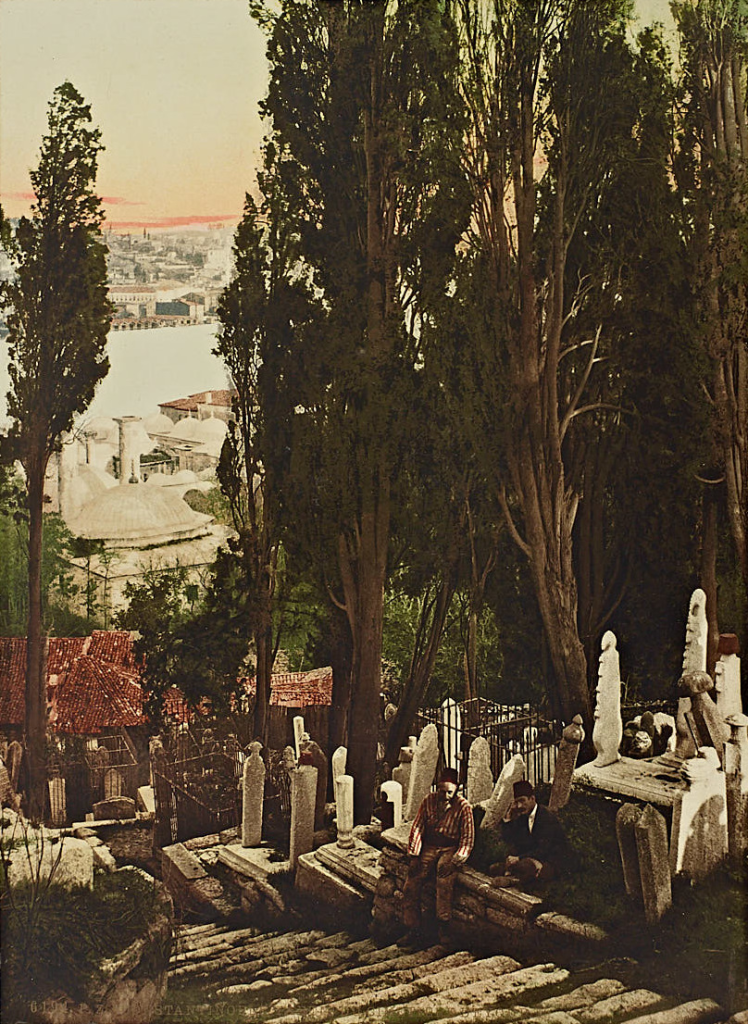
Eyüp Sultan, 1899
All throughout Ottoman history, lovers used to meet in cemeteries secretly away from the public gaze and families would make picnics under the giant trees and the vast greenery of the cemeteries. Even today, sites like Eyüp Sultan Cemetery near the Golden Horn, Süleymaniye Mosque Cemetery, Cemetery surrounding the Tomb of Mahmut II in Çemberlitaş, and Galata Mevlevihane Cemetery still pulse with quiet activity. Here, graves of sultans, scholars, dervishes, and ordinary citizens coexist in a living landscape. People come to pray, families picnic nearby and some drink their tea overlooking the tombs.
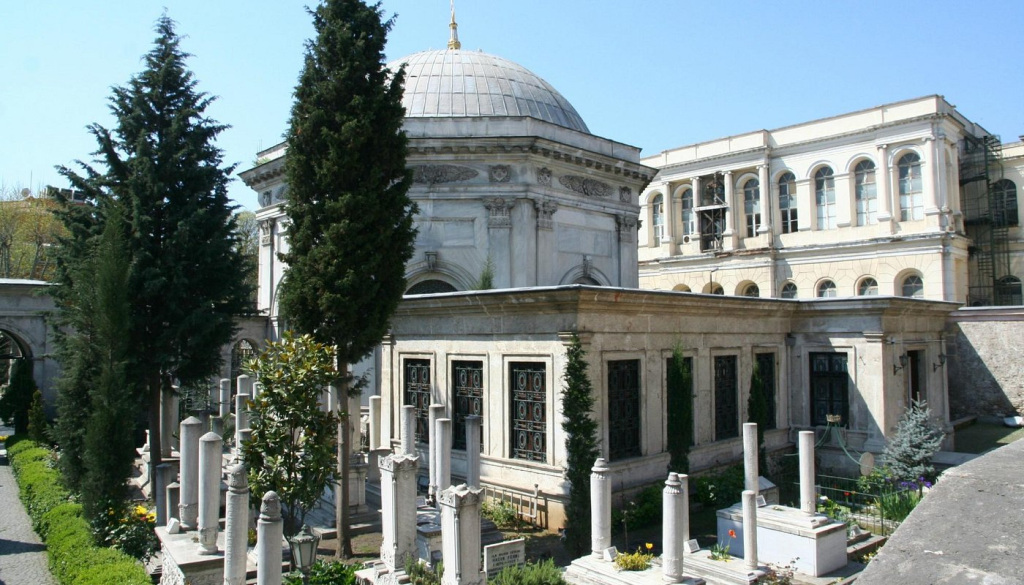
Note that there is a cafe inside the cemetery surrounding the tomb of Mahmut II in Çemberlitaş where young and old come to visit for a sip of Turkish tea and coffee in its tranquil garden
Especially Eyüp is a living necropolis where thousands come to visit for praying as well as walking among the graves up until the hilltop where they can watch the view of the Golden Horn, sip their Turkish coffee and flirt with their beloved.
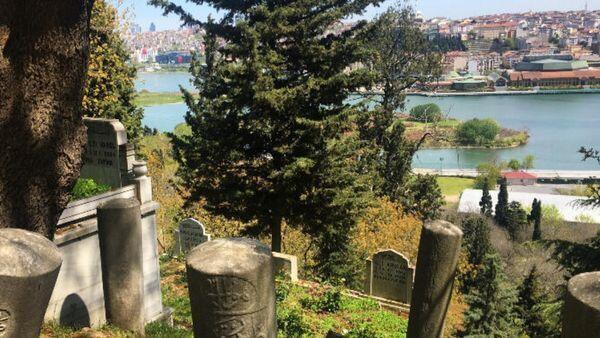
Istanbulites walk up a steep hill among the graves to reach the café at the top, which offers an amazing view of Eyüp
In Ottoman culture, tombstones (mezar taşları) were far more than grave markers; they were intricate biographies carved in stone. Each symbol, inscription, and motif communicated something about the deceased’s life, social status, and spiritual journey. A carved turban indicated a man of learning or high office, its wrapping style signaling his rank. Fezzes began appearing in the 19th century, reflecting Ottoman reforms and modern identity. Women’s stones, by contrast, emphasized virtue and beauty through floral motifs or jewelry-like carvings, communicating modesty, maternal care, or domestic devotion.
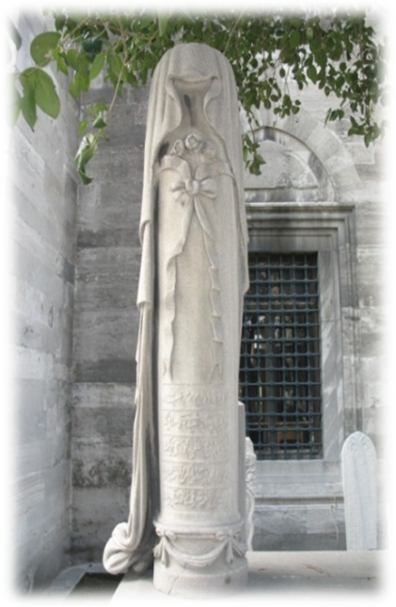
A beautiful tombstone of a young girl in Süleymaniye Cemetery
Note that Ottoman tombstones were once beautifully painted in green, red, and gold. Unfortunately, most have lost their colors over time, leaving only bare marble.
Inscriptions, often in elegant Ottoman calligraphy, opened with phrases like Hüve’l-bâkî (“He [God] is Eternal”) and quoted Qur’anic verses, poetry, or blessings. These epitaphs reminded visitors of life’s transience and the eternal nature of God, offering a spiritual dialogue between the living and the dead.
Note that to the amazement of foreign travellers, Ottoman cemeteries -similar to modern day cemeteries in Istanbul- were never perfectly ordered but rather chaotic -where tombstones, flowers, plants, and giant trees were intermingled- similar to the lives we lead.