
Some years ago, I was in Rome, sitting on the upper deck of one of those tourist buses that circle the monuments of the city. Through our headphones, a recorded guide narrated the rise and fall of Rome.
Then came a sentence that made me stop listening like a tourist. We were told that the Eastern Roman Empire had finally fallen when Constantinople was conquered by the “barbarians.” The barbarians in question were the Ottoman Turks. My ancestors.
I remember being struck less by offence than by astonishment. The conquest of Constantinople had taken place in 1453. Yet here, in the twenty-first century, on an ordinary sightseeing bus in one of Europe’s great capitals, an extraordinarily old image was still alive: civilization on one side, the Turk at the gates on the other.
The Dreadful Turk had survived.
The Turk at the Gates
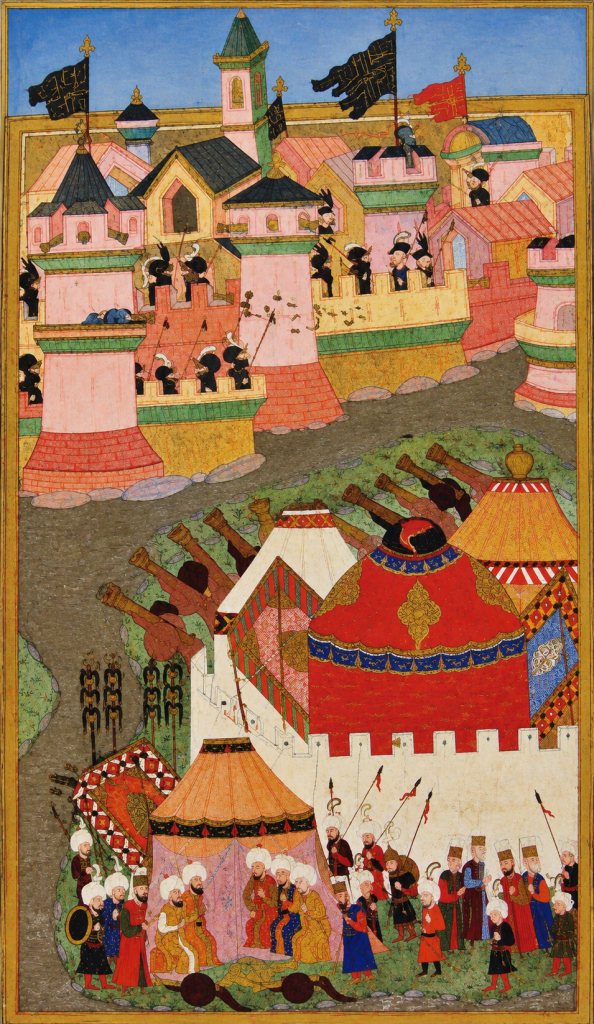
Siege of Buda by Suleiman
Europe did, of course, have reasons to fear the Ottoman Empire.
After the conquest of Constantinople by Mehmed II in 1453, the Ottomans became one of the great imperial powers of the Mediterranean and southeastern Europe. Under Süleyman the Magnificent, Ottoman armies advanced deep into Central Europe and besieged Vienna in 1529. More than a century and a half later, in 1683, an Ottoman army again appeared before Vienna.
For generations of Europeans living along the Ottoman frontier, therefore, the fear was hardly imaginary. War meant destroyed towns, displaced populations, captivity and death. The Ottoman Empire was an expansionist empire, and like other empires it could be violent.
But something more interesting happened in the European imagination.
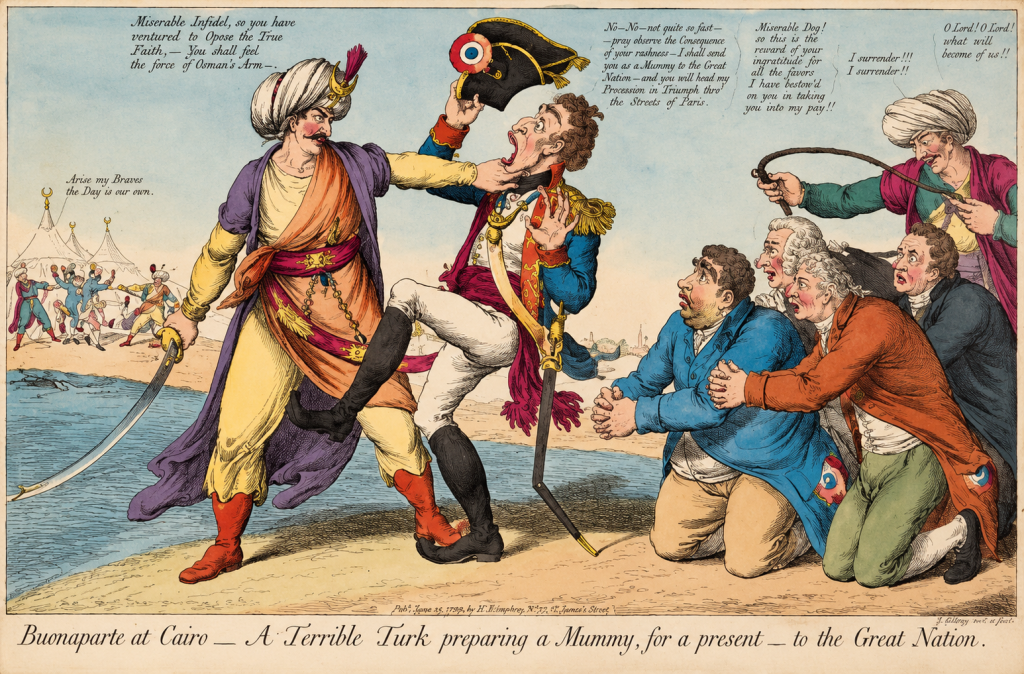
James Gillray, Buonaparte at Cairo — A Terrible Turk Preparing a Mummy for a Present — to the Great Nation (1799). The caricature offers a striking example of the “Terrible Turk” in the European imagination.
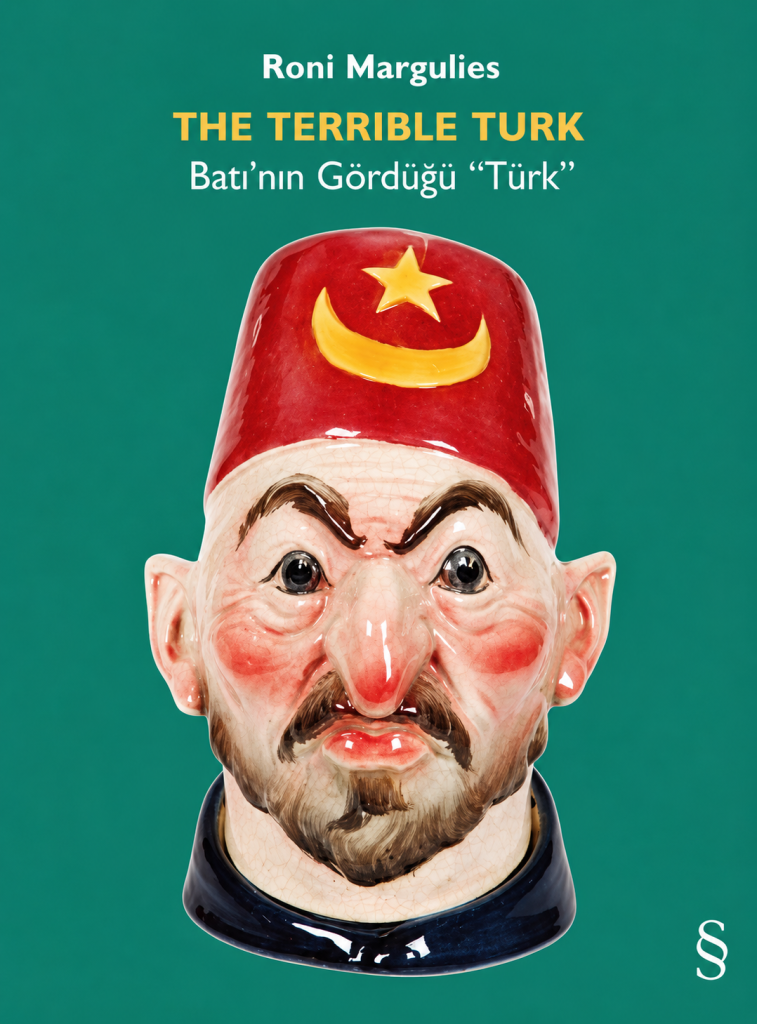
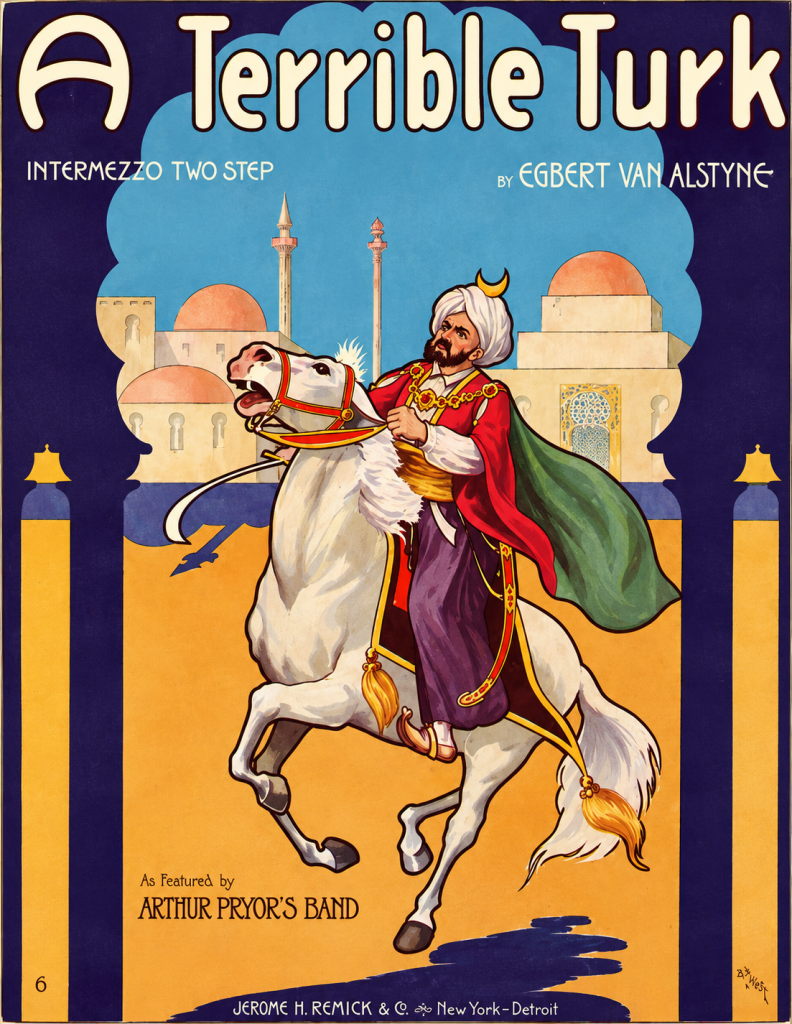
The Ottoman ceased to be merely an enemy. He became the Other. The Turk increasingly appeared in sermons, pamphlets, chronicles, plays and popular imagery as cruel, bloodthirsty, fanatical and uncivilized. Over time, these images crystallized into what would become one of Europe’s most enduring cultural stereotypes: the Terrible Turk.
And the word Turk itself often meant something much larger than ethnicity. In early modern European discourse, it could become a generic designation for the Muslim inhabitants of the Ottoman world. The figure of “the Turk” absorbed centuries of older Christian anxieties about Islam and became a convenient opposite against which Europe could imagine itself.
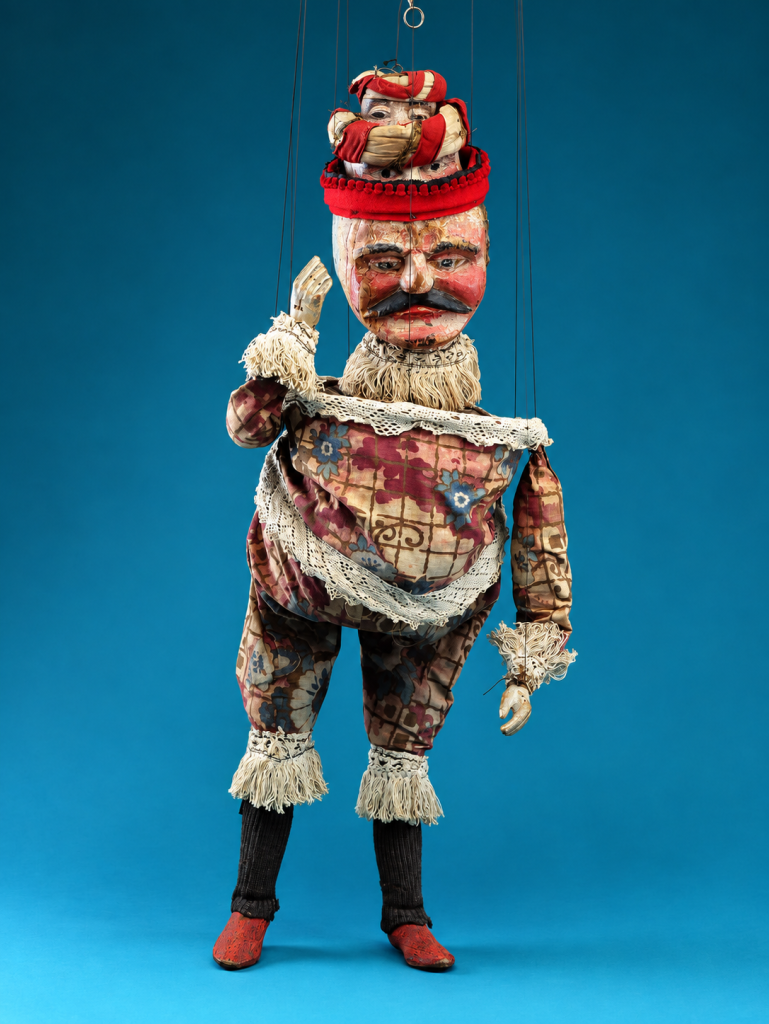
The “Turk” as a theatrical character: an Ottoman-inspired marionette reflecting the stereotypes that circulated through European popular culture.
If Europe was Christian, the Turk was Muslim. If Europe was civilized, the Turk was barbarous. If Europe represented order and reason, the Turk represented violence, sensuality and despotism. A political enemy had become a psychological category.
Constantinople and the Problem of the “Barbarian”
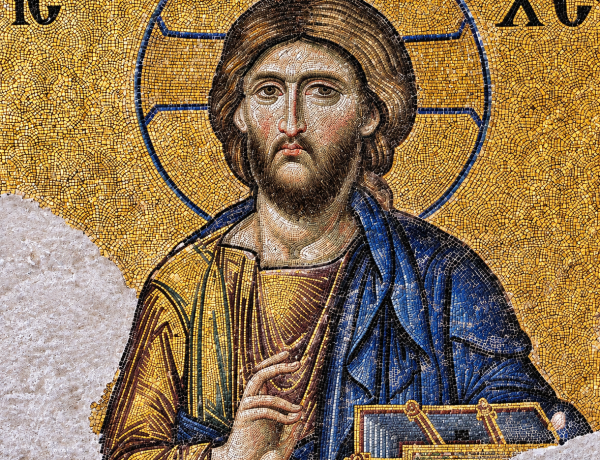
Nowhere is this more revealing than in the memory of Constantinople. The Ottoman conquest of 1453 was violent. Constantinople was taken by force and, according to the conventions of medieval warfare, subjected to pillage. There is no reason to romanticize conquest.
But describing what happened simply as “barbarians destroying civilization” quietly does something else. It removes the Ottomans from history and places them outside civilization altogether. This is especially peculiar when viewed from Istanbul. The conquerors did not destroy Constantinople and disappear into the steppes. They made it their imperial capital.
Constantinople—Istanbul—became the centre of an empire whose rulers built mosques, libraries, hospitals, schools, fountains, markets, gardens and enormous architectural complexes. Byzantine buildings were reused; Byzantine administrative and cultural inheritances survived in altered forms; Greek, Armenian, Jewish, Muslim and other communities continued to inhabit the imperial city.
The Ottoman capital that emerged after 1453 was not the negation of urban civilization. It became one of the great cities of the early modern world.
And Europeans knew this.
Diplomats came to Constantinople. Merchants traded there. Artists painted it. Travellers described it. European courts negotiated constantly with the Sublime Porte. Scholars sought Ottoman manuscripts. European consumers coveted Ottoman textiles, carpets, ceramics and luxury goods.
The European relationship with the Ottoman world was therefore never simply hatred. It was fear mixed with fascination.
The barbarian, inconveniently, possessed a magnificent capital.
Vienna: When Fear Became Memory
Vienna occupies a special place in this imagination. Süleyman’s army reached the city in 1529 but failed to take it. In 1683, the Ottomans returned. The second siege was eventually broken by a relief force led by the Polish king Jan III Sobieski.
But the two sieges became far more than military episodes. They entered European cultural memory as encounters between Christianity and Islam, civilization and danger, Europe and an East imagined as advancing towards its very gates. Here, the image of the Turk at the gates acquired extraordinary power. He was no longer safely distant in Asia. He was outside Vienna.
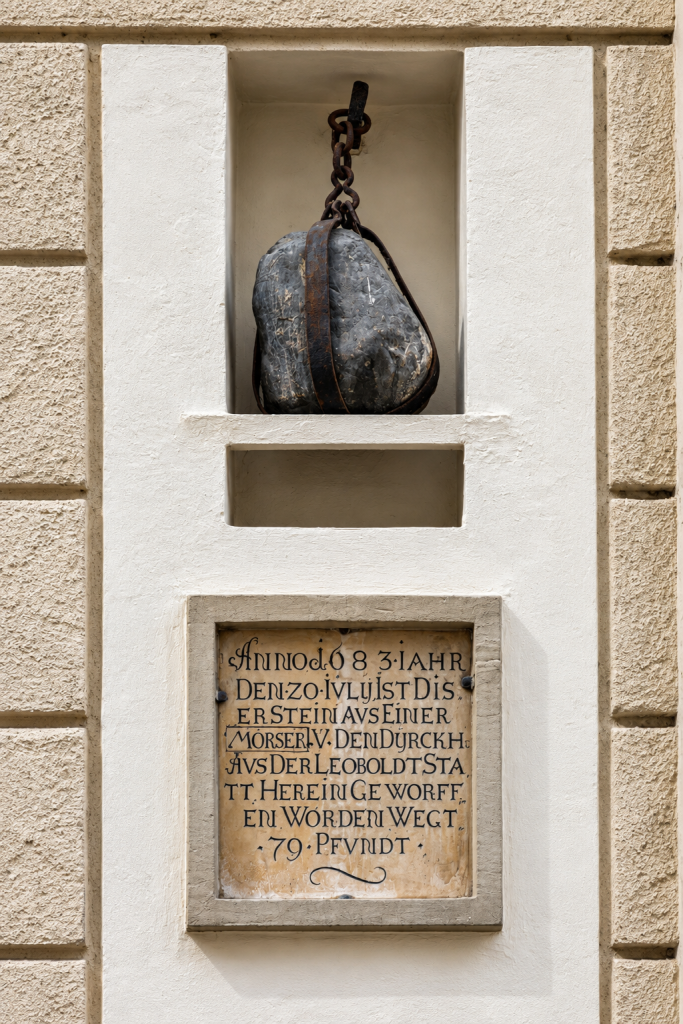
A “Türkenkugel” — literally a “Turkish cannonball” — preserved in the façade of Sterngasse 3, Vienna, and believed to have been fired into the city during the Ottoman siege of 1683.
The psychological geography is fascinating: Istanbul became the capital of a threatening East, while Vienna became one of the symbolic gates of the Christian West.
Yet imperial history is rarely so morally symmetrical. The Habsburgs were an empire. The Ottomans were an empire. Both fought wars, conquered territories, governed peoples of different languages and religions, suppressed revolts and pursued dynastic interests. The Ottoman-Habsburg struggle was not simply civilization defending itself against barbarism. It was also a centuries-long rivalry between two enormously powerful imperial systems.
But collective memory prefers simpler stories. And “civilization versus the barbarian” is a very powerful story.
From the Terrible Turk to the Exotic Turk
Eventually the military balance changed. As Ottoman power relative to the European states declined, the threatening Turk gradually acquired another identity. The Terrible Turk became accompanied by the Exotic Turk.
Now the Western imagination increasingly filled the Ottoman world with harems, odalisques, eunuchs, hookahs, baths, carpets, indolent pashas and sexually available women. Fear did not disappear; it became mixed with fantasy.
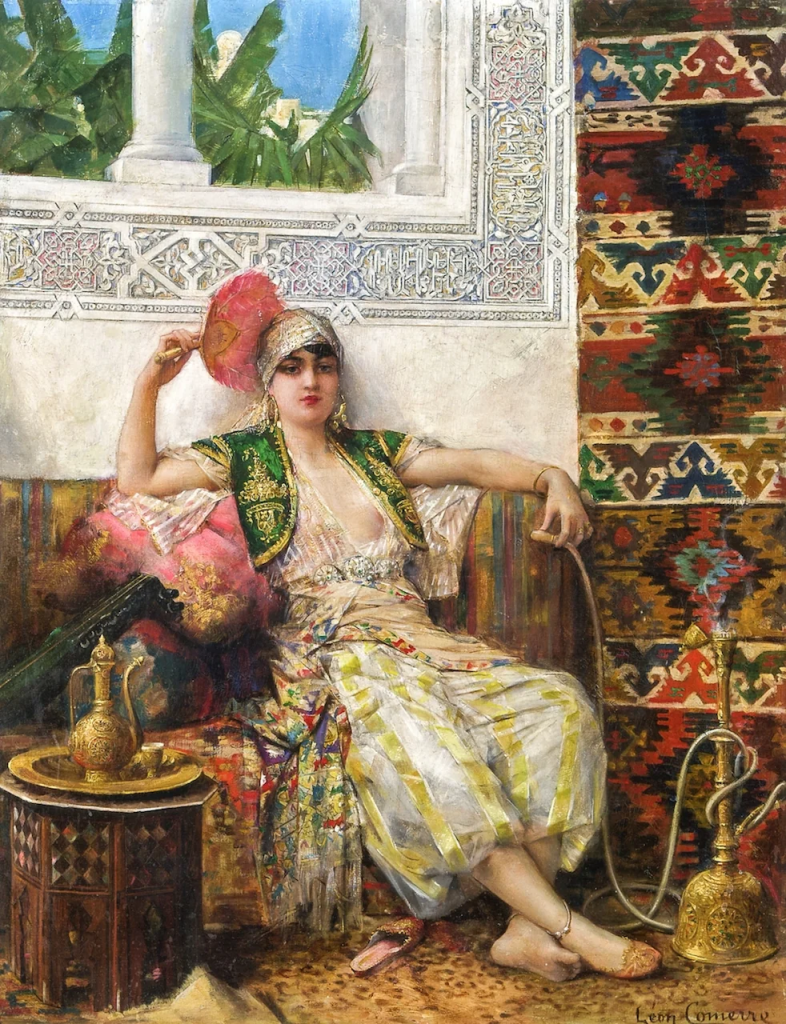
Odalisques by Léon-François Comerre, 1890
The transformation is revealing. When the Ottoman was powerful, he was terrifying. When he became weaker, he became picturesque. In both cases, however, Europe remained the observer and the Turk remained the object being imagined.
The real Ottoman world—with its extraordinary ethnic, linguistic, religious and social complexity—was considerably less convenient.
The Empire Behind the Caricature
None of this means replacing one historical myth with another.
The Ottoman Empire was not a multicultural paradise. There were hierarchies, massacres, forced migrations, slavery, religious inequalities and episodes of tremendous violence throughout its long history.
That distinction matters. Criticizing Ottoman violence is history. Turning violence into an essential characteristic of “the Turk” is stereotype.
European empires also conquered, displaced, enslaved and killed across vast territories. Yet Europeans as a people did not consequently become synonymous with barbarism. In the Ottoman case, however, conquest became incorporated into an enduring civilizational vocabulary in which Turk, Muslim, Oriental and barbarian could blur into one another.
And the stereotype proved remarkably durable.
Long after the Ottoman armies had ceased to threaten Central Europe, the imaginary Turk remained: sometimes cruel, sometimes decadent, sometimes ridiculous, sometimes exotic—but almost always defined from outside.
Which brings me back to that tourist bus in Rome.
‘The Barbarians’ Are Still at the Gates
Perhaps the person who wrote the commentary did not intend anything by the word.
That is precisely what interested me. Nobody had needed to stand before us and declare that Turks were barbarians. The old narrative had become so culturally comfortable that the word could slip almost unnoticed into a piece of twenty-first-century tourist commentary.
Constantinople fell.
The barbarians arrived.
History moved on.
Except that history is rarely that simple.
The “barbarians” built an imperial civilization that lasted for centuries. They turned Constantinople into their capital and filled it with monuments whose silhouettes still define Istanbul. They traded and fought with Europe, influenced it and were influenced by it, terrified it and fascinated it.
And eventually they entered its imagination so deeply that long after the janissaries disappeared, long after the Ottoman armies withdrew from Central Europe, long after the empire itself ceased to exist, the old Turk remained standing at the imaginary gates of Vienna.
And apparently, I discovered that afternoon in Rome, he was still there. Perhaps that is the most interesting thing about stereotypes. Empires disappear. Armies retreat. Borders move. But sometimes the imaginary barbarian is the last one to leave.
Make sure to read Roni Margulies’s The Terrible Turk to see how stereotypes can prove more enduring than bronze.