
“When the sword is drawn, there is no place left for the pen.”
— Timur, in his correspondence with Bayezid I (1402)
In 1402, on a plain near Ankara, two of the most formidable rulers of their age confronted one another.
One was Timur, known in Europe as Tamerlane, whose armies had carved an empire across Central Asia and Persia. The other was the Ottoman Sultan Bayezid I, remembered as Yıldırım—“the Thunderbolt”—for the extraordinary speed of his military campaigns.
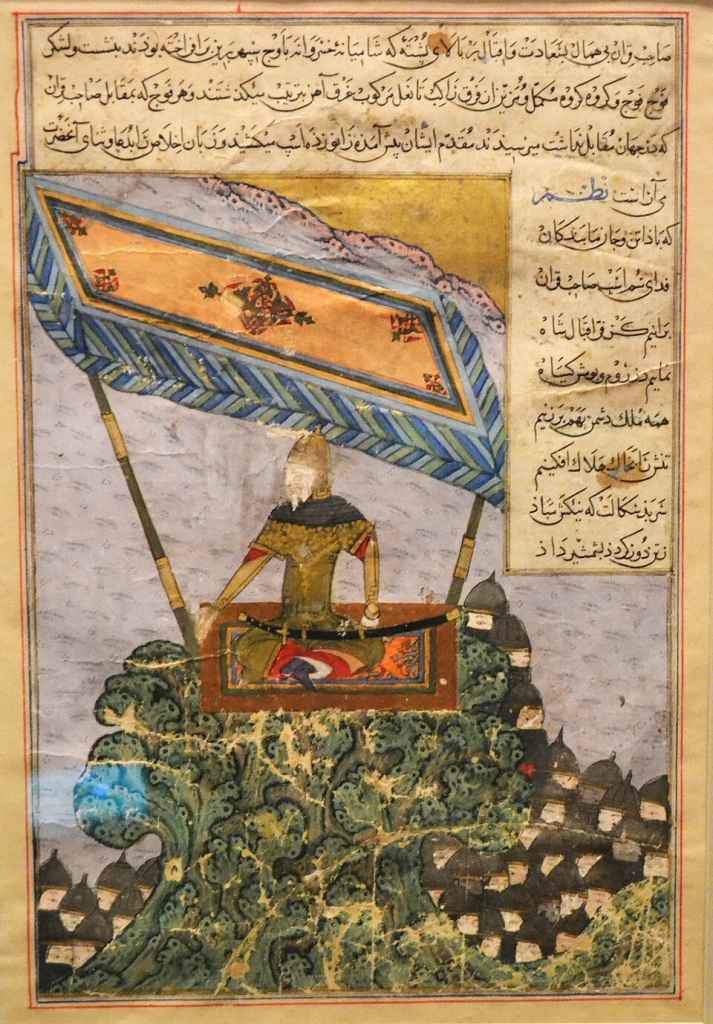
Timur Review His Troops Before the Battle of Ankara, Zafarnama 1436
Bayezid lost.
More remarkably, the Ottoman sultan was captured alive.
It was a catastrophe that almost destroyed the emerging Ottoman state. Bayezid died in captivity the following year, and his sons plunged into a struggle for succession that would become known as the Ottoman Interregnum. Only decades later would his great-great-grandson, Mehmed II, transform the dynasty’s fortunes by conquering Constantinople in 1453.
But Bayezid’s defeat had another, much stranger afterlife.
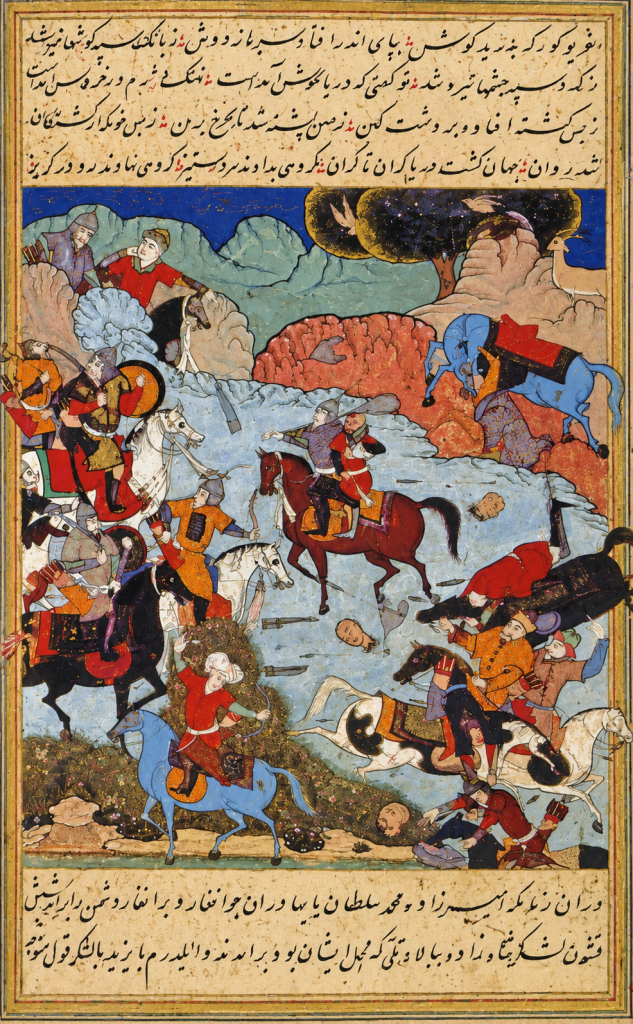
A miniature depicting the capture of Bayezid I at the end of the battle.
More than three centuries after the Battle of Ankara, the captive Ottoman sultan walked onto an Italian stage—and entered the music of Antonio Vivaldi.
From Ankara to the European Imagination
By the seventeenth century, Timur had become a legendary figure in Europe. His extraordinary conquests inspired histories, plays and eventually operas. Christopher Marlowe had already transformed him into the terrifying Tamburlaine the Great in the late sixteenth century.
The confrontation between Timur and Bayezid was irresistible theatrical material.
Here were two emperors, both accustomed to commanding armies and kingdoms. One had conquered the other. Yet the defeated ruler refused to surrender his pride.
The story gradually moved from history into drama. In 1675, the French playwright Jacques Pradon produced Tamerlan, ou la Mort de Bajazet. The Venetian librettist Agostino Piovene later reshaped the material into Tamerlano, first set to music by Francesco Gasparini in Venice in 1711. Handel used a version derived from Piovene for his magnificent Tamerlano in London in 1724.
Then, in 1735, came Vivaldi.
Vivaldi’s Bajazet
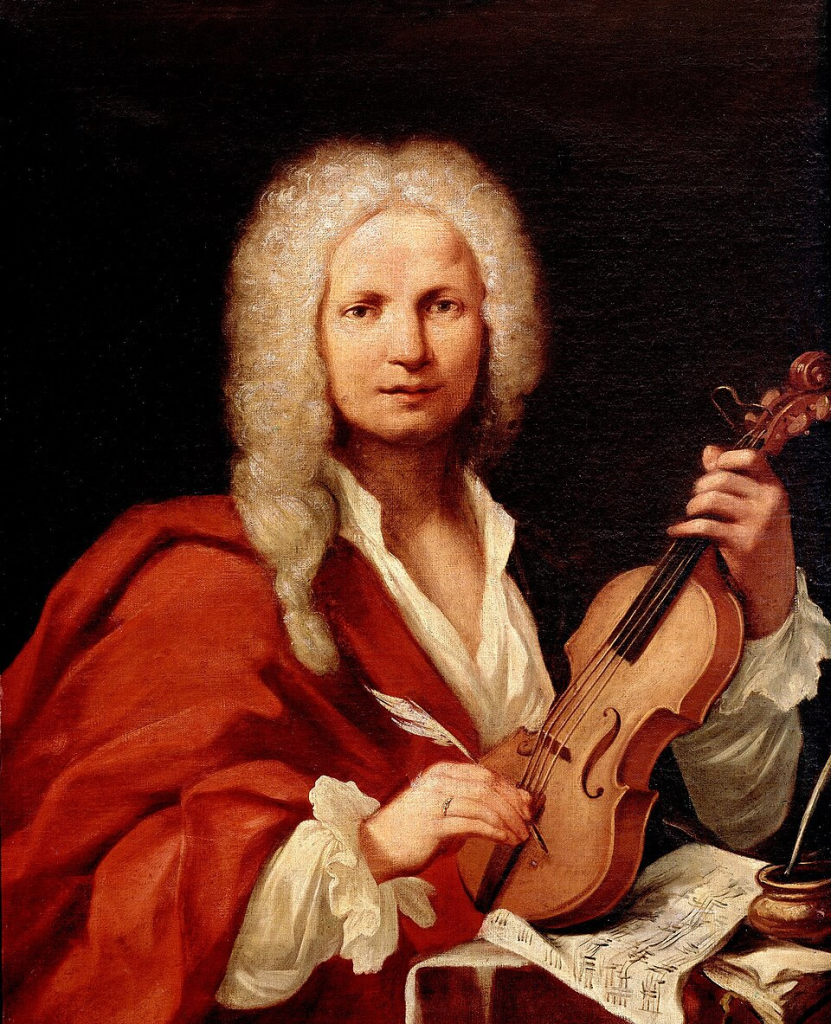
Vivaldi
Vivaldi’s Bajazet, RV 703—also known as Il Tamerlano—was performed during the Carnival season at the Teatro Filarmonico in Verona in 1735. It used Piovene’s libretto and placed the defeated Ottoman ruler at the emotional centre of the drama.
The historical event has by now become unmistakably Baroque.
Tamerlano has captured Bajazet. But he also desires Bajazet’s daughter, Asteria, who is in love with the Greek prince Andronico. Tamerlano, meanwhile, is already promised to Irene.
History becomes a labyrinth of love, loyalty, humiliation, revenge and power.
Yet beneath the operatic inventions lies something psychologically compelling.
Bajazet has lost everything except the one thing his conqueror cannot simply take from him: his dignity.
He is imprisoned, politically powerless and at the mercy of his enemy. Nevertheless, he refuses inward submission. His tragedy is therefore not simply that of a defeated ruler. It is the tragedy of a man who can no longer control his fate but insists upon controlling the meaning of his defeat.
For Baroque opera, with its fascination with sovereignty, honour, passion and the reversals of fortune, the story was almost irresistible.
An Opera Made from Other Operas
There is another fascinating twist.
Bajazet is not entirely “by Vivaldi” in the modern sense.
It is a pasticcio—an accepted eighteenth-century form in which an opera could be constructed from newly written music alongside existing arias by the same composer and by others. Vivaldi incorporated music associated with composers including Johann Adolf Hasse, Geminiano Giacomelli and Riccardo Broschi, as well as reusing music of his own.
This makes Bajazet almost a musical collage of the operatic world of the 1730s.
And there may be something even more deliberate about Vivaldi’s choices. Modern discussions of the work have noted that Vivaldi largely gave his own musical material to Bajazet and those aligned with him, while Tamerlano and his circle received arias associated with composers of the fashionable rival operatic style. The interpretation that Vivaldi thereby turned a musical rivalry into part of the drama is intriguing, although it should be treated as an interpretation rather than a documented statement of his intentions.
The conflict between conqueror and captive may therefore have been taking place on two levels at once: on the stage—and in the music itself.
Why Bayezid?
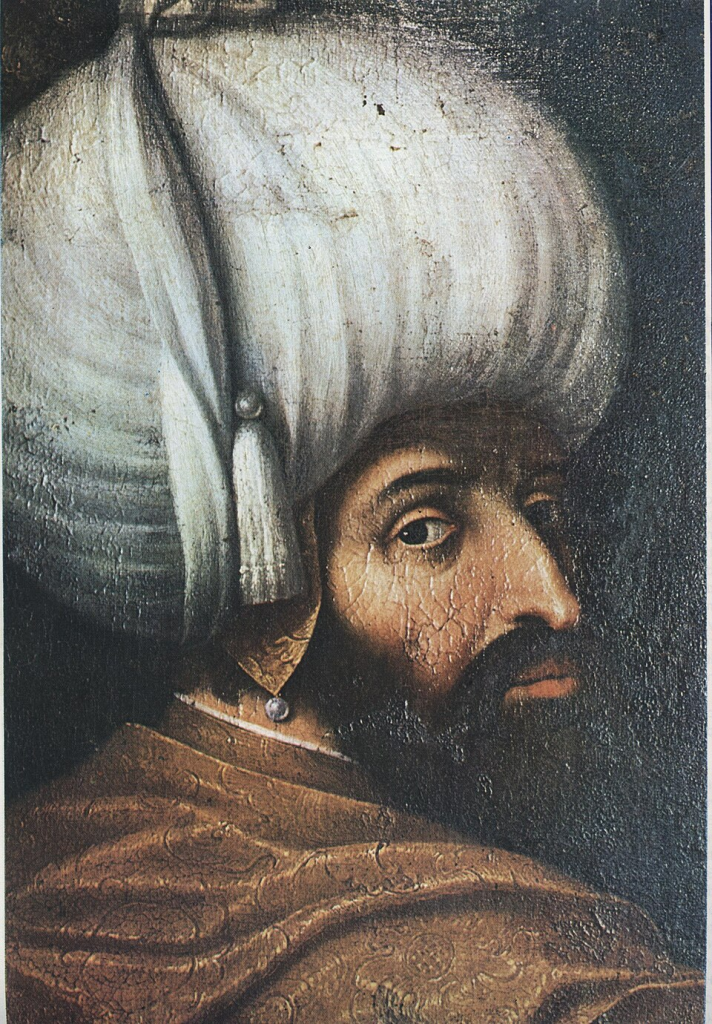
An imagined portrait of Sultan Bayezid I (Yıldırım Bayezid), based on a sixteenth-century European pictorial tradition. Bayezid died nearly two centuries before the portrait was created.
Why should an Italian audience in 1735 have cared about an Ottoman sultan defeated more than three hundred years earlier?
Part of the answer lies in Europe’s fascination with the Ottoman world. But in Vivaldi’s Italy—particularly in the cultural orbit of Venice—the Ottomans were hardly inhabitants of some purely imaginary Orient. Venice and the Ottoman Empire had been commercial partners, diplomatic interlocutors and military enemies for centuries.
Bayezid could therefore appear simultaneously distant and strangely familiar: an Oriental monarch, but one belonging to a dynasty that had profoundly shaped the history of the Mediterranean.
There was also something universal in his predicament.
Fortune had reversed itself.
The conqueror had become the captive.
The man who commanded armies could no longer command his own destiny.
And yet he could still refuse to kneel.
That is the Bayezid who fascinated the European stage.
The Strange Journey of a Defeat
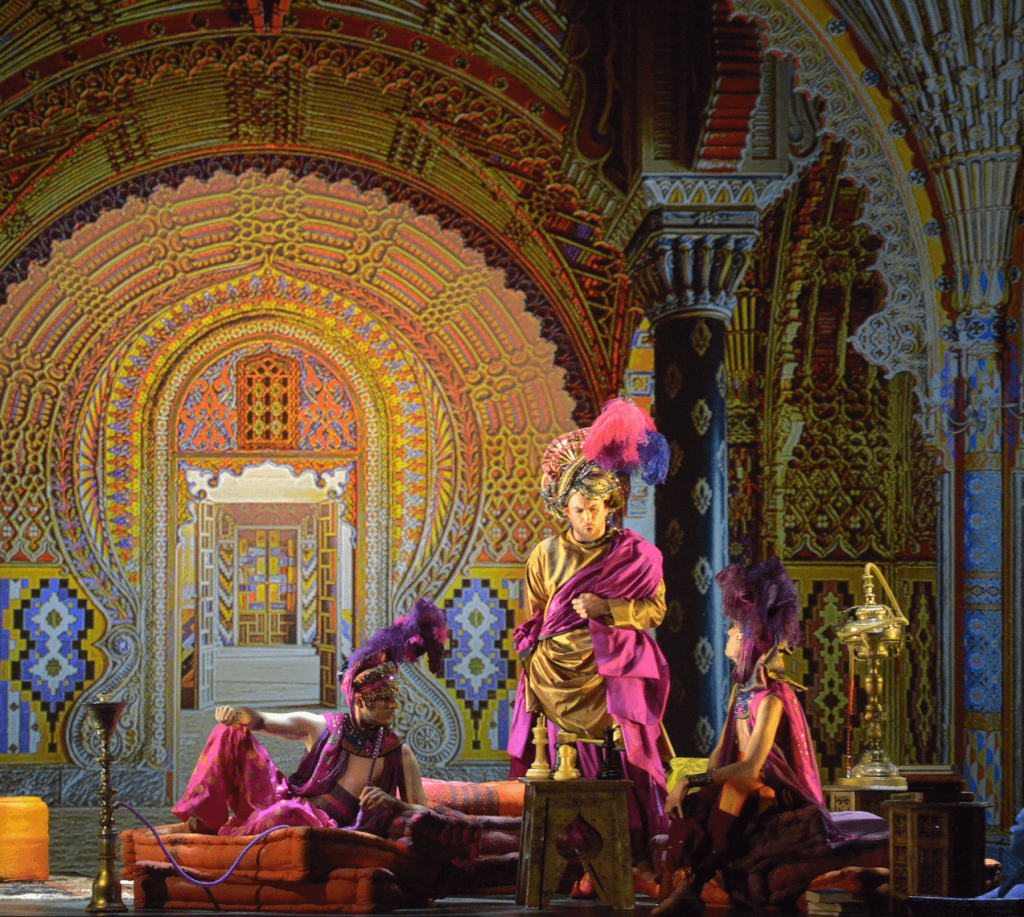
A scene from Vivaldi’s Bajazet, staged at Teatro Malibran in Venice in 2024.
There is something extraordinary about the journey of this story.
A battle fought outside Ankara in 1402 becomes a French tragedy in the seventeenth century, then a Venetian libretto, then Handel’s Tamerlano in London, and finally Vivaldi’s Bajazet in Verona.
Across three centuries, Bayezid travelled farther in European imagination than he ever did in life.
And perhaps that is why the story endured.
History usually remembers the victor. Timur won the Battle of Ankara.
But opera discovered something history alone could not quite contain: the drama of the defeated man who refuses to experience himself as defeated.
So in 1735, under the lights of a theatre in Verona, an Ottoman sultan who had died in captivity more than three hundred years before lived again.
Not as the Thunderbolt who conquered.
But as the prisoner who would not bow.
Note that the video is embedded via YouTube and all rights belong to the respective rights holders.