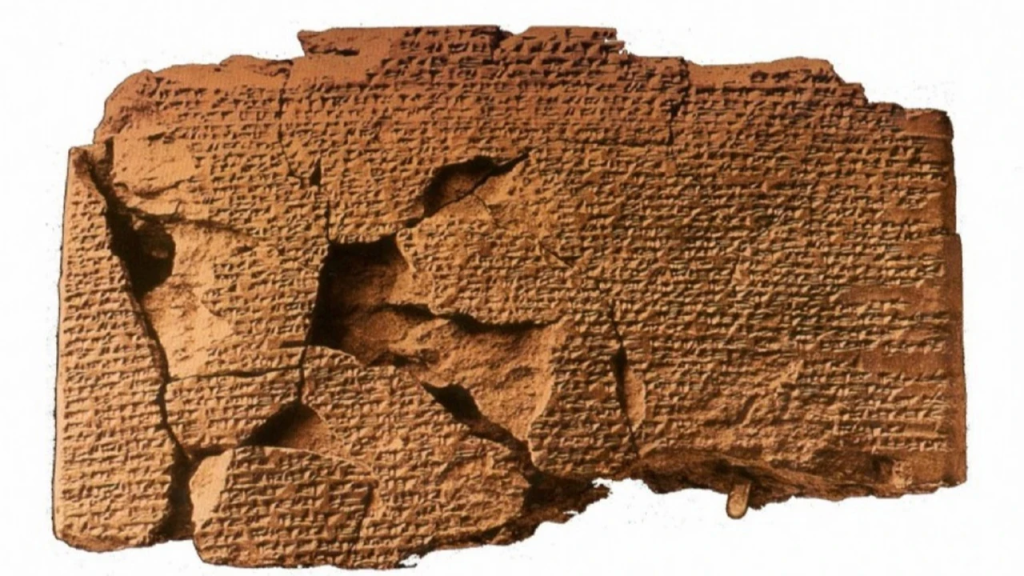

“in order to establish a good peace and a good fraternity forever among them. Thus speaks Reamasesa [Ramesses], the Great King, the king of the land of Egypt… to Hattusili, the Great King, the king of the land of Hatti, his brother… Look, I have established a good fraternity and a good peace now forever among us...”
from the Treaty of Kadesh
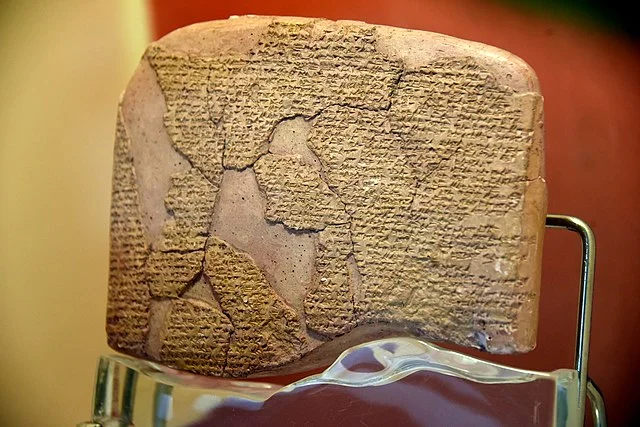
During a recent visit to the Istanbul Archaeology Museums, I found myself standing before a small clay tablet that, at first glance, seemed remarkably ordinary. Covered with rows of wedge-shaped marks impressed into its surface more than three thousand years ago, it lacked the visual drama of a golden crown or a monumental statue. Yet this modest object carries one of the most remarkable stories in human history. It is part of the Kadesh Peace Treaty, often described as the world’s oldest surviving international peace agreement, and its journey from a Bronze Age royal archive to a museum gallery in Istanbul is every bit as fascinating as the treaty itself.
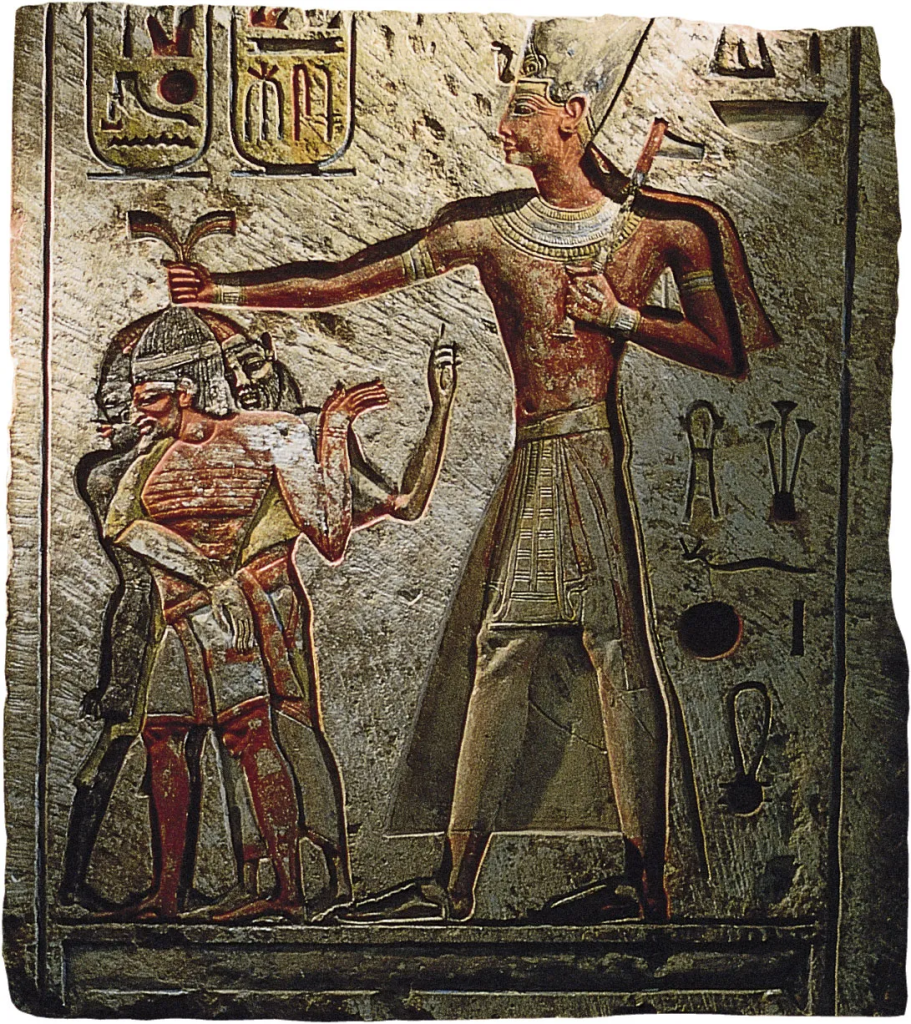
Pharaoh Ramesses II
The story begins in the thirteenth century BCE, when two great powers dominated the eastern Mediterranean world. To the south stood the Egyptian Empire under the celebrated Pharaoh Ramesses II, while to the north the Hittite Empire, centered in Anatolia, controlled vast territories stretching across much of modern-day Turkey and Syria. These rival powers competed for influence throughout the Near East and eventually clashed at the famous Battle of Kadesh, fought near the Orontes River around 1274 BCE.
The battle became one of the most celebrated military encounters of the ancient world. Ramesses II proclaimed a glorious victory in inscriptions carved across Egypt, while the Hittites also emerged claiming success. In reality, neither side achieved a decisive triumph. After years of costly rivalry, the two powers reached a more practical conclusion: peace would serve them better than perpetual war. Around 1259 BCE, Ramesses II and the Hittite king Hattusili III concluded a formal treaty establishing peace, mutual assistance, and diplomatic cooperation between their kingdoms.
What makes this agreement so extraordinary is not only its antiquity but also its sophistication. The treaty contained provisions concerning military alliances, mutual defense, extradition of political fugitives, and the maintenance of friendly relations between the two states. Reading its contents today, one is struck by how familiar many of its concerns remain. The language may belong to the Bronze Age, but the desire for stability, security, and cooperation feels surprisingly modern.
a thousand gods of the male gods and of the female gods of those of the land of Hatti, together with a thousand gods of the male gods and of the female gods of those of the land of Egypt, they are with me as witnesses to these words.’
What truly elevates the Kadesh Peace Treaty into a monumental landmark of ancient history is not merely its status as the world’s oldest surviving international peace pact, but the direct, equal authority exercised by Queen Puduhepa. In an era where international diplomacy was exclusively a male domain, Puduhepa stamped her own official royal seal alongside King Hattusili III, effectively making her a co-signatory and co-guarantor of the treaty. This unprecedented act established the Kadesh accord as the first international agreement in recorded history to bear a woman’s seal, underscoring both the remarkably progressive political status of Hittite queens—who ruled as sovereign Tawanannas in their own right—and Puduhepa’s personal genius as a master diplomat who helped shape the balance of power across the Bronze Age world.
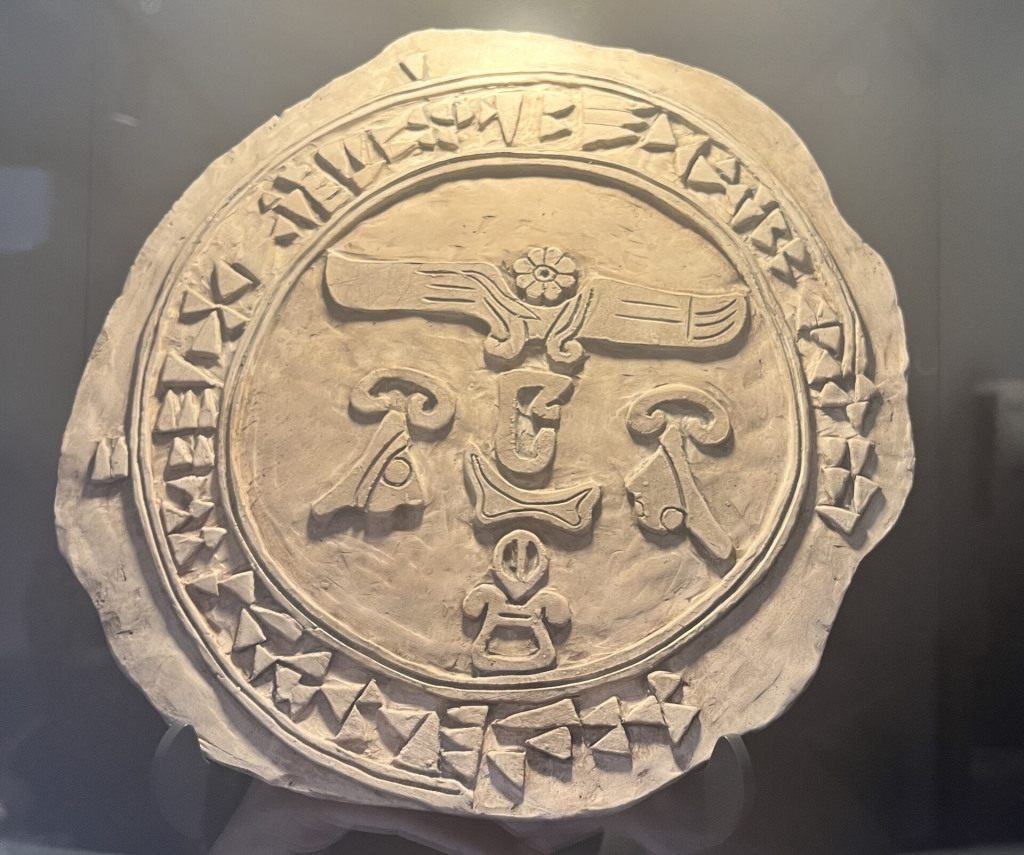
Seal of Puduhepa
The agreement was originally inscribed on silver tablets exchanged between the Egyptian and Hittite courts. These prestigious documents represented the official version of the treaty, intended to symbolize the importance of the agreement between two of the most powerful states of the age. Those silver originals, however, disappeared long ago and have never been found.
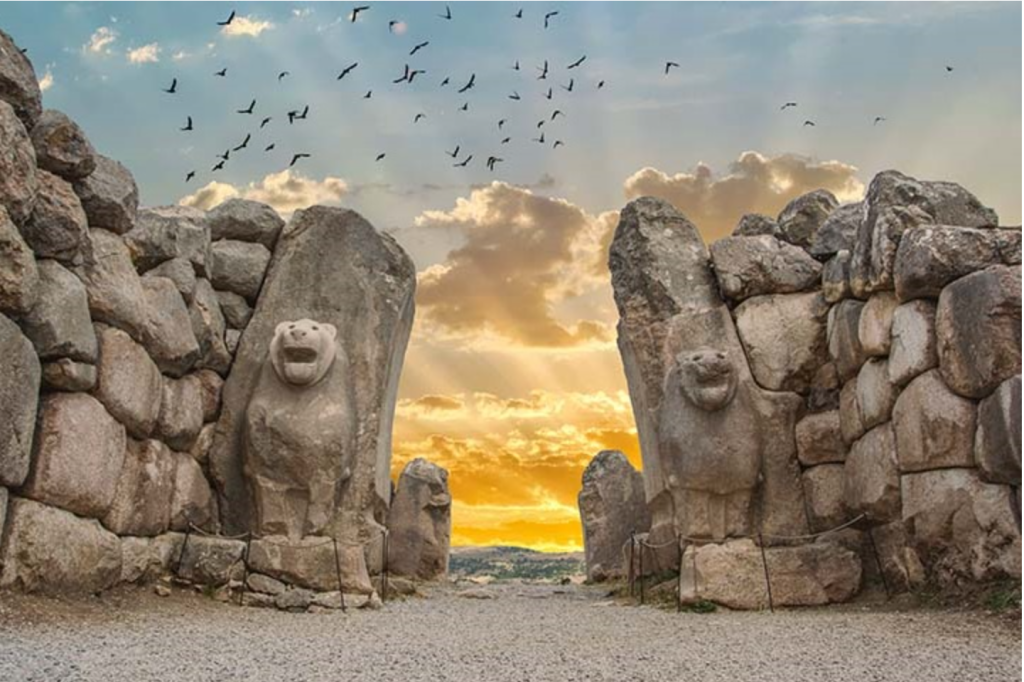
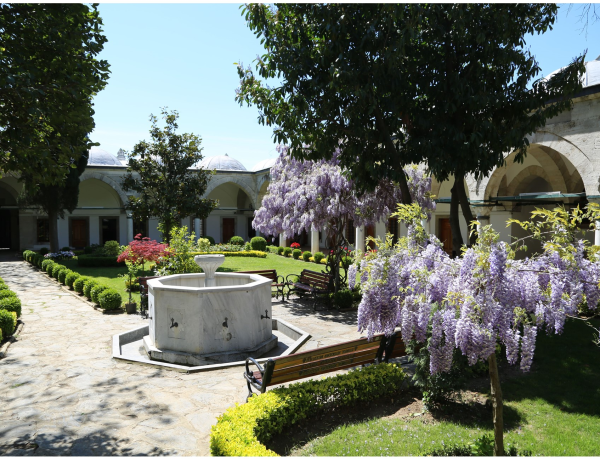
Hattusa
What survived were the clay archival copies produced by Hittite scribes and preserved within the royal archives of the Hittite capital, Hattusa, located near present-day Boğazkale in central Anatolia. There they remained for centuries, until history intervened. Around 1200 BCE, the Hittite Empire collapsed as part of the wider upheavals that transformed the eastern Mediterranean at the end of the Bronze Age. Cities were abandoned, political systems disintegrated, and entire cultures disappeared from history. The Hittite language ceased to be spoken, its script fell silent, and eventually even the memory of the civilization itself faded from human consciousness.
Yet the tablets survived.
Buried beneath the Anatolian soil, protected by the very destruction that erased the empire that created them, they remained hidden for nearly three thousand years. Long after the names of Hittite kings had been forgotten, the clay archives waited patiently underground, preserving voices from a vanished world.
The next chapter of the story began in 1906, when the German archaeologist Hugo Winckler started excavations at Hattusa. What emerged from the earth astonished scholars. Thousands of cuneiform tablets were discovered, revealing the existence of a powerful civilization that had largely vanished from historical memory. Among these tablets were royal correspondence, religious texts, legal documents, and diplomatic agreements, including copies of the treaty concluded between Egypt and the Hittites centuries earlier.
One of the most fascinating aspects of the discovery is that the treaty tablets themselves were not written in Hittite but in Akkadian, the international diplomatic language of the Late Bronze Age. Because Akkadian had already been deciphered during the nineteenth century, scholars were able to recognize and identify the treaty relatively quickly after its discovery. The archives of Hattusa, however, contained thousands of additional tablets written in the still undeciphered Hittite language, and it was these texts that remained largely inaccessible.
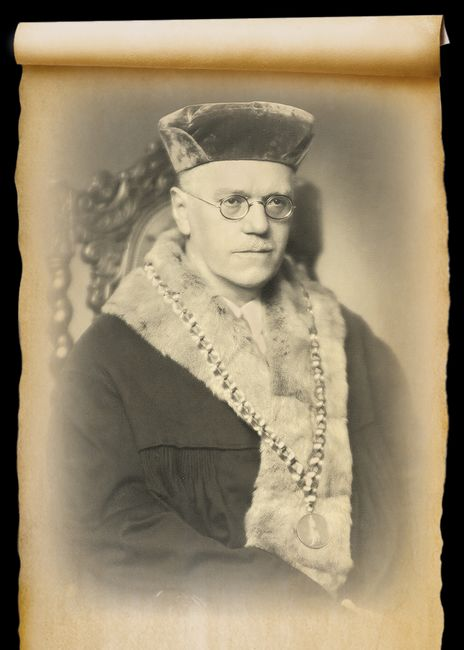
Bedřich Hrozný
The breakthrough came in 1915, when the Czech linguist Bedřich Hrozný demonstrated that Hittite belonged to the Indo-European language family. His decipherment unlocked the vast majority of the Hattusa archives and allowed historians to reconstruct the political, religious, and cultural world of the Hittites in unprecedented detail. The treaty itself was already known, but Hrozný’s achievement revealed the civilization that had produced it.

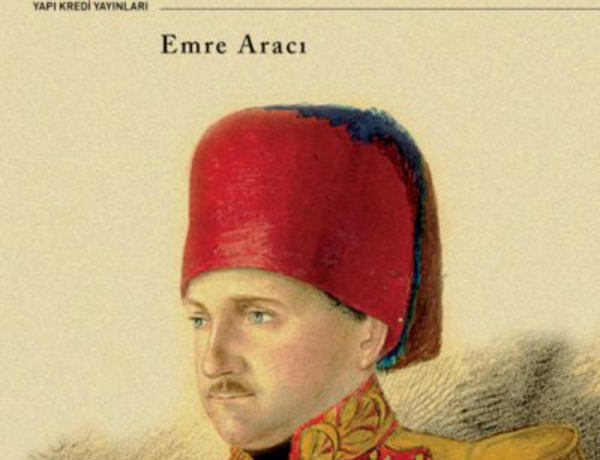
Istanbul Archaeology Museums
Many of the tablets discovered at Hattusa eventually entered the collections of the Imperial Museum in Istanbul, today known as the Istanbul Archaeology Museums. As a result, visitors can stand before an authentic Bronze Age tablet containing part of one of the earliest peace agreements in recorded history. It is not a modern reconstruction or replica, but a genuine archival document created by ancient scribes who could never have imagined that people living three millennia later would still be reading their work.
What I find most moving about the Kadesh Treaty is the chain of human effort that ensured its survival. A Hittite scribe carefully impressed the text into wet clay. The tablet endured the destruction of an empire and centuries of burial beneath the earth. Archaeologists uncovered it, linguists deciphered it, and museum curators preserved it. Because of their combined efforts, a diplomatic agreement negotiated in the Bronze Age continues to speak across the centuries.
The treaty’s significance extends far beyond antiquity. Today, a large replica of the Kadesh Peace Treaty is displayed at the United Nations Headquarters in New York, where it serves as a symbol of diplomacy and the pursuit of peace between nations. It is a fitting tribute to an agreement negotiated more than three thousand years ago, yet still relevant in a world that continues to struggle with the same questions of war, power, and coexistence.
Standing before the tablet in Istanbul, however, one is reminded of a different lesson. The silver originals vanished. The kings who signed the treaty vanished. The empires they ruled disappeared, their cities fell into ruin, and their languages were forgotten. Yet the humble clay copies survived.
In a world obsessed with permanence, the Kadesh Treaty offers a humbling reminder that history often preserves what nobody expects. Sometimes it is not the precious object that endures, but the working copy tucked away in an archive. And sometimes a small clay tablet, sleeping beneath the Anatolian soil for three thousand years, can become one of humanity’s most powerful witnesses to the persistence of memory.