

Donizetti Paşa (1788-1856)
In a world where we believe we are divided by nations, it is hard to imagine the world of empires where people from all sorts of different backgrounds could serve one empire. Try to imagine the Ottoman Empire where sultans married non-muslim women from across Europe, had palace painters from Italy, architects from France; had Armenian court jewellers, Greek cooks and Italian court musicians.
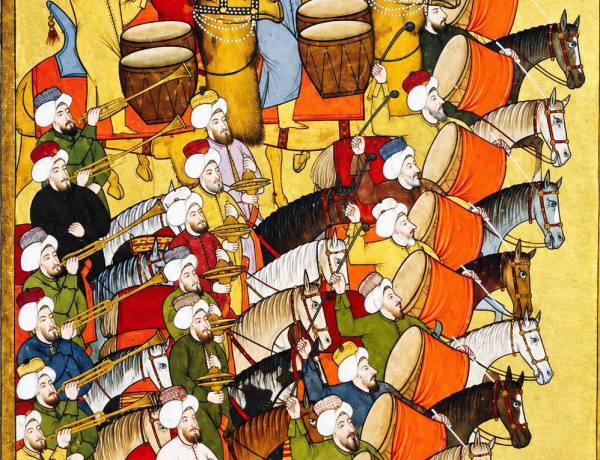
And Guiseppe Donizetti was a ‘child’ of his times. Having been born to a poor Italian family and having fought in the Napoleon army, he finally sought his fortunes in the Ottoman Empire. Being the talented musician he was, he was invited to İstanbul as the conductor of the Ottoman military band in 1828, where he stayed for the rest of his life. He brought Istanbul his military musical instruments and a team of young musicians. Following his arrival, he trained the Ottoman military band and stayed in the service of the Ottoman court for the remaining 28 years of his life. He is celebrated as the first western musician to introduce western music to Ottoman court with his compositions for the Ottoman family and his lessons to the high ranking Ottoman royalty. He was given the title Pasha to honour his great contributions to the Ottoman court.
Prominent Turkish musicologist Emre Aracı has written an excellent book on Donizetti Paşa and his life in the Empire.
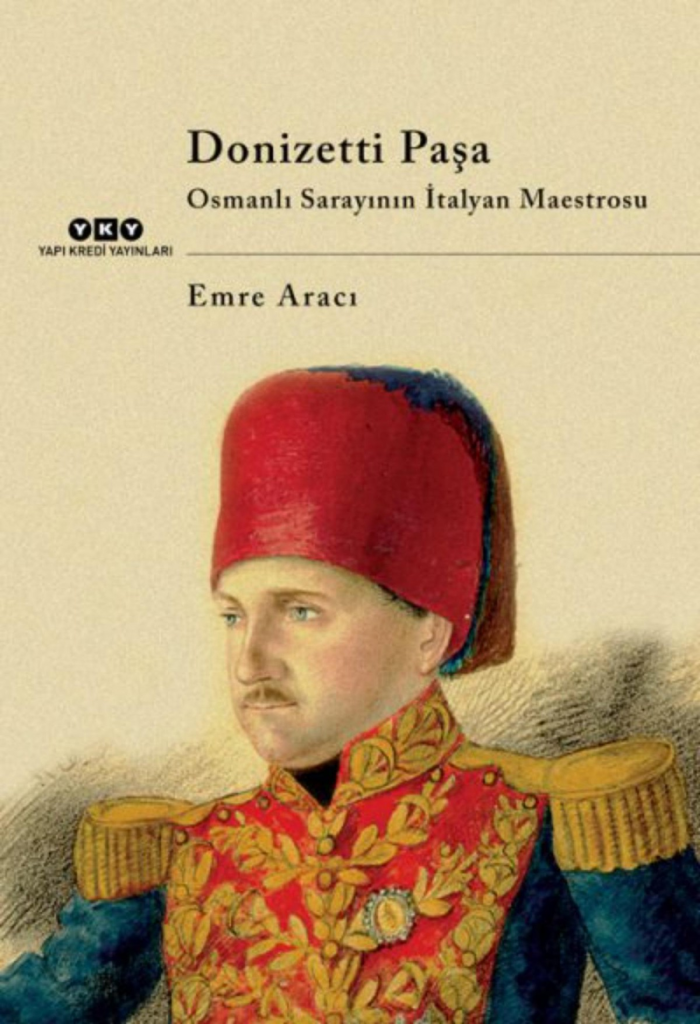
Donizetti Pasha: Italian Maestro in the Ottoman Court by Emre Aracı
Aracı mentions that Donizetti Paşa was actively involved in the opera performances in Pera performed to the Ottoman Sultan and high ranking royals. The opera building unfortunately burnt down during Pera fires in 1870. Çiçek Pasajı where you can currently visit rests upon this opera house that hosted operas from all across Europe at the time.
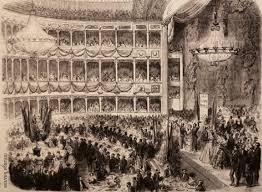
Naum Theatre Hall that hosted operas in Pera from 1844 to 1870
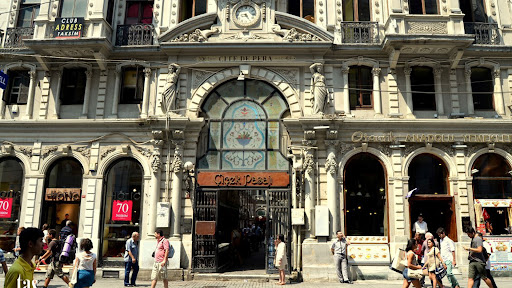
Çiçek Pasajı where Naum Theatre Hall was once standing
We owe the national anthem of the Ottoman Dynasty for 22 years to Donizetti Paşa. It was composed for Sultan Abdülmecit.
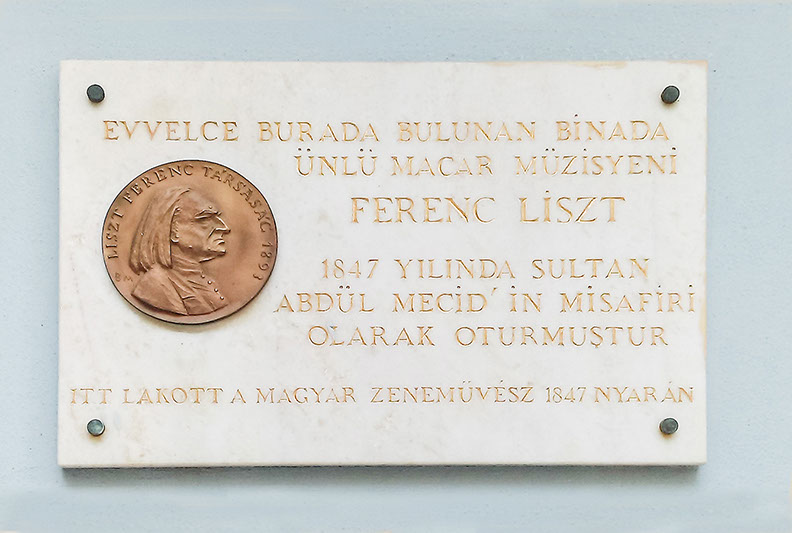
Donizetti Paşa also befriended Liszt who visited İstanbul for five weeks to give concerts to the Ottoman Sultan Abdülmecit in 1847.

Hungarian composer Franz Liszt who had great interest in oriental cultures
Liszt had composed Grande Paraphrase de la marche de Donizetti composée pour Sa Majesté le Soultan Abdül Mejid-Khan for his visit to Sultan Abdülmecit during his visit. You can listen to the magical composition of Liszt by Gülsın Onay who plays it beautifully!
Note that Donizetti Paşa died and was buried in İstanbul and his lasting place is in the cemetery of the St. Esprit Cathedral in Şişli.
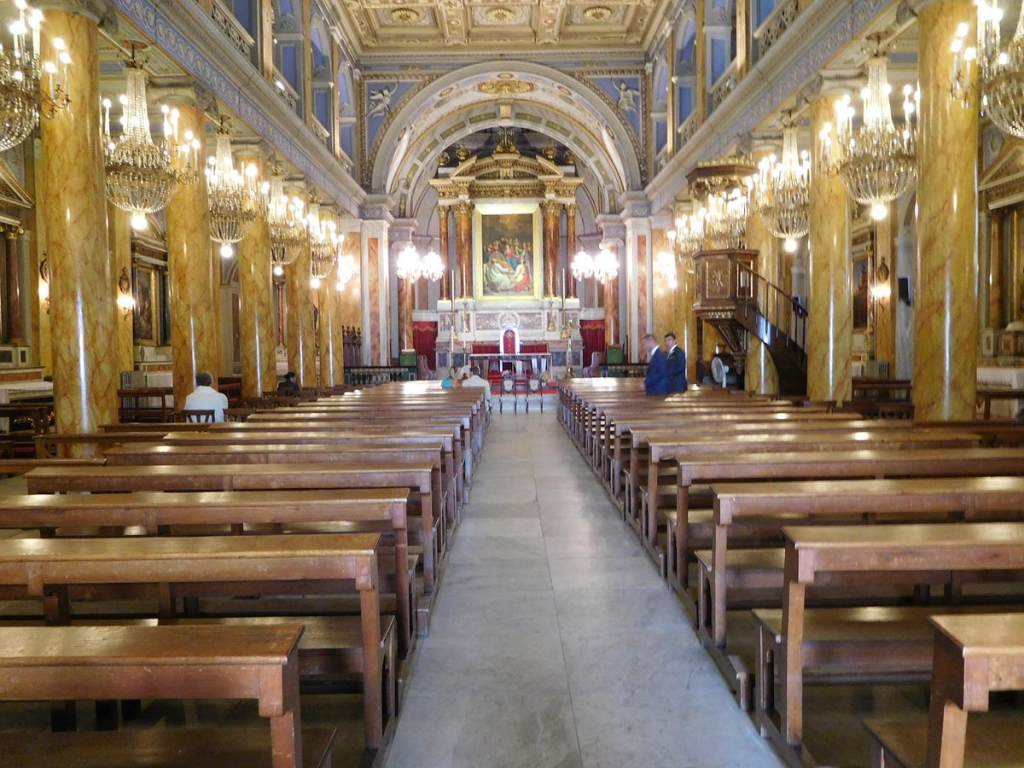
Saint Esprit Cathedral in İstanbul
The master’s name lives in a hotel in Pera.

Palazzo Donizetti Hotel
Have a look at this video that introduces Emre Aracı’s book on the life of Donizetti Paşa who introduced western music to the world of the Ottomans!