
Dedicated to my maternal grandfather Suat Vina
My story with Ivan Aivazovsky began long before I knew that I had one. In the home where I grew up in Istanbul, there was a reproduction of an Aivazovsky painting made by my grandfather Suat Vina.
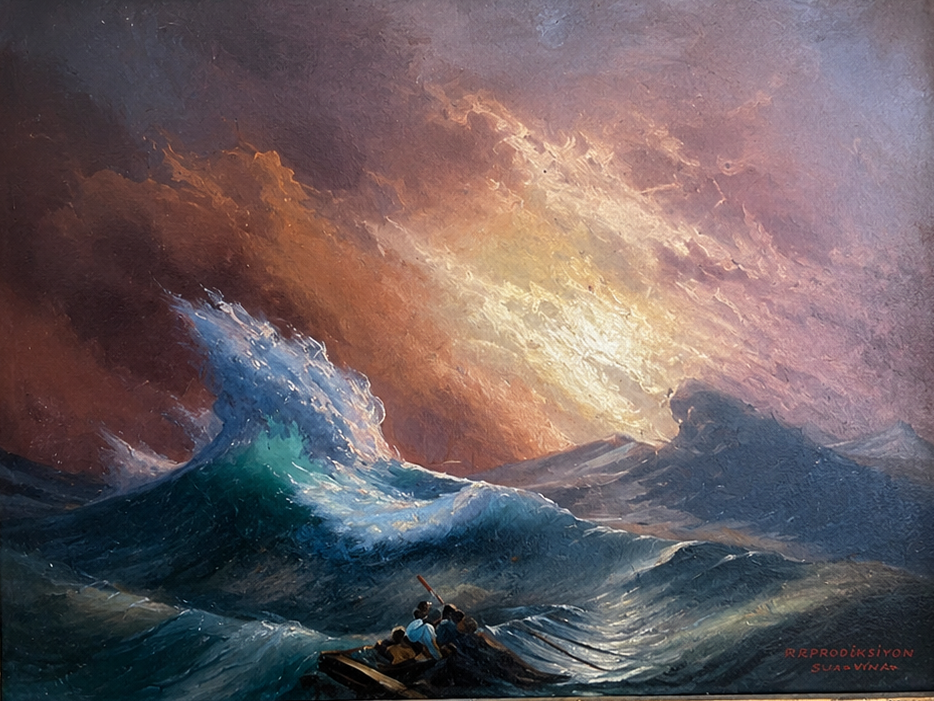
A glimpse at my grandfather’s reproduction of an Aivazovsky painting that has hung on our wall since my childhood
I knew the name of the painter. I knew those unmistakable seas, the strange luminosity of the water, the smallness of human beings before it, the almost supernatural light breaking through clouds. Aivazovsky belonged to that quiet collection of names and images one absorbs in childhood without ever asking exactly why they are there.
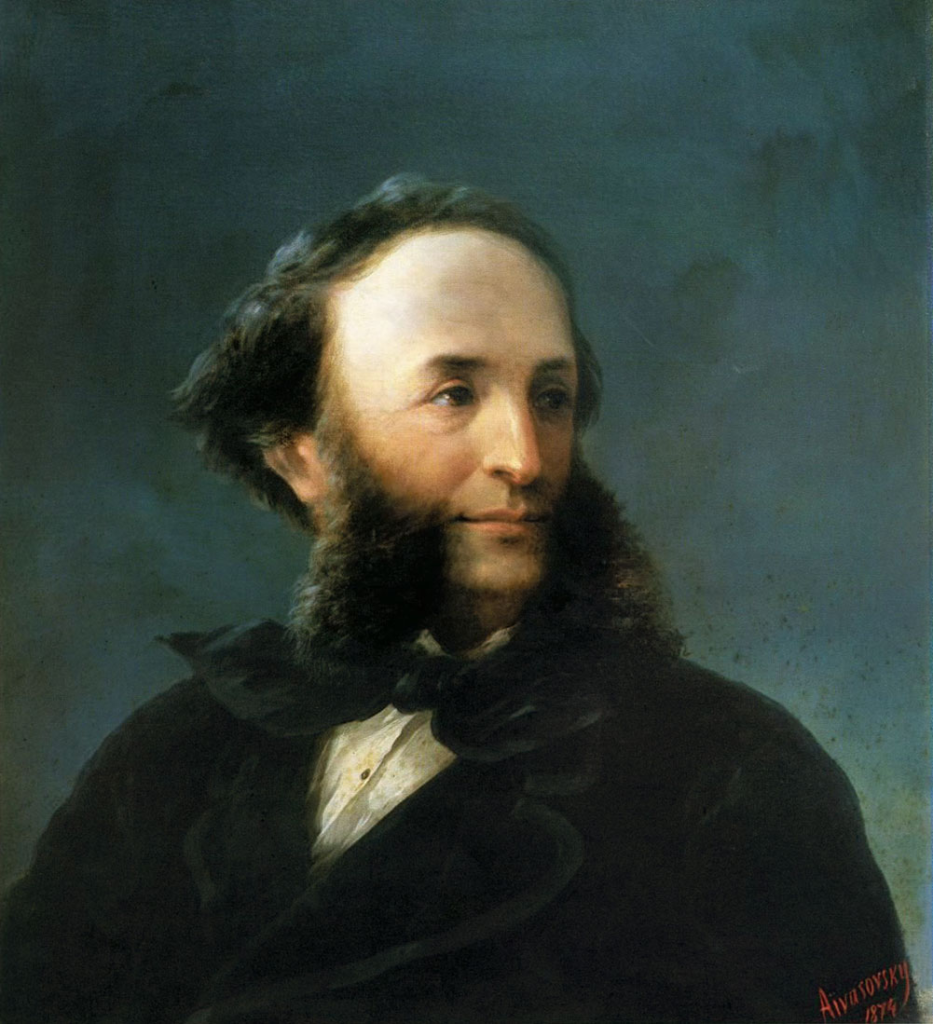
Ivan Konstantinovich Aivazovsky (1817–1900)
What I did not know was that Aivazovsky had a story with Istanbul.
And it was not a minor one.
Ivan Konstantinovich Aivazovsky (1817–1900), born into an Armenian family in the Crimean port of Feodosia, became one of the nineteenth century’s greatest painters of the sea. Trained at the Imperial Academy of Arts in St Petersburg and closely associated with the Russian Navy, he travelled widely through Europe and the Mediterranean. But Istanbul seems to have affected him differently.
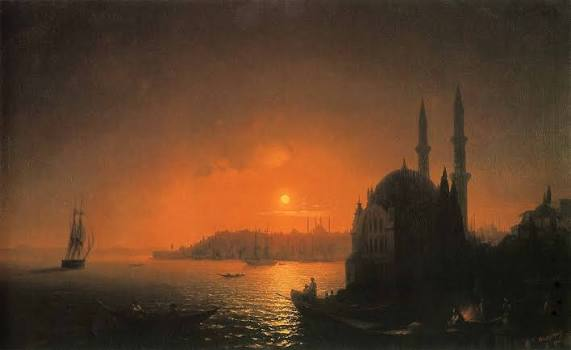
He first came to the city in 1845. For a painter obsessed with water and light, Istanbul must have seemed almost impossibly suited to his imagination: a city divided and joined by water, where palaces, mosques, wooden houses, sailing ships and distant hills could dissolve into mist at dawn and reappear transformed in the orange light of sunset.
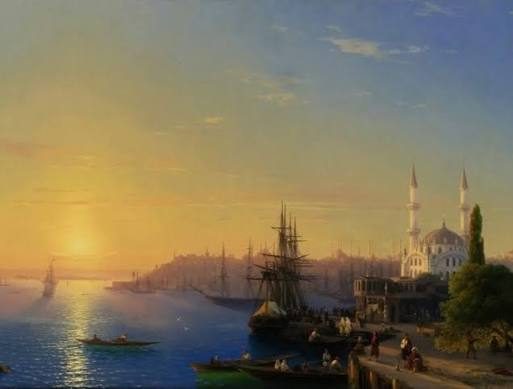
Throughout his eight visits to the city between 1845 and 1890, Aivazovsky developed a remarkable relationship with Istanbul and the Ottoman imperial court. During the reigns of Sultan Abdülmecid, Sultan Abdülaziz and Abdülhamid II, he produced paintings for the palace, exhibited his work in the city and received Ottoman decorations in recognition of his art.
His relationship with Sultan Abdülaziz was particularly significant. Abdülaziz was himself interested in drawing and an enthusiastic patron of painting. During his reign, the Ottoman palace expanded its collection of European-style easel paintings, and Aivazovsky became one of the artists particularly admired at court. In 1874, he returned to Istanbul at the Sultan’s invitation and produced works for the Ottoman palace, including Bosphorus views and maritime scenes. A number of his paintings remain in Turkey’s National Palaces collections today.
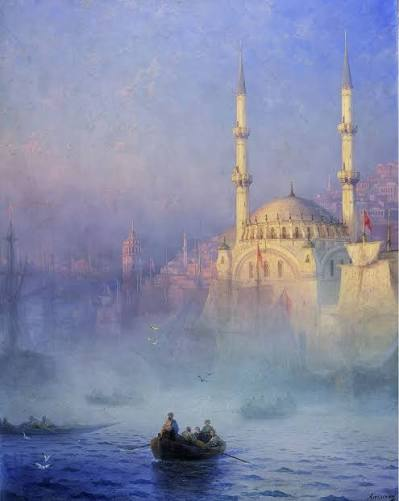
But Aivazovsky did not simply paint Istanbul’s monuments. He painted its atmosphere.
His Istanbul is made of reflections, mist, moonlight, burning sunsets and the movement of ships across water. Mosques and minarets rise along the horizon, caiques glide across the Bosphorus, and palaces appear almost weightless beside the sea. Architecture is present, but it rarely overwhelms the landscape. Eventually everything seems to surrender to water and sky.
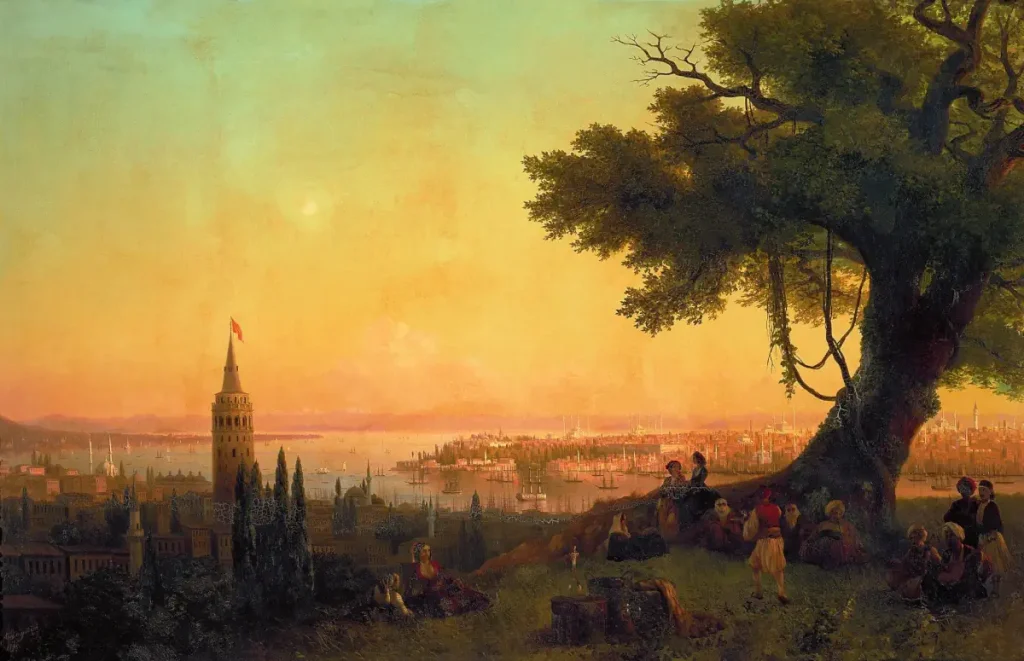
There is something wonderfully appropriate about Aivazovsky becoming a painter of Istanbul. He was born beside the Black Sea in Crimea and spent his life painting seas that connected rather than merely separated worlds. Armenian by family background, a celebrated artist of the Russian Empire, welcomed at the Ottoman court, he belonged to precisely the complicated nineteenth-century geography of the Black Sea and eastern Mediterranean that modern national boundaries can sometimes make us forget.
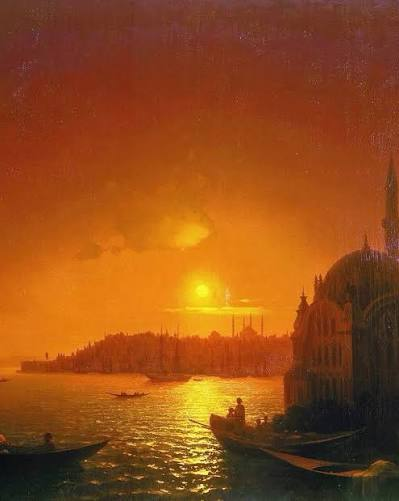
Perhaps that is also why his Istanbul paintings feel different from many conventional Orientalist images of the city. The city is certainly beautiful in them, sometimes almost dreamlike, but it is rarely merely an exotic stage. What fascinates him most is something more elemental: water, weather and light.
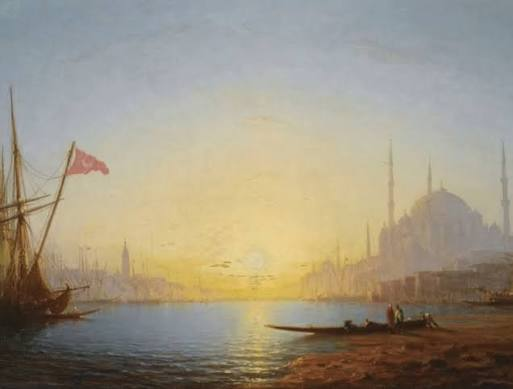
Today, looking at his paintings of the Bosphorus, the Golden Horn and Istanbul at sunset, I find myself returning mentally to that reproduction made by my grandfather.
As a child, I thought I was simply looking at a painting of the sea.
I knew Aivazovsky’s name, but somehow never discovered that the painter whose image had hung in the home where I grew up had repeatedly come to the city in which that home stood; that he had crossed these waters, watched this light, entered its palaces and returned again and again to Istanbul in his paintings.
Perhaps this is one of the pleasures of discovering the history of your own city. Sometimes what appears to be a new story has been quietly waiting for you all along.
In my case, it had been hanging on the wall of my childhood home.
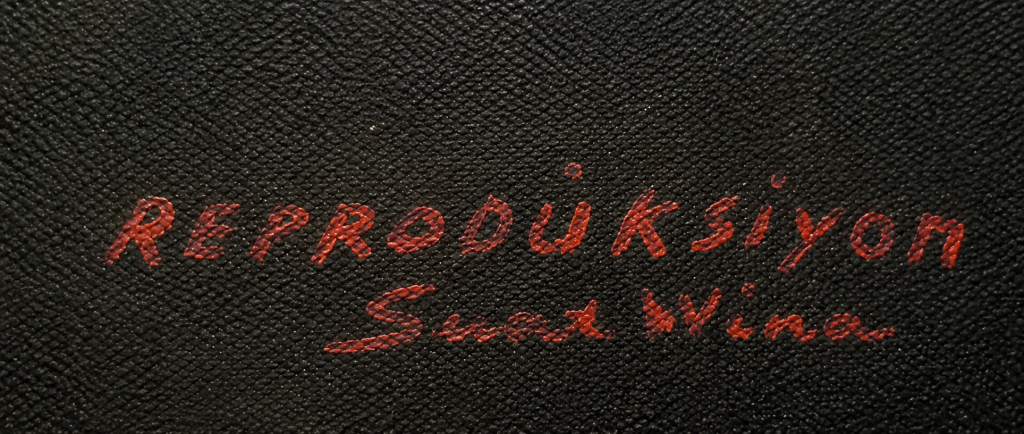
My grandfather’s signature beneath the reproduction of the Aivazovsky painting hanging on our wall since our childhood
Note that video is embedded via YouTube and all rights belong to the respective rights holders.