
Among the fishmongers, greengrocers, spice shops and old taverns of Kadıköy Market, there once lived a goose named Rodi. He was neither a curiosity brought in to entertain customers nor an ornamental creature confined behind a fence. He belonged to the market as naturally as the cries of the vendors, the scent of the sea and the cats waiting patiently beside the fish stalls.
Rodi arrived in Istanbul in 2002 with Nimet Köseoğlu, known around the market as Balıkçı Nimet, or Nimet the Fishmonger. Nimet had previously run a fish restaurant in Kardeşköy, near Aydın. When he closed the restaurant and moved to Istanbul, most of his animals remained behind. Rodi, however, came with him. The bond between the two was apparently too deep to be broken by distance.
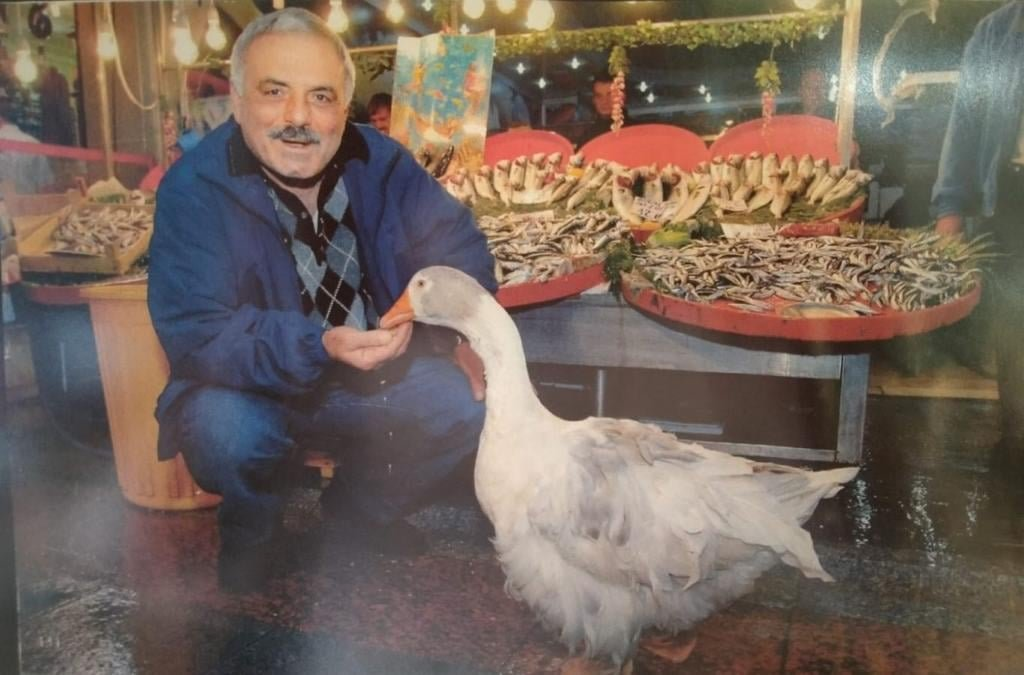
Nimet Köseoğlu with his dear Rodi
At Nimet’s fish shop in Kadıköy, Rodi quickly became part of the daily life of the market. He wandered freely among the shops, greeted familiar faces and accepted offerings of fish and salad from the tradespeople. Children stopped to stroke him; customers greeted him as though he were another shopkeeper. According to Nimet, if Rodi did not see him for two days, he would run towards him crying out in a voice that seemed to say, “Baba! Baba!”
The pair were sometimes seen walking together to Moda. Rodi would enter the ornamental pool while Nimet sat nearby reading his newspaper. Even in the crowded streets, the goose appeared perfectly at home. Local stories claimed that he waited at red lights and crossed when they turned green. He moved through Kadıköy not as someone’s pet, but as a small, dignified citizen of the neighbourhood.
By 2007, Rodi had become so closely identified with the market that Kadıköy Municipality commissioned a sculpture of him. Created by artist Nilüfer Ergin, it was placed near the Church of Saint Euphemia. Rodi thus became one of the rare animals to have a public monument erected during his own lifetime. Yet only three months later, the sculpture was stolen.
The saddest chapter of the story began on 3 May 2008, when Nimet Köseoğlu was shot and killed following a financial dispute. After his death, Rodi changed. The once-proud goose who had walked confidently through the market stopped eating and drinking. The tradespeople tried to care for him, and veterinarians treated and fed him with serum, but he never truly recovered.
Those who watched him believed that Rodi was grieving.
In April 2009, almost a year after Nimet’s death, Rodi died. The people of the market buried him in Karacaahmet Cemetery, at the feet of the man he had followed from an Aegean village to the heart of Istanbul.
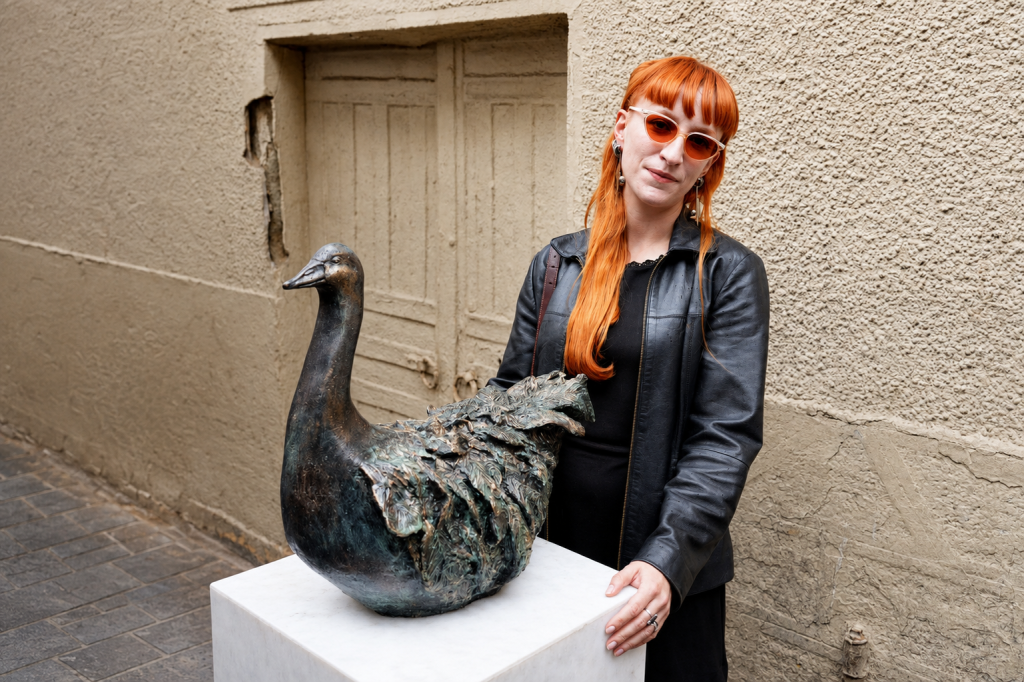
Artist Sevda Balaban with her sculpture
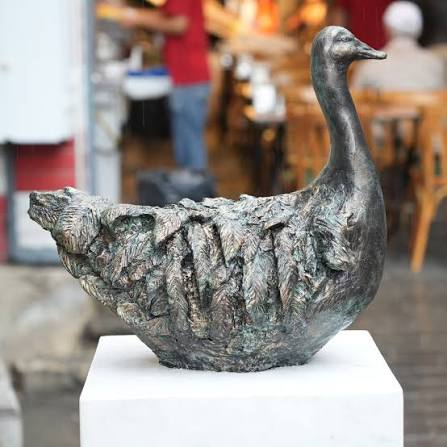
Years later, Kadıköy Municipality commissioned a new statue, created by sculptor Sevda Balaban, to replace the one that had disappeared. At its unveiling, Rodi was remembered as “the guardian of the market.” The new sculpture was entrusted to the local tradespeople so that his place in the neighbourhood would not be lost again.
Rodi’s story survives because it contains something increasingly rare in the modern city: a form of belonging that required neither ownership nor explanation. A goose arrived beside a fishmonger, learned the rhythms of the streets and was accepted into the life of a neighbourhood. When the person to whom he was devoted disappeared, he seemed unable to find his way back into the world.
Today, Rodi’s statue is more than a monument to an unusually charming animal. It commemorates an older intimacy between the city, its inhabitants and the creatures who shared its streets. Amid the restless crowds of Kadıköy Market, the bronze goose quietly preserves the memory of a friendship and of a grief so profound that even an animal could not survive it.
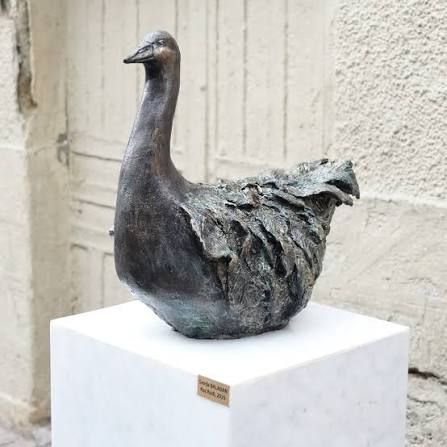
Visuals are taken from gazetekadikoy.com, kadikoy.bel.tr and Kadıköy Municipality’s facebook account.
Note that the video is embedded via YouTube and all rights belong to the respective rights holders.