

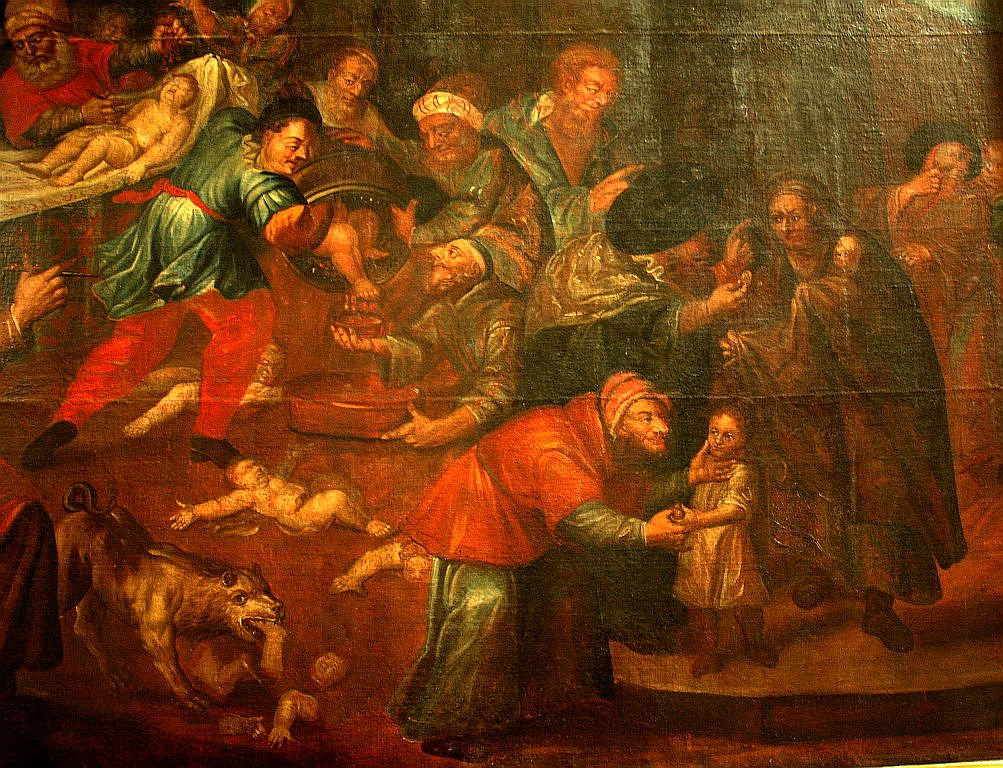
The Blood Libel, an early 18th-century painting by Karol de Prévot in Sandomierz Cathedral, Poland, depicting the false antisemitic belief that Jews murdered Christian children for ritual purposes.
For centuries, one of the darkest myths directed against Jewish communities was the blood libel: the accusation that Jews kidnapped and murdered Christian children and used their blood for religious purposes, particularly in preparing matzah for Passover.
The accusation had no basis in Judaism—in fact, Jewish religious law explicitly prohibits the consumption of blood—but from medieval Europe onward it repeatedly led to persecution, torture and murder.
The Blood Libel Reaches the Ottoman Empire
The Ottoman Empire was not immune to this European-born mythology. Historical records document accusations in Amasya in 1530, Jerusalem in 1546, Foça in 1560, Istanbul in 1633, Aleppo in 1830, Rhodes and Damascus in 1840, as well as later incidents in İzmir and elsewhere.
Yet an important distinction emerged between popular prejudice and the position of the Ottoman state.
As early as the reign of Sultan Süleyman the Magnificent, the imperial authorities intervened against ritual-murder accusations and sought to protect Jewish communities from prosecution based merely upon the blood libel.
1840: The Crisis Reaches Istanbul
The most important confrontation came in 1840.
That year, Jews in Damascus were accused of murdering a Franciscan friar and his servant for ritual purposes. Almost simultaneously, another blood libel erupted on the Ottoman island of Rhodes following the disappearance of a Greek Orthodox boy.
Jews in Rhodes were arrested and tortured, while the Jewish quarter was subjected to a blockade. Eventually, news of the affair reached the Jewish leadership in Istanbul, and the case was brought before the Ottoman authorities.
The timing was significant. Only months earlier, Sultan Abdülmecid had proclaimed the Gülhane Edict of 1839, promising greater security of life, honour and property to his subjects as part of the emerging Tanzimat reforms.
The Jews of Rhodes were eventually formally acquitted, and the governor responsible for the abuses was dismissed.
Sultan Abdülmecid’s Firman
The British Jewish philanthropist Sir Moses Montefiore, who had travelled east following the Damascus affair, subsequently came to Istanbul and appealed for an imperial declaration against the blood libel itself.
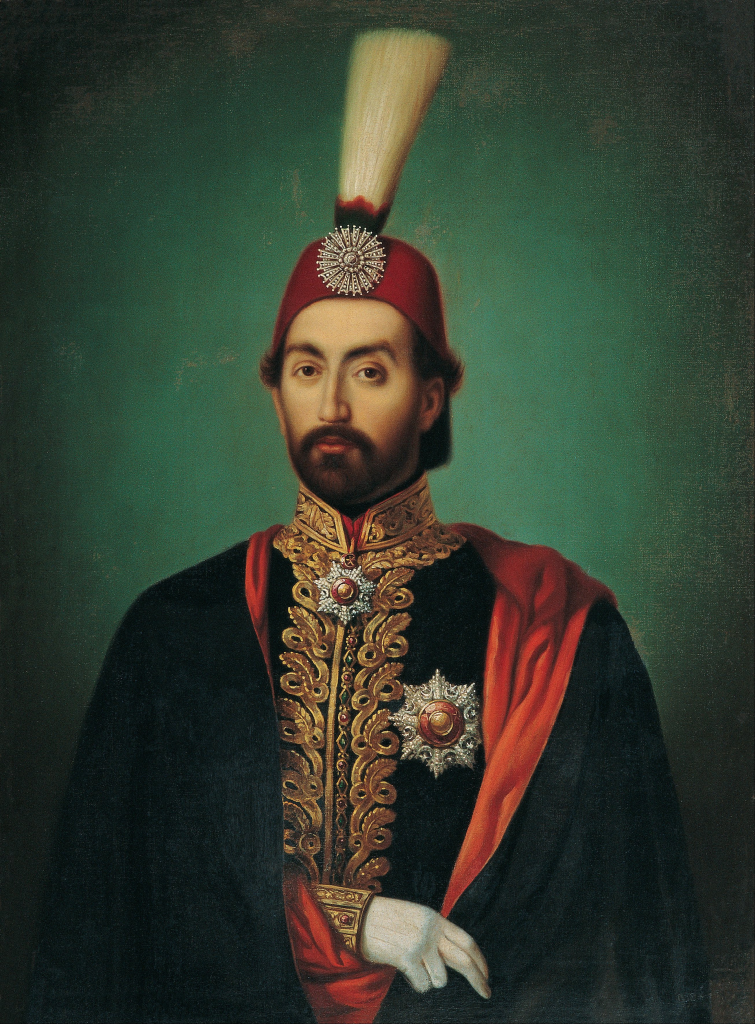
Sultan Abdülmecid
In November 1840, Sultan Abdülmecid issued a firman explicitly rejecting the accusation. The decree recognised that Jewish religious law prohibited the consumption of blood and ordered that Jews should not be persecuted on the basis of such allegations.
It was a remarkable moment: an ancient prejudice that had travelled across Europe and the Mediterranean had reached the Ottoman palace and the palace officially declared it baseless.
The Fragile Art of Coexistence
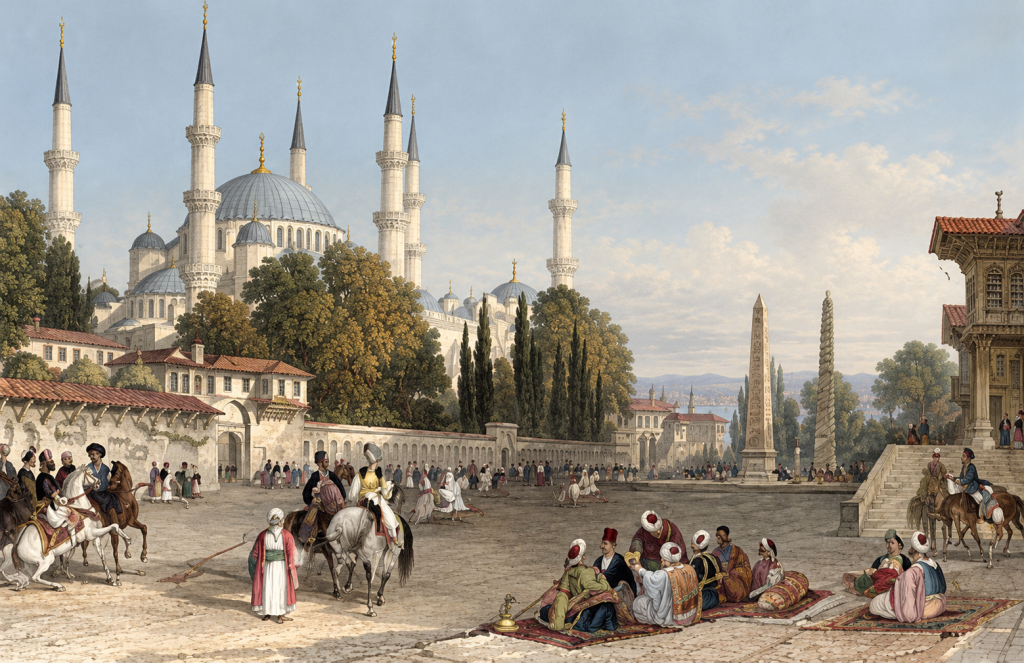
Istanbul in 1940s
The firman did not eliminate antisemitism. Blood-libel accusations appeared again in Ottoman territories during the nineteenth century, including Istanbul, and Sultan Abdülaziz would later intervene against similar accusations.
Nor should Ottoman Istanbul be romanticised as a multicultural utopia. Muslims, Jews, Greeks, Armenians and other communities lived beside one another for centuries, but coexistence could include rivalry, prejudice and violence as well as cooperation.
The history of the blood libel nevertheless reveals an important distinction. The accusation existed within Ottoman society, but it never became accepted Ottoman legal doctrine. On several significant occasions, the imperial government intervened to reject it and protect its Jewish subjects.
Perhaps that is what makes the story particularly relevant to Istanbul: a city where different communities lived extraordinarily close to one another, and where coexistence was always both rich and fragile.
The mechanism behind the blood libel remains disturbingly familiar: turn a minority into an outsider, attribute to it a secret and horrifying practice, repeat the accusation until rumour begins to resemble evidence, and allow fear to become certainty.
In Ottoman Istanbul, the myth was never completely defeated. But the imperial response at its best articulated a principle that remains strikingly modern: an accusation is not a fact, a rumour is not evidence, and difference is not a crime.