
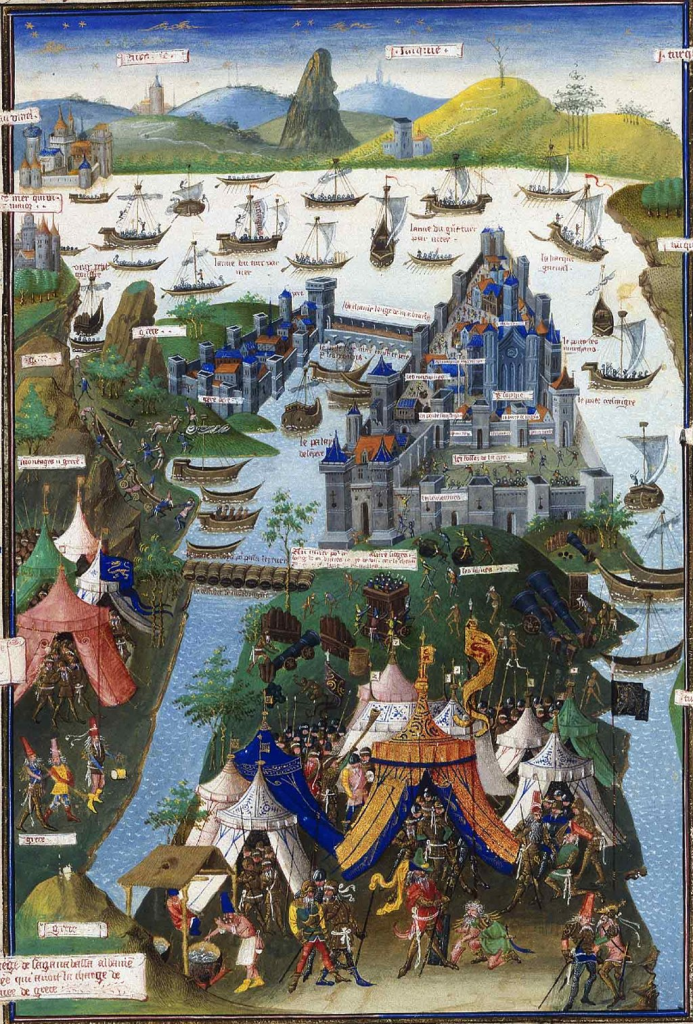
The siege of Constantinople (1453) by Jean Le Tavernier after 1455
Fall of Constantinople to Turks was a blow to Christendom and historians say that it was a turning point for Western history as it led to the end of Middle Ages and the start of the Renaissance.
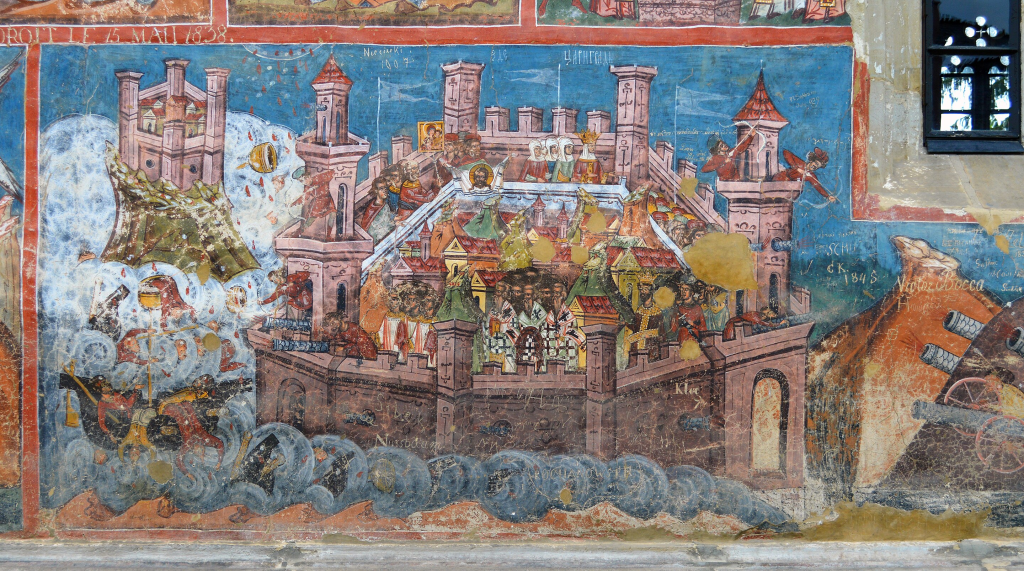
Siege of Constantinople on a mural at the Moldovita Monastery in Romania, painted in 1537
The main reason for this was the migration waves before and following the fall of Constantinople in 1453. These ’emigres’ were the most sophisticated citizens of Constantinople such as the philosophers, writers, poets, musicians, astronomers, scientists, theologians, grammarians, artists and humanists as well as politicians and architects. What they brought to Western Europe was the accumulated and preserved knowledge of Byzantine civilisation. These texts did not only include religious texts but works by Aristotle, Plato, and many other important Greek thinkers which had a profound impact on European thought and which led to a renewed interest in classical learning. Historians say that this is what paved the way to Renaissance Humanism.
Byzantine artists also brought with them a rich tradition of artistic techniques and styles characterised by rich colours, intricate patterns, and religious iconography which had a profound impact on European art as well. The rich iconography of Byzantine artists became an important feature of Renaissance art.
The manuscripts that travelled to Europe with the ’emigres’ that fled Constantinople are scattered in different museums across Europe today.
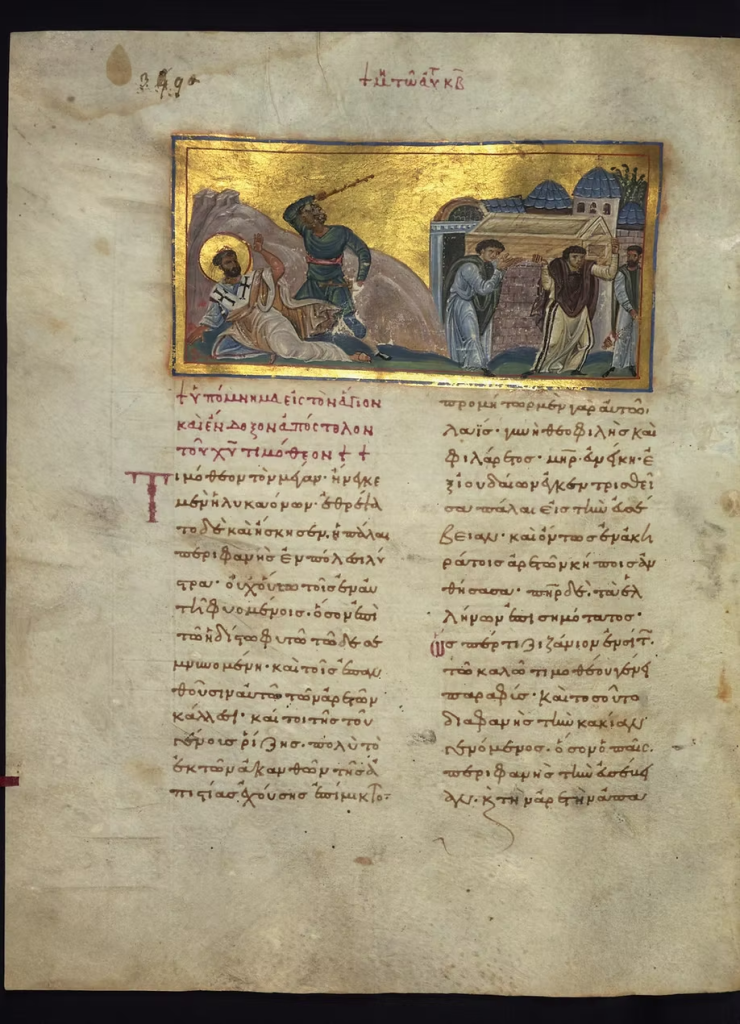
“Imperial” Menologion with Scenes of Martyrdom (taken from byzantinelegacy.com)
Constantinople, ca. 1025-1050 is among the many manuscripts that travelled to the west
Note that this ancient wisdom was also saved due to the Byzantine monks who lived in monasteries such as the one in Mount Athos. Most Byzantine monks were scholars who painstakingly copied ancient wisdom to create identical replicas. Here is an example which is currently in Cambridge University Library.
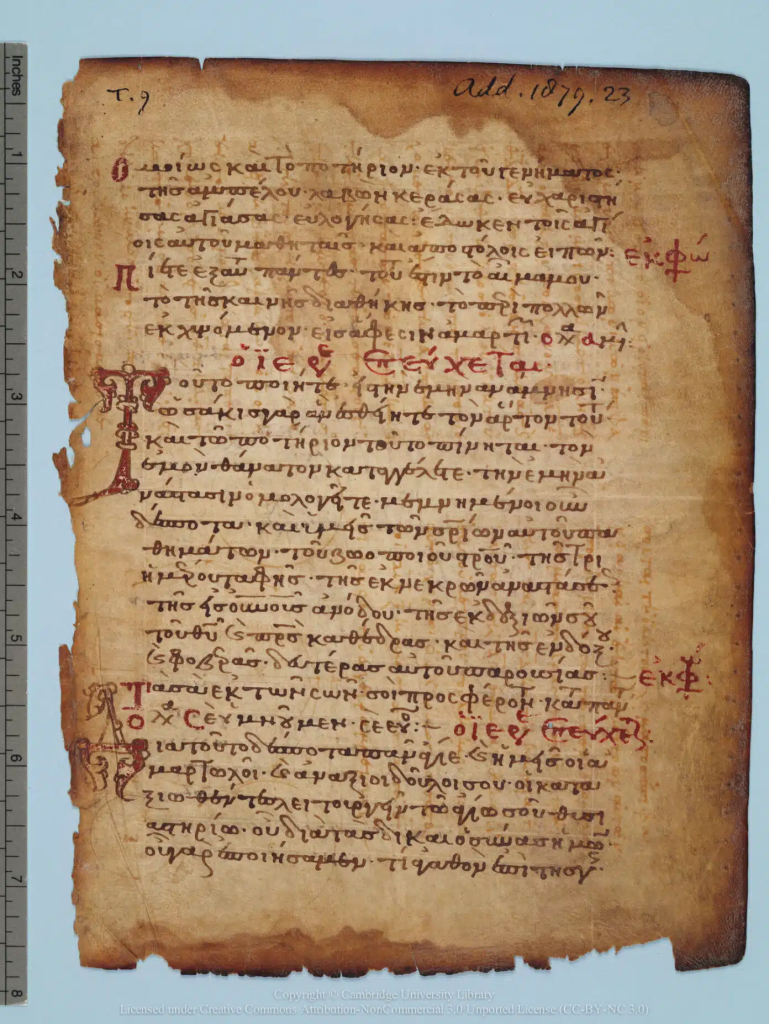
A single folio of the Archimedes Palimpsest, a manuscript originally copied in the middle or later 10th century (visual is taken from greekreporter.com)
These manuscripts are a living reminder that it is ideas that change the world!
Here is an amazing video on Renaissance which has changed the world for ever!