
Stained glass is an art form that emerges from cutting and assembling colored glass with aesthetic and technical skill, in harmony with a design — carrying within it a kind of history and culture.
In its early days, stained glass was used extensively in religious buildings, but over time it also appeared in civil architecture and monumental structures. Today, it continues to be used in interior design as well as in decorative and artistic objects.’Serap Kosovalı
Stained Glass Artist / Artı Vitray
Stained glass has a long history in İstanbul. Ottomans used stained and colored glass, especially in mosques and palaces but not in the narrative, story-telling way of Gothic cathedrals. Instead, Ottomans preferred geometric, floral, and calligraphic designs in stained glass, which aligned with Islamic artistic traditions avoiding figural representation in sacred spaces. These stained glass windows called revzen-i menkuş in Ottoman Turkish were often installed in the upper parts of mosques, letting in colorful light to complement the intricate Iznik tiles and calligraphy.
Istanbul was an important center for glass production, just as Constantinople had been earlier. The Ottomans also imported high-quality glass from Venice (Murano), especially in the 15th–17th centuries, while gradually developing their own workshops. By the 17th century, Ottoman glassmakers had become skilled at producing richly colored glass for both stained windows and decorative objects.
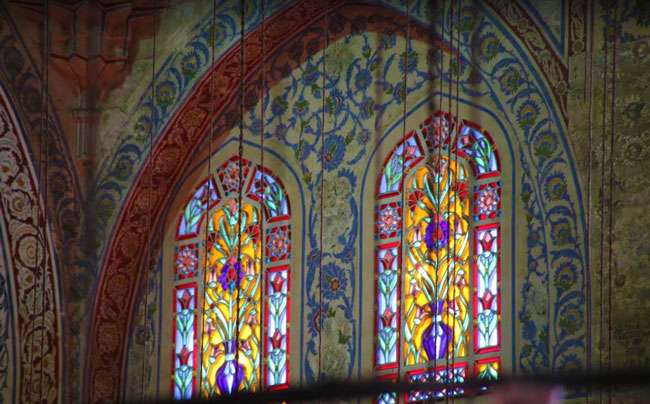
Stained glass windows of Sultanahmet Mosque
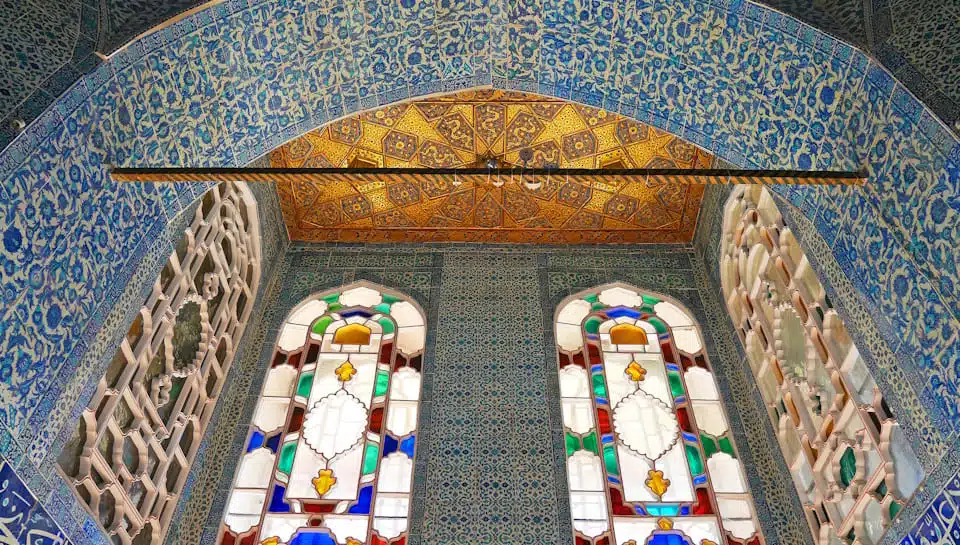
Topkapı Palace, stained glass detail
Today you can see fine examples of glass work in various historical buildings across the city. Some of the finest examples can be found in Topkapı Palace, Süleymaniye Mosque and Blue Mosque in which stained glass windows filter light into colorful, spiritual atmospheres.

visual taken from halkbanktaberaber.com
Istanbul, today hosts talented contemporary stained glass artists and one of these artists is Serap Kosovalı. Kosovalı is a painter by academic training and has been producing art till her graduation in early 2000s from Mimar Sinan Fine Arts University, which has the oldest tradition among art schools. The artist describes her art with the following words:
‘I have a journey that is nourished by different disciplines of art. By interpreting the relationship between glass and light from a modern and original perspective, I strive to create designs that are rooted in tradition yet carry contemporary lines. In my work, I aim to combine aesthetic and spiritual depth to bring a unique atmosphere to spaces. I mostly use the Tiffany technique, creating decorative objects, wall panels, and accessories. I see stained glass not merely as an ornamental tool, but as a contemporary language of expression that brings a theatrical atmosphere to a space.’

Serap Kosovalı in front of her Workshop and Showroom in Süleymaniye (visual taken from halkbanktaberaber.com)
Her current workshop and showroom is located in Süleymaniye in one of the shops that dates back to the construction of the Mosqıue itself in 1557.
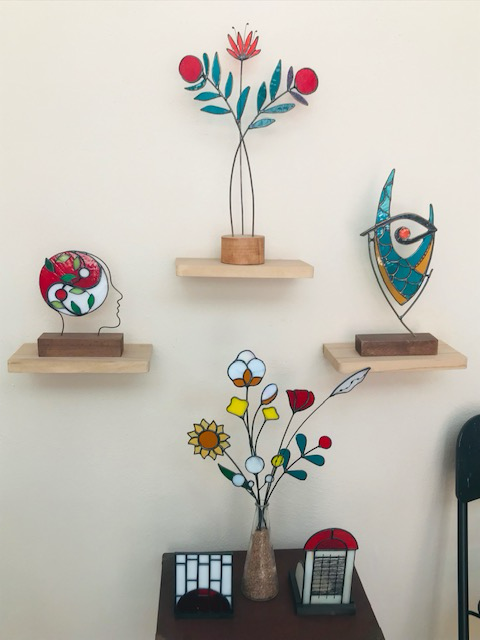

The store is a delight to visit with a range of alluring stained glass objects designed and crafted by the artist. The objects range from functional objects such as lamps to simply decorative objects. So if you visit Süleymaniye, do yourself a favour and stop by Kosovalı’s one-of-a-kind store, where the magic of stained glass is transformed into objects of art!

The fascinating view of Süleymaniye Mosque
The artist is also available at https://www.instagram.com/artivitray/.