

‘Theodora, who started life in the gutter as an erotic dancer, would end up ruling with “wisdom’s lilies” woven through her crown.’
Bettany Hughes
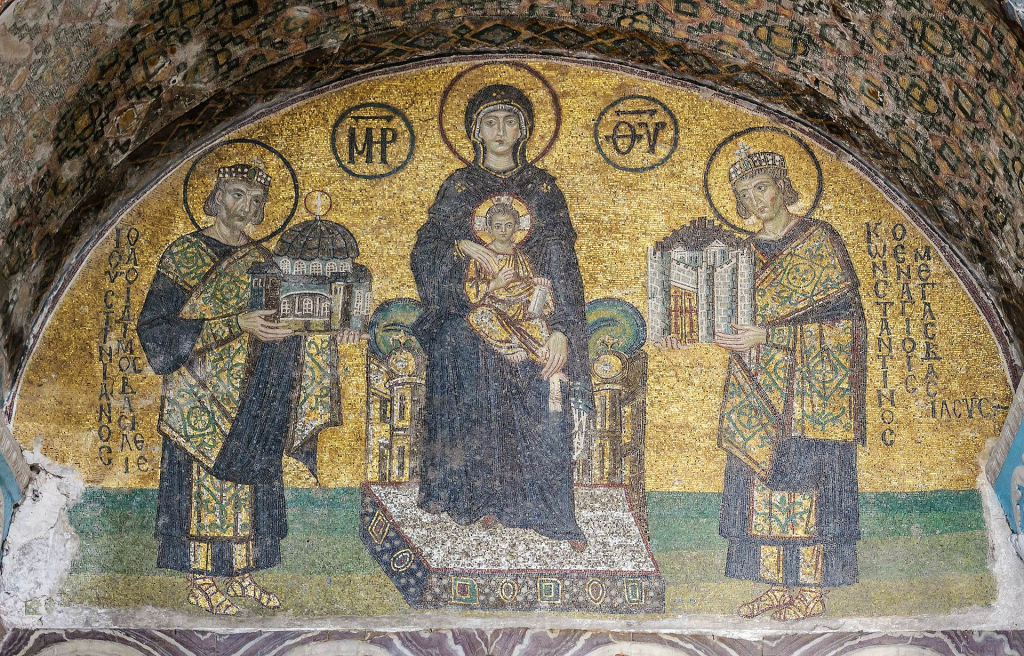
The Mosaic of Constantine and Justinian gifting Virgin Mary and Baby Jesus with Haghia Sophia and Constantinople, Haghia Sophia
The fleur-de-lis, often recognized today as a symbol of French royalty, has a far older and more complex history, stretching back into the Byzantine world. In Byzantine art and culture, this stylized lily, sometimes called a “wisdom lily” carried symbolic weight beyond mere decoration.
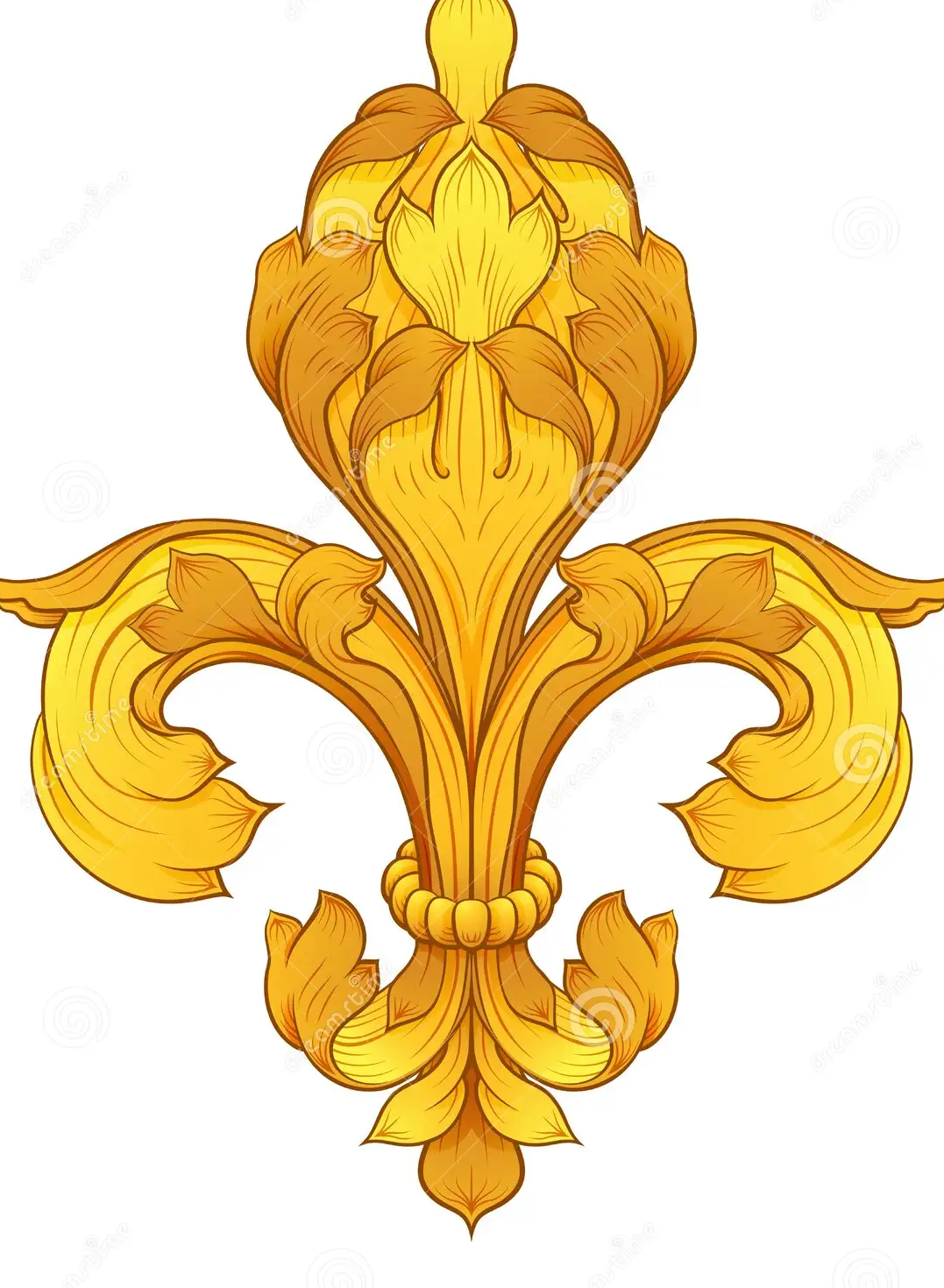
fleur-de-lis
In the Byzantine context, the fleur-de-lis was associated with purity, enlightenment, and divine wisdom. The lily’s three petals were often interpreted as a visual metaphor for the Holy Trinity, or as a symbol of intellectual and spiritual harmony. Byzantine mosaics, illuminated manuscripts, and metalwork frequently feature this motif, integrating it into religious iconography and courtly ornamentation alike.

Pay attention to the wisdom lily on the garment of Constantine the Great handing the city itself to Virgin Mary and Baby Jesus. The Mosaic dates back to 944, located on he tympanum over the southern doorway in Hagia Sophia.
The “wisdom lily” also conveyed social and political significance. It appeared on ceremonial objects, vestments, and architectural embellishments in imperial palaces and churches, signaling authority and moral virtue. Its geometric simplicity made it adaptable, lending itself to borders, friezes, and standalone motifs, often accompanied by other floral and vegetal designs. You can see the wisdom lily all across the traces of ancient Constantinople in modern day Istanbul, if you look closely. For example. ‘Many fleurs de Lis are incorporated into the toga decorations of Constantine and Justinian, as well as adorning Mary’s throne, in a mosaic in the Hagia Sophia made during Basil II’s reign‘. (taken from historium.com)
Interestingly, the fleur-de-lis’s symbolic trajectory from Byzantium to Western Europe suggests cultural transmission through trade, diplomacy, and crusading encounters. While Western interpretations later emphasized chivalric and dynastic associations, the Byzantine fleur-de-lis remained primarily a marker of sacred knowledge and refined taste—a visual emblem of wisdom incarnate in form and color.

Lily in nature


