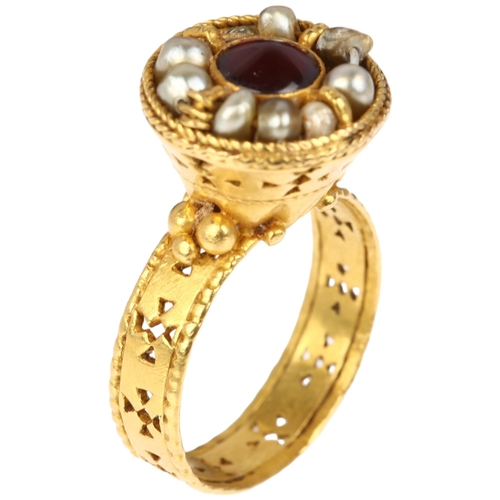

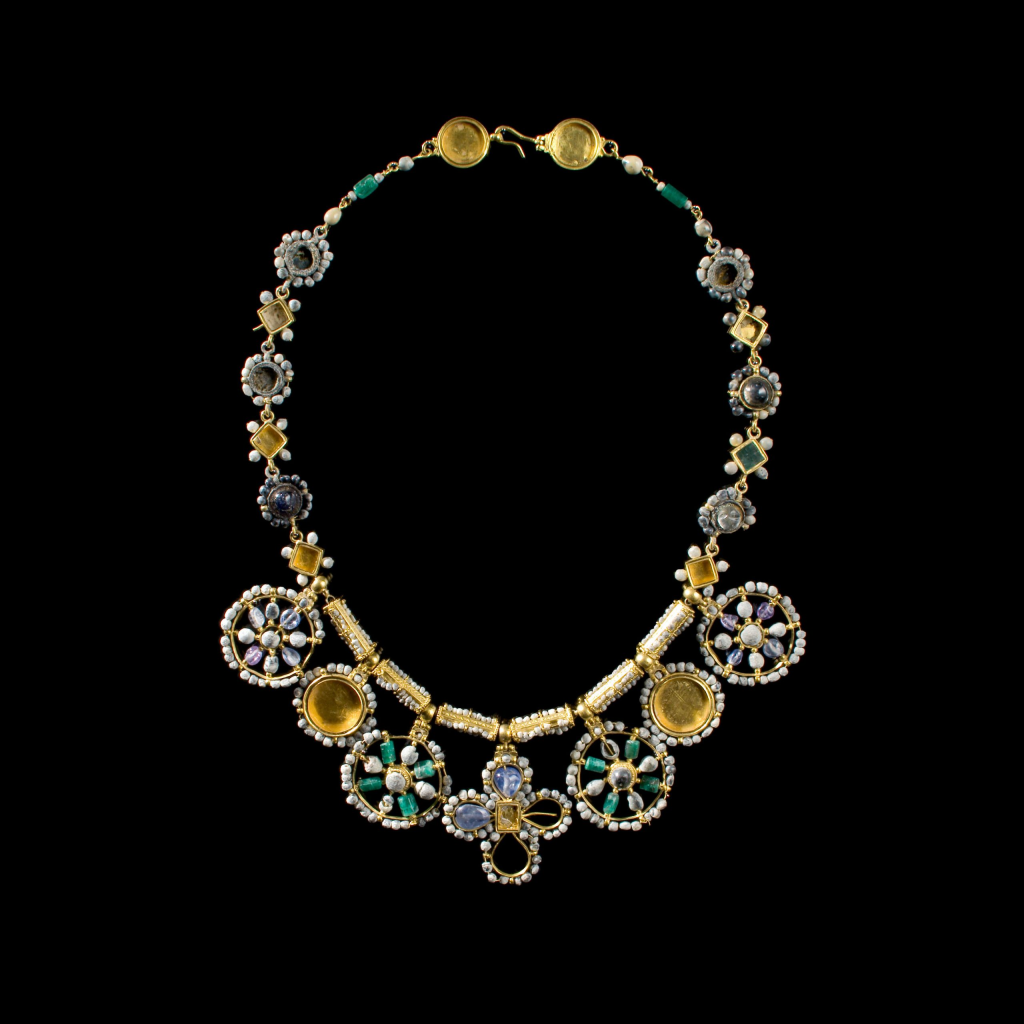
In the Byzantine Empire, pearls were far more than luxurious adornments—they were rich in symbolic meaning, reflecting spiritual, political, and social values. Their natural luminosity made them a symbol of purity, perfection, and divine light, often associated with the “pearl of great price” in Christian scripture, representing spiritual treasure and the Kingdom of Heaven.
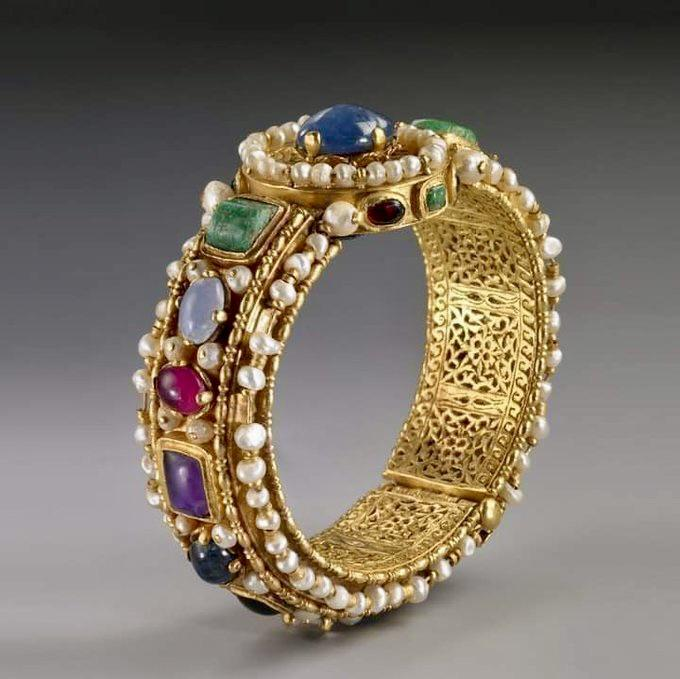
Byzantine Jewels dating back to 6th-7th Century
Pearls were a hallmark of imperial power. Emperors and empresses adorned crowns, diadems, robes, and ceremonial boots with pearls, visually communicating their wealth, authority, and God‑given legitimacy. In mosaics, coins, and ceremonial objects, pearls emphasized the wearer’s unique position at the intersection of the sacred and the political.

Empress Theodora adorned in pearls
For noblewomen, pearls symbolized beauty, chastity, and refinement. Jewelry such as necklaces, earrings, and jeweled crosses not only displayed status but reinforced ideals of moral and aesthetic virtue. Pearls also appeared in religious objects, adding a layer of protective and sacred significance.
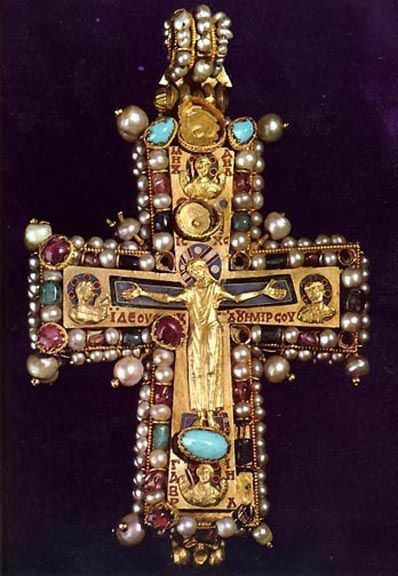
Pearls were imported from the Persian Gulf and Indian Ocean, linking Byzantium to vast trade networks. Their rarity and cost amplified their symbolism, marking the wearer as exceptional and favorably connected to both worldly and divine realms.

Emperor Justinian adorned with pearls
In sum, Byzantine pearls were a multifaceted symbol: luminous and pure, they conveyed spiritual meaning, reinforced imperial and social hierarchy, expressed feminine virtue, and reflected the empire’s wealth and global reach. Whether in jewelry, regalia, or religious artifacts, pearls were a tangible emblem of heavenly perfection and earthly power.