
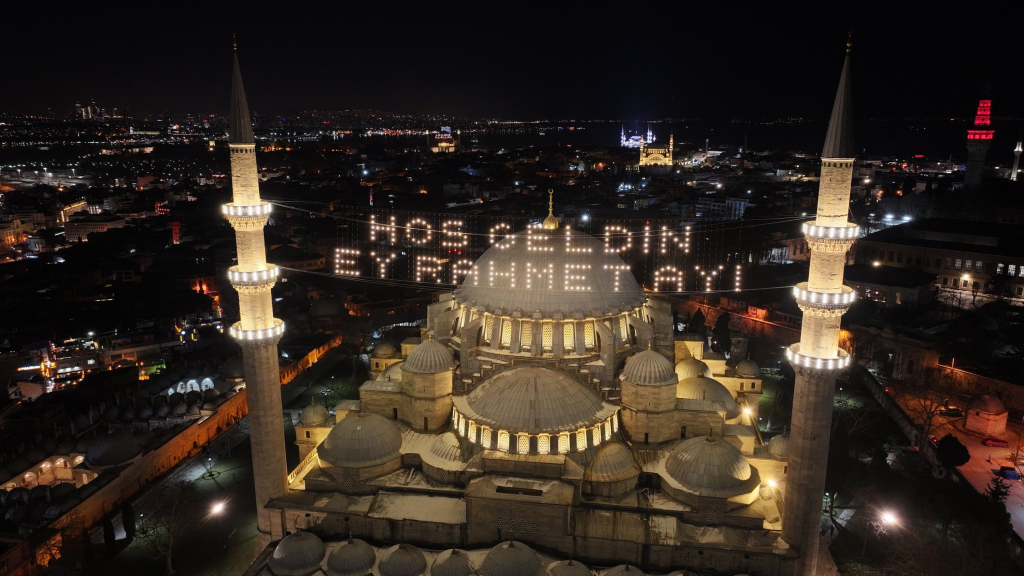
When Ramadan descends on Istanbul, the city transforms. By day, the streets slow their pace, steeped in quiet reflection and fasting. By night, a subtle magic emerges: Istanbul becomes a city of light, history, and communal celebration. At the heart of this nocturnal enchantment is the mahya, a tradition that dates back to the Ottoman era, most likely the 16th century.
Mahya—illuminated messages strung between mosque minarets originated during the reign of Suleiman the Magnificent and became a defining feature of Istanbul’s Ramadan nights. They were not merely decorative; they were a medium of communication in a pre-newspaper world. Messages ranged from spiritual blessings to witty couplets, crafted in intricate calligraphy that glowed above streets and rooftops. The lights bridged sacred and public space, announcing Ramadan’s presence across the city in a visible, radiant form.
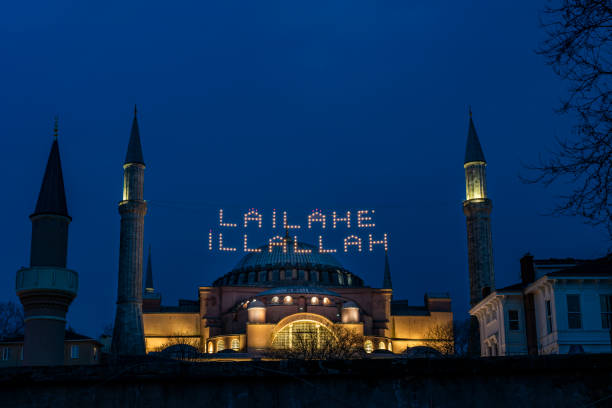
Walking through neighborhoods like Fatih, Sultanahmet, or Eminönü, the streets hum with life. Families gather for iftar, the meal that breaks the day’s fast, sharing dates, soup, and bread, while the aroma of stews, roasting meats, and sweet pastries drifts through narrow lanes. Children’s laughter mixes with the call to prayer, and above it all, the mahya glow from towering minarets, tying centuries of tradition to the present.
The mahya is more than visual splendor, it is a symbol of continuity. In a city that has always balanced East and West, history and modernity, the lights remind residents and visitors alike of faith, creativity, and shared celebration. Even for those passing quietly through Istanbul’s streets, the luminous messages offer a fleeting but profound sense of connection.
Ramadan in Istanbul is thus not merely a religious observance; it is a sensory and emotional experience, where devotion, family, art, and light intertwine. And at the heart of it, the mahya shines—a luminous thread connecting the city’s past, present, and spirit of celebration.