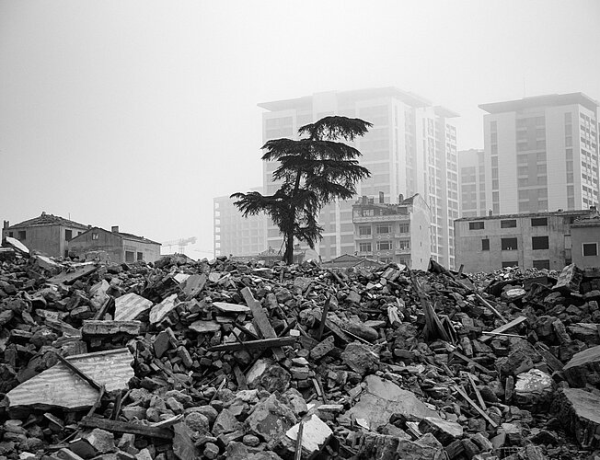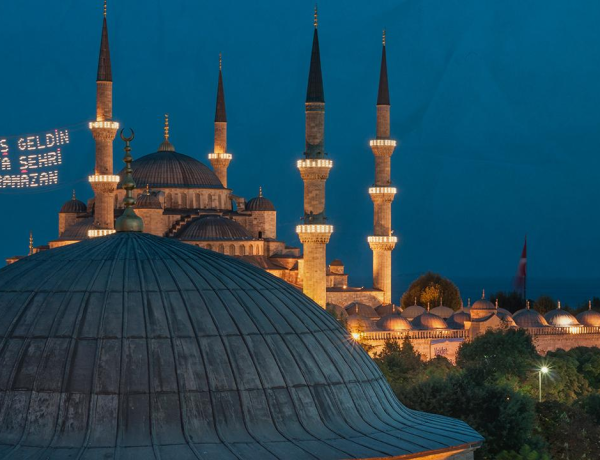

“I, Nebuchadnezzar, laid the foundation of the gates down to the groundwater level, and had them built out of pure blue stone. Upon the walls in the inner room of the gate are bulls and dragons, and thus I magnificently adorn them with luxurious splendor for all mankind to behold in awe.”
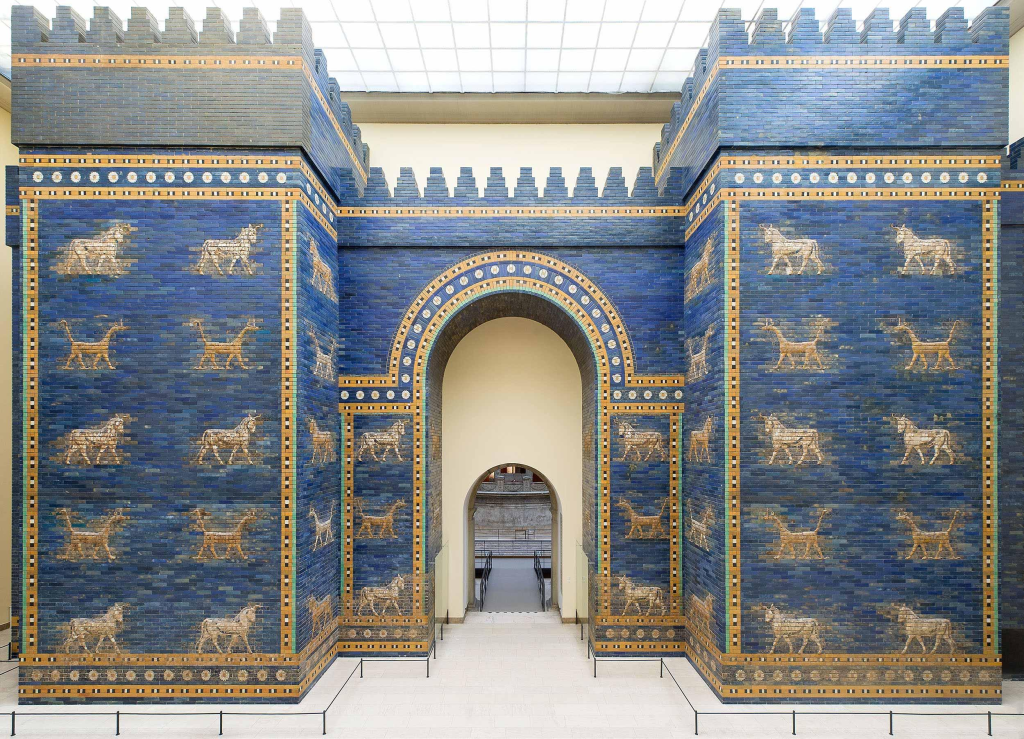
Ishtar Gate reconstruction in Berlin
Reconstructed inside Berlin’s Pergamon Museum, the Ishtar Gate remains one of the most breathtaking monuments of antiquity, radiating with brilliant lapis-blue glazed bricks that once lined the grand Processional Way of Babylon.
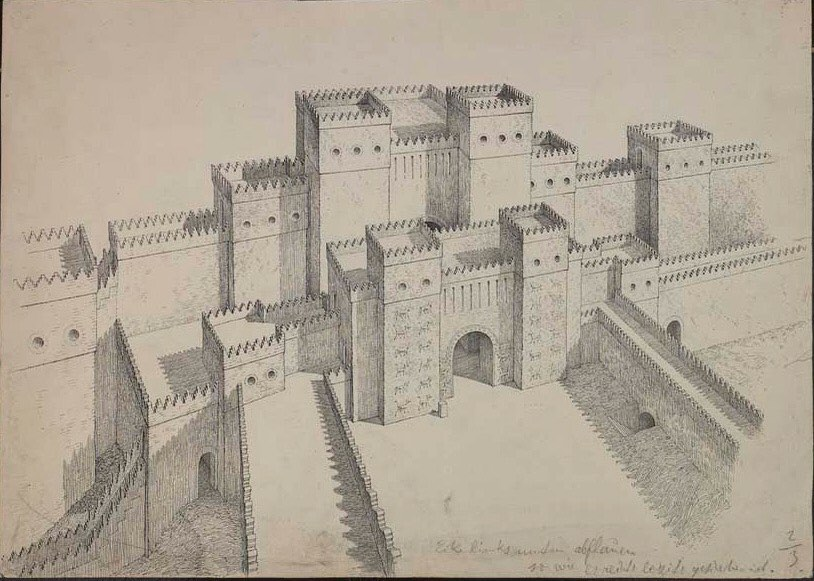
Alfred Bollacher, Reconstruction of the Ishtar Gate, 1918 CE (taken from nyu.edu)
Commissioned around 575 BCE by King Nebuchadnezzar II, this colossal double-gate served as the fortified northern entrance to the capital and stood as a towering tribute to Ishtar, the ancient Mesopotamian goddess of both fierce warfare and passionate love.
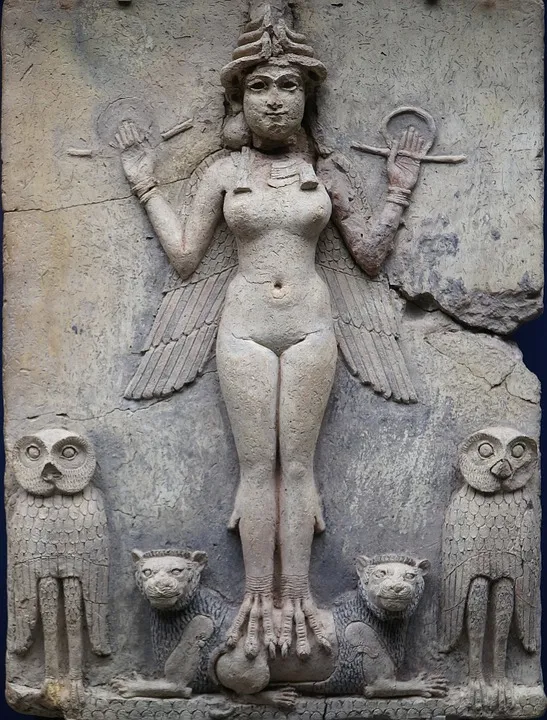
Goddess Ishtar
Intricately sculpted reliefs of sacred beasts—the roaring lions associated with Ishtar herself, along with the horned Muşhuşşu dragons of Marduk and the bulls of Adad—strided across its shimmering blue walls, symbolizing divine protection and the raw imperial majesty of the Babylonian Empire.
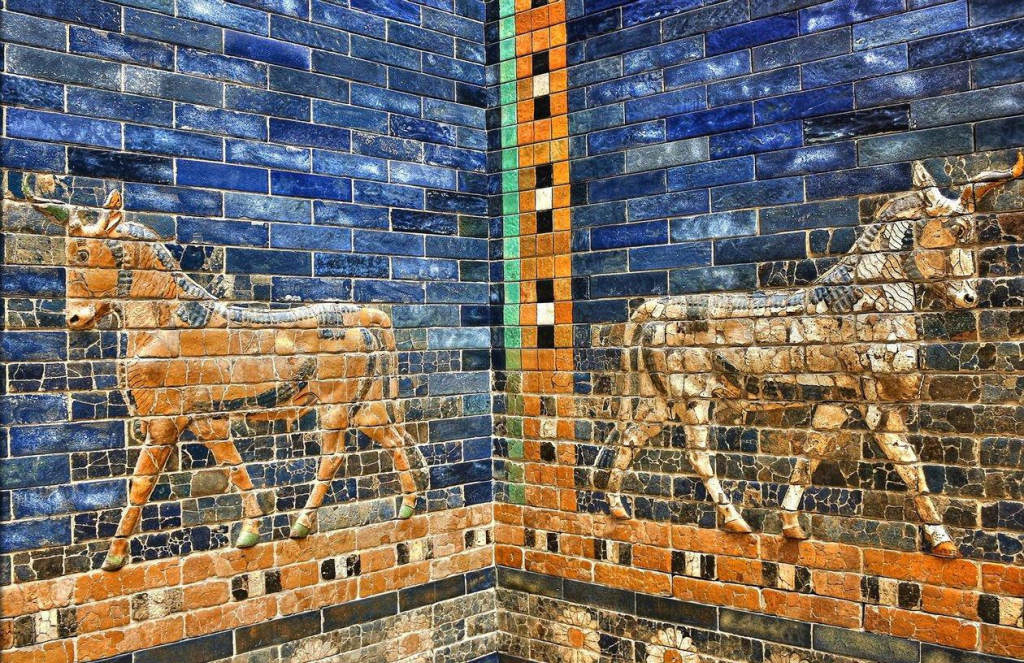
Detail from the Ishtar Gate in Berlin
But Babylon was not in Germany when the gate was excavated. It was in Ottoman Iraq. So how did so much of the Ishtar Gate end up in Berlin?
The answer leads to an extraordinary confrontation between European archaeology and a changing Ottoman understanding of cultural heritage—and to Osman Hamdi Bey, painter, archaeologist, and director of Istanbul’s Imperial Museum.
Istanbul Draws the Line
By the late nineteenth century, archaeology had become entangled with European imperial competition. British, French, and German expeditions excavated across Ottoman territories, while museums in London, Paris, and Berlin competed for the most spectacular discoveries.
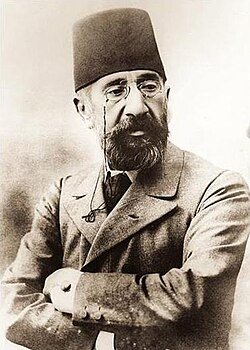
Osman Hamdi Bey
Osman Hamdi Bey sought to change the rules. Appointed director of the Müze-i Hümayun, or Imperial Museum, in 1881, he helped establish a radically different principle through the 1884 Âsâr-ı Atîka Nizamnamesi: antiquities discovered on Ottoman soil belonged to the Ottoman state, and their export was severely restricted.
He also gave those antiquities a home. Following major discoveries at Sidon, a purpose-built archaeological museum designed by Alexandre Vallaury opened in Istanbul in 1891.
The message was clear. If Paris had the Louvre, London the British Museum, and Berlin its rapidly expanding archaeological collections, the Ottoman Empire would have Istanbul Archeological Museums.
Koldewey Finds Babylon
In 1899, German archaeologist Robert Koldewey began excavating Babylon for the Deutsche Orient-Gesellschaft. His excavations revealed palaces, fortifications, the Processional Way, and the celebrated Ishtar Gate.
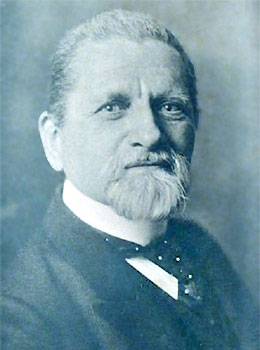
Robert Koldewey
What he discovered, however, did not resemble the pristine blue monument visitors know today.

A photo from the Ishtar Gate excavation
The gate had collapsed. Excavators recovered enormous quantities of glazed bricks and fragments, many obscured by dirt and salt deposits. Beneath them survived the extraordinary blues, yellows, whites, and blacks of Nebuchadnezzar’s Babylon, together with fragments of bulls and the serpent-dragon known as the mušḫuššu.
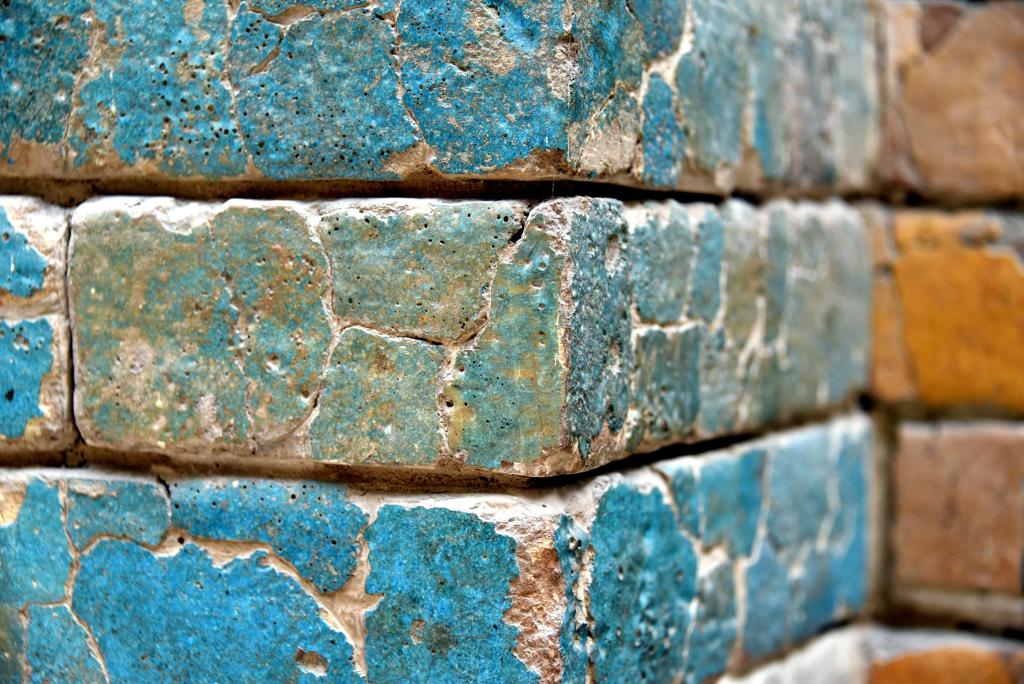
A glimpse at the glazed Bricks which are around 2600 years old
And this created a political problem.
Under the antiquities regime established during Osman Hamdi Bey’s tenure, German archaeologists could not simply assume that what they excavated belonged to Germany.
Koldewey’s Clever Plan
To bypass strict Ottoman antiquities legislation, Koldewey used a clever preservation argument: Koldewey insisted that the delicate glazed fragments could not be safely cleaned, desalinated, or reconstructed under harsh desert conditions.
On February, 1902, he arranged for crate after crate of raw brick fragments to be sent to Berlin “on loan” for cleaning and conservation, under the official understanding that they would be returned to the Ottoman Imperial Museum, once restored in Berlin.
Rebuilding Babylon in Berlin
Hundreds of crates containing vast numbers of ancient glazed-brick fragments were eventually transported to Berlin. There they were cleaned, desalinated, studied, sorted, and painstakingly fitted together. Missing areas were supplemented with modern material to make the architectural reconstruction possible.
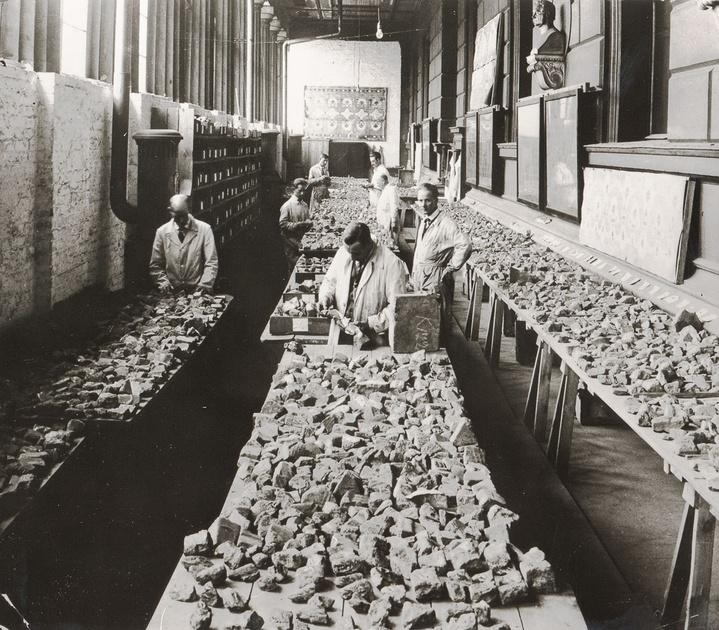
Koldeway’s team in Germany working on the fragments of the Ishtar Gate
The magnificent structure displayed in Berlin is therefore both ancient monument and modern reconstruction.
Its animals once belonged to the walls of Babylon. Its present architectural form also reflects decades of twentieth-century archaeological and museum work.
Berlin does not simply display the Ishtar Gate as it was found. It displays an interpretation of how the gate once appeared.
Osman Hamdi Bey’s Larger Battle
Despite repeated diplomatic protests and the legal framework established by Osman Hamdi Bey’s 1884 Âsâr-ı Atîka regulations, the Ottoman Empire’s persistent efforts to secure the complete return of the Ishtar Gate fragments sent to Berlin ultimately failed. German archaeologists continuously delayed the restoration process, and before any formal partition agreement could be executed to repatriate the restored gate, World War I erupted.
The imperial collapse that followed stripped Istanbul of its leverage: the Ottoman Empire lost control of Mesopotamia, and the new British mandate in Iraq—alongside shifting geopolitical borders—permanently severed the Ottoman state’s legal claim over the site. As a result, the reconstructed monument remained in Berlin, leaving Istanbul with only the original glazed panels secured prior to the war
The Babylon That Remained in Istanbul
But not everything went to Berlin.
Material from the German excavations also entered Istanbul’s Imperial Museum and survives today in the Museum of the Ancient Orient, part of the Istanbul Archaeological Museums.
Among the most striking pieces are glazed-brick representations associated with Babylon’s monumental ceremonial complex: the bull of Adad, the mušḫuššu dragon of Marduk, and the lion associated with Ishtar.
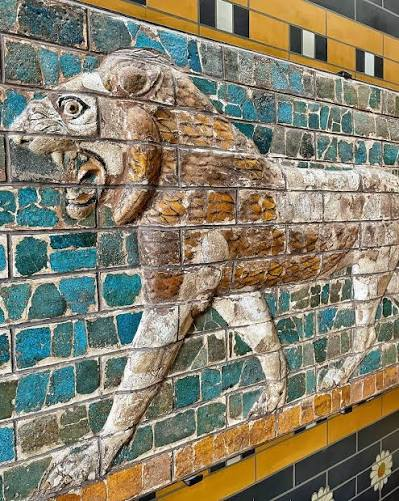
Panel at the Istanbul Archeological Museum
There is an important distinction. The bulls and dragons decorated the Ishtar Gate itself, while the lions belonged principally to the Processional Way leading toward it.
Together, however, they preserve in Istanbul something of the visual language of Nebuchadnezzar’s Babylon.
Their presence is also evidence of Osman Hamdi Bey’s larger project. He was not simply trying to save individual masterpieces. He was attempting to establish an entirely new principle: an antiquity excavated within the Ottoman Empire did not automatically belong in a European museum.
Two Museums, One Gate
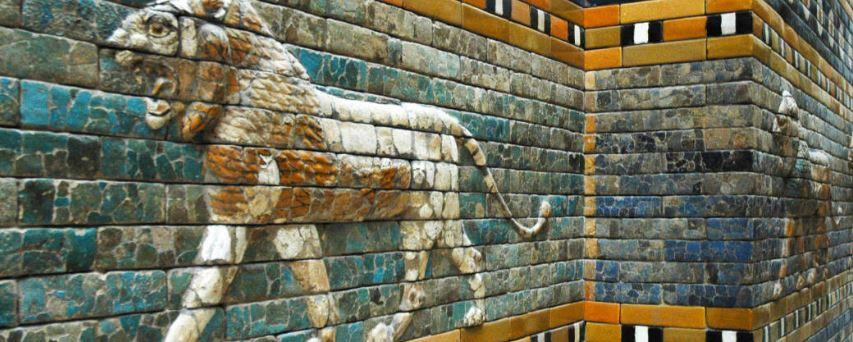
Berlin today possesses the spectacle: a monumental reconstruction assembled from thousands of fragments, allowing visitors to imagine walking into ancient Babylon.
Istanbul offers something quieter.
Its glazed animals can easily be passed without realizing the political history they carry. Yet they survive from the moment when the Ottoman Empire began systematically asserting its right to preserve the archaeological heritage excavated within its own territories.
The fragments therefore belong to two histories.
The first begins in sixth-century BCE Babylon, with Nebuchadnezzar II and a ceremonial city of blue glazed brick.
The second begins more than two millennia later, when archaeologists, museum directors, diplomats, and governments struggled over where the remains of that civilization should reside.
That struggle has never entirely disappeared. Contemporary debates over restitution and the great archaeological museums of Europe continue to circle around essentially the same question: Who owns the ancient past?
Perhaps that is why the dragon, the bull, and the lion resting in Istanbul demand a longer, more sorrowful look. They are neither grand trophies of victory nor accidental crumbs left behind by German excavators. They are witnesses to a far more melancholic truth: out of a colossal history swept away in the storm of falling empires, these few handfuls of blue brick are all that managed to stay home. In the shadow of the towering reconstruction in Berlin, these three isolated panels do not sing of a triumphant resistance—they are a silent elegy for the worlds that slipped through our fingers.
Make sure to watch this video on the amazing history of the Ishtar Gate.
Visuals are taken from isaw.nyu.edu, worldhistory.org, wikipedia,org,
Note that the video is embedded via YouTube and all rights belong to the respective rights holders.