
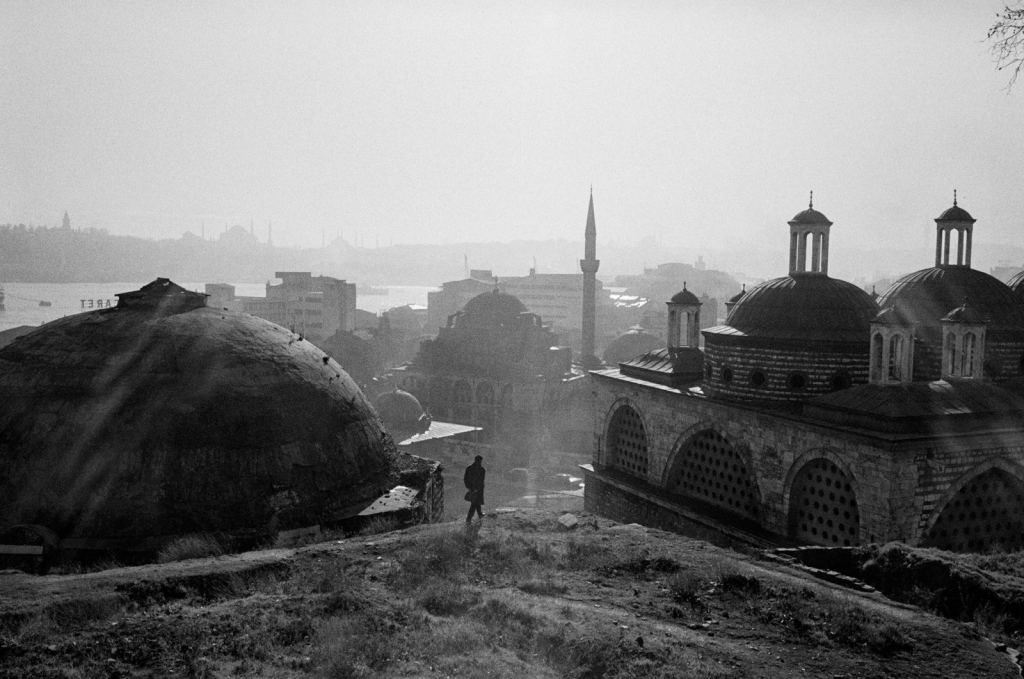
Photo by Ara Güler
In the vocabulary of Islamic mysticism, halvet, from the Arabic khalwa means retreat, seclusion, withdrawal. Yet to understand halvet merely as isolation is to miss its essence. Halvet is not an escape from the world but a temporary suspension of it, undertaken so that one may return less fragmented, less reactive, and less captive to external demands.
Few cities embodied this paradox as fully as old Istanbul.
Ottoman Istanbul was a city of extremes: imperial power and poverty, density and silence, spectacle and inwardness. Within this tension, halvet functioned as a cultural counterweight. The city did not only expand outward through conquest and architecture; it also folded inward through spiritual discipline.
Halvet was formalized most clearly through the Halvetî Sufi order, one of the most widespread and influential orders in Ottoman Istanbul between the 15th and 18th centuries. Halvetî tekkes were not monumental in the way Mevlevî lodges were. They favored modesty, enclosure, and often invisibility. Many were embedded within residential neighborhoods like Fatih, Zeyrek, Üsküdar, Eyüp, areas that already carried a sense of historical layering and inward gravity.
Central to these tekkes was the halvethâne: a small, often dark room where the practitioner withdrew for a defined period under guidance. This withdrawal was silence, fasting, repetition, sensory reduction but never indefinite. The purpose was not disappearance but recomposition. One learned how to be alone so that one could later stand among others without dissolving into them.
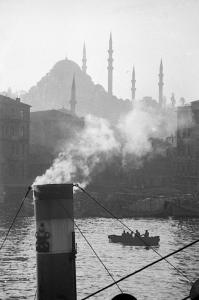
Photo by Ara Güler
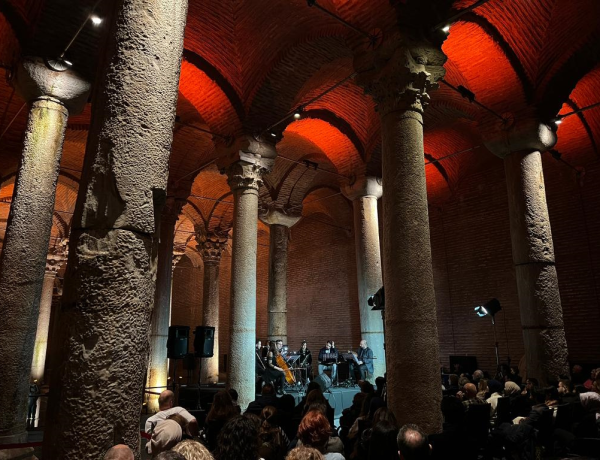
Importantly, halvet in Istanbul was not restricted to tekkes. The city itself was designed to accommodate withdrawal. There were courtyards that buffered the home from the street, cemeteries integrated into daily life rather than hidden away, hammams, where heat, enclosure, and anonymity softened the boundaries of the self, water crossings, that created natural pauses and thresholds. Old Istanbul understood something modern cities often forget: inner life requires spatial permission.
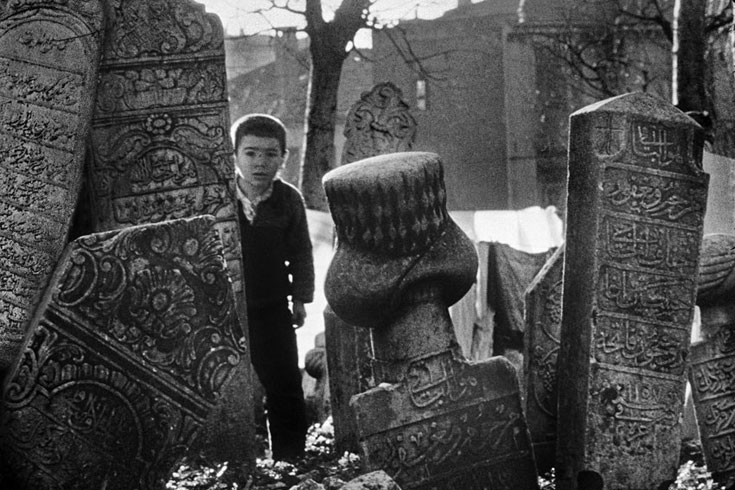
Photo by Ara Güler
What distinguished Istanbul’s relationship to halvet was that it allowed withdrawal without exile. One did not need to flee to the desert or the mountains. One stepped aside within the city itself.
This mattered psychologically and socially. Halvet was a recognized, even respected, mode of being. Silence was legible. Slowness was not immediately suspect. Melancholy, rather than being pathologized, was culturally intelligible. The city did not demand constant visibility or explanation.
In this sense, halvet was not merely a spiritual technique; it was a civilizational skill.
With the closure of tekkes in 1925, halvet lost its institutional frame. The guides disappeared. The time limits dissolved. The ethical insistence on return weakened.
Modern Istanbul did not lose its capacity for withdrawal but it lost its containers.
Today, people still retreat after relational injury, during burnout, under economic precarity, in response to overstimulation. But this withdrawal is often unstructured, prolonged, and lonely. What was once a guided descent becomes an unmarked drifting. What was once a ritualized pause becomes social disappearance. And yet despite everything, Istanbul still allows halvet in a way few cities do.
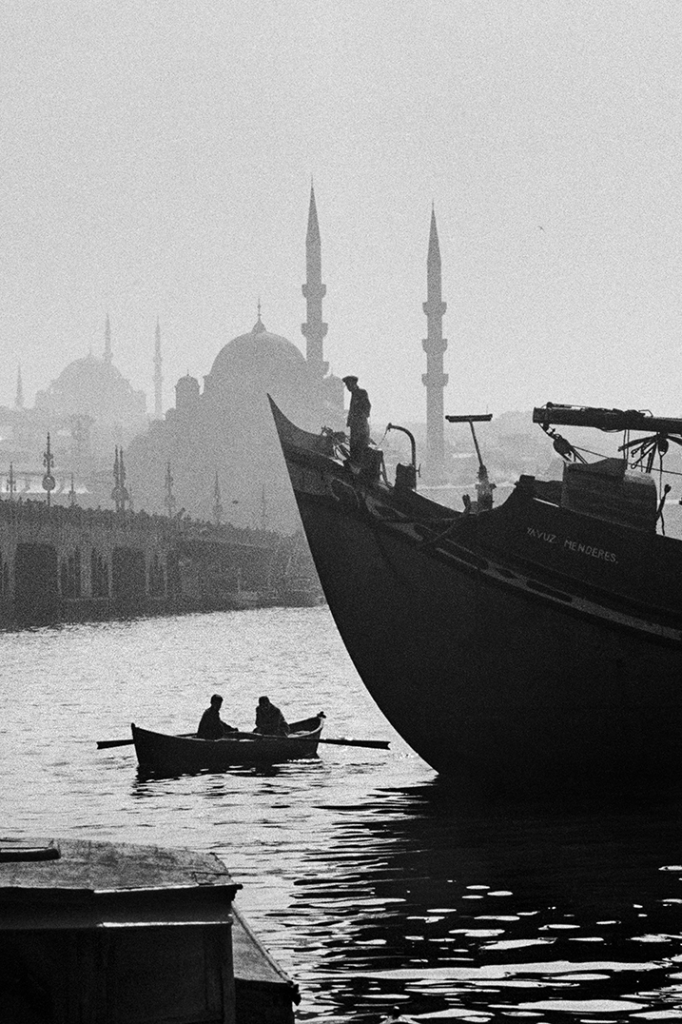
Photo by Ara Güler
Modern Istanbul remains fragmented, porous, and temporally layered. It has not fully become a city of total surveillance or uninterrupted productivity. One can still find cemeteries used as places of rest, back streets that resist speed, hammams that suspend hierarchy, ferries that regulate the nervous system, neighborhoods where anonymity is not alienation These are not spiritualized spaces by default but they can become halvet if approached consciously and briefly. In old Istanbul, halvet was once held by institutions. In modern Istanbul, it must be held by the individual.
Halvet still matters today not because we need more withdrawal, but because we need better withdrawal.
Halvet teaches that solitude must be chosen, not imposed, that withdrawal must be time-bound, that inwardness must lead to return, that silence is a discipline, not a void. In a city that overwhelms as much as it shelters, halvet offers a way to step aside without self-erasure.
Istanbul no longer has active Halvetî orders. The tekkes are closed, absorbed, or silent. But the city itself still carries their imprint. It remains a place where one can disappear for an hour without vanishing from life; where stillness does not automatically signal failure; where stepping aside is not immediately punished.
Istanbul does not teach you how to leave the world. It teaches you how to loosen your grip on it. This is halvet and in an age of relentless performance, it may be all we need.