


The figure known today as “Count Dracula” is rooted not in medieval superstition but in the historical life of Vlad III of Wallachia (1431–1476), a 15th-century ruler whose name later entered Western literature divorced from its original context. Understanding Vlad III requires separating documented history from later myth and situating him within the geopolitical realities of the Ottoman–Christian frontier.
Vlad III was born in 1431, most likely in Sighișoara, Transylvania. His father, Vlad II Dracul, was a member of the Order of the Dragon, a chivalric order established to defend Christian Europe against Ottoman expansion. The name “Dracula” derives from Dracul, meaning “the Dragon,” and Dracula simply denotes “son of Dracul.” Only in later Romanian vernacular did the word acquire demonic associations, a semantic shift that occurred after Vlad III’s lifetime.
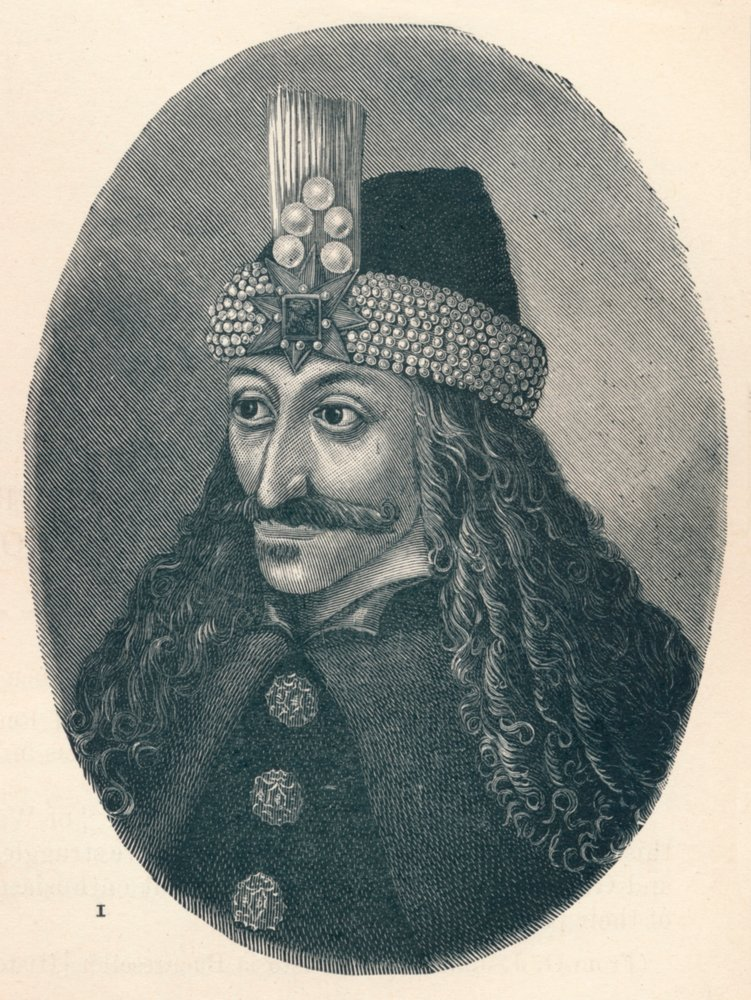
Vlad III of Wallachia
Wallachia in the fifteenth century was a politically unstable border principality caught between the expanding Ottoman Empire and the Kingdom of Hungary. Its rulers survived through tribute, shifting alliances, and military force. Violence was not exceptional but structural, embedded in a system where rapid changes of power, betrayal, and assassination were commonplace. Vlad III’s rule unfolded entirely within this environment.
Around 1442, Vlad and his younger brother Radu were sent to the Ottoman court in Edirne as political hostages, a standard diplomatic practice intended to secure their father’s loyalty to Sultan Murad II. Contemporary sources indicate that the brothers received education and military training and were treated as valuable political assets rather than prisoners. Later claims that Vlad was tortured or psychologically broken during these years are unsupported by primary evidence and stem from much later sensationalist accounts.
Vlad III ruled Wallachia intermittently between 1448 and 1476, employing extreme punitive measures to consolidate authority and deter internal and external threats. His most infamous method, impalement, was neither unique nor invented by him; it was already used throughout Europe, Byzantium, and the Ottoman world. What distinguished Vlad was the scale and theatrical visibility of his punishments, which functioned as instruments of governance and psychological warfare. While contemporary German pamphlets exaggerated his cruelty for propagandistic purposes, Ottoman and Hungarian records confirm that mass executions were a central feature of his rule.
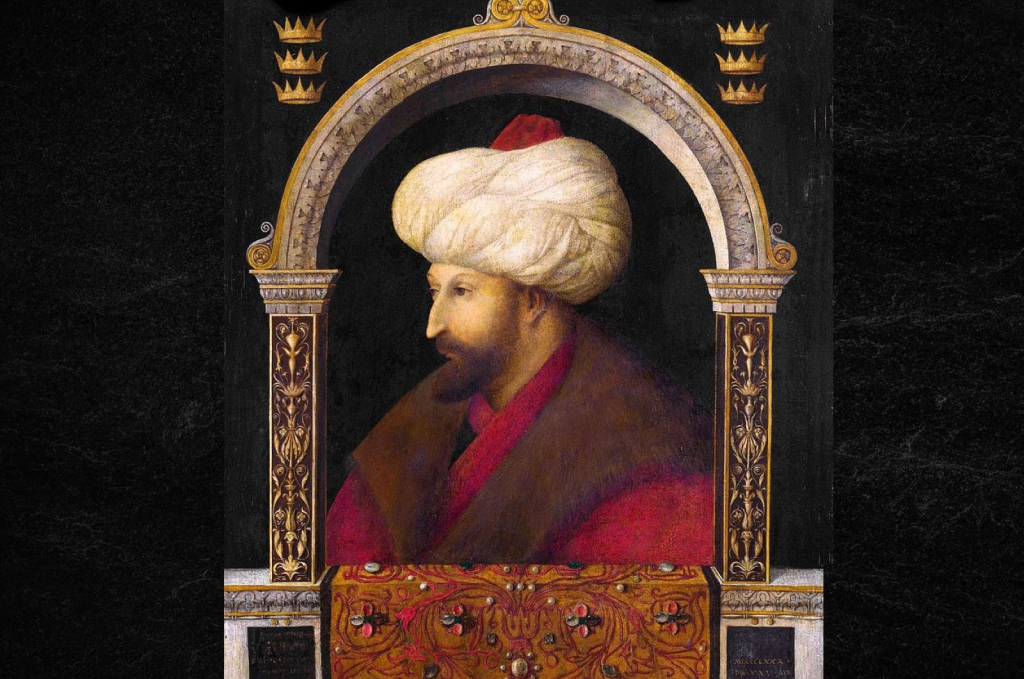
Sultan Mehmet II, the ruler who conquered Constantinople
Vlad’s conflict with the Ottomans intensified during the reign of Sultan Mehmed II, particularly after he refused to continue paying tribute. Ottoman sources portray him not as a madman or supernatural figure but as a rational, if ruthless, enemy who effectively employed terror as a defensive strategy. The notorious accounts of impaled bodies outside Târgoviște, though amplified in later retellings, align with known practices of frontier warfare designed to discourage invasion. Glance through this video titled ‘History’s Deadliest Message? Vlad’s Forest’ of the Impaled if you want to understand the horrific historical incident that shocked Sultan Mehmet II’s army. It is definitely not for the faintest at heart as it depicts the gruesome side of human nature.
The transformation of Vlad III into the vampire “Dracula” occurred centuries later with the publication of Bram Stoker’s novel in 1897.

Stoker borrowed the name and a generalized Eastern European setting but did not base his character on Vlad’s life or historical actions. There is no evidence linking Vlad III to vampirism, blood-drinking, or supernatural beliefs. These elements belong entirely to nineteenth-century Gothic literature and Western imaginative constructions of Eastern Europe.

Francis Ford Coppola’s Bram Stoker’s Dracula (1992) reimagines the gothic tale as a tragic romance, where horror is inseparable from desire and loss. Through stylized visuals and theatrical artifice, Coppola presents Dracula not just as a monster but as an immortal lover condemned to eternal longing.

A scene from Francis Ford Coppola’s film Bram Stoker’s Dracula
Vlad III was neither a folkloric monster nor a uniquely sadistic anomaly. He was a ruler shaped by borderland politics, imperial rivalry, and the violent norms of his time. The Ottoman Empire did not give birth to the myth of Dracula, but it formed part of the historical reality that shaped Vlad the man. The vampire is a literary invention; Vlad III remains a product of history.