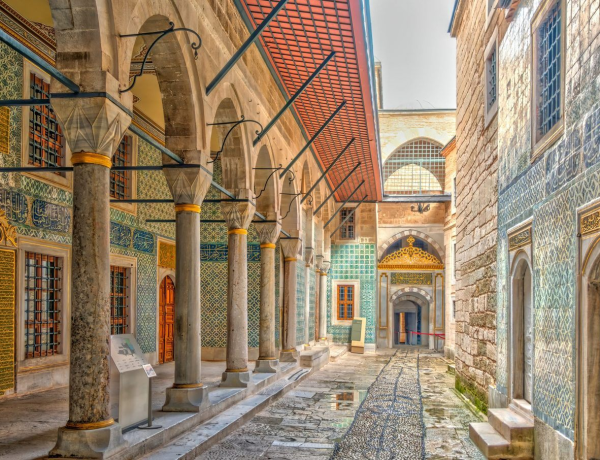

‘Out beyond ideas of wrongdoing and rightdoing there is a field. I’ll meet you there.‘ Mevlana J. Rumi

Dervishes are part of a mystic order of Islam called Sufism, They have always been unorthodox as they could never fully integrate into Orthodox Islam. Sufism emphasizes the internal search for the Divine unlike Orthodox Islam which is keen on daily practises.
Sufism was originally born as a reaction against the ‘earthliness’ of early Islam practitioners. I always think of Sufis as the mystics of Islam. I have great curiosity and respect for Sufis as I see them disinterested in worldly affairs and detached from others in their search of God. Unlike the orthodox Muslims, they are introspective and are only interested in their own path to God rather than being keen on ‘showing others’ the right path.
Sufis traditionally belong to ‘orders’ and meet in ‘tekkes’ for spiritual sessions in which they want to purify their inner selves. Their philosophy is ‘tasavvuf’, a teaching that aims to create a direct link between the human soul and the divine.
Sufi Dervishes of the Mevlevi Order practise ‘sama’ which is a physical form of meditation. They whirl to the traditional music with right hand looking upwards receiving from God and the left hand looking downwards giving to humanity. During this whirling ritual, they aim to disown their egos and worldly ambitions and unite with the Divine.
As dancing and music is prohibited in Orthodox Islam, Mevlevi dervishes are disowned by the main stream Muslim communities.
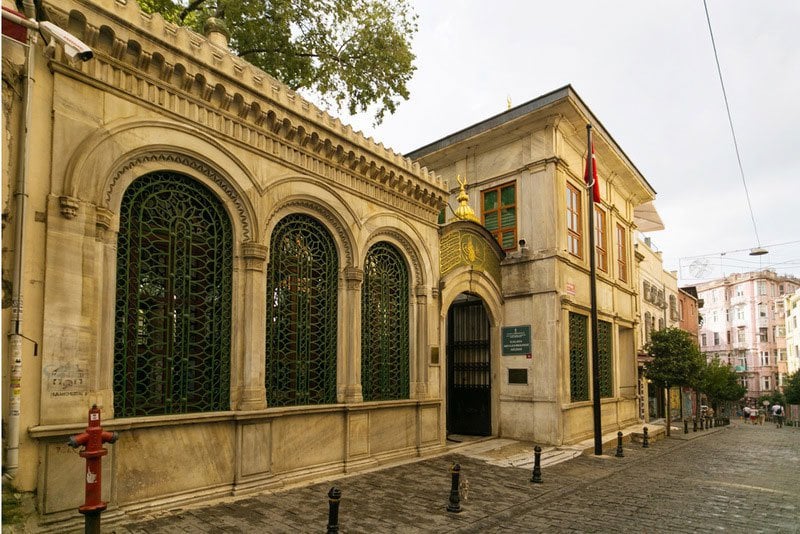
Galata Mevlevihane Museum in Pera
There are two Mevlevihanes (places of worship by Sufis who belong to the Mevlevi Order, an order who follow Mevlana Celaleddin Rumi) in Istanbul I suggest you visit. One of them is in Beyoglu (Pera) and it is called Galata Mevlevihane Museum as it is on top of a hill going down to Galata. Mevlevi Dervishes -in history- had decided to found a Mevlevihane in Pera among the non-muslim community as they felt safer away from the traditional neighbourhoods where they were rejected. Pera has always been a liberal place and this made the dervishes feel safe and accepted. Galata Mevlevihane Museum has ceremonies of whirling dervishes and you can watch their ceremonies. I suggest you check its website to see the timings of the ceremonies.

Galata Mevlevihane – Interior
It is quite a mystical experience to watch the whirling dervishes especially in their own house of worship.
Mevlevihane has a nice garden in which there is a cemetery. This cemetery is the resting place of many high ranking Sufis from the Mevlevi order, a refuge in the chaos of Istanbul.
The other Mevlevihane is on a far end of the city in Yenikapi which can easily be reached by Marmaray. It has recently been renovated and a delight to be in. It also has ceremonies which you can watch.
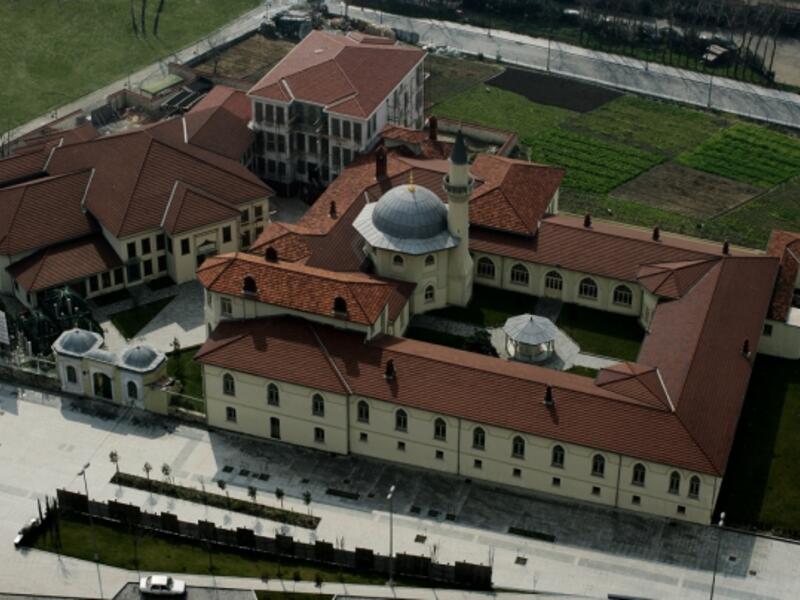
Yenikapi Mevlevihane in a part of a complex of buildings that belong to Fatih Sultan Mehmet University

Yenikapi Mevlevihane which has been restored to its ancient glory

Yenikapi Mevlevihane – Interior
When you visit Istanbul, give yourself a chance to see another side of Islam. An Islam that is more introspective and meditative. An Islam that embodies the human body, its movements and the magical power of music. An Islam that is more tolerant and accepting which can be felt in the the words of Sufi mystic Rumi who says “Come, come, whoever you are. Wanderer, worshiper, lover of leaving. It doesn’t matter. Ours is not a caravan of despair. come, even if you have broken your vows a thousand times. Come, yet again , come , come.”
Maybe that is all we need in a world that has become too polarised.
If you are interested in Sufism, consider watching this video by Omid Safi, a professor who teaches Sufism at Duke University who is explaining the notion of ‘love’ in Sufism. He is wise and humorous and great to listen to.
Let me end with a song whose lyrics belong to the famous 11th century Sufi Poet Omar Khayyam who was also an astronomer and a mathematician of the time.
His lyrics were composed by the Turkish musician Mehmet Gureli. The lyrics were taken from different poems of Khayyam in which he talks about the mystery of the universe and his fascination with it.
This song is an example of how Sufism has permeated our contemporary Turkish culture.