

A little thing can make you the greatest, most powerful and illustrious man of all who live today. . . It is a little bit of water by which you may be baptized and brought to Christian rites and to the belief in the Gospel. If you receive this…the Roman Church will not oppose you.’
Pope Pius II to Fatih Sultan Mehmet
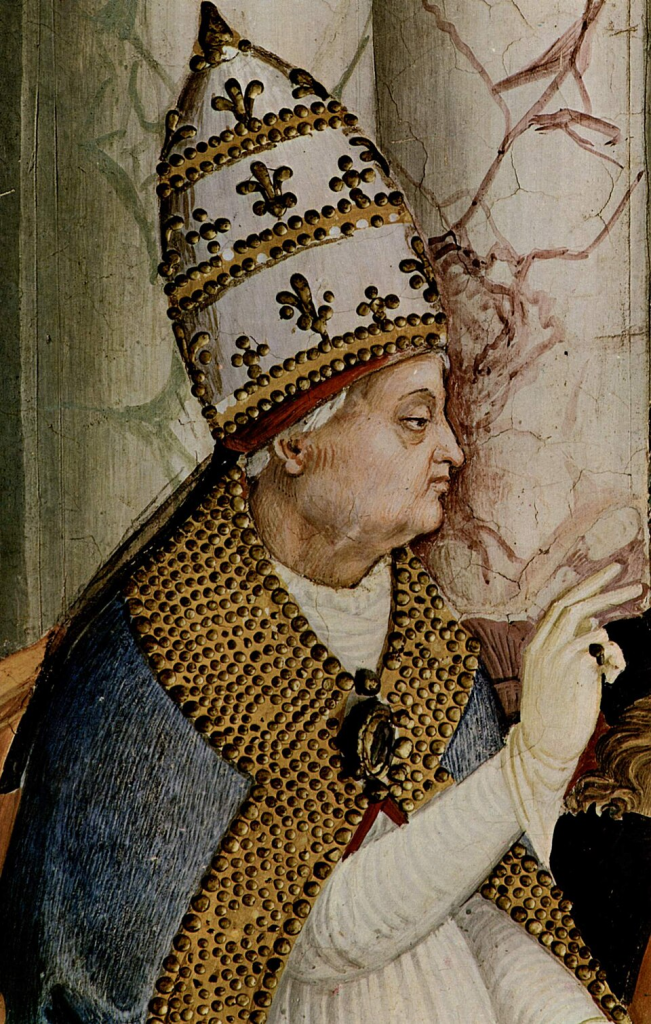
Pope Pius II
In the years following the fall of Constantinople, Europe was not only militarily shaken but intellectually unsettled. The conqueror of the ancient city, Fatih Sultan Mehmed, was unlike the enemies Christendom had known before. He was young, educated, fluent in several languages, interested in philosophy, history, and the legacy of the Roman Empire. He did not merely defeat Byzantium; he inherited it. Faced with this new kind of power, the papacy attempted something unprecedented: persuasion rather than crusade.
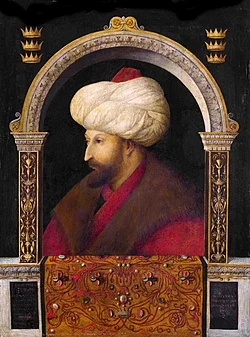
Fatih Sultan Mehmet who conquered Istanbul in 1453
In 1461, Pope Pius II composed a long and extraordinary letter addressed to Mehmed II. Known today as Epistola ad Mahumetem, the text invited the Ottoman sultan to convert to Christianity. The letter was never sent. Yet it survived, copied, printed, and circulated in Europe as one of the most revealing documents of Renaissance political theology.
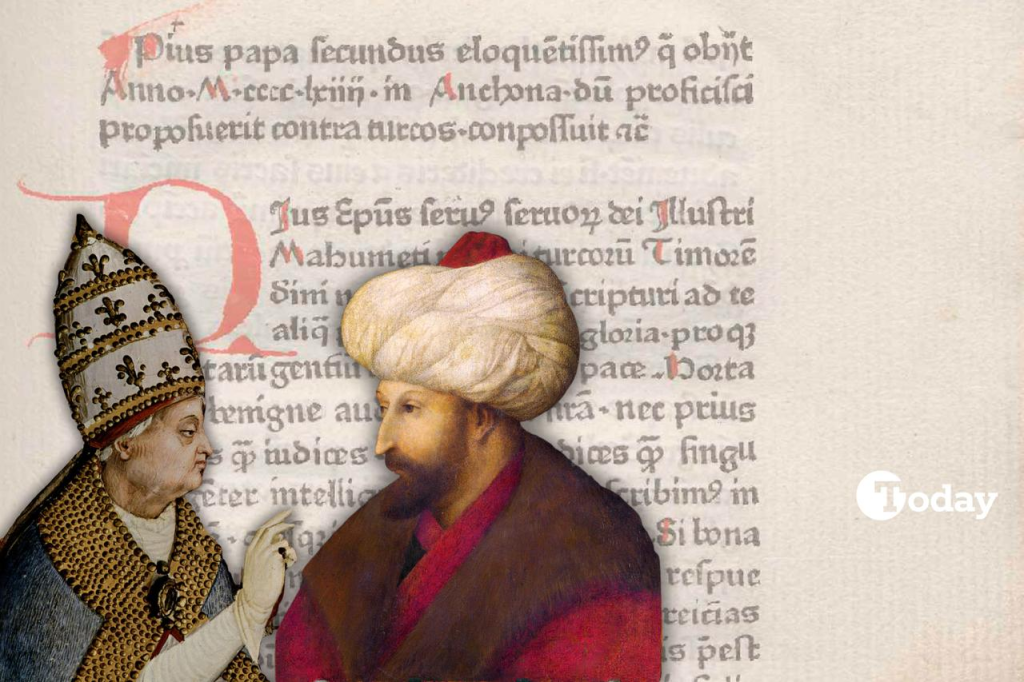
What distinguishes the letter is its tone. Pius II does not speak to Mehmed as a barbarian or infidel, but as a ruler worthy of comparison with Alexander the Great, Julius Caesar, and Constantine. Conversion is not presented as submission, but as transformation. With baptism, symbolized by what later memory condensed into “two drops of water”, Mehmed would gain more than salvation. He would gain universal legitimacy. The Pope suggests that Christianity would crown what conquest had already achieved: a ruler of East and West, recognized by divine and historical authority alike.
The letter is constructed through comparison. Christianity is described as the fulfillment of truth; Islam as law without transcendence. Christ appears as divine reason; Muhammad as a human legislator. Force is contrasted with persuasion, earthly empire with eternal glory. These arguments follow medieval Christian polemics, yet they are delivered with a Renaissance awareness of ambition, fame, and historical memory. Pius II writes for a man who wanted not only to rule, but to endure.
And yet, the letter remained undelivered.
There is no Ottoman record of its arrival, no papal documentation of its dispatch. Historians widely agree that Pius II either chose not to send it or never intended to. To do so would have risked humiliation, rejection, or ridicule. More importantly, the letter may already have served its purpose. It reassured a fractured Christendom that spiritual authority still claimed supremacy over military power even as cannons had proven otherwise.
In this sense, the letter functions less as diplomacy and more as self-reflection. It reveals how Europe imagined Mehmed: not merely as an enemy, but as a potential Constantine , a figure who might reconcile empire and faith under Christian terms. The Pope’s offer was not realistic, but symbolic. It was an attempt to reclaim moral centrality in a world where political reality had shifted eastward.
The image of “two drops of water” endures because it captures this tension perfectly. It suggests that the vast machinery of empire could be eclipsed by a sacrament; that history might still turn on belief rather than force. It is both an invitation and an admission of powerlessness.
That the letter was never sent gives it its final meaning. It belongs to imagined history, a dialogue that never occurred, yet exposes the anxieties, hopes, and illusions of an age confronting its limits. Mehmed II did not need baptism to become the ruler of his world. But Europe needed to believe that, somehow, he still might.


