
For much of Ottoman history—from the fifteenth through the eighteenth centuries—the Ottoman court embraced a masculine elegance: one of dazzling colour, luxurious textiles, and unapologetic splendour.
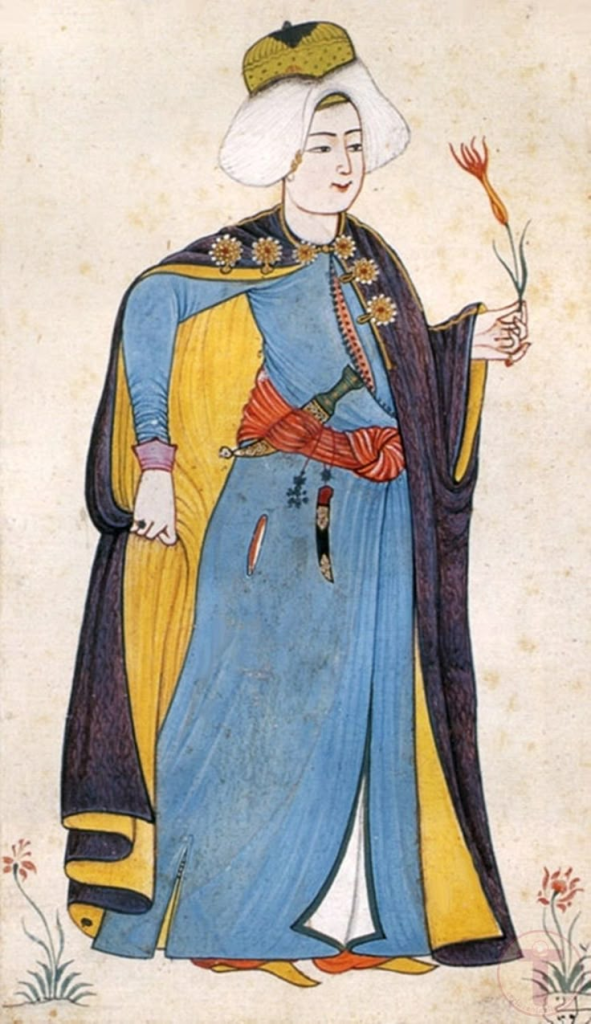
A miniature depicting a young boy in the Ottoman Empire by Levni, 18th century
This was the world before the sweeping Westernization and modernization reforms of the nineteenth century. Within the imperial palace, clothing was far more than a practical necessity. It was a language of rank, ceremony, identity, and imperial authority.
Unlike modern court dress, where men often wear nearly identical black suits or military uniforms, the Ottoman court was a vibrant display of colour and craftsmanship. Whether one encountered a grand vizier, a palace page, a military commander, a chamberlain, a chief eunuch, a prince, or the sultan himself, one entered a world in which every garment reflected both status and artistic refinement. Differences in rank were certainly visible, but they were expressed through the richness of fabrics, patterns, colours, furs, turbans, and accessories—not through visual austerity.
At the centre of this world stood the kaftan. Woven from the finest silks produced in centres such as Bursa and Istanbul, Ottoman kaftans featured bold floral motifs, çintemani designs, tulips, carnations, and stylized foliage. Gold embroidery, jewelled fastenings, sable or ermine linings, and exquisite tailoring transformed clothing into wearable works of art. The most prestigious kaftans also functioned as political gifts. Bestowed by the sultan upon ambassadors, military commanders, scholars, and high officials, they symbolized honour, favour, and imperial recognition.
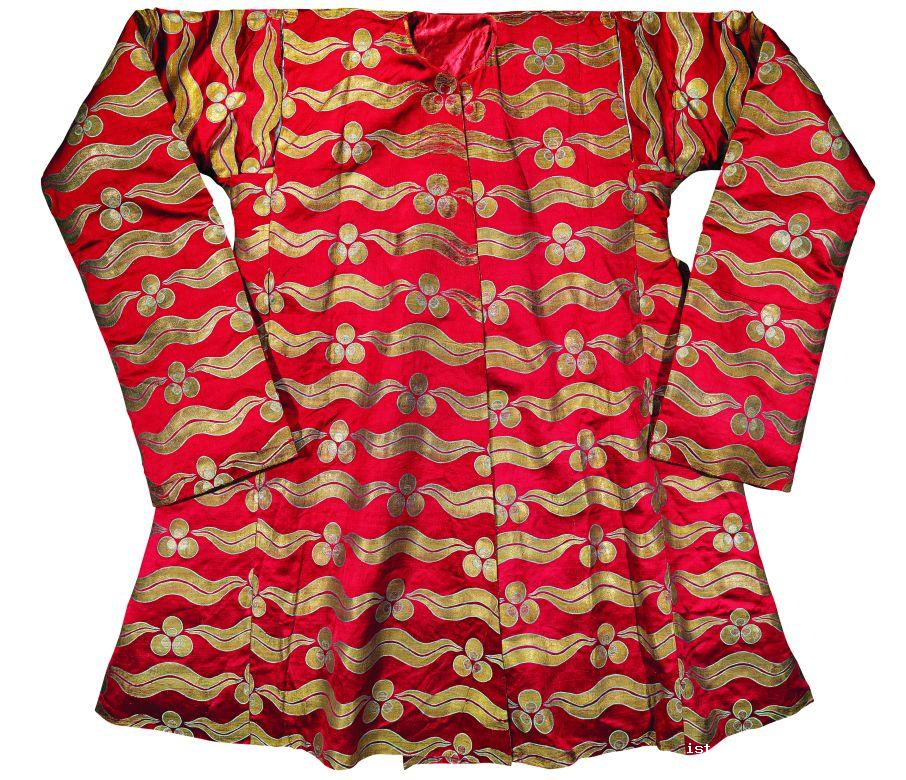
17th-century ceremonial kaftan
Colour itself was celebrated. Contrary to today’s assumption that masculine elegance requires restraint, the Ottoman court embraced brilliant reds, emerald greens, sapphire blues, radiant whites, vibrant yellows, and shimmering gold. These colours did not undermine masculine authority; they proclaimed it. Magnificence was understood as an appropriate expression of power.
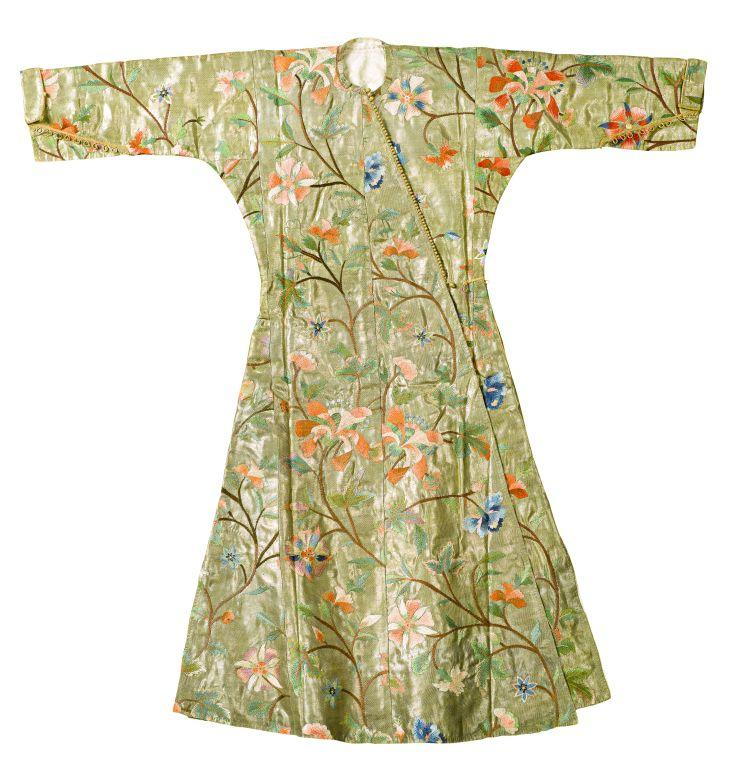
Ottoman male dress
The turban completed the composition. More than headwear, it served as an immediate indicator of profession and rank. The size, shape, and method of wrapping distinguished judges from military officers, palace officials from scholars, princes from viziers. Some ceremonial turbans were further adorned with aigrettes, precious stones, or feathers, creating striking silhouettes unlike anything seen in modern menswear.
Ceremonial Kaftan

Perhaps most remarkable is how little distinction the classical Ottoman court made between beauty and authority. The palace cultivated an aesthetic in which men were expected to embody refinement as well as power. Elegant textiles, harmonious colours, luxurious materials, and exceptional craftsmanship were not signs of vanity but of civilization, prestige, and imperial confidence.
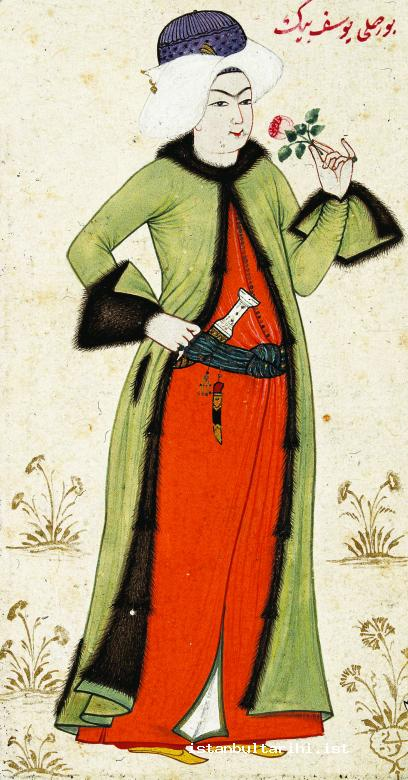
A miniature depicting a young boy in the Ottoman Empire by Levni, 18th century
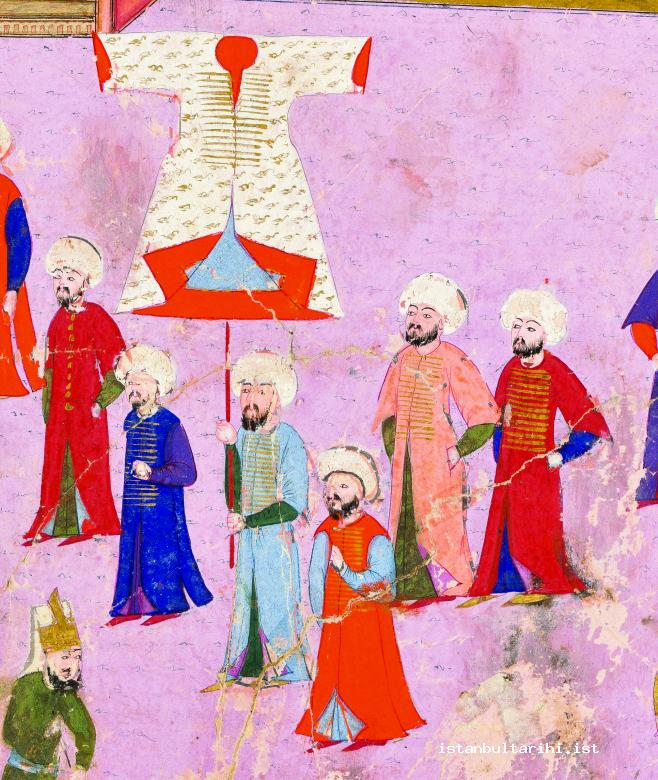
Parade of Kaftan tailors
This world began to change during the nineteenth century. As the Ottoman Empire pursued modernization and increasingly engaged with European political and cultural models, court dress gradually adopted Western forms. Flowing silk kaftans yielded to tailored frock coats, waistcoats, trousers, and eventually military-inspired uniforms. By the early twentieth century, many Ottoman officials dressed in a manner that would have been familiar in Paris, Vienna, or London.
Seen from this perspective, the restrained image many associate with the late Ottoman Empire represents only its final phase. For centuries before, the Ottoman court offered a strikingly different ideal of masculine elegance—one in which colour, ornament, and artistic excellence were not reserved for women but were embraced by men across the hierarchy of court life.
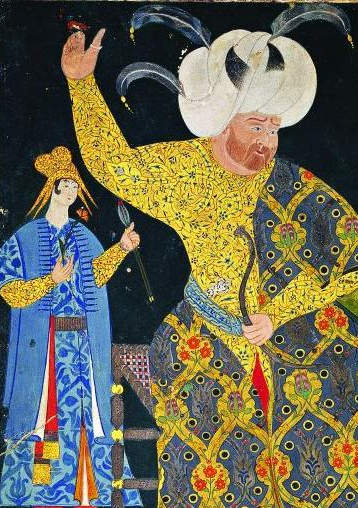
Miniature depicting Selim III shooting an arrow
Looking at surviving portraits, miniatures, and preserved garments today, one is reminded that masculinity has not always been dressed in black. The classical Ottoman court preserved another possibility: a world where men wore colour without apology, where luxury signified responsibility as much as privilege, and where beauty itself was considered a worthy expression of power.
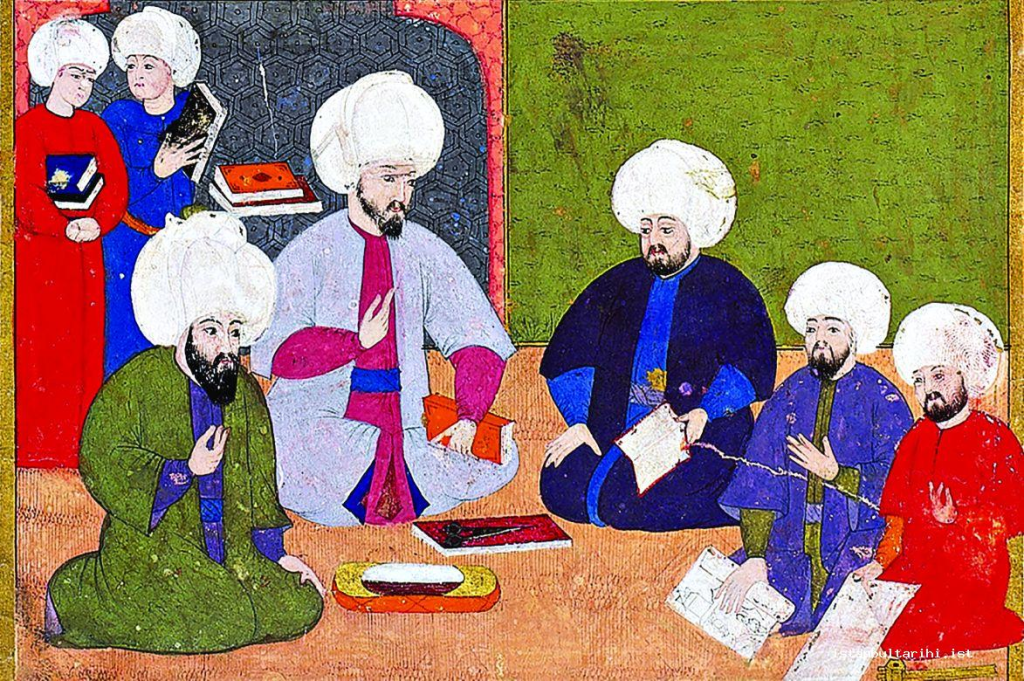
Miniature depicting Ottoman scholars in the 16th-century
Let me end with an 18th-century song as vivid as imperial male fashion!
Visuals are taken from istanbultarihi.ist.