
When we imagine the women of the Ottoman imperial harem, we rarely imagine the women in this photograph.
Popular culture has taught us to picture veiled concubines reclining on divans behind gilded screens, trapped in a mysterious world isolated from history. This image has been shaped as much by nineteenth-century European Orientalist painting as by modern television dramas. It is compelling, romantic—and profoundly misleading.
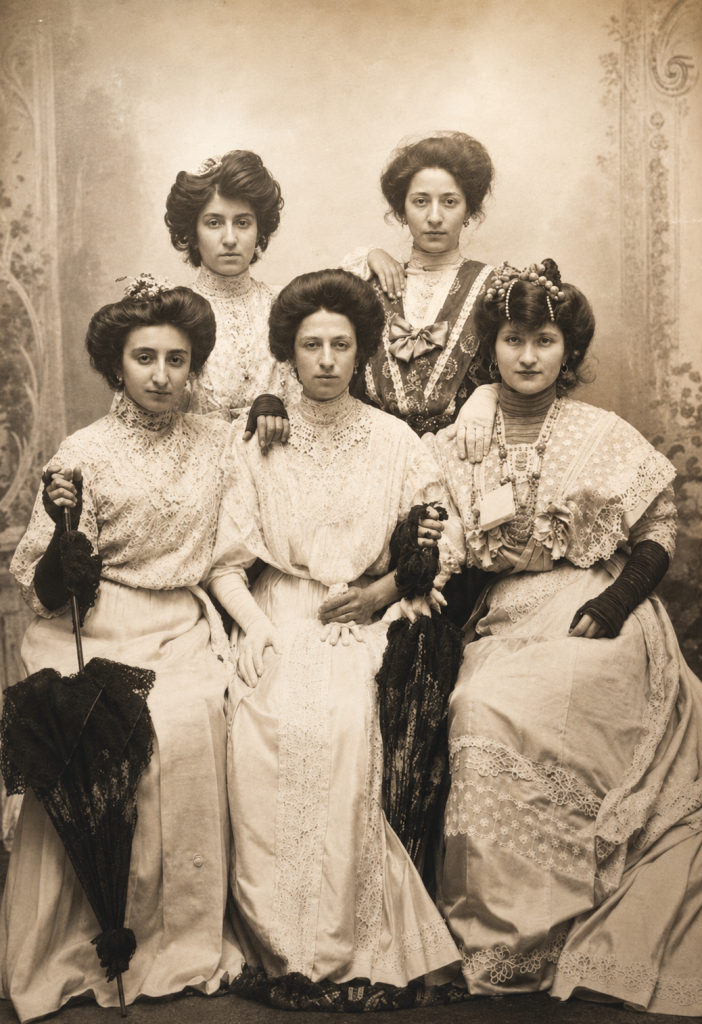
This remarkable photograph, taken by Elisa Zonaro, wife of the Italian court painter Fausto Zonaro, offers a rare glimpse into the imperial harem during the reign of Sultan Abdülhamid II.
The first surprise is that nothing here feels particularly “Oriental.”
Five young women sit before the camera with remarkable confidence. They do not lower their eyes or hide behind a veil. They meet our gaze directly, almost as equals across more than a century.
Their appearance is equally striking.
Their lace dresses, fitted bodices, elaborate hairstyles, gloves, jewelry, parasols, and carefully chosen accessories belong unmistakably to the world of the Belle Époque. Had this photograph been taken in Paris, Vienna, or Rome, few viewers would immediately suspect that these women belonged to the Ottoman imperial palace.
That is because the Ottoman Empire of the late nineteenth century was not turning away from Europe—it was looking toward it.
For decades, the empire had been modernizing. The Tanzimat reforms transformed administration, law, education, architecture, and public life. French became the language of diplomacy and refinement. European music filled the palaces. Ottoman elites followed the latest fashions arriving from Paris. Istanbul itself was one of Europe’s great cosmopolitan capitals.
The imperial harem stood at the heart of this transformation rather than outside it.
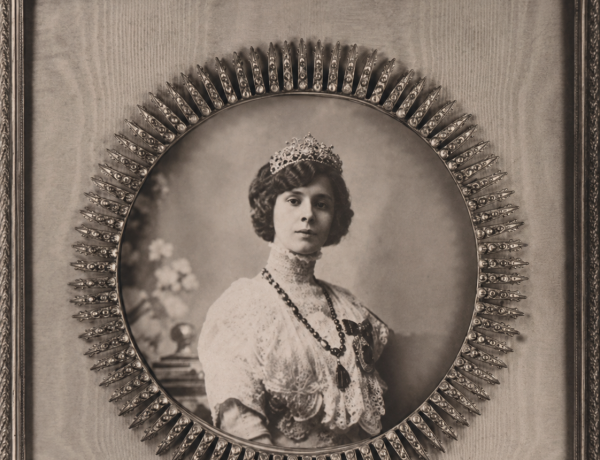
One of the most revealing examples concerns bridal fashion. It was an Ottoman princess Naime Sultan who was the daughter of Abdülhamid II who first wore a European-style white wedding gown in the imperial harem, introducing a fashion that soon spread throughout elite society and eventually across the empire. What is now often perceived as a timeless Western tradition became an Ottoman one through the palace itself.

Naime Sultan (1876-1945)
The harem, therefore, was not simply a secluded domestic institution. It was also a place where fashion, etiquette, languages, music, and artistic tastes were absorbed, adapted, and reinterpreted. Far from existing outside modernity, the women of the palace participated in shaping it.
This photograph quietly dismantles many of the assumptions we continue to carry about Ottoman royal women.
The irony is that our imagination has become more Orientalist than history itself.
Much of what is popularly celebrated today under the banner of Ottomania recreates an empire that never truly existed. The imagined Ottoman world is often one of rigid conservatism, perpetual seclusion, and an exotic “Eastern” identity frozen outside time. Yet the historical Ottoman elite of the empire’s final decades was often remarkably cosmopolitan, outward-looking, and deeply engaged with European culture.
In an unexpected twist, contemporary nostalgia sometimes reproduces the very Orientalist fantasies once created by European painters and travelers. The imagined empire becomes more conservative and more “Eastern” than the empire its own inhabitants experienced. Many of today’s admirers project onto the late Ottoman world an identity that its own princes, princesses, and court ladies might scarcely have recognized.
These young women tell a different story.
They look directly into the camera with confidence rather than mystery. They are neither the imprisoned beauties of Orientalist fantasy nor the symbols of an unchanging tradition. They belong to a society negotiating modernity, balancing Ottoman identity with European influence, and imagining its future as part of a wider world.
Perhaps the greatest surprise is not that they appear so modern.
It is that, more than a century later, our imagination has remained more conservative—and more Orientalist—than they ever were.
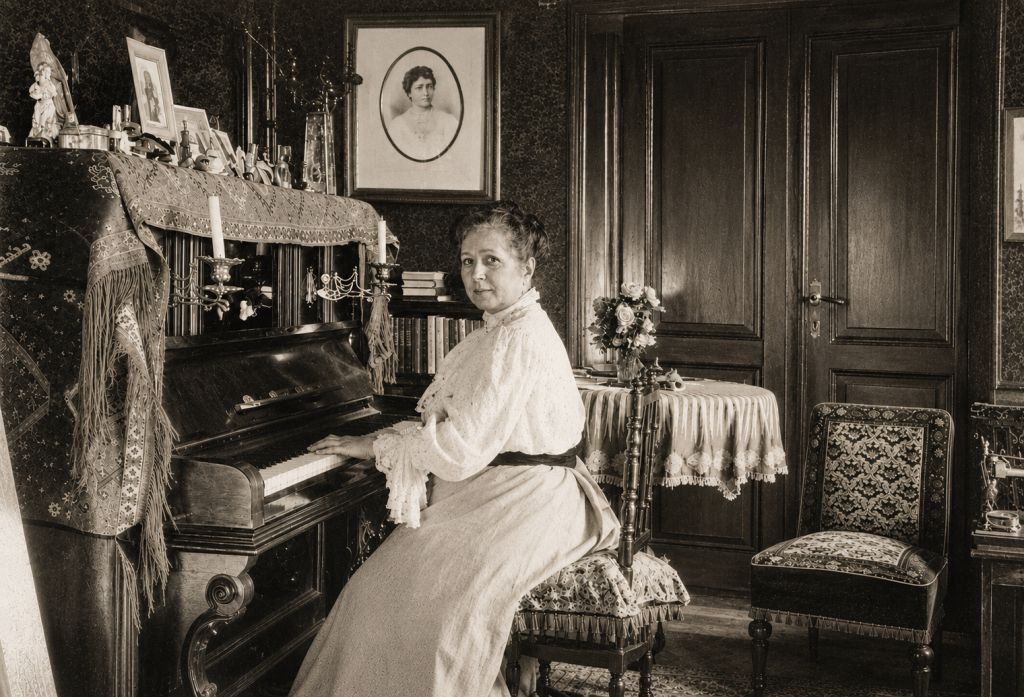
Leyla Saz Hanım (1850-1936)
I would like to end with a tribute to the women of the imperial harem at the turn of the twentieth century by sharing a piece composed by Leyla Saz Hanım who was also a part of the Imperial Harem. May she rest in peace.
Note that the video is embedded via YouTube and all rights belong to the respective rights holders.