


Fehime Sultan in the Harem
Among the many paradoxes of the final Ottoman century, few are more striking than the story of Fehime Sultan. Born into the heart of the imperial dynasty, raised amid the confinement and melancholy that followed her father’s deposition, she is remembered today not merely as an Ottoman princess, but as a woman who reportedly aided the Turkish National Movement during the years of occupation. If the accounts are correct, the daughter of Sultan Murad V—once a symbol of a fallen imperial order—became an ally of the forces that would ultimately bring that order to an end.
Yet her story is not one of betrayal. Rather, it reveals the complex relationship between dynasty, nation, and personal conviction in the twilight of empire.
The Daughter of the Tragic Sultan
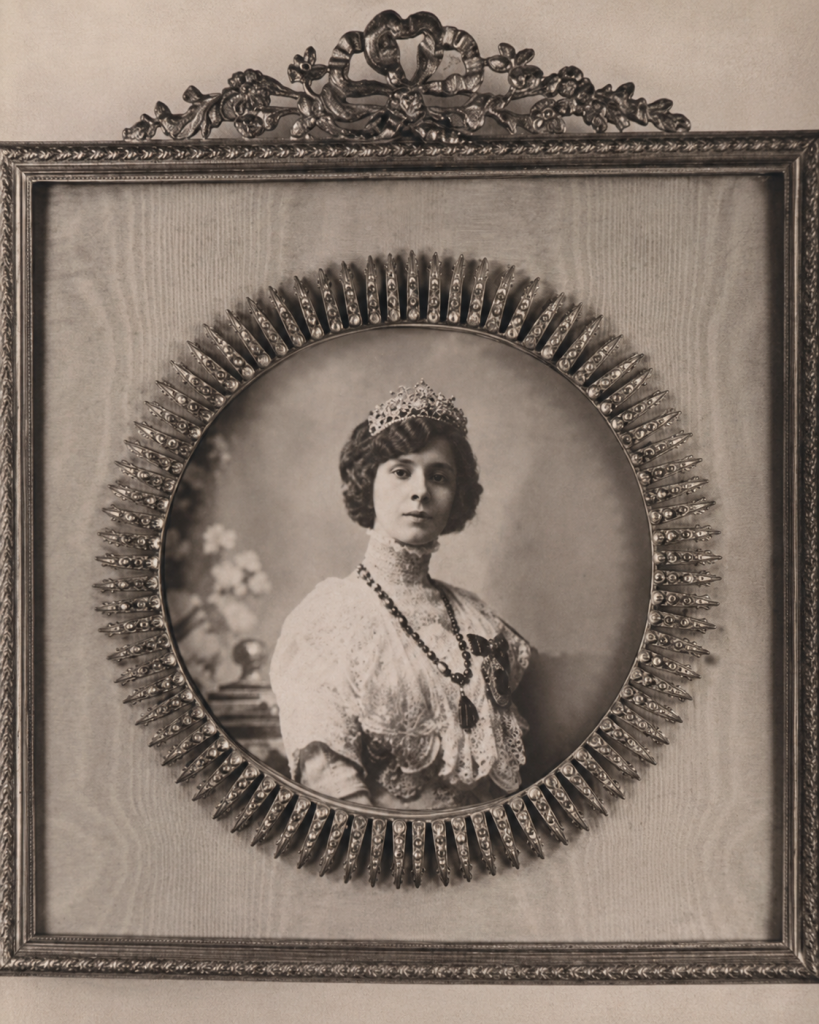
Fehime Sultan
Fehime Sultan was born in 1875 as the daughter of Sultan Murad V, whose reign lasted only ninety-three days. After his deposition in August 1876, Murad and his family were confined to the Çırağan Palace, where they remained for nearly three decades under close supervision.
The young princess thus spent her formative years in a world suspended between privilege and captivity. The palace, once intended as a residence of imperial grandeur, became a gilded prison. Within its walls, the children of Murad V developed a strong sense of familial solidarity and, perhaps, a profound awareness of the fragility of power itself.
This experience distinguished them from many other members of the Ottoman dynasty. They belonged neither fully to the ruling establishment nor entirely to the opposition. They inhabited a political and psychological borderland.
Occupied Istanbul and the Birth of a New Loyalty
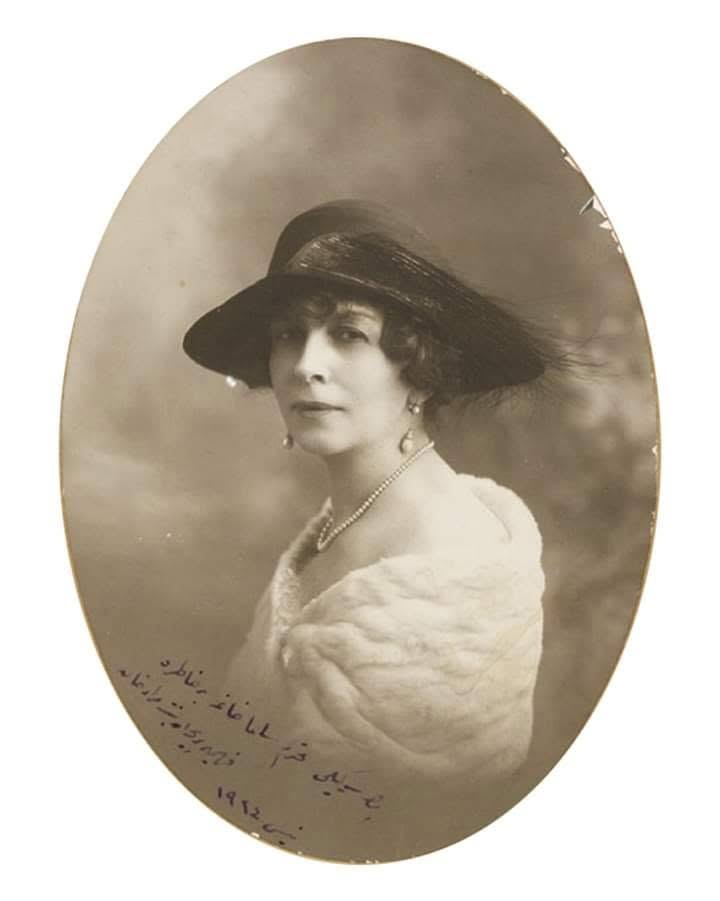
Fehime Sultan (1875-1929)
Following the Armistice of Mudros in 1918, Istanbul entered one of the darkest chapters of its history. Allied troops occupied the city, political uncertainty prevailed, and the future of the empire appeared increasingly bleak.
At the same time, Mustafa Kemal Pasha and the nationalist movement in Anatolia organized resistance against foreign occupation and partition.
Historical accounts suggest that Fehime Sultan, together with her cousin Naime Sultan, established connections with clandestine organizations supporting Ankara. These groups—particularly the Mim Mim Group and the Felah Organization—were engaged in transporting arms, gathering intelligence, and facilitating communication between occupied Istanbul and the nationalist leadership.
The image is extraordinary: an Ottoman princess quietly assisting an underground network that operated against the political status quo of the imperial capital itself.

Mustafa Kemal Atatürk during the Turkish War of Independence
To call her simply “Atatürk’s spy,” however, is to impose a modern and sensational label upon a far more nuanced reality. There is no evidence that Fehime Sultan was a professional intelligence operative in the romantic sense of the term. Rather, she appears to have been a sympathizer and collaborator who placed her social connections, discretion, and influence at the service of the national cause.
Patriotism Beyond Dynasty

Modern observers often assume that members of the Ottoman family must have uniformly opposed the nationalist movement. The historical reality was considerably more complex.
The dynasty itself contained a wide spectrum of political loyalties. Some remained devoted to the institution of the Sultanate; others viewed the nationalist struggle as the only realistic path toward preserving the homeland from foreign domination. Still others attempted to remain aloof from politics altogether.
For Fehime Sultan, support for Ankara may not have represented a rejection of her family’s legacy. Instead, it may have reflected a different understanding of loyalty—one that prioritized the survival and dignity of the nation over the preservation of a particular political institution.
The distinction is crucial. In times of imperial collapse, patriotism and dynastic allegiance do not always coincide.
The Legacy of Murad V

Fehime Sultan’s Mansion in Kuruçeşme
There is an additional irony in this story. Murad V himself had long occupied a unique place within Ottoman memory. Educated, liberal-minded, and sympathetic to constitutional ideals, he was celebrated by many contemporaries as a reformist figure whose reign ended before his aspirations could be realized.
Whether his daughters inherited elements of this political temperament is impossible to determine with certainty. Yet it is difficult to ignore the possibility that life within the isolated world of Çırağan fostered an outlook less tied to rigid dynastic orthodoxy and more receptive to new visions of political legitimacy.
If so, Fehime Sultan’s support for the nationalist movement may represent not a break with her father’s legacy, but one of its unexpected continuations.
A Symbol of Historical Complexity
The story of Fehime Sultan reminds us that history rarely conforms to simple binaries. Empires do not vanish overnight, nor do individuals neatly embody a single political identity.
She was simultaneously an Ottoman princess and, apparently, a supporter of the movement that founded modern Turkey. She belonged to a dynasty whose authority was ending while participating in the birth of a new national order. She was both an heir to imperial memory and an actor within the future republic’s struggle for independence.
Perhaps this is why her life continues to fascinate us.
In the final analysis, Fehime Sultan should not be remembered merely as a “spy” or as a princess who abandoned her class. Rather, she stands as a testament to the profound ambiguities of an age in which old loyalties dissolved, new identities emerged, and love of country could transcend even the walls of a palace prison.
As a tribute to Fehime Sultan, let’s lend an ear to one of her many compositions: Marche L’union Nationale.
Note that the video is embedded via YouTube and all rights belong to the respective rights holders.