
When news of the audacious 2025 heist at the Louvre Museum broke, the world focused on the staggering security failure that allowed thieves to walk away with priceless pieces of the French crown jewels. But for those versed in the intimate histories of the 19th century, the loss of one specific piece—Empress Eugénie’s diamond bow brooch—felt like the tearing of a silk thread connecting Paris to Istanbul.
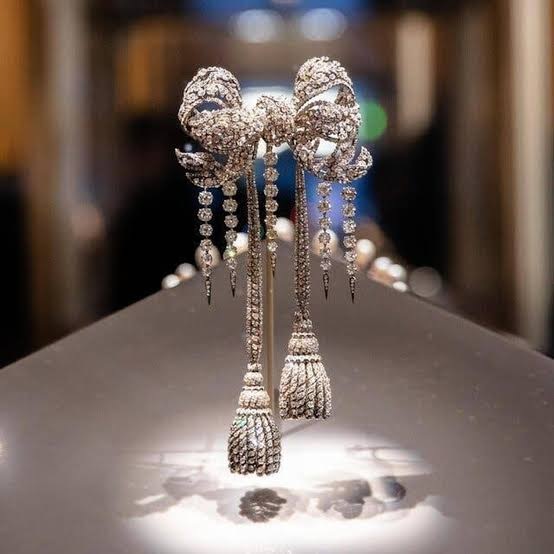
The theft of this French artifact inadvertently unsealed a parallel story of romance, exile, and an “Ottoman twin” jewel that today rests safely, untouched by the chaotic winds of history.
A Parisian Spark on the Seine
The story begins in the summer of 1867. Sultan Abdülaziz made history as the first Ottoman monarch to visit Western Europe on a peaceful diplomatic mission. Attending the grand Paris Exposition at the invitation of Emperor Napoleon III, the Sultan found himself entirely spellbound not just by the industrial wonders of the West, but by France’s Empress Eugénie.
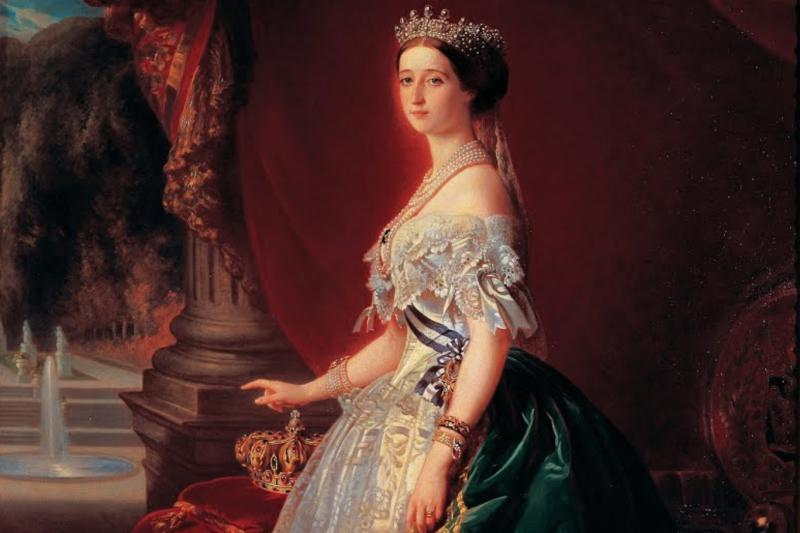
The Empress, an elegant woman of Spanish noble birth, possessed a legendary charm. Rumors immediately began to ripple through both courts of a deep, mutual infatuation between the eastern monarch and the western empress—a connection that danced dangerously on the edge of royal propriety.
When the Sultan returned to Istanbul, his mind remained fixed on Paris. Two years later, in October 1869, an opportunity for reunion arose. On her way to Egypt for the grand opening of the Suez Canal, Empress Eugénie made a six-day detour to Istanbul, steaming into the Bosphorus aboard the imperial yacht L’Aigle.
Secrets of the Beylerbeyi Palace

Sultan Abdülaziz pulled out every stop for her arrival. He personally supervised the decoration of the newly built, opulent Beylerbeyi Palace, assigning her a master suite overlooking the water.

Beylerbeyi Palace
While official histories record state banquets and military parades, historical accounts and local gossip painted a far more intimate picture. As documented by historians like Murat Bardakçı and Spanish researcher Pablo Martín Asuero, a quiet scandal gripped the palace on the night of October 17, 1869. The Sultan managed to deliberately dismiss Eugénie’s ladies-in-waiting and aides under a clever pretext. He then crossed from Dolmabahçe to Beylerbeyi Palace under the cover of darkness, staying with the Empress until the morning light broke over the Bosphorus.

According to Ottoman family accounts and later recollections, it was during this high-stakes romantic visit that the “twin” jewel was conceived. Empress Eugénie frequently wore a magnificent, glittering diamond belt buckle shaped like a bow that cinched her waist. Entranced by the piece—and perhaps wanting a token that embraced the Empress’s figure in a way he could not openly do—legend says that Sultan Abdülaziz secretly commanded his court jeweler to sketch the buckle during a grand reception at Dolmabahçe Palace.
Divergent Paths: The French Original vs. The Ottoman Twin
While both jewels began as identical expressions of imperial romance, the collapse of their respective empires sent them on mirror-opposite journeys across the globe.
The French Bow: From the Louvre to Thin Air
Following the disastrous Franco-Prussian War of 1870, the Second French Empire collapsed. Napoleon III and Empress Eugénie went into exile in England, leaving much of the French Crown Jewels behind. In 1887, the French government auctioned off most of the crown jewels in an effort to discourage any future restoration of the monarchy. Eugénie’s celebrated diamond bow—originally created as the centerpiece of a diamond belt and later transformed into a bodice brooch at the Empress’s request—was acquired on behalf of New York socialite Caroline Astor. The jewel subsequently passed through several prominent families, including that of the Duke of Westminster and the Earls Beauchamp, before the Louvre reacquired it in 2008. It remained on public display in the Galerie d’Apollon until it was stolen during the Louvre heist of October 2025.
The Ottoman Twin: From Royalty to the Secret Vault
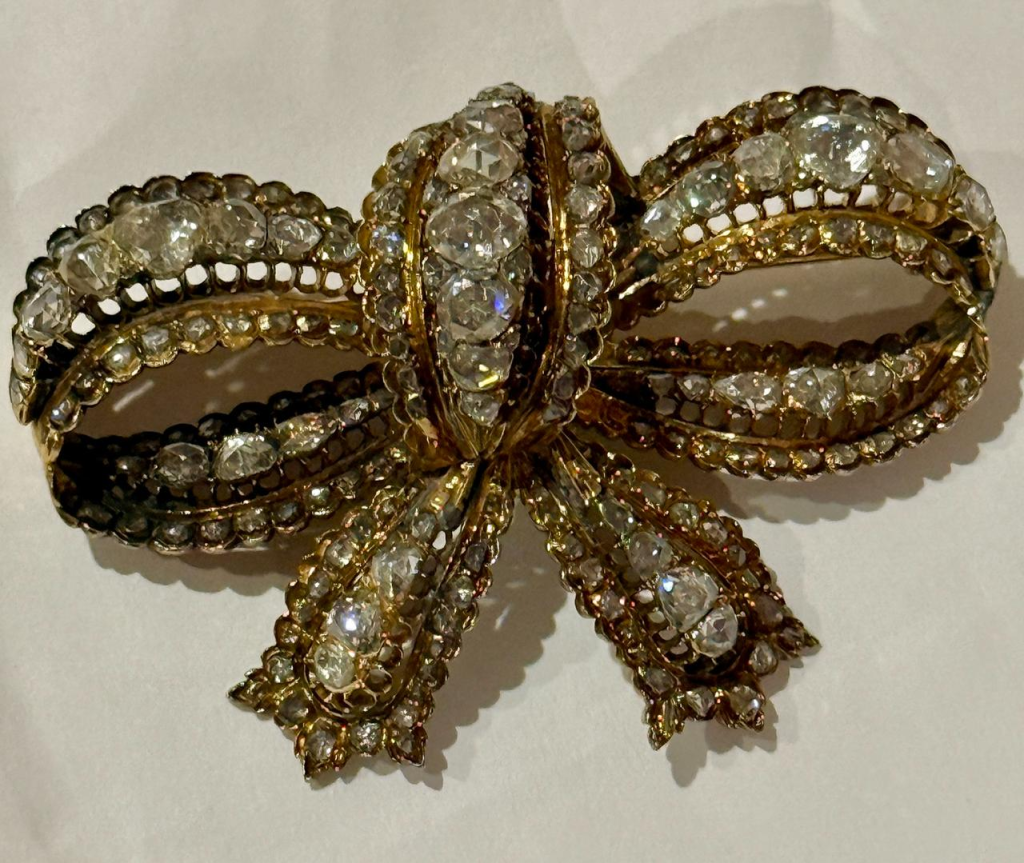
Sultan Abdülaziz kept his commissioned twin bow buckle proudly, perhaps privately recalling the woman who inspired it. Following his controversial death, the piece passed through the imperial line to Prince Ahmed Nihad Efendi. When the Ottoman dynasty was expelled from the newly formed Turkish Republic in 1924, Prince Ahmet Nihat Efendi took the family heirloom into exile.

Princess Nilüfer
In 1931, the jewel found a completely new life. Prince Ahmet Nihat Efendi gave it to Princess Nilüfer—the Murat V’s great-granddaughter—as part of her wedding trousseau when she married Prince Moazzam Jah, the son of the ultra-wealthy Nizam of Hyderabad.
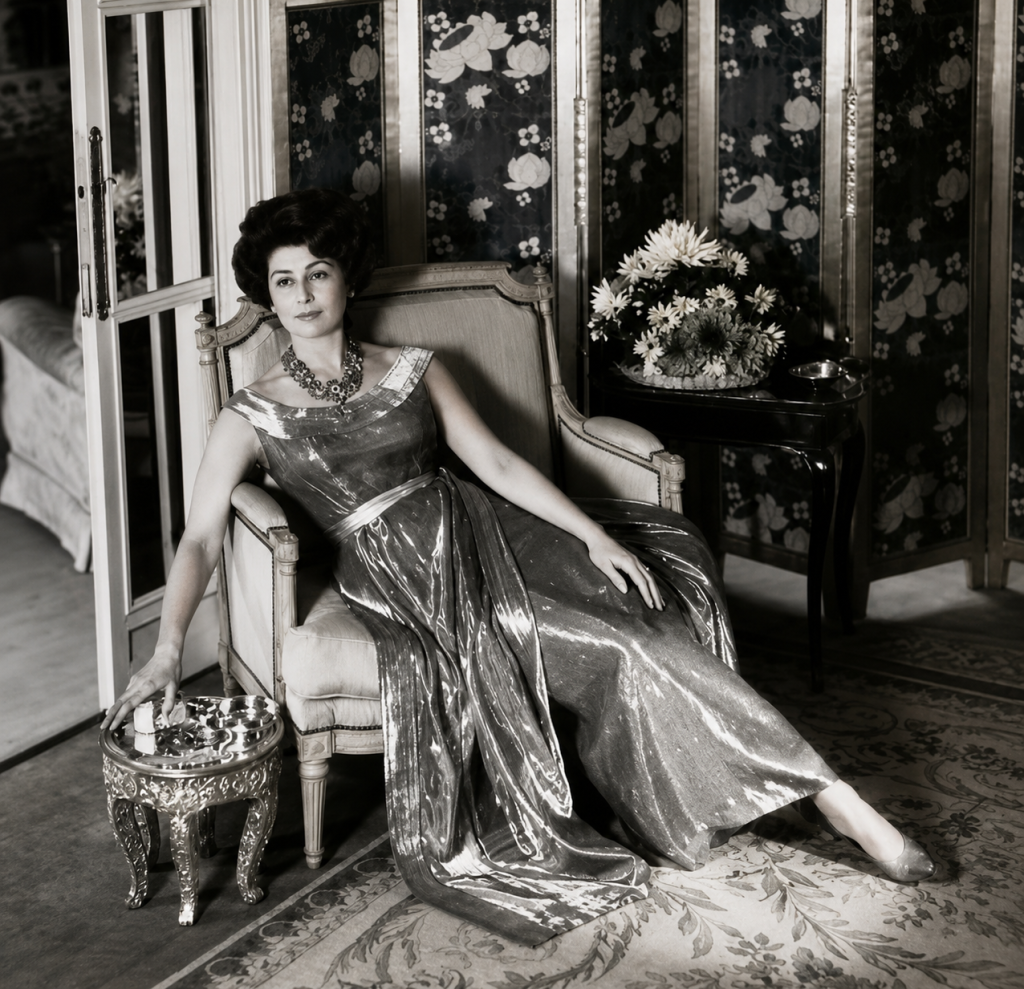
Princess Nilüfer
Because an imperial belt buckle did not pair well with the flowing, richly embroidered silk saris of India, Princess Nilüfer followed the exact same instinct as Empress Eugénie decades prior: she had the piece remodeled into a magnificent brooch,.
Following her divorce from her first husband, Princess Nilüfer returned to Paris and eventually rebuilt her life. In 1963, she married Edward Julius Pope Jr., an American diplomat and businessman. When the princess passed away in 1989, it was the Pope family who became the ultimate guardians of her remarkable imperial estate. Instead of allowing her treasures to vanish into obscurity, Edward Pope—and later his second wife, Evelyn Maddox Pope—carefully kept, preserved, and honored her legacy.
The Ultimate Irony
The visual parallel between these two pieces is striking. Yet, their fates could not be more polarized.
The French original, celebrated publicly and protected by state-of-the-art museum security in Paris, fell victim to modern thieves and remains missing. Meanwhile, its secret Turkish lookalike, born out of a midnight tryst on the Bosphorus and carried through exiles across Europe and India, rests safely in complete darkness—unseen by the public eye, but forever protected from the hands of the underworld.
Visual of the Ottoman twin is taken from the article of Ayşe Osmanoğlu on turkiyetoday.
References:
turkiyetoday.com/culture/the-sultans-salon-one-month-on-from-louvre-heistthe-stolen-crown-jewel-with-an-ottoman twin.
www.haberturk.com/yasam/haber/147159-murat-bardakci-yazdi