
‘Your only refuge is in yourself, there is no other.’ Bruno Taut
Whenever I crossed from the Anatolian side of the city to the European side, I would notice an eccentric building rising above the Bosphorus. There was nothing local about the character of this majestic house. It rested on two massive columns, and its roof had a distinctly Far Eastern quality. Something about it always haunted me. I did not know who had owned it or why it had been built in such an unusual way.

I have recently learnt that this unusual house belonged to a German Jewish architect who fled Nazi Germany in the 1930s to find a refugee in Istanbul. He was among the 1000 scientists, artists, doctors, lawyers and politicians that found a safe haven in Turkey after being invited by the founding father of modern Turkey: Mustafa Kemal Atatürk to our country. All of these valuable people served in the modernisation of Turkey and Taut was one of them.

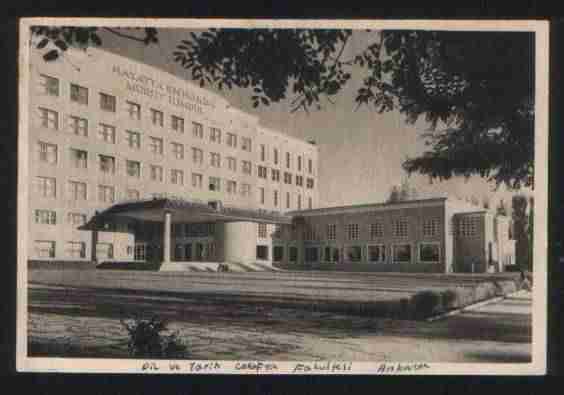
Taut was an exceptionally gifted architect and a professor of architecture who was so much ahead of his times. He became one of the leading professors of the Department of Architecture at the Istanbul Fine Arts Academy and built for the modern Turkish Republic, especially for the new capital Ankara. He was also an utopian socialist who had designed for the working class in his home country before Nazis came to power.

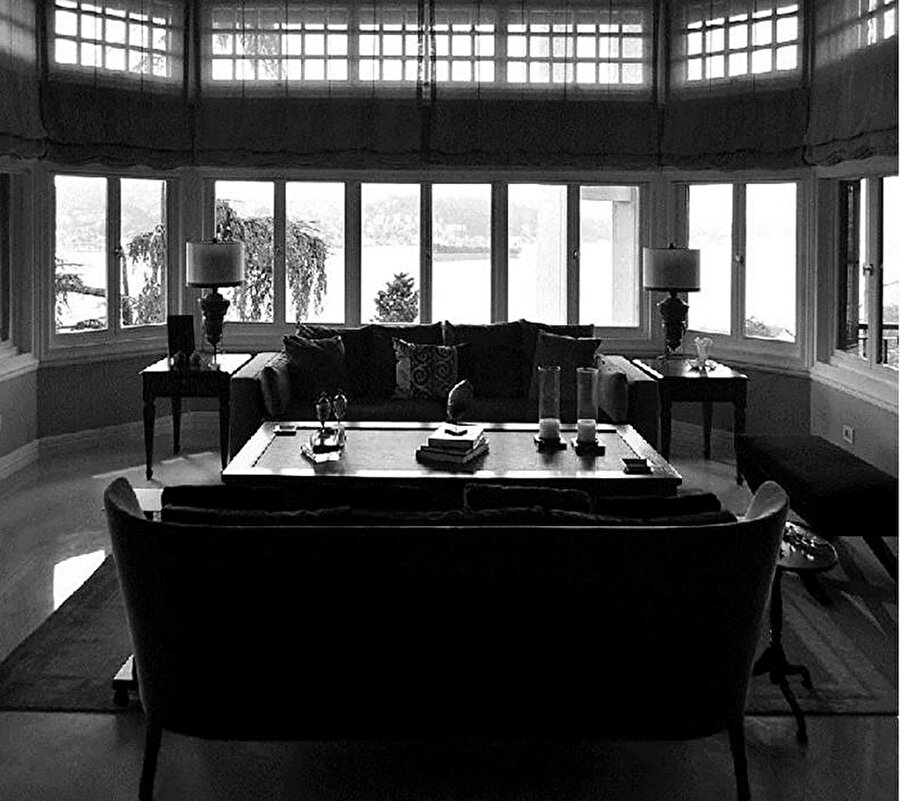
He enjoyed his life in Istanbul immensely and wanted to stay here for the rest of his life. He started building his own home overlooking the Bosphorus on one of the most beautiful sites in the city. Inspired by the Japanese architecture he had come to admire while living in Japan after fleeing Nazi Germany, and just before settling in Turkey, he described the house as “a castle in the air.”

Taut was asked to design the catafalque of Atatürk after he passed away in 10th of November, 1938.

Atatürk’s catafalque which Bruno Taut had designed
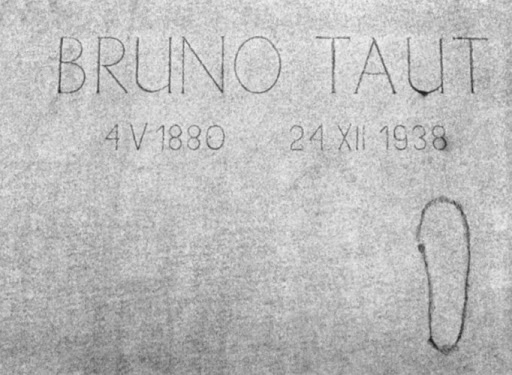
Unfortunately, Bruno Taut died before he could see the completion of his “castle in the air.” He passed away in Istanbul at the age of just fifty-eight, only a month and a half after Atatürk’s death. He became the first non-Muslim to be buried in Edirnekapı Cemetery, which remains his final resting place.
His dream home was eventually completed by his German colleague Franz Hillinger, who, like Taut, was also living in exile, far from his homeland.
We owe Bruno Taut a deep gratitude for having contributed to the making of modern Turkey. Let him rest in peace.