
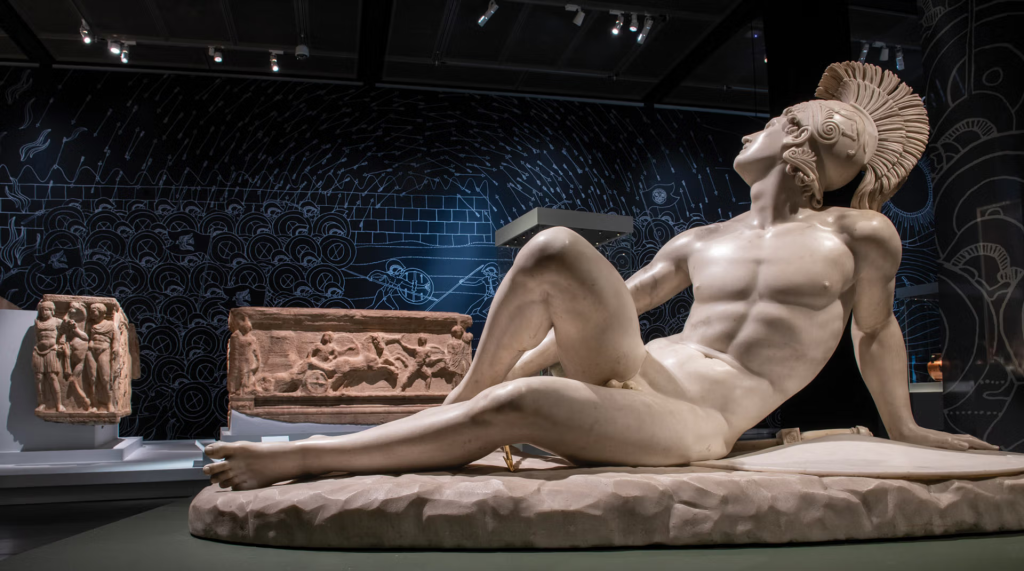
Visual from British Museum’s Troy: Myth and Reality Exhibition
History rarely stays in its own time. It leaks into myth, and myth quietly reshapes history. Few figures illustrate this better than Fatih Sultan Mehmet who is the conquerer of Constantinople, current day Istanbul, and few landscapes hold more mythic weight than Troy—the city of Homer’s imagination and archaeological ruin.
At the center of this imaginative overlap stands Hector, the tragic defender of Troy, whose name would later drift far beyond epic poetry into modern political myth-making.
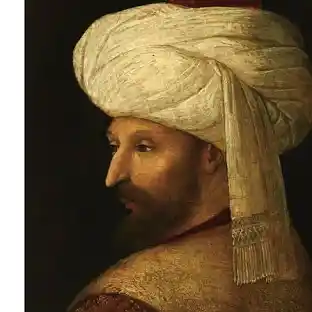
Fatih Sultan Mehmet
Mehmed II and Troy belong to completely different worlds of time. Troy is a Bronze Age city, remembered through archaeology and through Homer’s Iliad, where it appears as a site of war, fate, and divine interference. Hector belongs to that poetic universe as its most tragic warrior, a figure of loyalty and defeat. Mehmed II, by contrast, is a fifteenth-century Ottoman ruler whose life is documented through chronicles, state records, and diplomatic correspondence who is known as the conquer of the city of Constantinople. Between them lies more than two thousand years of entirely different historical realities.
And yet, history does not always remain strictly historical in the way people later imagine it. Once Mehmed II conquered Constantinople in 1453 and expanded Ottoman rule across Anatolia, he became not only a political figure but also a symbolic one. The lands he governed were already saturated with ancient narratives. In western Anatolia, especially around the Dardanelles region, the presence of ruins associated with Troy invited a kind of cultural layering where different civilizations seemed to coexist in the same landscape, even if they were separated by millennia.
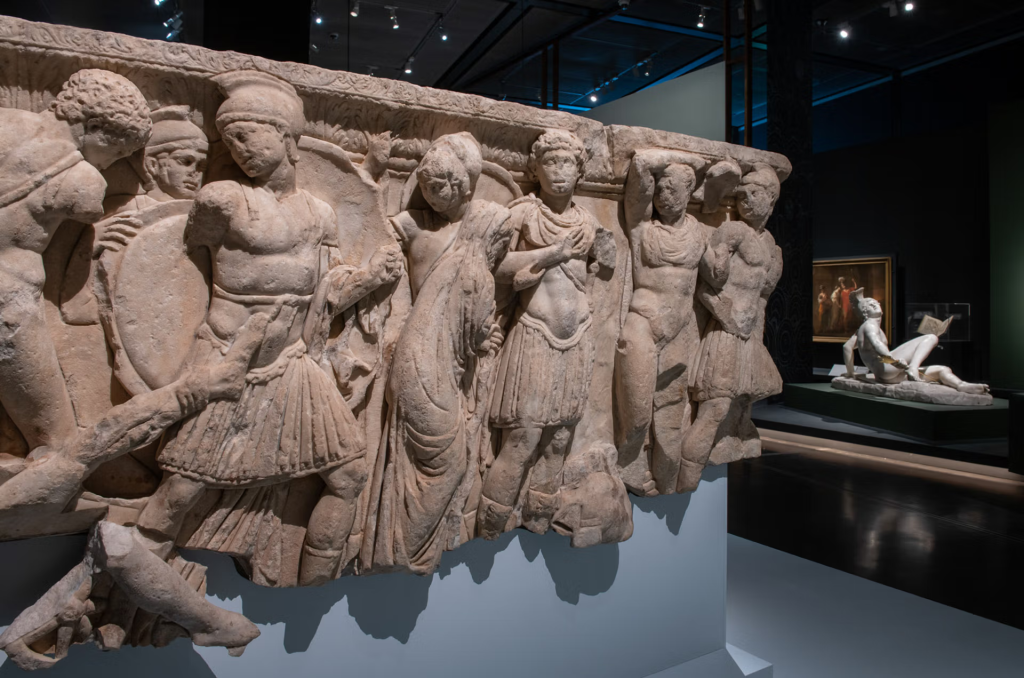
Visual from British Museum’s Troy: Myth and Reality Exhibition
It is in this environment that later writers and storytellers began to weave connections between Mehmed II and the Homeric world. Some accounts suggest that he visited or passed near the region traditionally associated with Troy and that he showed interest in the ancient past of the land he ruled. From this broad historical curiosity, later imagination expanded the story further. In romantic retellings of history, Mehmed II begins to appear not only as a conqueror of Byzantine Constantinople but as a figure standing at the end of a much older chain of epic conflict.
Out of this interpretive tradition comes the famous phrase attributed to him: “Hector, I have avenged you.” In this imagined moment, Hector becomes more than a character from Greek myth. He becomes a symbol of ancient defeat, of a city that once fell under siege, and Mehmed II becomes the one who closes that long arc of historical violence by conquering a successor civilization in the same broader region.

Achilles and Hector face each other in combat, British Museum
But this is where legend and history part ways. There is no contemporary Ottoman chronicle, no Byzantine source, and no early historical record that attributes such a statement to Mehmed II. The phrase emerges much later, shaped by literary imagination and modern fascination with linking empires across time. It reflects not what Mehmed II said, but how later generations wanted to frame the meaning of conquest itself.
Historically, Mehmed II is better understood through his political and intellectual world. He was a multilingual ruler, educated in Islamic, Persian, and Byzantine traditions, and deeply aware of the symbolic power of Rome and antiquity. He consciously positioned himself as a universal sovereign, successor to multiple imperial traditions. But this intellectual world does not require him to have spoken to Hector across time. That connection belongs to a later poetic reinterpretation of history.
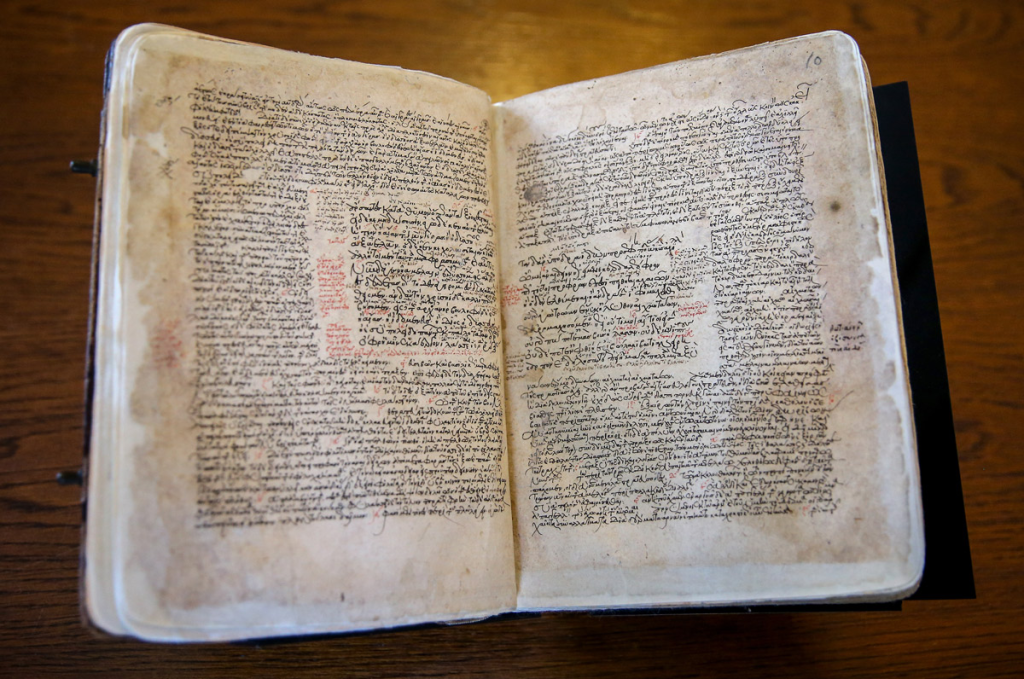
A 260-page Iliad of Homer, dating to the 13th century and belonging to the Trabzon priest Gennadios, is preserved in the library of Fatih Sultan Mehmet in the Topkapı Palace. (visual is taken from arkeolojikhaber.com)
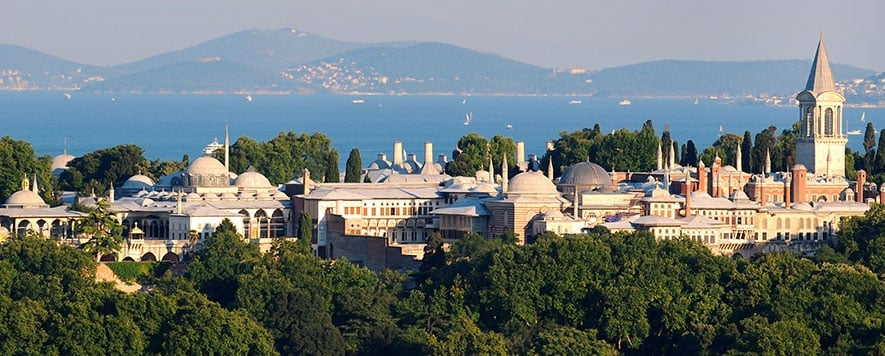
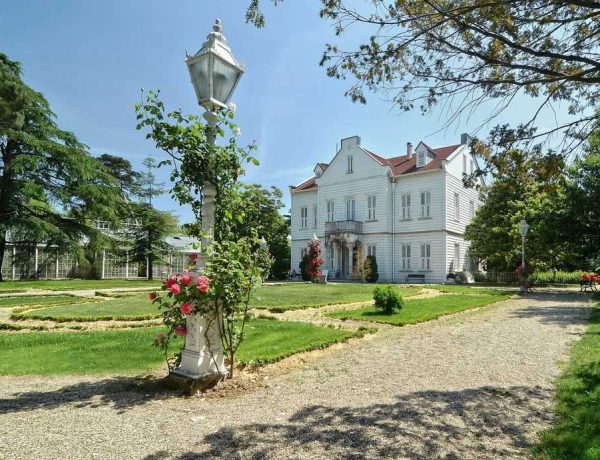
Majestic Topkapı Palace
The enduring appeal of the story lies in its emotional structure. It compresses the fall of Troy, the wars of antiquity, and the rise of Ottoman power into a single symbolic continuity. It turns geography into memory and memory into narrative, allowing different epochs to appear as if they are speaking to each other across centuries.
In reality, Mehmed II, Troy, and Hector remain separated by vast historical distance. In cultural imagination, however, they are drawn together into a shared mythic landscape where conquest and loss echo endlessly.
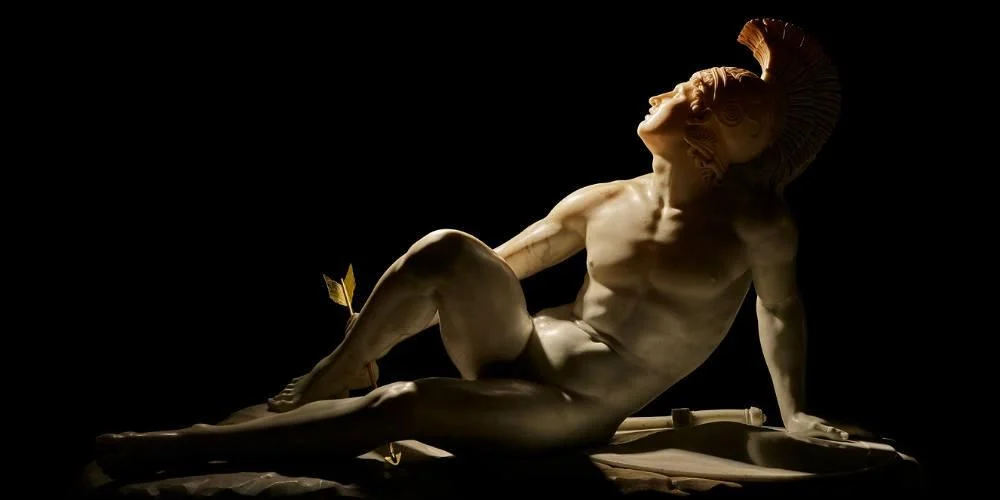
visuals are taken from theartnewspaper.com and Britishmuseum.org.