
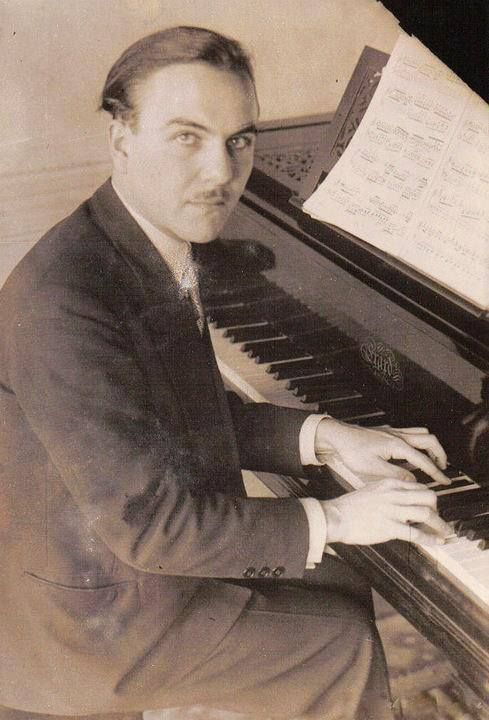
Cemal Reşit Rey (1904-1985)
Cemal Reşit Rey occupies a singular place in Turkey’s cultural history: he was not only one of the pioneering composers of the early Republic, but also the musical architect of a modernizing Istanbul. His life and work reveal how a city in transition found its voice in symphonic form.
Born in 1904 in Jerusalem, then part of the Ottoman Empire, Rey received his musical education in Europe, particularly in Paris and Geneva. Yet it was Istanbul that became the center of his artistic life. Returning to Turkey during the formative years of the Republic, he devoted himself to establishing Western polyphonic music in the country’s cultural capital.
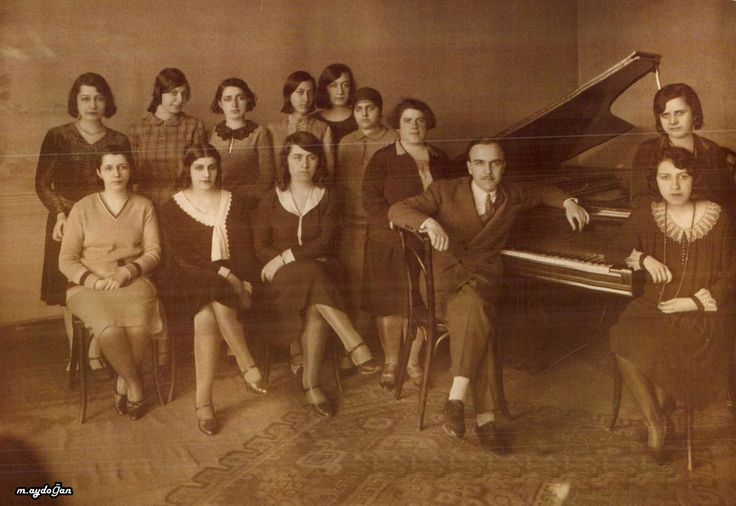
Cemal Reşit Rey with his students, 1930 (visual is taken from M. Aydoğan’s pinterest account)
He taught at the conservatory (formerly Darülelhan), conducted orchestras, and organized concerts that introduced Istanbul audiences to symphonic repertoire. The city was not merely his workplace, it was his living archive of sounds. Street calls, neighborhood rhythms, and the layered atmosphere of Bosphorus life filtered subtly into his musical imagination.
Rey’s name became inseparable from the Republic itself through his composition of the Onuncu Yıl Marşı (Tenth Year March) in 1933. Written to celebrate the tenth anniversary of the founding of the Turkish Republic, with lyrics by Faruk Nafiz Çamlıbel and Behçet Kemal Çağlar, the march quickly became one of the most iconic patriotic works in Turkish history.
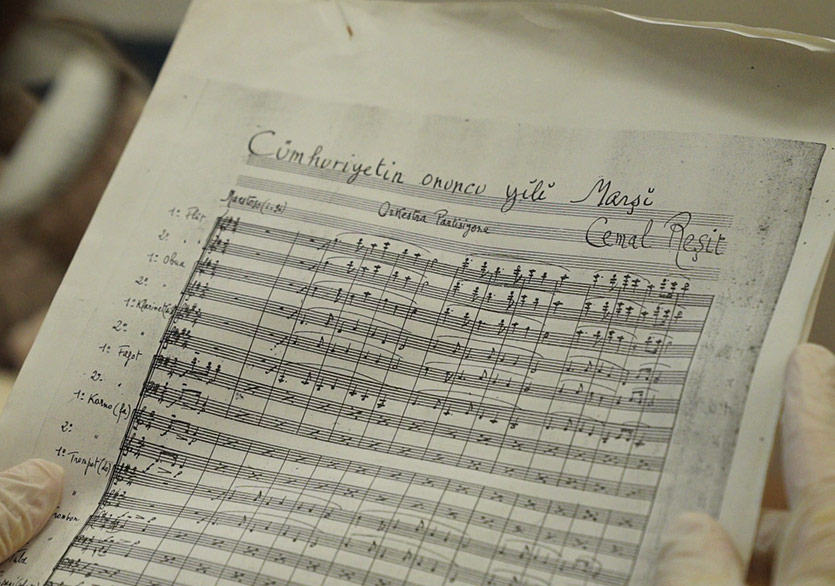
Premiered in Istanbul, it echoed through the city’s squares and official ceremonies, transforming Rey into a household name. The march’s triumphant orchestration and forward-driving rhythm embodied the optimism of a young Republic and Istanbul was its resonant stage.
Rey was also a founder and long-time conductor of the Istanbul City Orchestra, helping institutionalize symphonic music in the city. His efforts were central to making polyphonic music accessible to a broader public. Through education, performance, and composition, he helped Istanbul redefine itself not only as the heir of an imperial musical tradition but as a participant in modern European art music.
Significantly, Istanbul’s major concert venue, the Cemal Reşit Rey Concert Hall, bears his name a lasting testament to his role in shaping the city’s musical life.

Cemal Reşit Rey Concert Hall
Beyond official works and marches, Rey composed operettas, orchestral pieces, piano works, and chamber music that reflect Istanbul’s social and cultural transformation. His famous operetta Lüküs Hayat humorously portrayed the aspirations of Istanbul’s emerging urban bourgeoisie, capturing the city’s fascination with Western lifestyles and modern apartment living.
In other works, he drew on folk themes and melodic motifs that bridged Anatolian sources with Western orchestration. His music does not nostalgically recreate the Ottoman past; instead, it stages a negotiation between tradition and modernity much like Istanbul itself.
Rey belonged to the generation often referred to as the “Turkish Five,” composers committed to synthesizing Western symphonic techniques with Turkish musical materials.
He died in Istanbul in 1985, leaving behind a body of work that mirrors the city’s twentieth-century transformation. In his music, one can sense a metropolis rehearsing modernity, ambitious, self-aware, and full of layered memory.
Cemal Reşit Rey was not only the composer of a national march. He gave Turkey a modern musical voice, one that carried its memory, and its restless transformation into sound.
Note: The videos are embedded via YouTube. All rights belong to the respective rights holders.