
“If I love the past deeply; if I feel bound to its great, magnificent days, be assured that it is because I believe the dead, too, have a right to a voice in this land and in our lives.”
Ahmet Hamdi Tanpınar
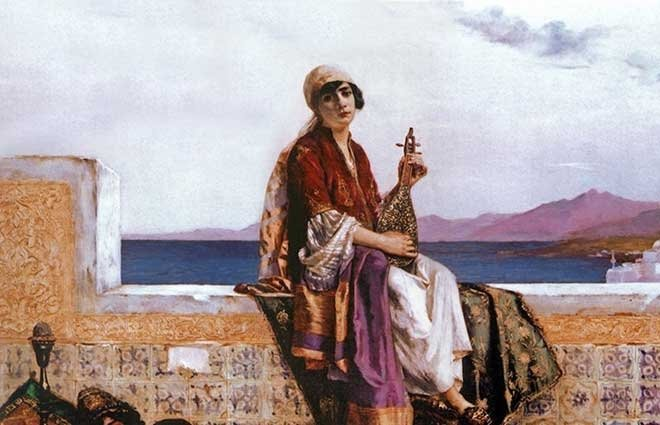
I find myself repeatedly surprised to discover that women in the Ottoman world were active participants in the social and artistic fabric, a presence far richer and more engaged than we often recognize today. Kevser Hanım is one of those remarkable figures in Turkish music history whom we know so little about but whose influence vividly endures. Born in Istanbul in the 1880s, she learned the violin and piano at a time when it was rare for women to pursue such training, and she later taught at Dârülelhan, the first official music school of the Ottoman Empire. Her life is only glimpsed through fragments, yet through her teaching and compositions, we can feel the dedication, care, and artistry she brought to every note. Even in a male-dominated world, her voice found a way to leave its mark.
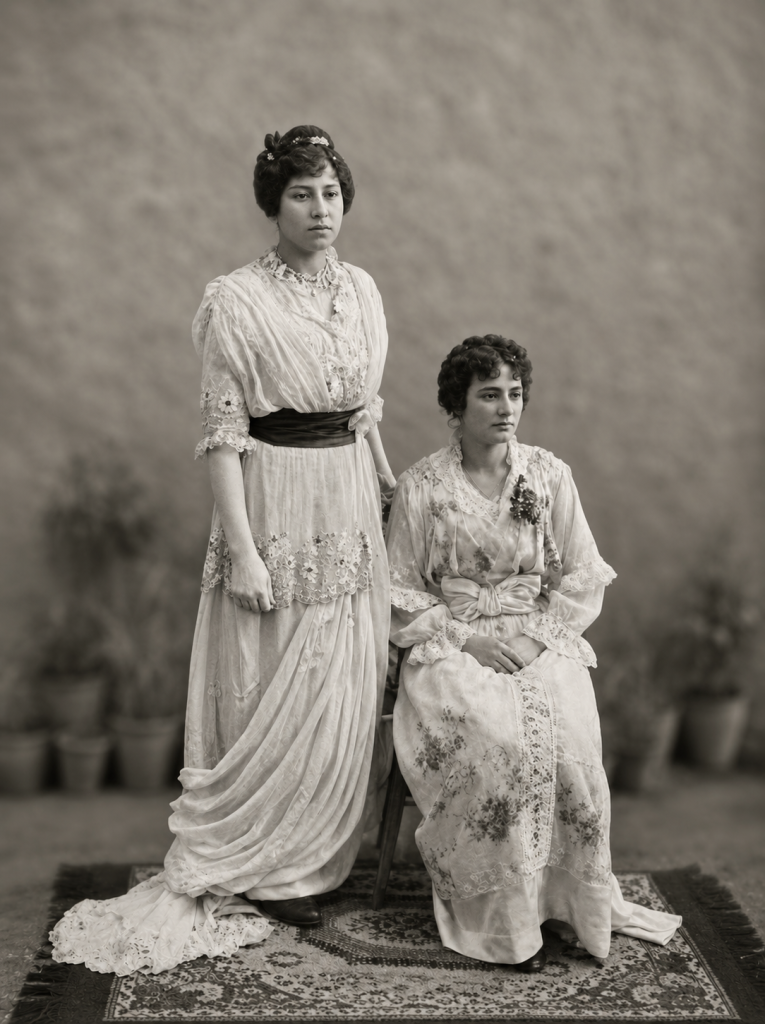
My paternal grandmother Nezihe Hanım (seated) with her younger sister Nevrestan Osmanoğlu in Yıldız Palace
What makes Kevser Hanım especially dear to my heart is that she was the piano teacher of my paternal grandmother, Nezihe Hanım, who was raised in the harem of Abdülhamid II and later married Prince Ahmet Nihad, the grandson of Murat V. While browsing through photographs in our family archives, I came across an image of a lady holding a violin. Curious, I asked a dear friend, Umut Soysal, who works in the Ottoman Archives, to translate the handwritten note on the back of the photograph. It read: ‘To respectable and appreciative Mrs.Nezihe, a verse remains as my souvenir. Your teacher Kemani Kevser, 14 October, 1917′.
I find it deeply moving that I was able to trace a visual record of this remarkable female composer within our own family album, dedicated to her student, who was none other than my grandmother.
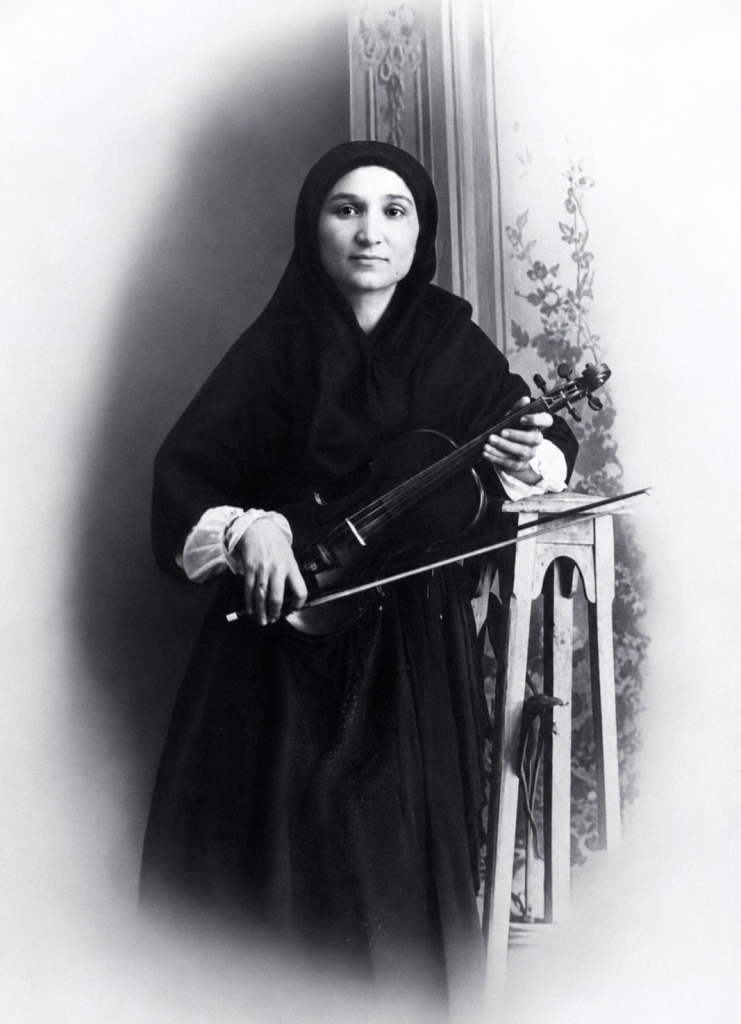
Kevser Hanım
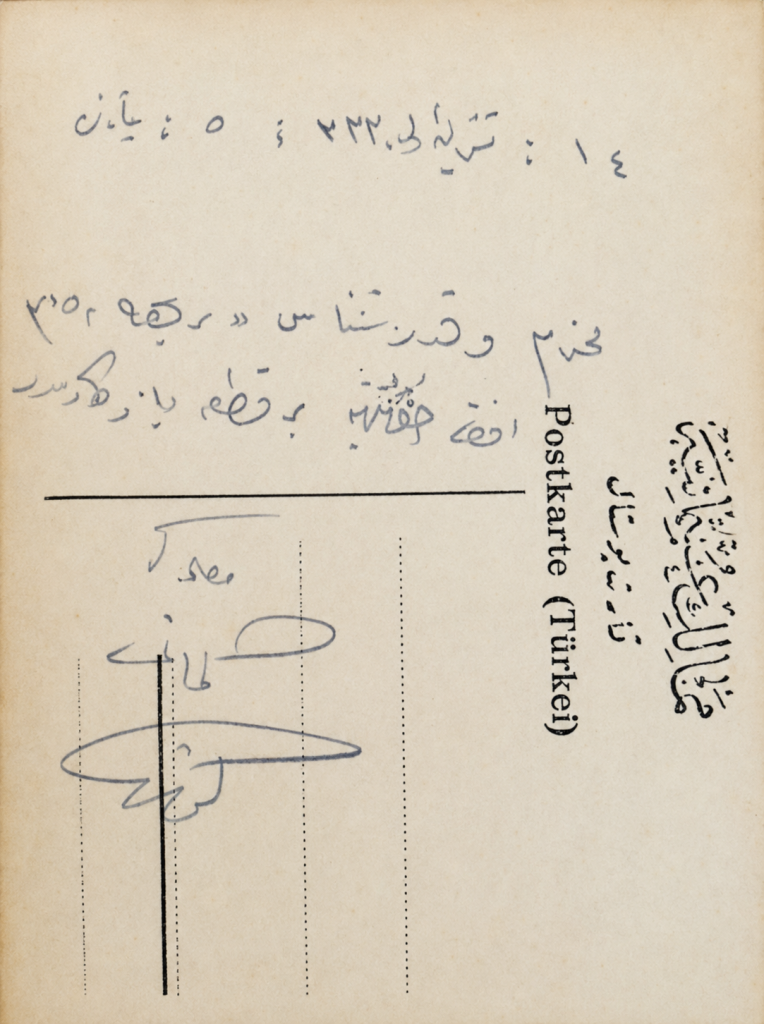
‘To respectable and appreciative Mrs. Nezihe, a verse remains as my souvenir.
Your teacher Kemani Kevser, 14 October, 1917′.
The pieces Kevser Hanım left behind carry a warmth and life that still resonates today. Her “Nihavend Longa” is full of energy, a lively and intricate work that has endured in concerts and recordings, and still lives with us. Millions of us have no idea that this beautiful piece of music, which we listen to again and again and even dance to, belongs to this remarkable woman.
Another piece she has composed is the melody known as the “Çanakkale Türküsü”, which evokes the emotion and tragedy of the Gallipoli campaign which still lives in the subconcious of all of us. While the lyrics themselves traveled through oral tradition and became anonymous over time, the melody as archival sources suggest was shaped by Kevser Hanım. Each note reflects her sensitivity and deep understanding, not only of the music itself but also of the emotional weight of the Çanakkale War, which claimed the lives of tens of thousands of young men including the uncles of my father.
Beyond these familiar works, she composed songs, semais, and cantos that reflect a careful weaving of Ottoman classical music and Western influences, creating something that feels both sophisticated and deeply human. Rediscovering her music is like uncovering a hidden treasure in history and listening to her keeps inspiring us.
Kevser Hanım’s melodies didn’t stay confined to Istanbul. One remarkable example is how her Çanakkale Türküsü traveled across the world, carried by voices like Marika Papagika, a Greek-American singer in the early 20th century. Papagika recorded the song in the United States, bringing a piece of Ottoman musical memory to a new audience and context. Through her interpretation, the melody was transformed, adapted, and preserved in a diaspora setting, showing how Kevser Hanım’s work though composed in a very specific historical moment resonated far beyond her own time and place. It’s a reminder that music can quietly transcend borders, languages, and generations, leaving traces of its origin while continuing to grow in new hands.
We are so lucky that Kevser Hanım’s melodies are still with us. Let her rest in peace!
Note: Photos are taken from our family album. Videos are embedded via YouTube and all rights belong to the respective rights holders.